When to Upgrade to a Riding Mower: A Decision Guide
The short answer: for most homeowners, a riding mower starts to pay off somewhere between half an acre and a full acre of actual grass, and it becomes the clear choice above about an acre or once a single mowing session runs past 90 minutes. But the acre number is not the real test. Time spent mowing, the terrain you cross, your physical ability, and whether your current mower keeps breaking down matter more than any flat size figure. Plenty of people buy a rider for a yard a self-propelled walk-behind handles fine, so it is worth walking through the actual decision before you spend the money.
The signals that actually justify the upgrade
Most buying guides treat this as one calculation: measure your yard, cross a size line, buy a rider. That misses how the decision usually happens in real life. Here are the signals that push people to upgrade, ranked by how strong a reason each one really is.
| Signal | How strong a reason it is | What to do about it |
|---|---|---|
| Mowing takes more than 90 minutes every week | Strong | A rider cuts a wide path and holds a faster pace. This is the most reliable upgrade signal. |
| Yard is over an acre of open grass | Strong | Above an acre, a walk-behind stops being practical for most people. |
| Mowing has become physically hard (age, back, knees, heat) | Strong, and often ignored | A rider removes the walking and pushing. This alone can justify it well below an acre. |
| Your walk-behind needs its third or fourth repair | Underrated | The real trigger for many buyers. See the section below before you sink more into an old machine. |
| Yard is a half acre of simple, open lawn | Weak on its own | A wide-deck self-propelled mower usually handles this. Upgrade only if time or ability also points that way. |
| A neighbor has one and it looks fun | Not a reason | Storage, maintenance, and a tight yard can make a rider slower and more expensive, not less. |
Notice that two of the three strongest signals are not about size at all. That is the part the size charts leave out.
The size threshold that actually matters
Yard size is still the starting point, so here is the pattern that shows up consistently across mower makers and buying guides. A push or self-propelled walk-behind mower is comfortable up to roughly a quarter to a half acre of real mowing area. Between about a half acre and two acres, a rear-engine rider, a lawn tractor, or a residential zero-turn becomes the sensible range. At an acre or more of open grass, a rider is usually the practical choice, and above three acres you are into larger zero-turns and garden tractors with wider decks and bigger engines.
Two cautions on those numbers. First, "yard size" on a property listing is not the same as mowing area. Subtract the house, driveway, beds, patio, and anything else you do not cut. It is common to own half an acre and only mow a third of it. If you are not sure where your lot actually lands, our guide on how to match mower size to your lawn walks through measuring the part that matters.
Second, the size line is a starting point, not a verdict. A wide-area self-propelled mower with a 28 or 30 inch deck closes a lot of the gap on a flat half acre, and it stores and maintains like a normal walk-behind. Before you assume you need a rider, it is worth reading how a self-propelled mower compares to a standard push mower, because that upgrade is cheaper, smaller, and enough for more yards than people expect.
The signal the size charts miss: repeated repairs
Here is the trigger almost no buying guide addresses. For a lot of people, the yard did not grow. The mower got old. The pull cord frays, the deck rusts, the self-propel drive slips, and you are back at the repair shop for the third time in two seasons. At that point the honest question is not "what size yard needs a rider," it is "do I fix this again or upgrade."
A few things help you answer it clearly:
- Add up the last two years of repairs, not just the next one. A single belt or blade is cheap. But if you have already paid for a carburetor, a drive cable, and a starter, you are funding a machine that will keep asking. Look at the running total, not the quote in front of you.
- Match the repair to the life left. A well-kept walk-behind engine can run a long time, so a one-off fix on an otherwise sound mower is usually worth it. A deck that is rusting through or a transmission that is slipping is a different story, because those failures tend to bring more failures behind them. Our breakdown of which mower parts signal the machine is worn out covers what is worth fixing and what is a sign to stop.
- Separate the two decisions. "My mower died" and "I want a rider" are not the same choice. If your yard is genuinely a walk-behind yard, replacing a broken push mower with another walk-behind is often the right move, and a rider would be spending more to solve a problem you do not have.
The repair spiral is a legitimate reason to upgrade. Just make sure you are upgrading because the new machine fits the yard, not only because the old one finally quit.
Terrain and layout can flip the math
Two yards of the same size can call for completely different mowers. Layout changes the answer more than square footage does.
Obstacles. A yard full of trees, beds, a swing set, and tight corners is slower on a big riding mower, not faster. A standard lawn tractor has to back up and reposition around every obstacle, so a cluttered quarter acre can genuinely take longer on a rider than on a nimble walk-behind. This is the case where people upgrade and feel disappointed.
Slopes. Hills change both safety and machine choice. Riding mowers can be less stable across a slope than a walk-behind, and different rider types handle grades differently. If any part of your yard is hilly, read the best mower approach for a sloped yard before you commit, because on steep ground the right walk-behind is sometimes the safer tool.
Gates and storage access. Measure your narrowest gate. Many riding decks will not fit through a standard yard gate, and if the only path to the back lawn is a three-foot side yard, a wide rider is a non-starter before you even reach the grass.
Rider, lawn tractor, or zero-turn: they are not the same machine
"Riding mower" is a category, not a product. The three common types suit different yards.
- Rear-engine riders are the most compact and the easiest to store. They fit smaller open yards and tighter sheds, and they are the mildest step up from a walk-behind.
- Lawn tractors use a steering wheel and feel familiar to drive. They shine on open, mostly flat lawns without a lot of obstacles, and they can take attachments like carts or baggers.
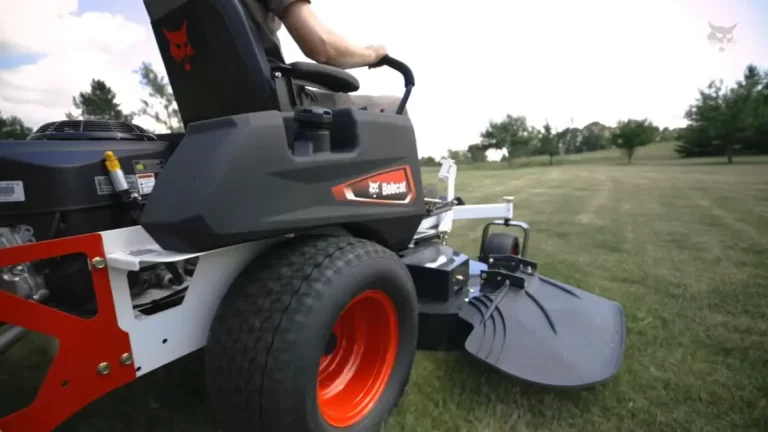
- Zero-turn mowers use lever steering and pivot in place, so they move around trees and beds without backing up. They are the fastest choice for a yard that is large but broken up by obstacles. They also have a learning curve and cost more.
Rough rule: open and flat points toward a lawn tractor, large with lots of obstacles points toward a zero-turn, and small but a little too much to walk points toward a rear-engine rider or a wide-deck self-propelled walk-behind.
What you give up when you stop pushing
This is the part the sellers skip, and it is the honest core of the decision. Moving to a rider is not a pure upgrade. You trade some real things away.
- Storage. A riding mower needs serious room. A common minimum is a shed or garage bay around 8 by 10 feet just to store and reach one, versus a walk-behind that folds against a wall. If your storage is tight, the mower has to live somewhere, and that cost is easy to forget in the showroom.
- Maintenance. More machine means more to service: oil changes, deck belts, blade sharpening on a wider deck, filters, spark plugs, battery, and fuel care over a longer off-season. The upkeep is heavier than a walk-behind's, every year.
- Precision. A walk-behind gets close to edges, beds, and fence lines that a rider cannot reach, so you may still need a push mower or trimmer for the detail work anyway.
- Fit for the yard you actually have. The most common mistake is buying more mower than the yard needs. On a small, obstacle-filled lot, a rider can be slower to use, harder to store, and more expensive to keep than the self-propelled mower it replaced.
None of this means "do not upgrade." It means upgrade when the yard, the time, your body, or a dying machine actually calls for it, and skip it when a walk-behind is quietly doing the job.
Budget reality without the sticker games
Prices move constantly, so think in tiers instead of a number. A riding mower is a meaningfully bigger purchase than a walk-behind, and the sticker is only the start. Add fuel, storage, and a heavier yearly maintenance load over the life of the machine. Set that total against what you are really buying: time back every week, less physical strain, and, if your old mower is in a repair spiral, the money you would otherwise keep feeding into it.
The upgrade is easy to justify when it saves you an hour a week for years, or when mowing has become physically hard, or when repairs on the old machine have stopped making sense. It is hard to justify when a wide self-propelled walk-behind would have done the same job for less money and far less storage. Run the trade honestly and the answer for your specific yard usually becomes obvious.
FAQ
Is a riding mower worth it for half an acre?
Sometimes, but often not on size alone. A half acre of simple, open lawn is well within reach of a wide-deck self-propelled walk-behind. A rider becomes worth it on a half acre if mowing is taking too long, if the ground is hilly or awkward, or if walking the yard has become physically hard. If it is flat, open, and quick to walk, a rider is usually more mower than you need.
How much time does a riding mower actually save?
A lot, mostly because of deck width and pace. A 21 inch walk-behind on a larger yard can take up to about two hours, while a rider with a much wider deck can cut the same lawn in closer to 45 minutes. The savings shrink on small or obstacle-filled yards, where a big rider spends time maneuvering instead of cutting.
Should I buy a used riding mower or a new push mower?
It depends on the yard, not the deal. If your lawn genuinely needs a rider (large, open, or hard to walk), a well-maintained used rider can be a smart way in, as long as you can inspect the deck, belts, and drive. If your yard is really a walk-behind yard, a new push or self-propelled mower is the better buy, because a used rider adds storage and maintenance you did not need.
What size yard is too small for a riding mower?
As a rough floor, under about a half acre and full of obstacles is where a rider starts to work against you. In tight, cluttered yards a rider is slower to steer, harder to store, and more to maintain than a walk-behind, so the "upgrade" can actually make mowing less pleasant.
Do I need a zero-turn or is a regular lawn tractor enough?
If your yard is large but mostly open and flat, a lawn tractor is usually enough and simpler to drive. Choose a zero-turn when the yard is big and broken up by trees, beds, and islands, because pivoting in place around obstacles is exactly where a zero-turn saves time.