Battery vs Gas Mower Reliability: The Honest Answer
Battery mowers are usually more reliable day to day, because they have far fewer parts that can fail: no carburetor, no fuel system, no spark plug, no oil to change. Gas mowers are more reliable for long sessions on big yards, because you refuel in seconds instead of waiting on a charge. The honest catch is that “reliability” is not one thing. It splits into different failure modes. A battery mower rarely refuses to start, but its battery is a wear part that eventually needs replacing. A gas mower can run for well over a decade, but fuel and carburetor trouble is its single most common breakdown.
So the right answer depends less on the word “reliable” and more on your yard. Below is what actually goes wrong on each type, why, and which buyer each one suits.
“Reliability” is really three different questions
When people ask which mower is more reliable, they are usually asking three separate things at once, and battery and gas each win a different one:
- Starting reliability (will it turn on when I pull the trigger or the cord?). Battery wins clearly. There is no cold engine, no flooded carburetor, no stale fuel.
- Session reliability (will it finish the whole lawn without stopping?). Gas wins on larger yards, because refueling is instant while a drained battery means a wait or a spare pack.
- Lifespan reliability (will it still work in ten years?). Gas usually wins on raw longevity, but with a maintenance cost attached, while a battery mower stays simple until the battery wears out.
Keep those three apart and the comparison stops being a tug of war and starts being a match to your situation.
What actually goes wrong on a gas mower over time
This is where a lawn’s real history matters more than a spec sheet. Gas mowers do not usually die from the engine wearing out. They stop working because of the systems around the engine, and the pattern is consistent:
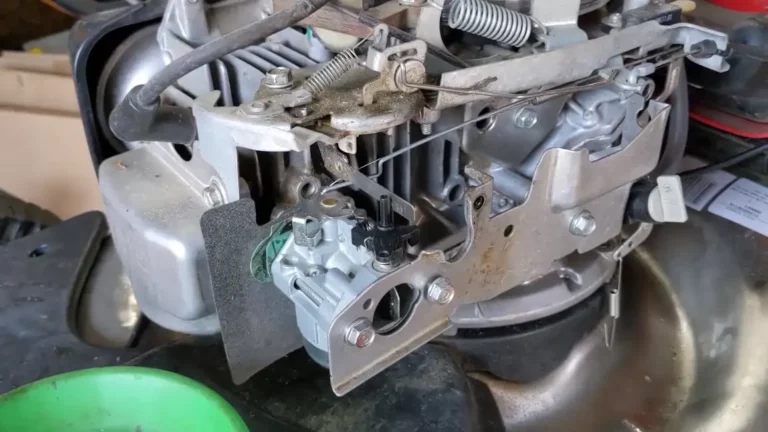
- Fuel and carburetor problems are the number one no-start cause. Gas left in the tank over winter breaks down, gums up the carburetor, and clogs the tiny passages that meter fuel. This is the classic “ran fine in fall, dead in spring” failure. If you have ever fought this, our guide on why your lawn mower won’t start after winter storage walks through the exact fuel-related causes.
- Spark plugs, air filters, and oil all need periodic attention. Skip them and performance drops before the mower fully quits.
- Electrical faults on electric-start and self-propelled models add another set of parts that can fail.
None of this makes gas unreliable. It makes gas maintenance-dependent. A gas mower that gets fresh fuel, fuel stabilizer before storage, a clean filter, and an occasional plug is genuinely a 10-to-15-year machine, and some run 20 years. A gas mower that gets none of that is the one sitting in the garage refusing to start every April.
What actually goes wrong on a battery mower
A battery mower removes almost every item on the gas list. There is no fuel to go stale, no carburetor to clog, no oil, no plug. That is why the day-to-day starting reliability is so high. What it cannot remove is the battery itself.
The failure story for battery mowers is short and predictable:
- The battery is a wear part. Every lithium-ion pack loses capacity with charge cycles. It does not fail suddenly; it slowly holds less charge, so a mower that once did the whole lawn eventually needs a mid-job recharge.
- The electronics, not the motor, are the other weak point. The brushless motors themselves are very durable. The controller, wiring, and battery-management electronics are the parts most likely to give trouble over many years.
- Blades still wear exactly as they do on a gas mower. A dull blade tears grass and strains any motor, which is worth checking on either type. Here is how to read the signs your lawn mower blade needs replacing.
So a battery mower trades a long list of small, recurring maintenance chores for one large, occasional one: replacing the pack.
The cold-weather and battery-degradation reality (as of 2027)
This is the part comparison articles tend to skip, so here is the current picture on battery behavior, which is worth date-stamping because battery tech keeps improving.
As of 2027, lithium-ion is the standard chemistry in cordless mowers, and it handles cold far better than the older lead-acid and nickel batteries. But cold still costs you. In near-freezing temperatures the electrolyte thickens, internal resistance rises, and both power output and charging efficiency drop. In practice that means shorter runtime on a cold morning and slower charging in an unheated garage. The common guidance is to store a lithium pack at roughly a 40 to 60 percent charge, keep it out of hard freezes, and let it warm to room temperature before charging.
Degradation over the years is the bigger reliability factor. A lithium mower battery is commonly rated for something on the order of 500 to 1,000 charge cycles, and many packs are cited as staying healthy for around five years of normal use before capacity fades noticeably. Those are general industry figures, not a guarantee, and real life varies with how you charge and store the pack. The takeaway is not “batteries are bad.” It is that a battery mower’s clock starts ticking the day you buy it, in a way a well-maintained gas engine’s does not.
Runtime and big-yard limits
Runtime is where reliability turns practical. A single charge on a modern battery push mower typically covers a small-to-medium lawn comfortably. Past roughly a half-acre, you start managing runtime: a second battery, a mid-mow charge, or a step up to a more powerful system. Gas has no such ceiling. As long as you have fuel in a can, it keeps going.
For larger properties this is often the deciding factor, and it is also where mower type matters as much as fuel. If your yard has pushed you toward thinking about a bigger machine, our guides on self-propelled versus push mowers and when to upgrade to a riding mower cover that decision separately from the battery-versus-gas one.
Lifespan and the battery-replacement question
Here are the general lifespan figures the major sources agree on, attributed as industry findings rather than our own testing:
| Question | Battery mower | Gas mower |
|---|---|---|
| Typical mower lifespan | Around 5 to 10 years | Around 10 to 15 years, sometimes longer |
| Main wear-out point | The battery pack | Fuel system / carburetor, then engine |
| Routine maintenance | Very low (charge, clean, sharpen blade) | Higher (oil, plug, filter, fuel, stabilizer) |
| Most common no-start cause | Depleted or aged battery | Stale fuel / clogged carburetor |
| Big-yard runtime | Limited by charge | Limited only by fuel on hand |
The honest wrinkle is that on many battery mowers the machine outlasts its first battery, so at some point you face a battery-replacement decision. A replacement pack is a real, recurring cost you should plan for, the same way a gas owner plans for fuel and tune-ups. We are deliberately not quoting a dollar figure, because pack prices vary widely by brand and platform and they move over time; check the current price for your specific mower’s battery before you buy the mower, since that number is part of the true cost.
The honest part nobody selling you a mower mentions
Most buying guides frame this as battery versus gas, winner take all. It is not. The uncomfortable truth is that both are reliable, and they simply fail in different ways at different costs:
- A battery mower’s reliability is high and boring right up until the battery ages, then it becomes a purchase decision. You are trading many small maintenance moments for one large one you can see coming.
- A gas mower’s reliability is entirely in your hands. Maintain the fuel system and it is a 15-year workhorse. Neglect it and it becomes the machine that will not start, which is the most common gas complaint and the most avoidable one.
Which means the real question is not “which is more reliable,” it is “which failure mode do you want to own.” If you would rather never touch a carburetor and do not mind eventually buying a battery, go battery. If you have a big yard and would rather do a few chores than manage charge time, go gas. Neither choice is a mistake. For a broader look at what makes any mower go the distance, see our companion piece on which lawn mower actually lasts.
Which buyer should choose which
- Small to medium yard, wants low fuss: battery. Instant starts, no fuel chores, and runtime is rarely an issue at this size.
- Large yard, long mowing sessions: gas, or a high-capacity battery system with a spare pack. Instant refueling still wins on raw endurance.
- Tired of a gas mower that will not start: battery genuinely solves the fuel-and-carburetor problem, but understand you are adopting the battery-degradation clock instead. It is a real trade, not a free upgrade.
- Longevity above all, willing to maintain: gas. A cared-for gas mower has the longest proven track record.
FAQ
Do battery mowers really cut as well as gas?
On small and medium lawns, modern battery mowers cut comparably to gas for most homeowners. The gap shows up in tall, wet, or very thick grass and over long sessions, where gas torque and unlimited runtime still have an edge. Blade sharpness affects cut quality more than fuel type on either mower.
How long does a mower battery actually last?
A lithium-ion mower battery is generally cited as good for roughly 500 to 1,000 charge cycles, which for many homeowners works out to around five years before capacity noticeably fades. Storage habits, charging practices, and cold exposure all shift that up or down. The mower itself often outlives its first battery.
Is it worth switching from gas to battery?
If your main frustration is starting problems, fuel storage, and routine maintenance, battery removes almost all of it and is worth it on a small-to-medium yard. If you have a large property or run long sessions, weigh the runtime limits and the eventual battery-replacement cost before switching.
Which is more reliable long term, battery or gas?
Gas has the longer proven lifespan when maintained, while battery has fewer parts to fail day to day. Long term, gas usually lasts more years but demands upkeep, and battery stays simple until the pack wears out. The more reliable choice is the one whose failure mode fits your yard size and your tolerance for maintenance.
What is the most common reason each type fails?
For gas mowers it is stale fuel and a clogged carburetor, usually after winter storage. For battery mowers it is a depleted or aged battery, not the motor. Both are predictable, and both can be planned around.