Lawn Watering During Drought: Keep It Alive, Not Green
Lawn watering during drought comes down to one early decision: keep the grass green with regular deep watering, or let it go dormant and give it only enough water to keep the crowns alive. Under a restriction, dormancy is usually the realistic choice for cool-season lawns, and it is not the same as dying. Illinois Extension puts the survival amount at roughly 1/4 to 1/2 inch every two to four weeks during extreme drought. The one thing to avoid is switching back and forth, because waking a dormant lawn and letting it dry out again drains the reserves it needs to survive.
Green or dormant: make the decision once
Illinois Extension's guide to managing lawns during drought, which we read on September 25, 2026, lays out the two options for cool-season lawns: keep applying water to maintain active growth, or allow the grass to go dormant. It cautions against switching between them, because breaking dormancy drains reserves within the plant, and recovery becomes unlikely if dry conditions continue.
That makes the choice more important than the watering itself. Ask three questions:
- Can you legally and practically water deeply enough to keep it green for the whole dry spell? On odd-day or even-day rules, or a single allowed day, the answer is often no.
- How long is the dry spell likely to last? A short dry stretch is worth riding out green. A long one, or a formal restriction with no end date, points to dormancy.
- What else needs the water? Iowa State University's Yard and Garden guide to watering during drought or water restrictions, by Aaron Steil, which we read on September 25, 2026, says that when water is limited you should prioritize vegetables, newly planted plants and garden areas over turfgrass. Trees and new plantings cannot go dormant and come back the way an established lawn can.
If you choose green, commit to it. If you choose dormant, let the lawn brown and leave it there until the weather turns.
Dormant is not dead
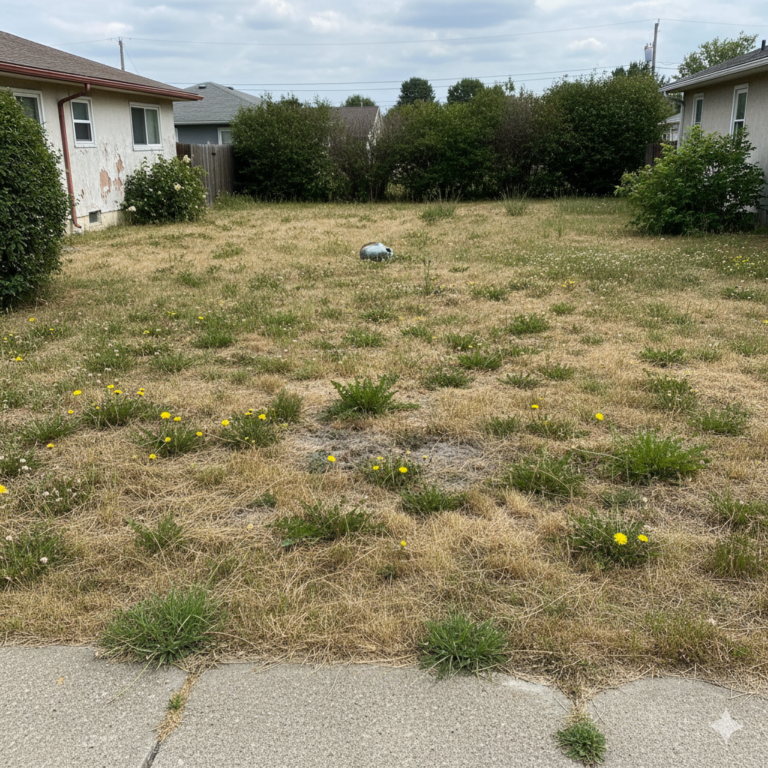
A dormant cool-season lawn looks alarming. The leaves turn straw-colored and stop growing. But the crowns, the growing points at the base of each plant, and the roots stay alive, waiting for water and cooler weather. Iowa State says lawns can remain dormant for 4 to 6 weeks with little long-term damage.
The risk comes when a drought runs long and the crowns themselves dry out. That is what the small survival waterings below are for. If you are staring at a brown lawn and not sure which it is, our dormant or dead test walks through the check.
Lawn watering during drought when you let it go dormant
Extension services agree on the principle and differ on the numbers, which is worth seeing side by side rather than picking one at random.
| Source (read September 25, 2026) | When it applies | Survival watering |
|---|---|---|
| Illinois Extension | Extreme drought, over four weeks without rain | About 1/4 to 1/2 inch every two to four weeks |
| Iowa State Extension | Restrictions lasting beyond the 4 to 6 weeks a lawn can stay dormant | 1 to 1.5 inches in a single application every 4 weeks |
Both describe the same goal: enough water to keep crowns and roots alive, not enough to green the lawn up. Iowa State says directly that the grass won't green up from its schedule. The difference is mostly in how often you are allowed or willing to water. Smaller, more frequent survival waterings fit a restriction that allows occasional use; one larger soak fits a rule that allows very little.
How to put it into practice:
- Measure, do not guess. Set a few straight-sided cans or cups on the lawn and time how long it takes your system to put down the amount you are aiming for. Iowa State and Illinois both give amounts in inches, not minutes.
- Water slowly enough to soak in. Dry soil, especially clay, can shed water before it absorbs it. If water runs off, split the amount into two shorter sessions with a break between them. Our guide on why water isn't absorbing into your lawn soil covers the soil side of this.
- Water in the morning. Iowa State recommends morning, when temperatures are cool and winds are calm, to reduce evaporation.
- Follow your local rules first. A restriction's allowed days and hours override any schedule here. Plan survival waterings around them.
If you choose to keep it green
Keeping a lawn green through a drought means regular, deep watering, not light daily sprinkling. Illinois Extension says to start when the lawn shows the first signs of drought stress: wilting, darkening color, and footprints that stay visible after you walk across it. Iowa State says to water deeply and infrequently so roots grow down.
For warm-season lawns in hot climates, University of Florida IFAS Extension gives its own version: water only when drought stress shows (leaf blades folded lengthwise, a blue-gray tint, footprints or tire tracks that linger), apply 1/2 to 3/4 inch at a time, one to two days a week, and avoid watering between 10 a.m. and 4 p.m. It also notes that bahiagrass and centipedegrass have better drought tolerance than other turfgrasses. Those figures are written for Florida conditions; your local Extension office will have its own.
Going green is a commitment for the whole dry spell. If a restriction arrives halfway through, let the lawn move to dormancy once and hold it there, rather than giving it a green-up soak every time the rules allow.
What to stop doing during a drought
Watering is only half of it. Several routine jobs make a drought-stressed lawn worse:
- Mowing a dormant lawn. Iowa State says not to mow dormant lawns. If the lawn is still growing, raise the cut: Illinois suggests 3 to 4 inches and Iowa State 3.5 to 4 inches during active growth, to shade the soil.
- Foot traffic. Iowa State says to limit traffic to avoid damaging the crowns, and Illinois says to minimize it on stressed lawns. Dry, dormant grass crushes easily.
- Fertilizing. Iowa State says not to fertilize during restrictions. Illinois says to avoid excess nitrogen during hot, dry periods, since it pushes growth the grass cannot support. Florida IFAS also advises postponing fertilizer and herbicide applications during water shortages. If you use any product later, the label on it is the governing instruction.
- Seeding or laying sod. Iowa State says not to lay sod or sow seed during dry periods. New grass has no reserves and no deep roots, and it is the first thing a restriction will kill.
Why some lawns handle drought better than others
Illinois Extension notes that poor drainage, compaction and thatch layers all worsen drought stress, and that lawns with good organic matter and soil structure tend to green up faster once moisture returns. Our look at why a lawn gets worse during hot weather covers the heat side of the same problem.
This is the honest limit of any drought watering plan: the survival amounts above assume a reasonably healthy lawn going in. A thin, compacted lawn with shallow roots may lose patches even with careful watering, and no schedule can fully make up for that during the drought itself. The fixes (aeration, better mowing height, soil work) happen once the dry spell is over.
When the drought ends
When rain returns and temperatures ease, a dormant lawn should start greening from the crowns. Give it time. Resist the urge to fertilize heavily or reseed the whole lawn in the first week; wait to see what actually comes back.
Areas that stay brown and brittle after the lawn around them has recovered are likely dead. Iowa State recommends reseeding dead areas in early fall, and considering more drought-tolerant grasses when you do. Our guide on when to overseed in fall covers timing if the drought ran late into the season.
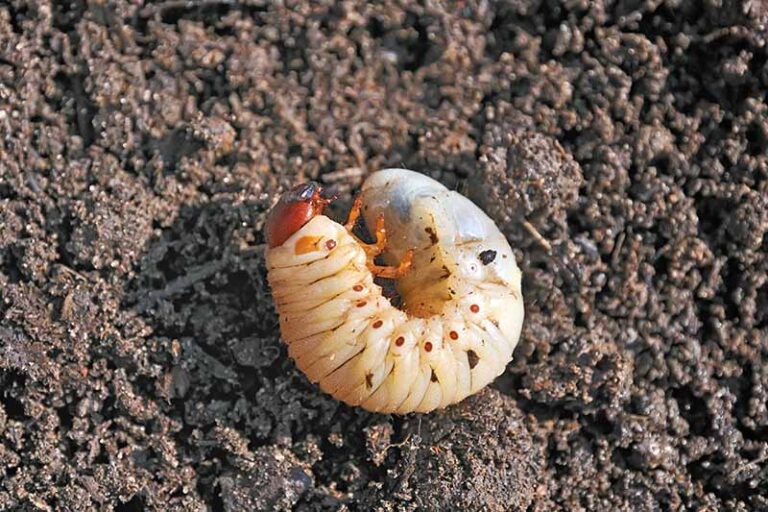
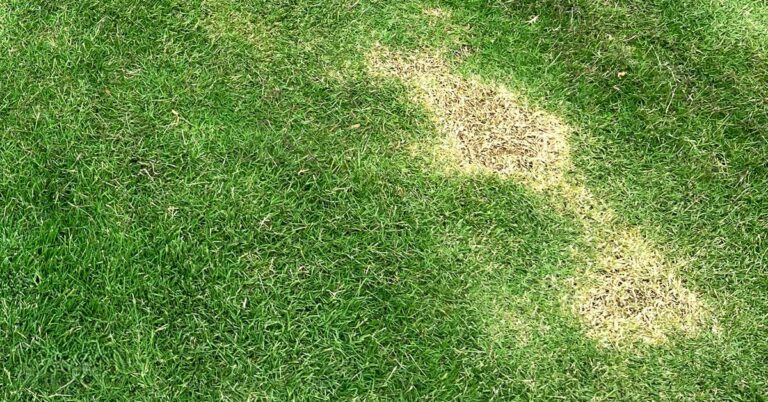
If brown areas are spreading, have an unusual pattern, or appear in parts of the lawn that were watered like everything else, drought may not be the whole story. Insects and disease can look similar. Take a sample or photos to your county Cooperative Extension office or a lawn-care professional before treating anything.
Quick reference
| Situation | What to do |
|---|---|
| Short dry spell, no restriction | Water deeply and infrequently at first signs of stress |
| Long drought or ongoing restriction, cool-season lawn | Let it go dormant once; give survival waterings |
| Dormant more than a few weeks | Follow Illinois (1/4 to 1/2 inch every two to four weeks) or Iowa State (1 to 1.5 inches every 4 weeks) |
| Limited water, other plants too | Trees, vegetables and new plantings before turf |
| Rain returns | Let it green up; reseed only what stays dead |
Frequently asked questions
Should I water my lawn during a drought?
It depends on whether you can keep it up. Illinois Extension says you can either water to keep the lawn growing or let cool-season grass go dormant, but should not switch between the two, because breaking dormancy drains the plant's reserves.
How much water does a dormant lawn need to survive?
Illinois Extension suggests about 1/4 to 1/2 inch every two to four weeks in extreme drought. Iowa State Extension suggests 1 to 1.5 inches every 4 weeks when restrictions run past 4 to 6 weeks. Neither amount will green the lawn; both aim to keep the crowns alive.
How long can grass stay dormant?
Iowa State Extension says lawns can remain dormant for 4 to 6 weeks with little long-term damage. Beyond that, survival waterings help keep the crowns from drying out.
Should I mow or fertilize during a drought?
Iowa State Extension says not to mow dormant lawns and not to fertilize during restrictions. If the lawn is still growing, mow higher and limit traffic.
What time of day should I water under watering restrictions?
Follow your restriction's allowed days and hours first. Within them, Iowa State Extension recommends morning, when it is cool and calm, to reduce evaporation.