Best Reliable Lawn Mower: What Actually Makes One Last
The most reliable lawn mower is the one that gets maintained, not the one with the most famous badge on the hood. Across the mowers we see fail, longevity comes down to two things far more than brand or price: build quality (a steel or heavy composite deck, a name-brand engine, serviceable parts) and consistent upkeep (oil changes, a clean air filter, a sharp blade, and dry off-season storage). A well-built mower that gets neglected dies young. A mid-tier mower that gets maintained routinely outlives it. So buy for the build, then commit to the maintenance. That order matters more than any brand ranking.
Why most "best reliable lawn mower" guides miss the point
Search for the best reliable lawn mower and you get two kinds of pages: lab-tested roundups that rank machines on cut quality, noise, and features after a season of use, and "brands to avoid" lists that treat reliability as a fixed property of a logo. Both are useful, and both measure the wrong window.
A lab test measures a mower on a good day. It cannot measure year three, when the drive belt has stretched, the air filter is packed with clippings, and the blade has not been sharpened since it left the box. That is the window where mowers actually die, and almost nobody writing buying guides works in it.
We do. This site has spent years diagnosing what breaks on mowers after the warranty ends: self-propel drives that quit, transmissions that lose reverse, blades that will not engage, ignitions that go dead. So this guide is built backward from the failures. Instead of ranking brands, it tells you which parts of a mower determine whether it lasts, and how to buy against the ways they fail.
What actually kills a mower: neglect, not defects
Here is the uncomfortable truth the review sites skip: most mowers do not die of manufacturing defects. They die of neglect. The single most common "dead mower" we see is not a lemon. It is a sound machine that ran on the same oil for five seasons, sucked air through a clogged filter, sat outside all winter with fuel souring in the tank, and finally quit.
Two mowers of the same build will have wildly different lifespans depending only on the owner. The one that gets an annual oil change, a fresh air filter, a sharp blade, and dry storage can run for a decade or more. The identical mower left to fend for itself is often scrap in five years. This is why chasing the "most reliable brand" is only half the decision. Reliability is roughly half the machine and half the owner.
That reframes the whole buying question. You are not just buying a mower. You are buying a maintenance commitment. If you know you will never touch the thing, buy the simplest, most serviceable machine you can, because complexity you will not maintain is complexity that will fail. One of the quietest killers is off-season storage: fuel left in the tank over winter is behind a huge share of the mowers that will not start in spring. If that is your pattern, our guide to why your mower won't start after winter storage walks through the fix and the prevention.
The real durability levers, in order
When you strip away the marketing, four things determine how long a mower lasts. Judge any machine against these before you look at the badge.
1. The engine brand matters more than the mower brand
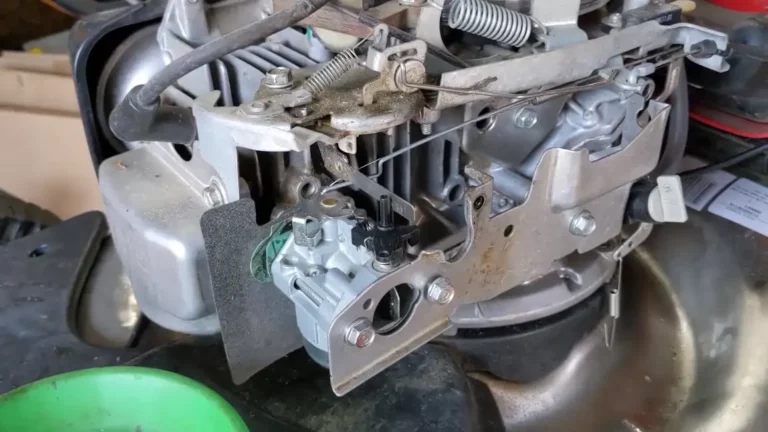
On a gas mower, the engine is the heart, and the company that stamps its name on the mower often did not build the engine. A mower brand may bolt on an engine from a dedicated engine maker. So the reliability question is really: whose engine is under the hood?
The well-known small-engine names, Honda, Briggs & Stratton, Kohler, and Kawasaki among them, all build engines that will run for years when maintained. As a rough sense of scale, a residential small engine is generally reasoned to be good for several hundred up to around a thousand hours of use, while premium and commercial-grade engines are built to run well beyond that. Honda, for example, backs its push-mower engines with a multi-year engine warranty, a signal of how long the maker expects it to run. Treat those hour figures as ballpark ranges, not promises: maintenance moves the number far more than the label does. A named, serviceable engine you can get parts for beats an unbranded engine you cannot, every time.
2. Deck material: steel, plastic, or modern composite
The deck is the body the whole mower hangs from, and it is where cheap mowers cut corners. A stamped-steel deck is sturdy and shrugs off the bumps and stray rocks that crack lesser materials, but it can rust if you store it wet and never clean it. Thin, low-grade plastic decks are the ones to be wary of, because they can grow brittle and crack over years of sun and impact.
Modern composite decks are a different story. Higher-end mowers now use engineered polymer decks (Honda's NeXite is a well-known example) that resist rust entirely and hold up well. So the rule is not "steel good, plastic bad." It is "heavy, quality material good, thin bargain plastic bad." Pick up the deck if you can. Flimsy is flimsy.
3. Build tier: and why "commercial-grade" is usually overkill
Mowers roughly sort into residential, prosumer, and commercial tiers, and there is a real temptation to think buying up a tier guarantees longevity. For a big property or a lawn full of obstacles, a higher tier genuinely pays off in heavier bearings, better transmissions, and thicker decks.
But for an average small-to-mid suburban yard, a commercial-grade mower is usually overkill. A commercial machine is engineered to run hundreds of hours a year behind a crew that services it constantly. You will never put that many hours on it, and if you maintain it like a homeowner rather than a landscaper, you are paying for durability you cannot use. A well-built residential mower, matched to your yard and maintained, is the sweet spot for most people. Match the machine to the actual job. Our guide on choosing the right mower size for your yard covers that fit in detail.
4. Serviceability: can you keep it alive?
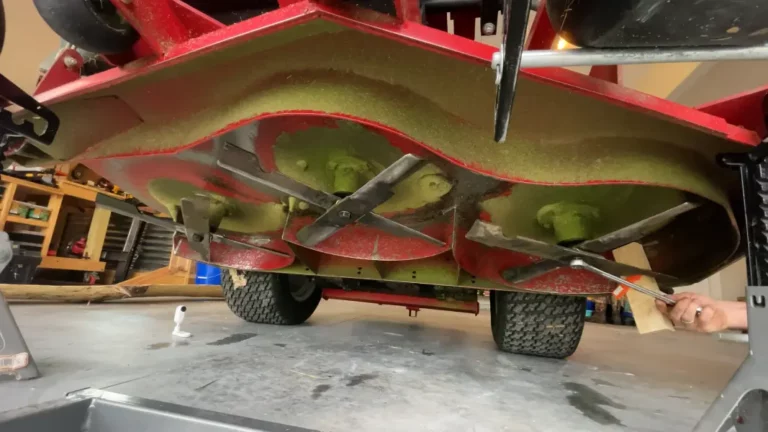
The most overlooked durability lever is whether a mower is designed to be maintained at all. Can you reach the oil drain, the air filter, the spark plug, and the blade bolt without a shop visit? Are wear parts (belts, blades, filters) common and easy to find? A mower built so that routine service is easy is a mower that will actually get serviced, and one that gets serviced lasts. The blade is the part homeowners neglect most: a dull blade tears grass and strains the engine, and it is one of the cheapest, highest-impact things to stay on top of. Here is how to read the signs your mower blade needs replacing.
Gas vs. battery: where each one actually fails
Gas and battery mowers do not fail the same way, so "which lasts longer" depends on which failure you would rather manage.
A well-maintained gas mower can run well past a decade, because when a part wears out you replace that part. The trade is the maintenance load: oil, filters, plugs, fuel care, and the winter-storage ritual that trips up so many owners.
A battery mower removes almost all of that. No oil, no fuel, far fewer moving parts to fail. The catch is the battery itself. Lithium packs generally hold up well for several years, but they do degrade, and once the pack is done, the mower is effectively done unless a fresh pack is available and worth buying. So a battery mower often has a lower maintenance burden but a harder ceiling on total life. We break the two down in full in battery vs. gas mower reliability.
Push, self-propelled, walk-behind, or riding: complexity is a trade
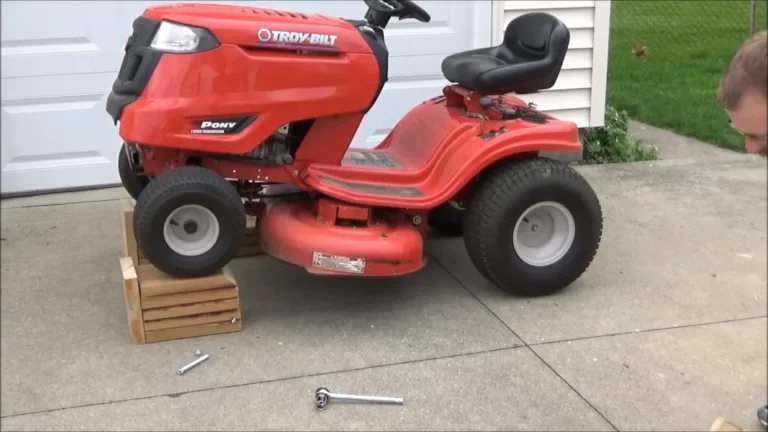
Every feature that makes mowing easier adds parts that can break. A basic push mower has almost nothing to go wrong. Add self-propel and you add a drive system, one of the more common repair calls we see. Move up to a riding mower and you add a transmission, a steering system, and a deck-engagement system, all more things to maintain and eventually fix.
That does not mean simpler is always better. It means the extra complexity has to earn its place for your specific yard. On a small flat lawn, self-propel is convenience you may not need. On a hilly or large one, it is worth the added system. We compare the durability trade directly in self-propelled vs. push mower, and cover the jump to a rider in when to upgrade to a riding mower.
How long should a lawn mower actually last?
As a working benchmark, the average lawn mower is generally reasoned to last about ten years. A budget machine that gets little care may only give you five to seven years, while a well-built mower that is maintained and stored properly can run fifteen years or more. Those numbers are ranges, not guarantees, and where your mower lands inside them is decided far more by upkeep than by the price you paid.
A buyer's checklist, based on what we see fail
Before you buy, ask:
- Whose engine is it? A named, serviceable engine you can get parts for.
- What is the deck made of? Heavy steel or a quality composite, not thin bargain plastic.
- Can I service it myself? Reachable oil drain, air filter, plug, and blade bolt.
- Are wear parts common? Belts, blades, and filters that are easy and cheap to find.
- Is the build tier matched to my yard? Not overkill, not underbuilt.
- How much complexity am I actually maintaining? Every added drive or steering system is another thing to keep alive.
- Will I do the maintenance? If not, buy simpler, because unmaintained complexity is what breaks.
The honest part: the mower that lasts is the one you maintain
If there is one thing the buying guides will not tell you, it is this: the best reliable lawn mower is less about what you buy and more about what you do after. We have diagnosed enough dead mowers to say plainly that most of them were not defective. They were maintainable machines that were never maintained.
So buy well. Get a named engine, a solid deck, a serviceable design, and a build tier that fits your yard rather than a landscaper's. Then do the boring part: change the oil, keep the filter clean, sharpen the blade, and store it dry with the fuel handled for winter. Do that, and a mid-priced mower will quietly outlast a premium one that was left to rot. That is the whole secret, and it is why "which brand is most reliable" was always the wrong first question.
FAQ
How long should a lawn mower last?
About ten years is a fair average. Budget mowers with little maintenance may only reach five to seven years, while a well-built, well-maintained mower can run fifteen years or more. Upkeep and storage move that number more than brand does.
Is a more expensive mower always more reliable?
No. Price often buys a heavier build and a better engine, which help, but it does not buy longevity on its own. A neglected premium mower will fail before a maintained mid-tier one. Spend on build quality and serviceability, not on features and tiers you will not use.
What is the most reliable lawn mower brand?
There is no single answer, and the engine brand usually matters more than the mower brand. The established engine makers all build durable engines when maintained. Focus on a named, serviceable engine, a quality deck, and easy access to parts rather than chasing one logo.
Do I need a commercial-grade mower to get one that lasts?
Usually not. Commercial mowers are built for hundreds of hours a year behind a crew that services them constantly. For an average residential yard, a well-built homeowner mower that is properly maintained lasts a long time without the extra cost or weight.
What is the number one thing that kills a mower early?
Neglect, not defects. Old oil, a clogged air filter, a dull blade, and fuel left in the tank over winter cause far more dead mowers than manufacturing faults do. Routine maintenance is the single biggest factor in how long a mower lasts.