Zero Turn vs Riding Mower: Which Fits Your Property
A zero-turn mower suits a large, mostly flat lawn broken up by trees, beds and edges, because it pivots in place and trims close. A lawn tractor, the classic riding mower, suits ground with real slopes, owners who need to tow or run attachments, and anyone who wants a steering wheel. Terrain decides this before speed, deck size or brand does.
Most comparisons stop at "zero-turns are faster." That is true on open ground, and it is the least useful fact on the list if your yard runs downhill toward a pond. This guide covers how each machine steers, what that means on a slope, which safety features differ between them, where each design tends to fail over the years, and the property shapes that make the answer clear.
How a zero-turn and a lawn tractor actually steer
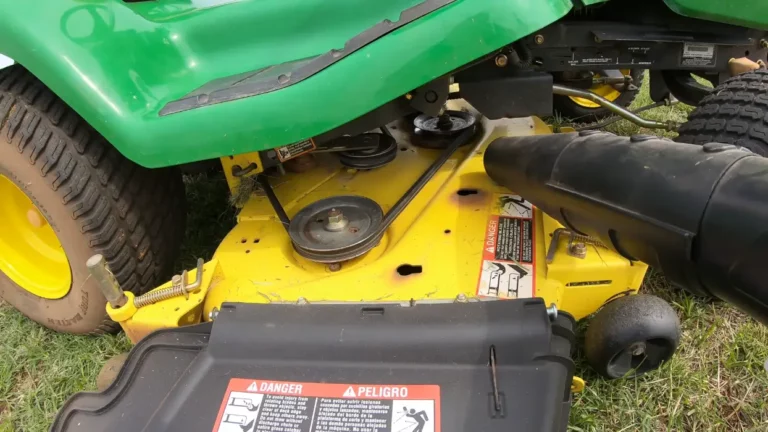
A lawn tractor steers like a car. The front wheels turn, the rear wheels drive, and the mower travels in an arc. Turning at the end of a row takes a loop, and getting around a tree usually leaves a ring for the trimmer.
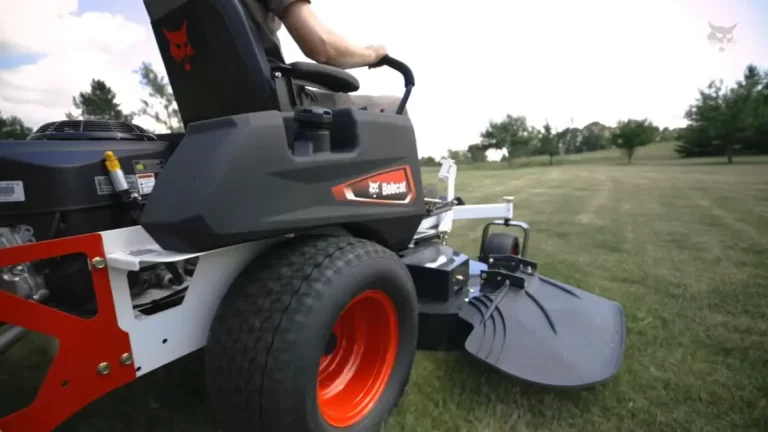
A zero-turn has no steered wheels at all. The two rear wheels are driven independently, usually through two lap bars, one per hand. Push both forward and it goes straight. Push one forward and pull the other back and it spins on its own center. The front wheels are free-swiveling casters that simply follow. The U.S. Consumer Product Safety Commission's Riding Lawnmowers fact sheet, Publication 588 (read September 11, 2026), describes it this way: a zero turn radius mower can rotate 180 degrees and move away on the same path it came in on, which lets homeowners mow close to landscaping and buildings.
That single design difference produces nearly every other difference in this article, including the one that matters most:
On a zero-turn, the rear tires do all of the steering and all of the braking. When those tires lose grip, on wet grass or a downhill grade, steering and braking go together. A lawn tractor that loses some rear traction still has front wheels pointing where you aimed them.
Zero turn vs riding mower, side by side
| Question | Zero-turn | Lawn tractor (riding mower) |
|---|---|---|
| How it steers | Two lap bars drive the rear wheels independently; front casters follow | Steering wheel turns the front wheels |
| Around trees, beds and fences | Pivots in place and trims close, less trimmer work afterward | Wider arcs, more trimming afterward |
| On open, flat ground | Generally covers ground faster, with less time lost turning | Slower and steady |
| On slopes | Steering and braking both depend on rear-tire grip | Front wheels keep steering when rear grip is light, though tractors also tip and slide |
| Blade cutoff when reversing | Excluded from the ANSI mow-in-reverse requirement, per CPSC | Covered by that requirement on machines built to the 2003 standard |
| Towing and attachments | Most are built to mow and little else | Many are built to tow and run attachments the maker approves |
| Learning curve | Lap bars take practice; abrupt input causes abrupt turns | Familiar to anyone who drives |
| Who it suits | Flat to gently rolling lawns with many obstacles | Hilly ground, chores beyond mowing, operators who want a wheel |
Speed is one row of eight. If your property fails the slope row, the other seven stop mattering.
Slopes decide it for many yards
This is the row that belongs first, and most buying pages put it last.
Toro, which builds zero-turns, states on its zero-turn safety tips page (read September 11, 2026): "Never drive your Zero Turn mower on any slopes greater than 15 degrees." That figure is Toro's, for Toro's machines. The limit that governs your mower is the one printed in its own operator's manual, and some are lower. Treat any number you read online, including this one, as a reason to open the manual, not a substitute for it.
CPSC's fact sheet is more direct than most brochures. It calls slopes "a major factor related to loss of control and tip-over accidents," tells riders to mow up and down slopes rather than across, to avoid starting, stopping or turning on a slope, to stay off wet grass because tires may lose traction, and to keep away from drop-offs, ditches and embankments, where a machine can roll if a wheel goes over the edge or the edge caves in. Its one-line test is worth remembering: if you cannot back up the slope or you feel uneasy on it, do not mow on it.
What that means for the choice:
- Flat to gently rolling ground: both machines work, and the zero-turn's strengths show.
- Noticeable slopes across part of the property: a lawn tractor is the more forgiving ride-on, and the steepest sections may belong to a walk-behind regardless.
- Banks, ditches, pond edges and retaining walls: neither. Toro tells zero-turn owners to keep at least two mower widths from water and to use a hand trimmer or walk mower near it. That advice holds for tractors too.
Measure your slopes before you shop. A ride-on you cannot safely use on a third of your land is the wrong ride-on for all of it.
The safety feature difference the brochures leave out
This detail is missing from the top-ranking comparisons for this search. CPSC's fact sheet lists the safety features of machines certified to the voluntary ANSI/OPEI B71.1-2003 standard. One is a requirement, added in 2003, that prevents the mower from mowing in reverse with the blades powered, because backing over a young child is one of the fatal patterns CPSC records. The same fact sheet states that ride-on machines with zero turn radius capability are excluded from that requirement.
That does not make a zero-turn unsafe. It means one safeguard a tractor buyer may be relying on is not part of the zero-turn picture, and the discipline has to come from the operator. CPSC's instructions apply to both machines: do not mow in reverse unless absolutely necessary, and always look down and behind before and while backing.
Both machine types share the operator presence control described in the same fact sheet, which stops the blades if the operator leaves the seat without first disengaging them. Never disable, jumper or work around a seat switch, blade switch or brake interlock on any mower. CPSC's service rules say never tamper with safety devices and check their operation regularly. If one misbehaves, that is a job for a dealer or a qualified small-engine technician.
Rollover protection and the seat belt
Many zero-turns ship with a rollover protective structure, the roll bar behind the seat, and a seat belt. Toro's rollover protection instructions (read September 11, 2026) are specific: keep the roll bar fully raised and locked and wear the seat belt whenever it is up; lower it only when absolutely necessary, and raise it again as soon as clearance permits. Toro also states there is no rollover protection when the bar is down, and that you should not wear the belt when the bar is folded.
That last instruction surprises people. The belt makes sense only with the bar up, because its job is to hold you inside the protected space the raised bar creates. Your own machine's manual has the version that applies to it.
Children and pets in the yard
CPSC's guidance on children around ride-on mowers is blunt. Keep small children out of the mowing area and in the care of a responsible adult other than the operator. Turn the machine off if a child enters the area. Never carry children, even with the blades shut off, because children who have been given rides may later appear in the mowing area expecting another and be run over or backed over. Take the same approach with pets: keep them indoors or secured away from the yard until the mower is off.
This applies to both machines equally. A zero-turn's ability to reverse and pivot in a moment is a reason for more care, not less.
Where each design costs you over the years
This is the section dealer brochures skip, and it is the one lawninside.com's repair archive speaks to most directly. The two designs tend to fail in different places.
A zero-turn runs two drive systems. Each rear wheel has its own hydrostatic drive, so there are two to maintain, and when one weakens the mower pulls or tracks in a curve. Blade engagement is its own common complaint, and our guide to zero-turn blades that won't engage walks through the switch, belt and clutch causes.
A lawn tractor has one transmission and a steering linkage. That linkage is a wear point a zero-turn does not have: loose tie rods, worn bushings, play in the steering gear. Our breakdown of riding lawn mower steering problems covers what goes and why. Tractors with hydrostatic transmissions share some drive failures with zero-turns, including the one in our piece on a hydrostatic mower with no reverse.
Neither design is more reliable in the abstract. What drives long-term cost is whether the machine works inside what it was built for. A zero-turn fighting slopes and a tractor grinding through tight turns it cannot make both wear faster than they should.
Which property points to which machine
A zero-turn fits if:
- The lawn is large and mostly flat or gently rolling.
- There are many trees, beds and edges to mow around.
- Mowing is the only job the machine needs to do.
- Whoever mows is willing to learn lap-bar control on open ground before going near obstacles.
A lawn tractor fits if:
- Parts of the property slope enough that you hesitate on them.
- You want to tow a cart or run attachments the maker approves for that model. CPSC's rule is to tow only with a hitch designed for towing and within the maker's weight limits.
- Whoever mows is more comfortable with a steering wheel.
- The layout is open, with long straight runs and few tight corners.
Neither alone fits if:
- The steep sections are banks or water edges. Those are walk-behind or trimmer ground whatever you ride on the rest.
- The lawn is small enough that a ride-on is hard to justify at all. Our guide on how to pick the right lawn mower size covers where that line tends to fall.
Some makers sell zero-turns with a steering wheel instead of lap bars. They soften the learning curve, but they do not change the traction physics: the rear tires still do the steering, so everything in the slope section still applies.
Before the first cut on either machine
Read the operator's manual in full. It carries the slope limit, the roll bar instructions if the machine has one, and the safety-system checks for that model. Walk the property first and remove sticks, rocks, wire and toys, which CPSC lists as objects the blade can throw. Learn the controls on flat, open ground. And leave wet slopes alone: wet turf is where traction goes first, and our guide on whether it is better to mow wet or dry grass explains why it hurts the cut as well as your footing.
FAQ
Is a zero-turn faster than a riding mower?
On open, flat ground with obstacles to mow around, generally yes, because it turns in place instead of looping at the end of each row. On sloped ground speed is the wrong measure, because a zero-turn has to slow down more and some slopes should not be mowed from either seat.
Can a zero-turn mower go on hills?
Gentle ones, within the limit in its operator's manual. Toro states its zero-turns should never be driven on slopes greater than 15 degrees. Because steering and braking both depend on rear-tire grip, wet grass on a slope is where control is lost first.
Can a zero-turn tow a cart or spreader?
Most are designed primarily to mow. Check the operator's manual for what the maker approves on that model, and follow CPSC's rule to tow only from a hitch designed for towing, within the maker's weight limits.
Should I wear the seat belt on a zero-turn?
Only with the roll bar raised and locked. Toro's instructions say to wear the belt whenever the bar is up and not when it is folded down, because the belt is meant to keep you inside the space the raised bar protects.
The short version
Measure your slopes, count your obstacles and list every job beyond mowing. Flat ground with lots of trees points to a zero-turn. Hills, towing, or a preference for a steering wheel points to a lawn tractor. The right machine is the one that fits your ground and that you can stop safely on every part of it.