Why Your Lawn Mower Won’t Start After Winter Storage
TL;DR
- Stale gasoline is the leading cause of post-winter starting failures – gas begins to degrade in as little as 30 days (Briggs & Stratton, 2026).
- A fouled spark plug is the second most common culprit; a new one costs as little as $4-$8 at most hardware stores.
- A clogged carburetor from gum and varnish deposits will prevent starting even with fresh fuel.
- A dirty air filter starves the engine of air and is a quick, inexpensive fix most homeowners overlook.
- Work through the causes in order: fuel first, then spark plug, then carburetor, then air filter.
Why Lawn Mowers Struggle to Start After Sitting All Winter
Four things kill spring starts on a gas-powered lawn mower: old fuel, a worn spark plug, a clogged carburetor, and a dirty air filter. After three to five months in storage, any one of these can stop the engine cold. Most of the time, you can diagnose and fix the problem yourself in under an hour without any special tools.
The good news is that roughly 15% of mowers that won’t start only need fresh gas or a reconnected spark plug wire (Seacoast Power Equipment, 2026). Go through the easy checks first before you pull the carburetor.
Stale Gasoline Is the Most Common Reason Your Mower Won’t Start
Old gas sitting in the tank all winter is the number one reason a lawn mower won’t fire up in spring. Gasoline begins to degrade in as little as 30 days, and ethanol-blended fuel accelerates that process by attracting moisture and leaving behind sticky varnish deposits that clog fuel passages (Briggs & Stratton, 2026).
After a full winter in storage, the gas in your tank is not fuel anymore – it’s closer to a thick, gummy residue that won’t vaporize properly. The engine cranks but never catches.
The fix is straightforward: drain the old fuel completely using a siphon pump, then refill with fresh gasoline. If your mower sat with untreated fuel for months, run a can of carburetor cleaner through the system after refilling to clear any residue left in the fuel lines.
What to use: For most 4-stroke engines (Briggs & Stratton, Honda GCV160, Kohler Command Pro), use fresh 87 octane with no more than 10% ethanol (E10). Avoid E15 entirely – Briggs & Stratton warns that it attracts moisture that can separate and pool at the bottom of the tank, causing engine damage and voiding the warranty (Briggs & Stratton, 2026).
A Fouled Spark Plug Can Kill the Start Even With Fresh Fuel
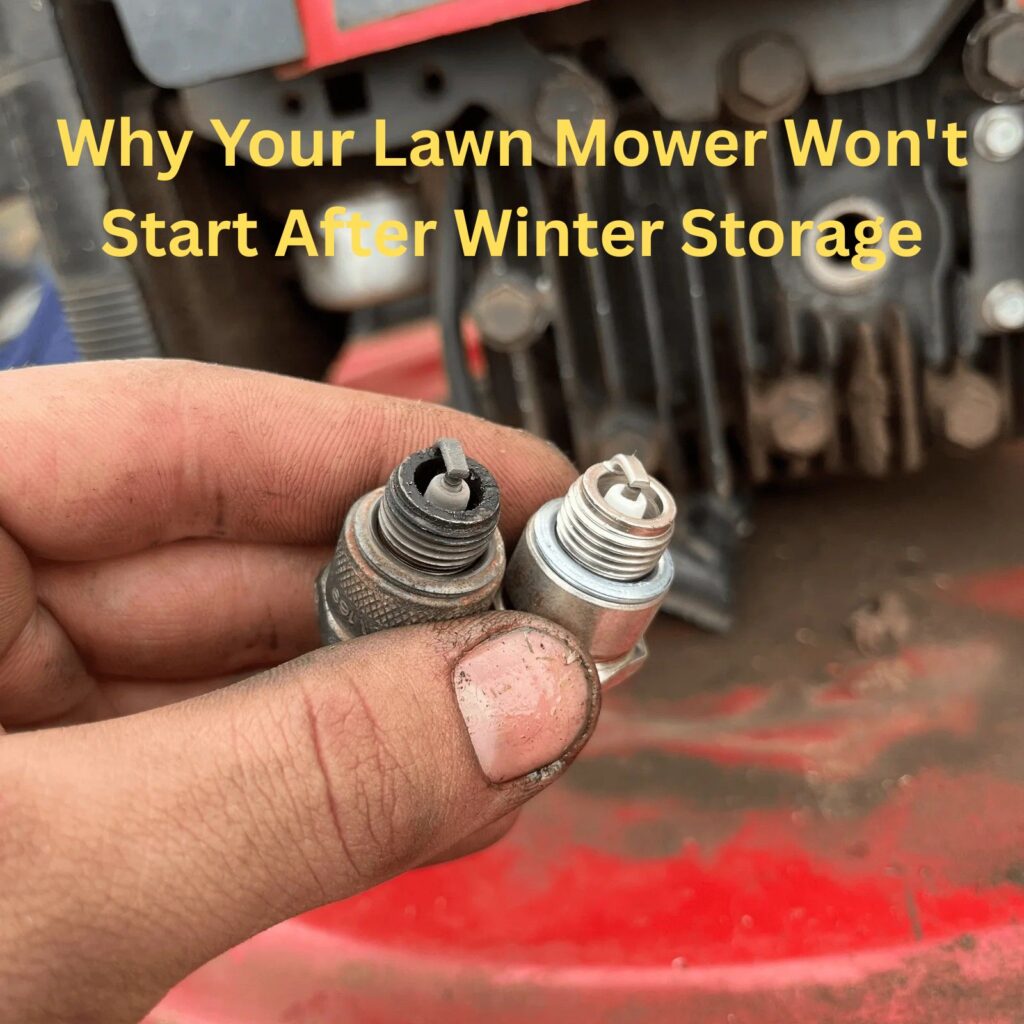
The spark plug is the first thing to check after the fuel. Over winter, moisture and temperature swings corrode the electrode, build up carbon deposits, and widen the gap past the point where a reliable spark is possible.
Pull the spark plug with a socket wrench. Look for black carbon buildup, a cracked ceramic tip, or a worn electrode. Any of those means replacement. A standard spark plug for a push mower like a Craftsman M105 or Toro Recycler runs $4-$8 at Home Depot or Walmart (Briggs & Stratton RJ19LMC, Walmart, 2025). At that price, just replace it annually rather than cleaning and reinstalling.
For most residential push mowers, the correct plug is a Champion RJ19LM or the OEM equivalent. Check your engine model number on the shroud and cross-reference it if you’re unsure – most Briggs & Stratton and Honda GCV engines have plug specs printed on the air cleaner housing.
A Clogged Carburetor Means the Engine Gets Fuel but Can’t Use It

credit: https://lawnchick.com/
The carburetor is where fuel and air mix before ignition. When old gas sits in it all winter, the volatile compounds evaporate and leave behind a sticky varnish that clogs the tiny jets and passageways inside. The engine gets fuel delivered to the bowl but can’t draw it through to fire.
A clogged carburetor is the likely cause if you’ve already replaced the fuel and spark plug and the engine still won’t start – or starts briefly and then dies. According to small engine repair technicians, fuel-related carburetor issues account for more than 70% of mower repairs at shops each season (JustAnswer, small engine technician forum).
For a mild clog, spray carburetor cleaner directly into the air intake with the air filter removed and try starting. For a more stubborn blockage, remove the carburetor bowl (usually one bolt on the bottom), spray the jets clear, and reinstall. If that still doesn’t work, a replacement carburetor for most Briggs & Stratton or Toro engines is $15-$35 online and takes about 30 minutes to swap.
A Dirty Air Filter Starves the Engine of the Air It Needs to Ignite
The air filter stops debris from getting into the engine. After a winter in a dusty garage or shed, it can be clogged enough to restrict airflow so severely that the engine won’t ignite at all. A completely blocked air filter is like trying to start a fire in a sealed box – there’s no oxygen to support combustion.
Pull the filter out and hold it up to the light. A paper filter that blocks most of the light needs to be replaced. A foam filter can usually be washed with soap and water, dried completely, and reinstalled. Replacement paper filters for most residential push mowers run $5-$10 at any hardware store.
Check the air filter every season before your first mow. It takes less than two minutes and eliminates one of the easier causes of starting failure.
Quick Diagnosis: What to Check and in What Order
| Problem | What You’ll See | Likely Fix | Estimated Cost |
|---|---|---|---|
| Stale gasoline | Engine cranks but never catches; dark or cloudy fuel in tank | Drain and replace with fresh fuel | $5-$10 (gas) |
| Fouled spark plug | Engine cranks, no fire; visible carbon or corrosion on plug | Replace spark plug | $4-$8 |
| Clogged carburetor | Starts then immediately dies; starts with choke but dies without | Clean or replace carburetor | $5-$35 |
| Dirty air filter | Weak, sputtering attempts to start | Clean or replace air filter | $5-$10 |
| Dead battery (electric start) | Nothing happens when you turn the key | Charge or replace battery | $20-$60 |
Mistakes That Make Spring Startup Worse
- Leaving ethanol-blended fuel in the tank over winter without a stabilizer. The ethanol draws in moisture during temperature swings, and the resulting water-alcohol mix corrodes the fuel system from the inside. Either drain the tank completely or add a fuel stabilizer and run the engine for five minutes before storage to circulate it through the carburetor.
- Cleaning the spark plug instead of replacing it. A used plug with a corroded electrode or widened gap will start inconsistently even after cleaning. At $4-$8, a new plug is cheaper than the time you’ll spend troubleshooting a marginal one.
- Skipping the primer bulb. If your push mower has a primer bulb, press it three to five times before each start attempt. Fuel lines dry out after months of sitting, and the bulb pushes fuel back into the carburetor to restore flow.
- Pulling the cord 20 times and flooding the engine. If the engine is flooded (you’ll often smell raw gas), let it sit for 10-15 minutes with the choke open before trying again.
Frequently Asked Questions
Why does my lawn mower turn over but not start in spring?
If the engine cranks but won’t fire, the most likely cause is stale fuel. Gas degrades in as little as 30 days and leaves behind varnish that prevents proper combustion (Briggs & Stratton, 2026). Drain the tank, add fresh gas, and try again. If that doesn’t fix it, replace the spark plug next.
How do I know if my carburetor is clogged after winter storage?
The clearest sign is an engine that starts briefly on starter fluid or with the choke closed, then immediately dies. That means fuel is reaching the engine on ignition but the carburetor can’t sustain delivery on its own. A clogged jet or needle valve is almost always the cause.
Can I just add fresh gas on top of old gas in the tank?
No. Diluting old, varnished fuel with fresh gas rarely works. The gum and varnish deposits stay behind even when you add fresh fuel, and they’ll continue clogging the carburetor. Drain the old fuel completely before refilling.
How much does it cost to fix a mower that won’t start after winter?
Most post-winter starting issues cost $10-$35 to fix yourself – a new spark plug ($4-$8), fresh fuel ($5-$10), and possibly a carburetor cleaning kit or replacement ($10-$35). A professional tune-up at a small engine shop typically runs $50-$150 for a push mower (Steve’s Services, 2025).
Should I take my mower to a shop if I can’t get it started?
Try the basics first: fresh fuel, a new spark plug, a clean air filter. Most post-winter no-start situations resolve with one of those three. If you’ve gone through all of them and the engine still won’t start, the carburetor likely needs a rebuild or replacement, and a shop visit at that point is reasonable.
What can I do next fall to avoid this problem entirely?
Before storing the mower, either drain the fuel tank completely or add a fuel stabilizer and run the engine for five minutes so the treated fuel circulates through the carburetor. Change the oil, replace the spark plug, and clean the air filter. Those four steps will eliminate most spring starting problems before they start.
Quick Recap
- Drain old fuel and refill with fresh 87 octane, E10 or lower.
- Replace the spark plug if there’s any visible corrosion, carbon buildup, or electrode wear.
- Spray carburetor cleaner through the jets if the engine starts and immediately dies.
- Check the air filter and replace it if it blocks light when held up.
- Press the primer bulb three to five times before attempting to start.