Grub Damage in Lawns Explained: Signs, Causes & Fixes
TL;DR
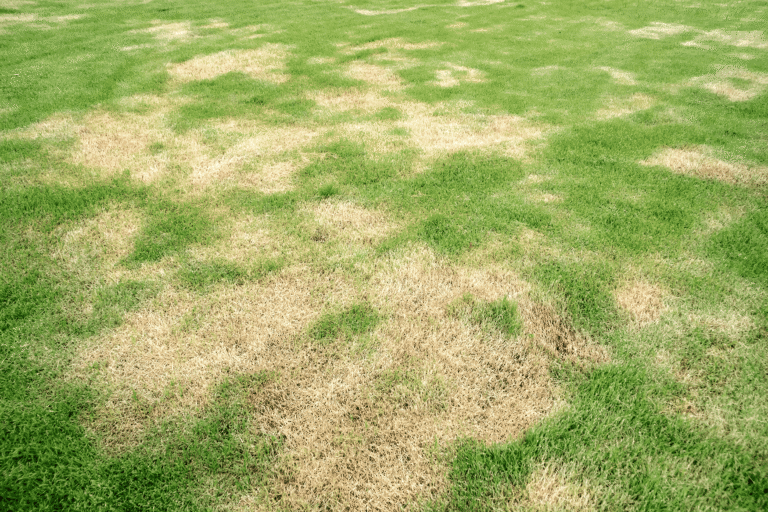
- Grub damage looks like irregular brown patches that feel spongy underfoot and peel back like loose carpet, usually appearing in late August through October.
- The treatment threshold is 10 or more grubs per square foot, per Ohio State University Extension (2024) and Purdue Extension (2023).
- White grubs are the larvae of Japanese beetles, masked chafers, and European chafers; they chew grass roots within the top few inches of soil.
- Preventive products with chlorantraniliprole (apply May to June) or imidacloprid (apply late June to early August) work best; trichlorfon is the curative option for active damage.
- Kentucky bluegrass, perennial ryegrass, and fine fescue are most vulnerable; tall fescue, zoysia, and bermudagrass rarely show serious damage.
What Is Grub Damage and What Causes It?
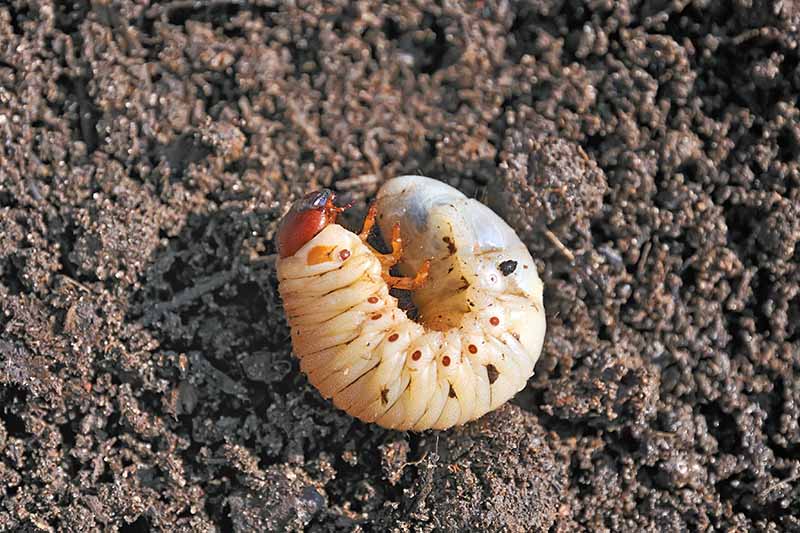
credit: https://gardenerspath.com/
Grub damage is root injury caused by white grubs, the C-shaped larvae of scarab beetles that feed on grass roots a few inches below the soil surface. When the roots are gone, the turf above dies in irregular brown patches that lift off the soil like loose sod.
The species behind most home lawn damage in the US are Japanese beetles (Popillia japonica), masked chafers (Cyclocephala spp.), and European chafers (Amphimallon majale), according to Purdue Extension (2023). All three follow a one-year cycle: adults emerge in June, females lay 20 to 60 eggs in moist soil through July, and tiny grubs hatch in late July and August. The worst damage shows up in late summer when those grubs are at their largest and hungriest.
Irrigated lawns are the most attractive targets. Per Purdue Extension (2023), females prefer moist, well-maintained turf for egg laying, so a yard watered religiously through July often takes the heaviest hit.
How to Identify Grub Damage
Grub damage shows up as irregular brown patches that do not green up after watering, because the roots feeding the turf are already gone. The damaged turf feels soft and spongy underfoot, and you can grab a handful of grass and roll it back like a rug.
Look for these telltale signs:
- Brown or yellow patches that appear in late August through October and keep expanding.
- Turf that pulls up with almost no resistance, exposing white, C-shaped larvae with chestnut-colored heads.
- Increased animal activity: skunks, raccoons, crows, and starlings tear up turf to eat the grubs underneath.
- Wilting that looks like drought damage but does not respond to irrigation.
Per the University of Maryland Extension (2024), Kentucky bluegrass, perennial ryegrass, and creeping red fescue lawns are the most susceptible. Tall fescue, zoysia, and bermudagrass have deeper or tougher root systems and rarely show severe damage.
How to Confirm Grubs Are the Problem (The Cup-Cutter Test)
Cut a one-square-foot section of turf about 2 to 3 inches deep at the edge of a damaged area, peel it back, and count the grubs in the soil. Anything at or above 10 grubs per square foot crosses the treatment threshold confirmed by Ohio State University Extension (2024).
Use this scale to decide what to do next:
| Grubs per Sq. Ft. | What It Means | Action |
|---|---|---|
| 0 to 4 | Normal background population | No treatment needed |
| 5 to 9 | Borderline; healthy turf tolerates it | Monitor; water and fertilize |
| 10 to 15 | Above threshold | Apply curative treatment |
| 15+ | Heavy infestation | Curative treatment plus fall overseeding |
Cut at the edge of brown patches, not the dead center. Grubs move on once the roots are gone, so the active feeding zone is the green margin around the damage.
When Does Grub Damage Show Up?
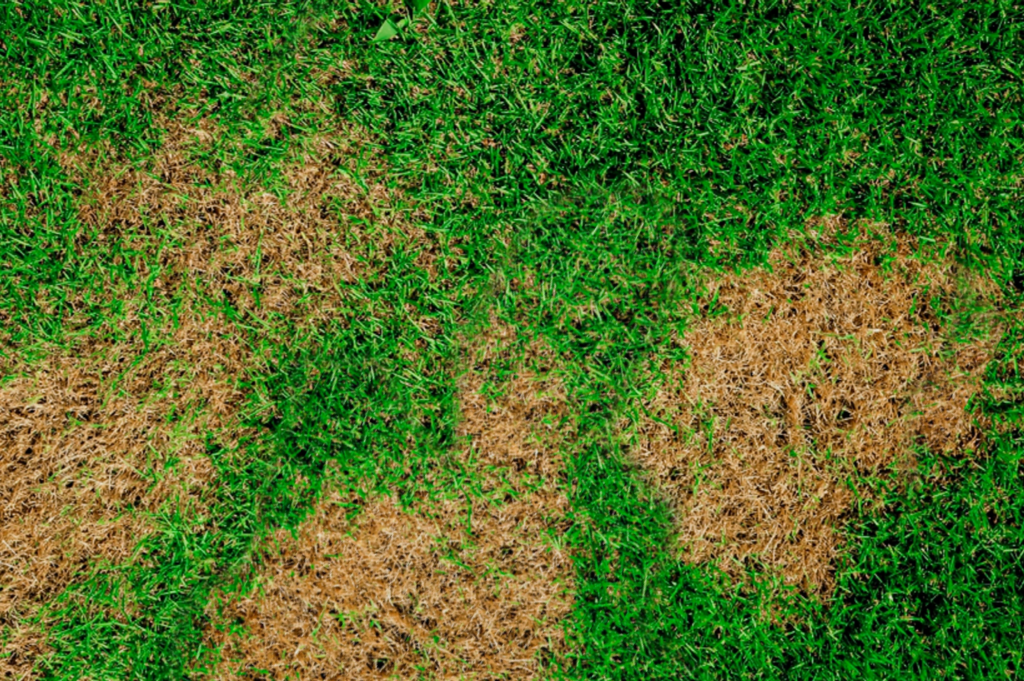
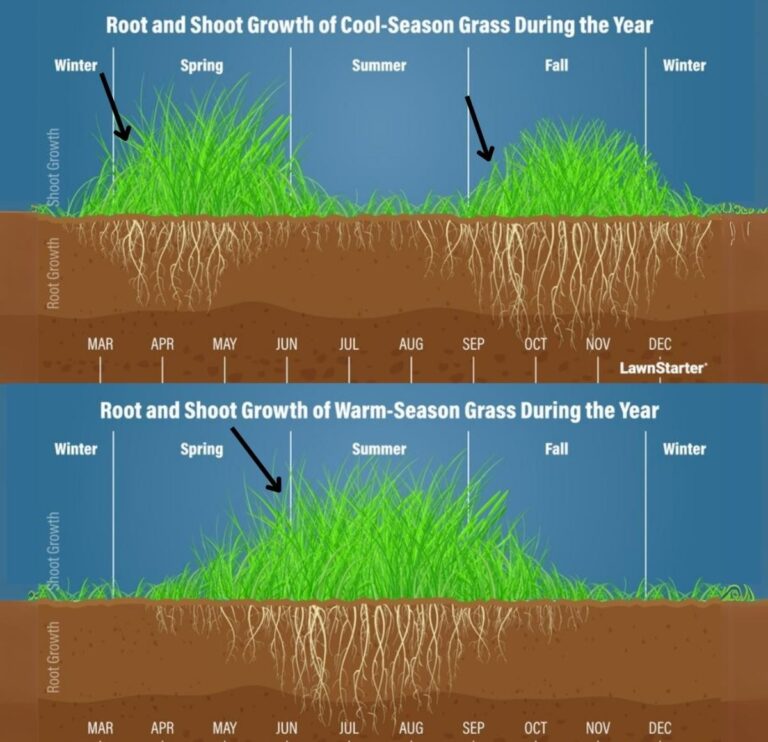
Grub damage typically appears from late August through October, when third-instar larvae are doing the most root feeding before winter. A smaller spring damage window can show up in April and May as overwintered grubs return to the root zone for a brief feed before pupating.
Spring damage is mostly cosmetic and rarely worth chemical treatment. Per the University of Minnesota Extension (2024), large overwintered grubs are resistant to most pesticides, and the larvae stop feeding within a few weeks anyway. Focus spring effort on lawn repair, not spraying.
The real prevention window is June and July, before eggs hatch. That timing is what separates a preventive product from a curative one.
How to Treat and Prevent Grub Damage
Preventive insecticides applied before egg hatch are far more reliable than curative products applied after damage shows up. The active ingredient and timing both matter.
| Product Type | Active Ingredient | Best Application Window | Use Case |
|---|---|---|---|
| Preventive | Chlorantraniliprole | May to June | Long residual; safer for pollinators |
| Preventive | Imidacloprid | Late June to early August | Effective but restricted in some states |
| Curative | Trichlorfon | Late August to early September | Active damage already visible |
| Biological | Beneficial nematodes (Heterorhabditis bacteriophora) | Late summer, moist soil | Organic option; needs irrigation |
Per the University of Maryland Extension (2024), Maryland law restricts imidacloprid use to certified pesticide applicators because of pollinator impact. Check your state rules before buying any neonicotinoid.
For lawns already damaged, treat with trichlorfon, water it in immediately (about half an inch), and plan a fall overseeding in early September while soil temperatures are still warm enough for germination.
Common Mistakes That Make Grub Damage Worse
- Spraying in spring when you see damage. Per UMN Extension (2024), large overwintered grubs are nearly impossible to kill with consumer products, and they stop feeding within weeks anyway.
- Treating without confirming the count. Brown patches can also come from drought, dog urine, fungus, or chinch bugs. Cut a test plug before spending money on insecticide.
- Overwatering through July. That moist soil is exactly what egg-laying females are looking for.
- Skipping fall overseeding after a heavy infestation. The bare patches stay open for weeds without new grass to fill them in.
- Mowing too short. Turf cut below 3 inches has shallower roots and recovers slower from any root injury.
Frequently Asked Questions
How much does grub treatment cost in 2026?
A DIY bag of granular grub control for a typical 5,000 square foot lawn runs about $20 to $40 at Home Depot or Lowe’s. Professional applications run roughly $75 to $200 per treatment depending on lawn size and region, per LawnStarter pricing data (2024).
How do I know if it’s grubs or just drought?
Pull on the brown turf. Drought-damaged grass stays anchored; grub-damaged grass lifts off the soil with almost no resistance because the roots are gone. You will usually see the white, C-shaped larvae in the top 2 to 3 inches of soil.
Can milky spore kill grubs?
Milky spore (Paenibacillus popilliae) targets Japanese beetle grubs specifically and does nothing for masked chafers or European chafers, per Purdue Extension (2023). Results take 2 to 4 years to build up in the soil, which is why most homeowners go with chemical or nematode options instead.
Will the grass grow back on its own after grub damage?
Lightly damaged turf with grub counts under 10 per square foot usually recovers with regular watering and fall fertilization. Heavy damage (15+ grubs per square foot) leaves bare soil that needs overseeding in early September to fill in before winter.
Are beneficial nematodes worth using?
Heterorhabditis bacteriophora nematodes work as an organic curative when applied to moist soil in late summer. They need consistent watering for about two weeks after application to survive and seek out grubs, which makes them less reliable in dry conditions than chemical options.
Does aerating make grub damage worse?
Core aeration in early fall does not spread grubs and actually helps damaged lawns recover by reducing compaction before overseeding. Time aeration for September in cool-season lawns, after any curative grub treatment has been watered in.
Citations and Sources
- Richmond, D. (2023). Managing White Grubs in Turfgrass. Purdue University Extension, E-271-W.
- University of Maryland Extension. (2024). White Grubs in Lawn and Garden Soil.
- University of Minnesota Extension. (2024). What’s Digging Up Your Yard?
- Ohio State University Extension. (2024). White grub treatment thresholds (10 per square foot).
- Woodmansee, J. (2024). What Are White Grubs? Purdue Extension, Whitley County.
- LawnStarter. (2024). Average grub control service pricing.