Cool-Season vs Warm-Season Grass: Which Is Right for You?
TL;DR
- Cool-season grasses (Kentucky bluegrass, tall fescue, perennial ryegrass) grow best at air temperatures between 60°F and 75°F and are suited to northern and transitional US climates (Penn State Extension).
- Warm-season grasses (Bermudagrass, Zoysiagrass, St. Augustinegrass) peak at 80°F to 95°F and dominate lawns across the South and Gulf Coast (Lawn Doctor, 2026).
- Planting the wrong grass type for your climate costs you money every season in water, fertilizer, and reseeding.
- The transition zone – a band running roughly from Virginia through Kansas – can support either type, but each comes with trade-offs.
- If you’re not sure which type you already have, look at your lawn in July: warm-season grass is thriving; cool-season grass may be brown and stressed.
What Are Cool-Season and Warm-Season Grasses?
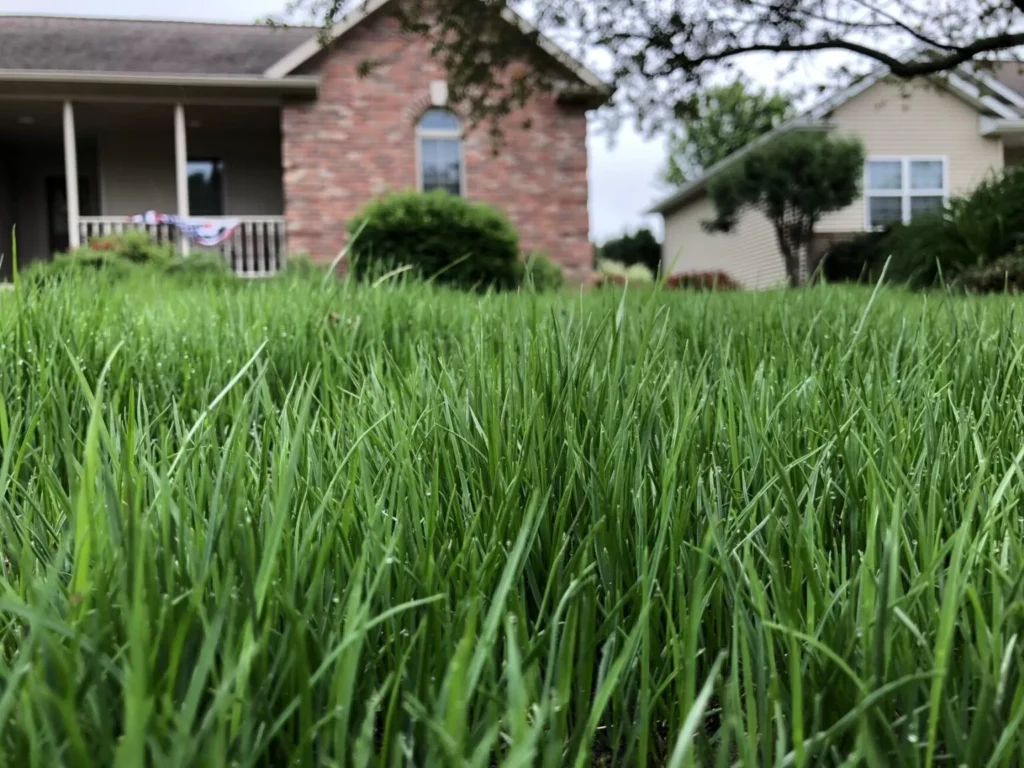
credit: https://backyardfanatics.com/
Cool-season and warm-season grasses are the two broad categories that all common lawn grasses fall into, and the difference between them is temperature. Cool-season grasses grow most actively in spring and fall, when air temperatures sit between 60°F and 75°F. Warm-season grasses hit their stride in summer heat, with peak growth occurring between 80°F and 95°F (Lawn Doctor, 2026).
The names reflect when each type performs, not just where it survives. A warm-season grass planted in Minnesota won’t make it through winter. A cool-season lawn in Georgia will limp through summer heat, turn brown, and demand constant water just to stay alive. Getting this choice right is the foundation of low-effort lawn care.
Cool-Season Grasses: What They Are and Where They Work
Cool-season grasses are the standard lawn choice across the northern third of the US, from New England through the Pacific Northwest and down through the upper Midwest. The most common varieties are Kentucky bluegrass, tall fescue, perennial ryegrass, and fine fescues.
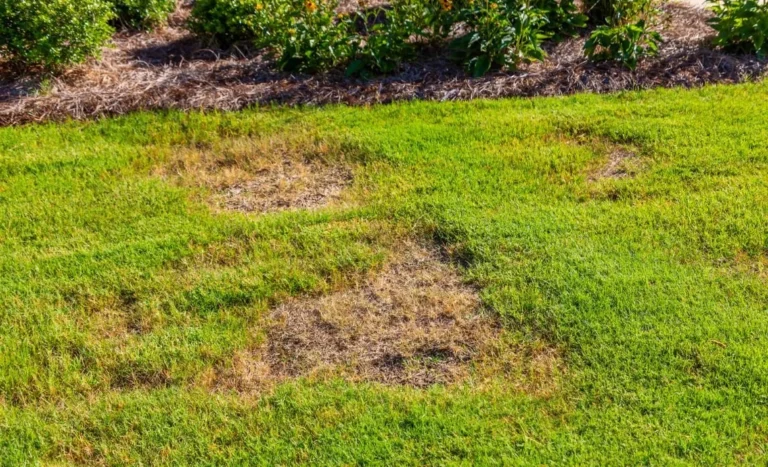
These grasses start growing when soil temperatures reach 40°F to 45°F and reach their best growth at air temperatures of 60°F to 75°F (Penn State Extension). Once temperatures push above 80°F, leaf growth slows sharply. In extreme summer heat without irrigation, cool-season lawns go dormant and turn brown – this is normal, not dead, and they green back up when fall temperatures return.
Fall is the single best time to seed or overseed a cool-season lawn. Soil is still warm enough for germination, air temperatures favor growth, and the grass has months to establish before the following summer.
Common Cool-Season Grass Types
- Kentucky bluegrass – dense, dark green, spreads by underground rhizomes. Best for full-sun northern lawns. Slow to establish but very durable once it fills in.
- Tall fescue – the most adaptable cool-season option, with deeper roots than bluegrass. Handles heat and drought better than most cool-season types and performs in the transition zone.
- Perennial ryegrass – fast germination (5-10 days), bright green color, often used to overseed warm-season lawns for winter color in the South.
- Fine fescues – low-maintenance, shade-tolerant, best for northern lawns that don’t get full sun.
Warm-Season Grasses: What They Are and Where They Work
credit: https://blog.lawnguru.co/
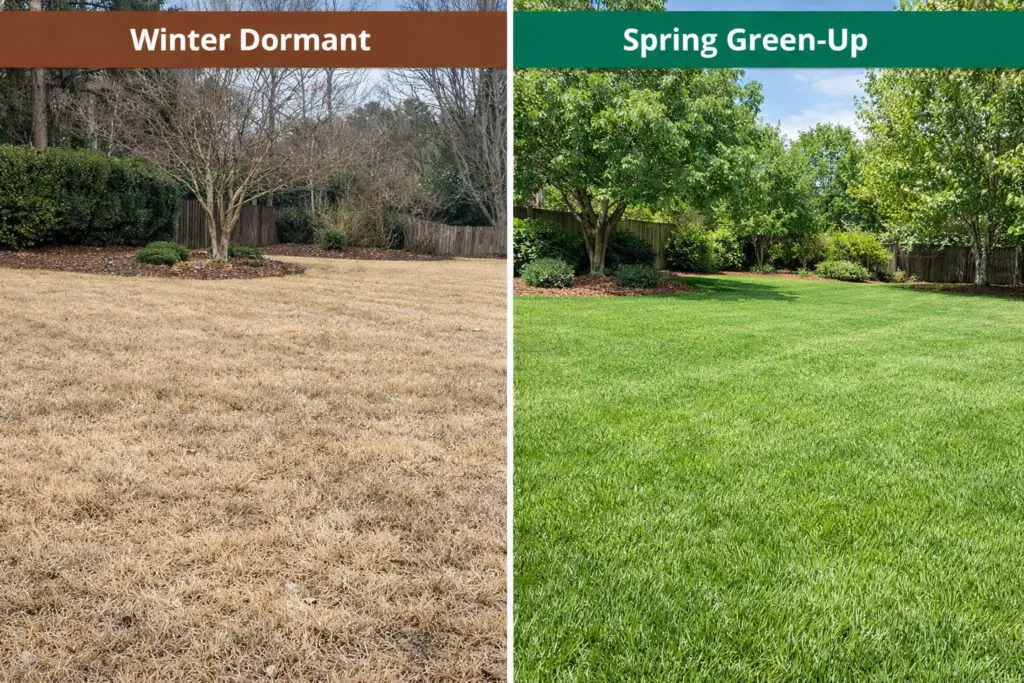
Warm-season grasses are the right choice for lawns across the South, Gulf Coast, Southwest, and lower transition zone. They grow aggressively through summer heat, go dormant and turn brown in fall, and green back up in late spring when soil temperatures consistently reach 65°F or above.
These grasses peak at air temperatures between 80°F and 95°F (Lawn Doctor, 2026). Bermudagrass, in particular, actually performs better as temperatures climb – with optimal daytime temperatures between 95°F and 100°F for maximum growth. Below 50°F, warm-season grasses stop growing entirely, and temperatures below 25°F can cause permanent damage to Bermudagrass (whatgrassisthis.com, 2026).
Warm-season lawns are typically established by sod or plugs rather than seed, especially Zoysia and St. Augustine, because seed germination in warm-season conditions is unreliable and slow.
Common Warm-Season Grass Types
- Bermudagrass – fast-growing, heat and drought tolerant, requires 6-8 hours of full sun. The most popular warm-season grass for high-traffic lawns and sports fields. Needs mowing every 3-5 days at peak summer growth.
- Zoysiagrass – dense, soft texture, more shade-tolerant than Bermuda. Works across USDA Zones 6-9, making it the most versatile warm-season option. Takes two full seasons of plugs to fill in.
- St. Augustinegrass – wide blades, tolerates more shade than Bermuda, best suited to the Gulf Coast and Florida.
- Centipede grass – low-maintenance, thrives in acidic southeastern soils, slow-growing.
- Bahiagrass – coarse texture, handles heat and humidity well, common in Florida and the Deep South.
Side-by-Side Comparison: Cool-Season vs Warm-Season Grass
| Feature | Cool-Season Grass | Warm-Season Grass |
|---|---|---|
| Peak growth temperature | 60°F to 75°F | 80°F to 95°F |
| Best US region | North, Pacific Northwest, upper Midwest | South, Gulf Coast, Southwest |
| Active growing seasons | Spring and fall | Late spring through summer |
| Dormancy period | Hot summers (may turn brown) | Winter (turns brown in fall) |
| Common types | Kentucky bluegrass, tall fescue, ryegrass | Bermuda, Zoysia, St. Augustine |
| Establishment method | Seed or sod | Sod, plugs, or seed (type-dependent) |
| Shade tolerance | Varies – fine fescues are best | Low – most need 4+ hours of sun |
| Drought tolerance | Moderate (tall fescue performs best) | High (Bermuda and Zoysia excel) |
| Fertilize timing | Fall (primary) and early spring | Late spring through summer |
What Is the Transition Zone and Which Grass Works There?
The transition zone is the band of states where neither grass type has a clear advantage, running roughly from northern Virginia and North Carolina west through Tennessee, Arkansas, and Kansas. Winters are too cold for most warm-season grasses to thrive year-round, and summers are too hot for cool-season grasses to stay green without extra work.
In the transition zone, tall fescue is often the most practical cool-season choice because its deeper root system handles summer heat better than Kentucky bluegrass or ryegrass. Zoysiagrass is the most reliable warm-season option in the transition zone because it tolerates Zone 6 cold better than Bermuda or St. Augustine (whatgrassisthis.com, 2026).
Homeowners in the transition zone often face a real trade-off: warm-season lawns look thin and brown from November through April, while cool-season lawns need more water and sometimes go semi-dormant in July and August.
When to Fertilize Each Grass Type
Fertilizing at the wrong time of year is one of the most common mistakes homeowners make, and it’s tied directly to grass type. Feeding cool-season grass in the heat of summer stimulates rapid top growth while weakening the root system – the opposite of what you want going into a stressful season (Purdue Extension).
Cool-season grass gets its most important fertilizer application in fall, typically late September through early November, when the grass is actively growing and storing energy for winter. A secondary light application in early spring is fine, but fall is the priority.
Warm-season grass should be fertilized after it fully greens up in spring – typically May across most of the South – and through midsummer. Stop fertilizing warm-season grass about 6-8 weeks before the first expected frost so the grass can harden off before dormancy.
Common Mistakes That Cost You More in the Long Run
- Seeding warm-season grass from seed in shaded areas: most warm-season species need 4 or more hours of direct sun, and seed establishment in shade almost always fails. Use sod or plugs and pick a shade-tolerant variety like Zoysia or St. Augustine.
- Watering cool-season grass heavily during summer dormancy: a dormant cool-season lawn in August is conserving energy, not dying. Resuming irrigation during a heat wave often encourages disease without actually reviving the lawn.
- Fertilizing cool-season grass in summer: this pushes top growth at the expense of roots and makes the lawn more vulnerable to heat stress and fungal disease.
- Overseeding a warm-season lawn with cool-season seed in fall without planning for spring: perennial ryegrass used for winter color will compete with Bermuda or Zoysia when warm temperatures return, slowing green-up and requiring scalp mowing to remove it.
Frequently Asked Questions
What is the difference between cool-season and warm-season grass?
Cool-season grasses grow actively in spring and fall at temperatures of 60°F to 75°F and are suited to northern US climates. Warm-season grasses thrive in summer heat between 80°F and 95°F and are standard across the South and Gulf Coast. The biggest practical difference is when each type goes dormant: cool-season grass may brown in summer, while warm-season grass turns brown every winter.
How do I know which type of grass I have?
Check your lawn in mid-July. If the grass is green and growing without much irrigation, it’s almost certainly a warm-season type. If it’s struggling, faded, or semi-dormant despite decent rainfall, it’s likely a cool-season grass under heat stress. You can also bring a handful of grass to your local cooperative extension office or upload a photo to a grass identification tool for a species-level ID.
Can I plant warm-season grass in a northern state?
Bermudagrass and St. Augustinegrass are not cold-hardy enough for most northern states – they’ll sustain winter damage or die entirely below 25°F. Zoysiagrass is the exception, performing in USDA Zones 6-9 and surviving winters in parts of the mid-Atlantic and lower Midwest. If you’re in Zone 6 or cooler, stick with cool-season grasses unless you’re specifically planting Zoysia.
When should I seed cool-season grass?
Fall is the best time for seeding cool-season grass – typically late August through early October depending on your region. Soil temperatures are still warm enough to support germination (above 50°F), air temperatures favor growth, and the seedlings have months to establish before summer heat arrives. Spring seeding works but carries more risk because the seedlings have less time to build roots before summer.
Why does my warm-season lawn turn brown in winter?
Warm-season grasses go dormant when air temperatures drop below 50°F and soil temperatures stay consistently cool. Brown color in winter is normal and not a sign the lawn is dead. The grass is storing energy underground and will green up again in late spring once soil temperatures climb back above 65°F. The timeline depends on your region – expect dormancy from November through March or April across most of the South.
Quick Reference: Pick Your Grass by Region
- New England, Great Lakes, Pacific Northwest: Cool-season only – Kentucky bluegrass, tall fescue, or fine fescues.
- Southeast, Gulf Coast, Florida: Warm-season – Bermudagrass, St. Augustine, Centipede, or Bahia depending on sun and soil.
- Southwest (Texas, Arizona, California inland): Warm-season – Bermudagrass and Zoysia are the most common choices.
- Transition zone (Virginia through Kansas): Tall fescue for cool-season; Zoysiagrass for the most cold-tolerant warm-season option.
- Pacific Northwest (Oregon, Washington): Cool-season stays green year-round in mild winters without going fully dormant.