Common Lawn Care Mistakes That Destroy Grass (And What to Do Instead)
TL;DR
- Mowing below 2.5 inches is the single most common mistake and directly invites weeds, disease, and drought damage (Clemson Extension, 2021).
- Daily watering produces shallow roots that dry out fast; most lawns need just 1 to 1.5 inches of water per week in one or two deep sessions (University of Nebraska-Lincoln Extension).
- Over-fertilizing with synthetic nitrogen burns grass by pulling moisture out of roots through salt buildup – visible as yellow or brown streaks within days of application.
- Watering at night leaves grass wet for hours and creates conditions where fungal diseases like pythium blight can spread.
- A dull mower blade tears grass instead of cutting it, leaving ragged tips that turn brown and create entry points for disease (Illinois Extension).
What These 5 Mistakes Have in Common
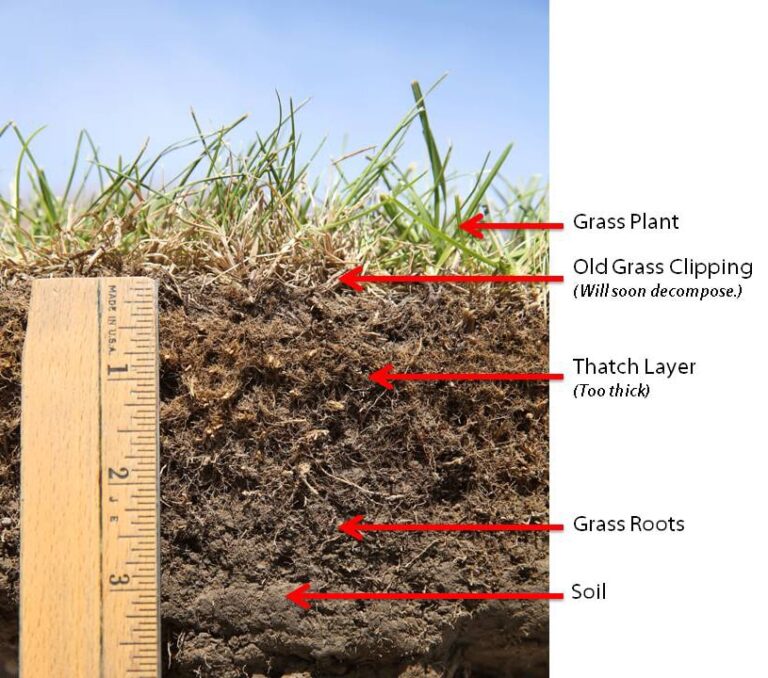
All five mistakes covered here damage grass the same way: they weaken the root system. Shallow roots, burnt roots, and torn roots all leave grass unable to handle heat, drought, or heavy foot traffic. A lawn that looks healthy on the surface can be quietly failing underground for weeks before you notice.
This article covers the five most damaging mistakes across mowing, watering, and fertilizing – the three areas where homeowners do the most unintentional damage.
Mistake 1: Mowing Too Short (Scalping)
credit: https://gardenichome.com/
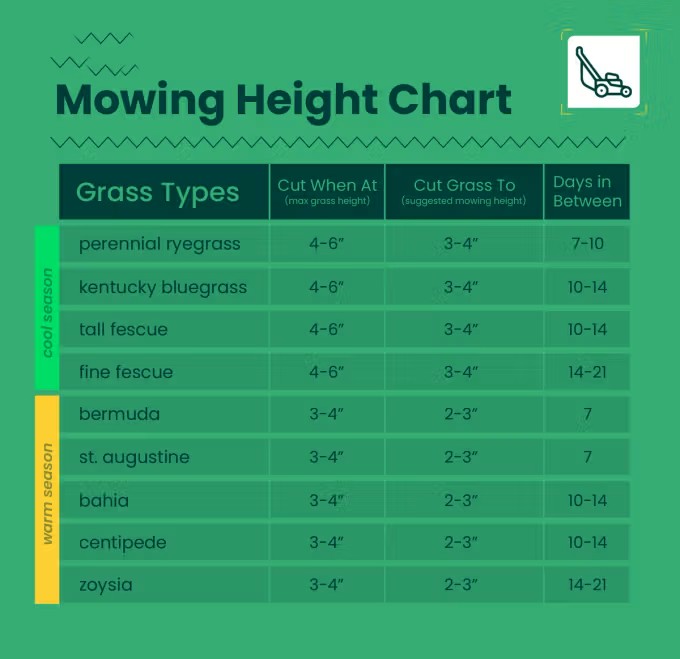
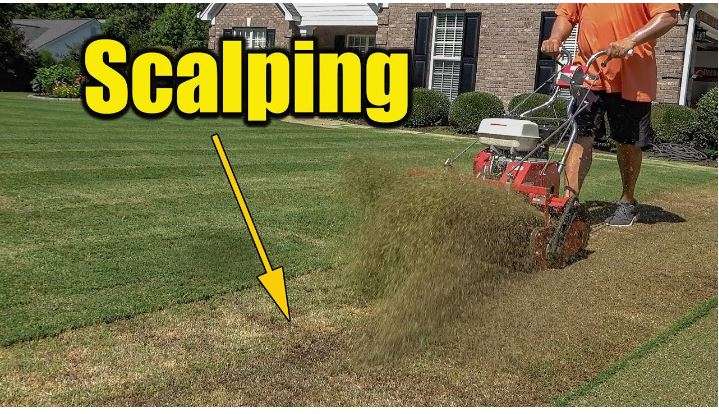
Cutting grass below 2.5 inches is the most widespread lawn care mistake, and it does more damage than almost anything else. When you cut too low, you remove a large share of the grass blade, which is the only part of the plant that produces energy through photosynthesis. Less blade means less energy, and less energy means weaker roots.
Per Clemson Extension (2021), mowing to the proper height can reduce weeds and diseases by 50% to 80% in tall fescue. The reason is straightforward: taller grass shades the soil surface, which makes it harder for weed seeds to germinate and slows soil moisture loss.
The fix: Follow the one-third rule. Never cut more than one-third of the grass blade in a single mow. For most cool-season lawns in the northern US, that means maintaining a height of 2.5 to 3 inches. Raise that to 3.5 inches or higher in peak summer heat. University of Wisconsin-Madison Extension (2024) recommends staying at 3 inches or slightly higher once July arrives.
Mistake 2: Watering Every Day
Daily watering is one of the most well-meaning mistakes a homeowner can make. It feels thorough. It’s not. Short daily watering sessions wet only the top inch or two of soil, and grass roots follow the moisture down. Train roots to stay near the surface and they’ll dry out the moment temperatures climb.
University of Nebraska-Lincoln Extension recommends watering deeply once or twice a week, soaking the soil to the depth of the root zone rather than triggering a light daily rinse. The technical term for this is “deep and infrequent” irrigation, and it’s the foundation of every university extension watering guide in the country.
A good field test: push a long screwdriver into your lawn. If it slides into the soil 6 inches easily, the lawn has enough moisture. If it stops short, it’s time to water.
Mistake 3: Watering at Night
Even the right amount of water does damage when applied at the wrong time. Watering at night leaves grass blades wet for hours because there’s no sun or heat to accelerate drying. That extended wet period is ideal for fungal diseases like pythium blight and take-all root rot, both of which can spread quickly and kill large patches of turf.
Per Lawn Doctor (2026), overly wet conditions from poor timing create the exact environment where fungal diseases establish and spread through root systems.
Water between 6 AM and 10 AM. The soil absorbs moisture before the heat of the day, and the grass blades dry off by mid-morning. TruGreen notes that watering at midday wastes water through evaporation – up to half the applied water can be lost before it reaches the roots.
Mistake 4: Over-Fertilizing
credit: https://www.whygoodnature.com/
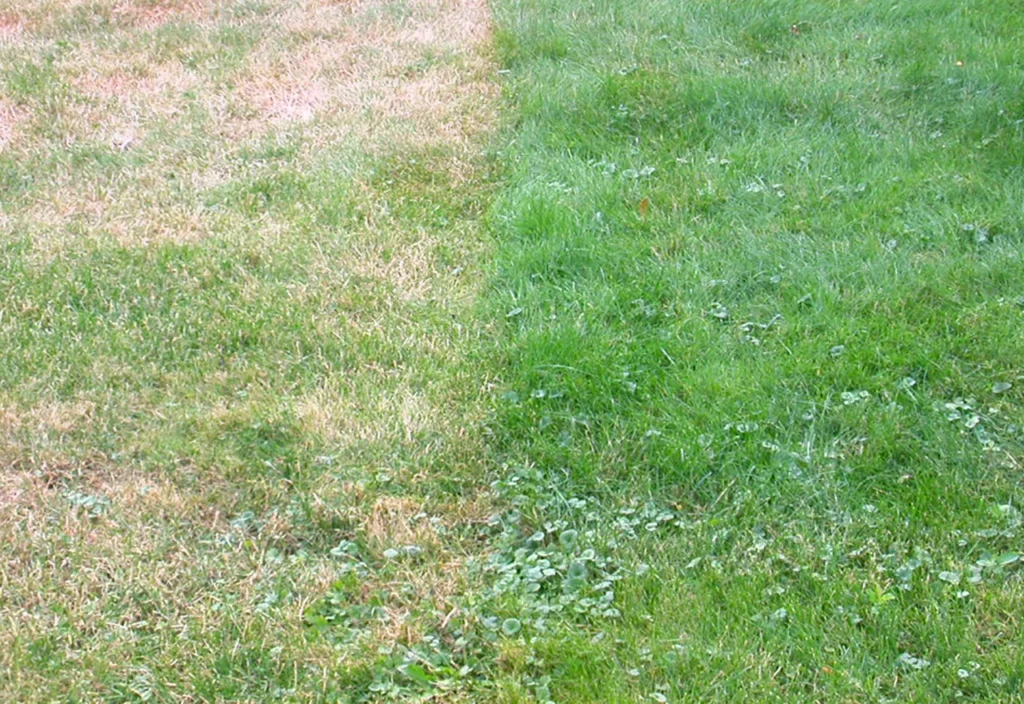
More fertilizer feels like more food for your lawn. In practice, it does the opposite of what you want. Fertilizers, especially synthetic nitrogen products, contain concentrated salts. When you apply too much, those salts pull moisture out of grass roots through osmosis, dehydrating the plant even when the soil looks moist.
The damage shows up as yellow or brown streaks that follow the path of your spreader. This is called fertilizer burn, and it can appear within days of application (TruGreen, 2026).
| Fertilizing Scenario | What Happens | How to Avoid It |
|---|---|---|
| Too much nitrogen at once | Rapid top growth, weak roots, salt burn | Use slow-release fertilizer; follow label rates |
| Fertilizing during drought or heat | Grass can’t process nutrients under stress | Wait for moderate temps and active growth |
| Overlapping spreader passes | Concentrated burn lines in application pattern | Close hopper before turning; watch overlap |
| Fertilizing dormant grass | Nutrients sit unused; salt damage risks increase | Apply only during active growing season |
The right timing: fertilize cool-season grasses in early fall and again in early spring when the lawn is actively growing. Avoid applications in mid-summer heat. If you’re unsure about your soil’s nutrient needs, a basic soil test from your local extension office costs $15 to $25 and removes all the guesswork.
Mistake 5: Using a Dull Mower Blade
A dull mower blade doesn’t cut grass – it tears it. The difference is visible within a day or two: torn grass tips turn white or brown, giving the lawn a hazy, dead appearance even when the underlying turf is healthy.
Beyond appearance, Illinois Extension notes that a sharp mower blade cuts cleanly, reducing disease entry points. A dull blade creates ragged wounds that grass has to work to seal, consuming energy that should go toward root development. Over time, this repeated stress weakens the turf and makes it more susceptible to disease and drought.
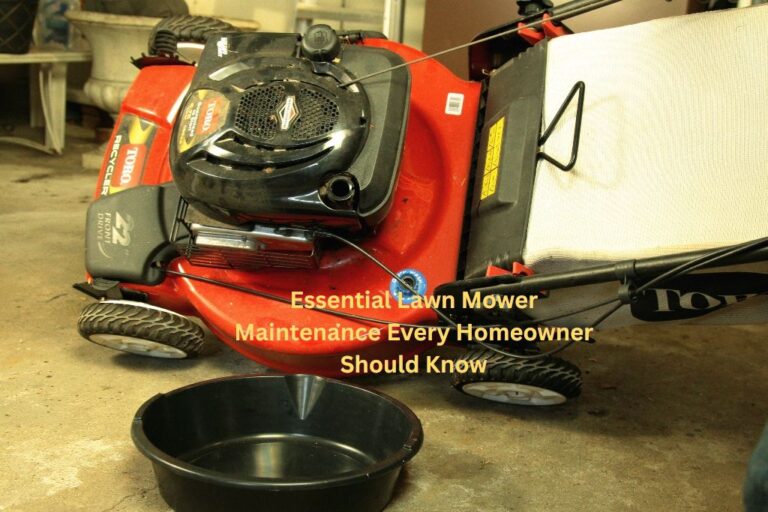
Sharpen mower blades at the start of every mowing season and again every four to six weeks during active use (University of Maryland Extension, 2023). If you’re mowing an acre or more, sharpen more frequently. The standard recommendation is to sharpen or replace after every 20 to 25 hours of cutting time.
Side-by-Side: Mistake vs. Correct Practice
| Mistake | What It Does to Grass | Correct Practice |
|---|---|---|
| Mowing below 2.5 inches | Weakens roots, invites weeds and disease | Maintain 2.5-3 inches; raise in summer heat |
| Watering daily (shallow) | Builds shallow roots that dry out fast | Water deeply 1-2x per week, 1-1.5 inches total |
| Watering at night | Promotes fungal disease | Water between 6 AM and 10 AM |
| Over-fertilizing | Salt burn, weak top growth, dead patches | Follow label rates; use slow-release products |
| Dull mower blade | Torn tips, brown haze, disease entry points | Sharpen each season; replace every 20-25 hours |
Frequently Asked Questions
How short is too short when mowing a lawn?
For most cool-season grasses in the US (Kentucky bluegrass, tall fescue, perennial ryegrass), cutting below 2.5 inches causes stress and root damage. The safe target is 2.5 to 3 inches for most of the season, with a bump to 3.5 inches or higher in summer. Warm-season grasses like bermudagrass tolerate shorter cuts, typically 1 to 2 inches, because they’re built differently.
How often should I water my lawn?
Water deeply once or twice per week rather than lightly every day. The goal is to wet the soil 6 inches deep with each session, which typically takes 1 to 1.5 inches of water per week total. How long your sprinkler runs to deliver that amount depends on your system’s output – place a tuna can in the yard and time how long it takes to fill halfway (about 30 minutes for most systems).
Can you fix fertilizer burn on grass?
Yes, in most cases. Flush the affected area immediately with heavy watering – at least an inch of water per day for a full week to dilute the salt concentration in the soil. Avoid mowing the damaged area until new growth fills in, which takes two to four weeks for mild burn. Severe cases with dead root systems may need reseeding.
Why does my grass look brown after mowing?
Brown tips after mowing are almost always caused by a dull blade tearing the grass rather than cutting it cleanly. The fix is straightforward: sharpen or replace the blade. If the whole lawn browns out (not just the tips), check whether you cut too low in a single pass – scalping removes too much of the photosynthetic surface at once and the grass goes into stress mode.
When is the best time to fertilize a lawn?
For cool-season grasses, the two best windows are early fall (late August through October) and early spring, when grass is actively growing. Avoid fertilizing in mid-summer heat or during drought. For warm-season grasses like zoysia or bermudagrass, fertilize in late spring through early summer. Always water in fertilizer after application to move it past the grass blades and into the soil where roots can absorb it safely.
How do I know if I’m overwatering my lawn?
Overwatered lawns often show symptoms similar to drought: yellowing grass, spongy soil that stays wet for days, and patches of fungal growth or mushrooms. Press your foot onto the turf – if the soil feels saturated and doesn’t spring back, you’re likely overwatering. Pull back to one deep session per week and check whether conditions improve within 10 to 14 days.