Basic Lawn Care Routine Every Homeowner Should Follow
TL;DR
- A basic lawn care routine covers four core tasks: mowing at the right height, watering deeply once a week, fertilizing at the right time of year, and doing light seasonal prep in spring and fall.
- Mow cool-season grasses (fescue, bluegrass, ryegrass) at 3 inches; warm-season grasses (Bermuda, Zoysia, St. Augustine) at 1-2 inches – and never remove more than one-third of the blade in a single mow (Purdue Extension).
- Water 1 to 1.5 inches per week, in one or two sessions rather than daily light sprinkles (Consumer Reports).
- For cool-season lawns, fertilize primarily in fall – not spring. For warm-season lawns, feed in late spring once the grass is fully green.
- Leave grass clippings on the lawn after mowing. They can supply up to 25% of the lawn’s annual nitrogen needs at no cost (University of Kentucky Extension, 2023).
What a Basic Lawn Care Routine Actually Covers
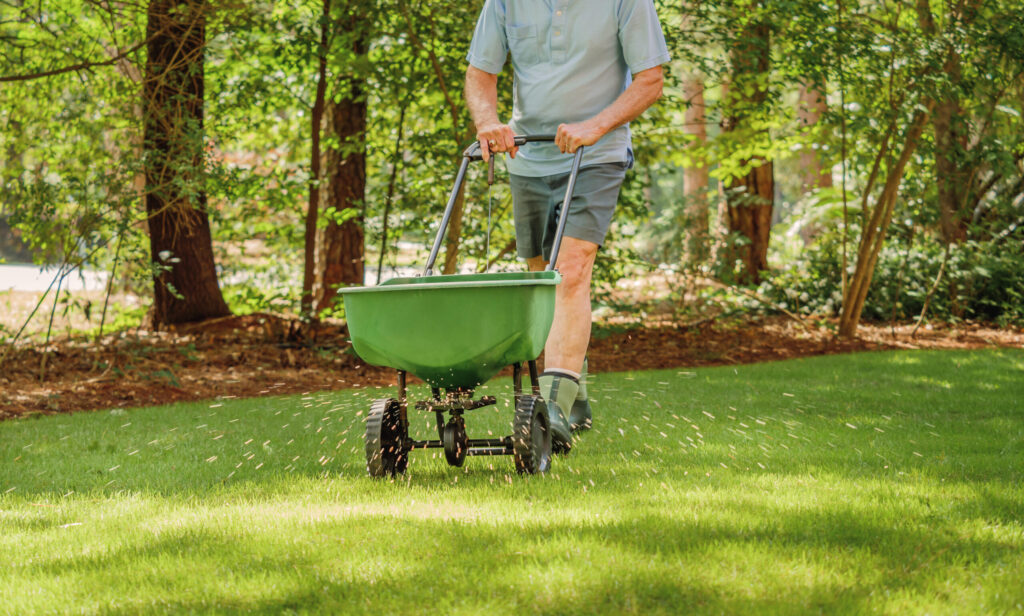
credit: https://everyday.fleetfarm.com/
A basic lawn care routine is a repeating schedule of four tasks – mowing, watering, fertilizing, and seasonal prep – done at the right time for your grass type. You don’t need a landscaping crew or a shed full of products to do it right.
The single biggest factor in how your lawn looks is grass type. Cool-season grasses like Kentucky bluegrass, tall fescue, and perennial ryegrass grow actively in spring and fall and need different timing than warm-season grasses like Bermuda, Zoysia, and St. Augustine, which peak in summer. Everything in this routine follows from knowing which one you have.
How High to Mow and How Often to Do It
Set your mower to 3 inches for cool-season grasses and leave it there for most of the year. All cool-season lawn grasses – Kentucky bluegrass, perennial ryegrass, and tall fescue – perform best at 3 inches or more (Purdue Extension). Warm-season grasses like Bermuda do better at 1 to 2 inches; St. Augustine and Zoysia at 2.5 to 4 inches.
The rule that actually protects your lawn is the one-third rule: never remove more than one-third of the grass blade in a single mow. If your mower is set to 3 inches, mow when the grass reaches 4.5 inches. Cut it sooner or later, and the quality of cut stays consistent without stressing the root system (Purdue Extension).
In practical terms, this means mowing once a week during peak growth in spring, and stretching to every 10-14 days in summer when growth slows. Mowing too short – called scalping – sends grass into shock and encourages weed growth. A dull blade makes it worse; it tears the grass blade instead of slicing it clean, leaving the tips brown and opening the door to disease (Illinois Extension).
| Grass Type | Recommended Mowing Height | Peak Growth Season |
|---|---|---|
| Kentucky Bluegrass | 2.5-3.5 inches | Spring and fall |
| Tall Fescue | 3-4 inches | Spring and fall |
| Perennial Ryegrass | 2.5-3.5 inches | Spring and fall |
| Bermuda | 1-2 inches | Summer |
| Zoysia | 1-2.5 inches | Summer |
| St. Augustine | 3-4 inches | Summer |
How Much to Water and When to Water It
Your lawn needs 1 to 1.5 inches of water per week, including rainfall (Consumer Reports; Missouri Extension). The timing and method matter as much as the amount.
Water in one or two deep sessions per week rather than a little every day. Daily light watering produces shallow roots that struggle in heat and drought. One deep soak each week pushes roots down into the soil, where they find moisture on their own. Most hose sprinklers deliver about one-quarter to one-third inch of water per hour, so a 3-hour run roughly hits your target (Missouri Extension).
Water in the early morning, between 6 a.m. and 10 a.m. The grass dries quickly in the daylight, which reduces the risk of fungal disease. Evening watering leaves grass wet overnight and is the most common cause of lawn fungus in otherwise healthy yards.
If you’re not sure whether the lawn needs water, step on it. Grass that springs back is fine. Grass that holds the footprint is telling you it’s thirsty.
When and How to Fertilize Your Lawn
The right fertilizing schedule depends entirely on grass type – the timing that feeds a cool-season lawn well will damage a warm-season lawn.
For cool-season grasses (bluegrass, fescue, ryegrass): fertilize primarily in fall, around September, when the grass is actively growing and storing energy for winter. Consumer Reports recommends a September application using fall fertilizer with slow-release nitrogen if you only fertilize once a year. A second application in early November is optional. Spring fertilization is fine if the lawn is thin or patchy, but excess nitrogen in spring promotes top growth at the expense of root development (University of Kentucky Extension, 2023).
For warm-season grasses (Bermuda, Zoysia, St. Augustine): fertilize in late spring once the lawn is fully green and growing – typically May for most of the South. These grasses are heavier feeders during summer, so 3 to 4 applications spread from spring through early fall is a reasonable schedule.
One free fertilizer most homeowners skip: their own clippings. Grass clippings can supply up to 25% of the lawn’s annual nitrogen needs when left on the lawn after mowing (University of Kentucky Extension, 2023). They break down within days and do not cause thatch.
What to Do Each Season to Keep the Routine on Track
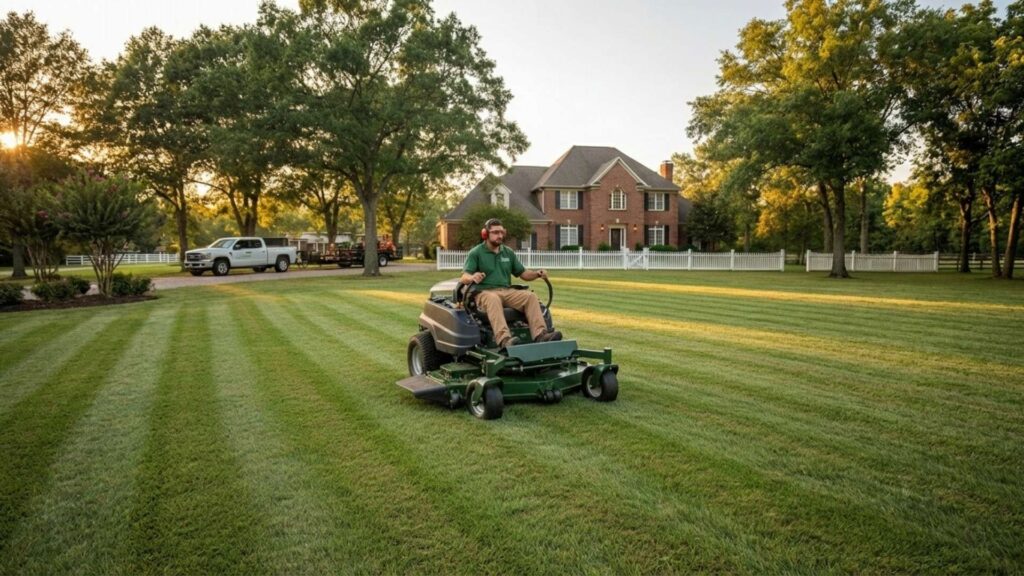
credit: https://www.yourgreenpal.com/
A consistent routine does not require doing the same tasks every week. Most of the work happens twice a year.
Spring:
- Sharpen the mower blade before the first cut of the season. A sharp blade slices cleanly; a dull one tears.
- Apply a pre-emergent herbicide before soil temperatures hit 55-58°F to block crabgrass from germinating (Lawn Doctor, 2026).
- Resume mowing once the grass reaches the one-third threshold for your target height.
- Hold off on heavy fertilization unless the lawn is thin.
Summer:
- Raise the mower height by about half an inch compared to spring. The extra length shades the roots and helps retain soil moisture.
- Stick to the 1 to 1.5 inch weekly watering schedule. Reduce frequency only if the lawn goes dormant – do not mow dormant grass.
Fall:
- Fertilize cool-season lawns in September.
- Continue mowing until growth stops, finishing with a cut at the low end of your target range to reduce the risk of snow mold.
- Aerate compacted soil in fall, when cool-season grasses can recover quickly. Core aeration opens pathways for water and nutrients to reach the roots (Today’s Homeowner, 2025).
Winter:
- Stay off the lawn when it is dormant or frost-covered to avoid compacting the soil and damaging the crowns.
- Service the mower – change the oil, replace the spark plug and air filter, and drain or stabilize the fuel if it will sit for more than 30 days.
Common Mistakes That Quietly Damage Your Lawn
- Mowing too short: Cutting below the recommended height shocks the grass and forces it to grow fast to replace lost foliage. That rapid recovery consumes stored energy the roots need for drought resistance. Set the deck height once and leave it.
- Watering every day: Frequent shallow watering trains roots to stay near the surface, where they are vulnerable to heat and drying. One deep weekly soak builds the root depth that makes a lawn actually tough.
- Fertilizing cool-season grass in summer: Nitrogen applied to cool-season grass during summer heat pushes excessive top growth and can burn the lawn. Fall is the right window.
- Leaving the mower blade dull all season: A dull blade is one of the most common and overlooked causes of brown-tipped, disease-prone grass. Sharpen or replace the blade at least once per season – or every 20-25 mowing hours during heavy use.
Frequently Asked Questions
What is a basic lawn care routine for beginners?
A basic lawn care routine covers four tasks: mow at the right height for your grass type (3 inches for most cool-season grasses), water 1 to 1.5 inches per week in one or two deep sessions, fertilize at the right time of year for your grass, and do light prep in spring and fall. Start with these four and your lawn will outperform most neighbors who skip even one of them.
How often should you mow your lawn?
Mow based on growth rate, not the calendar. The one-third rule is the guide: mow when the grass reaches 1.5 times your target height. For a 3-inch lawn, that means mowing at 4.5 inches. In spring this may be every 5-7 days; in summer growth slows and you may stretch to 10-14 days (Purdue Extension).
How much should you water your lawn each week?
Most lawns need 1 to 1.5 inches of water per week, counting rainfall. The best approach is one or two deep sessions per week rather than light daily watering. Light daily watering builds shallow roots that dry out quickly in heat (Consumer Reports).
When is the best time to fertilize your lawn?
For cool-season grasses, the best time to fertilize is fall – September is ideal. For warm-season grasses, fertilize in late spring once the lawn is fully green. Avoid applying nitrogen to cool-season lawns in summer, as it promotes excessive growth and increases the risk of burn (Consumer Reports).
Should you leave grass clippings on the lawn or bag them?
Leave them on the lawn in almost every case. Grass clippings decompose quickly and can return up to 25% of the lawn’s annual nitrogen needs (University of Kentucky Extension, 2023). The only time to bag is when the lawn is severely overgrown and clippings are clumping – heavy clumps can smother the grass underneath.
How do you know when to water the lawn?
Step on the grass. If the blades spring back, the lawn has enough moisture. If your footprint stays visible, the grass is under water stress and needs irrigation. You can also watch for a bluish-gray color or slightly curled blades – both are early signs of drought stress before the lawn turns brown.