Bare Spots in Lawn That Keep Coming Back
TL;DR
- Bare spots that return after reseeding mean the underlying cause was never addressed — the seed is just covering the symptom.
- The seven most common repeat causes are soil compaction, grub damage, dog urine, fungal disease, shade stress, chemical spills, and pH imbalance.
- Acceptable soil pH for turfgrass is between 6.0 and 7.5; outside that range, grass struggles to establish even with good seed (Purdue University Turfgrass Science).
- Grub infestations require treatment before reseeding — laying seed over an active infestation will not hold (University of Minnesota Extension, 2024).
- Diagnose the cause first, fix it, then reseed or sod. That is the only repair that lasts.
Why Bare Spots in Your Lawn Keep Coming Back

credit: https://www.whygoodnature.com/
Bare spots return because the problem underneath was never fixed. Reseeding over compacted soil, active grubs, or dog urine damage without treating the cause is like painting over a water stain without fixing the leak. The new grass germinates, looks fine for a few weeks, then dies in the same spot.
The repair process only works in the right order: identify the cause, correct it, prepare the soil, then plant. Skipping step one or two is what sends homeowners back to the hardware store for more seed every spring.
The 7 Causes of Bare Spots That Keep Returning
Each of these causes produces a different pattern and requires a different fix. Knowing which one you’re dealing with saves time and money.
| Cause | What It Looks Like | Fix Required Before Reseeding |
|---|---|---|
| Soil compaction | Thin, struggling grass; water pools or runs off | Core aeration, at least 3-4 inches deep |
| Grub damage | Irregular dead patches; turf pulls up like carpet | Treat with grub control product, then reseed |
| Dog urine | Round burned circles, often with greener ring at edge | Flush area with water; reseed after dilution |
| Fungal disease | Circular or irregular patterns; grass looks matted or slimy | Fungicide application; improve drainage |
| Shade stress | Thin, pale patches under trees or on north-facing slopes | Overseed with shade-tolerant mix; prune canopy |
| Chemical spill | Sharp-edged dead zones near storage areas or driveways | Flush soil thoroughly; replace top 2-4 inches if severe |
| pH imbalance | Patchy, yellow, or stunted growth across wide areas | Soil test; apply lime (low pH) or sulfur (high pH) |
How Soil Compaction Kills Grass Roots From Below
Compacted soil is the most overlooked repeat cause. When soil particles are pressed together tightly by foot traffic, equipment, or heavy clay content, roots cannot penetrate deep enough to survive summer heat or dry spells. The grass thins out, bare spots appear, and no amount of seed will fix it without first breaking up the compaction.
Core aeration is the standard fix. Penn State Extension recommends aerating cool-season lawns in early fall, with hollow tines penetrating 3-4 inches deep, followed by overseeding while the soil channels are open (Penn State Extension). For high-traffic zones — paths kids take every day, areas where you park equipment — annual aeration is worth doing every year.
After aeration, topdress with a thin layer of compost before seeding. This improves seed-to-soil contact and adds organic matter that loosens the root zone over time.
How to Tell If Grubs Are Causing Your Bare Spots
Grub damage looks like drought stress but doesn’t respond to watering. The turf turns brown and the affected sections pull cleanly away from the soil because the roots have been eaten from below. If you lift a section and find more than five C-shaped white grubs per 12-inch square of soil, that’s enough to cause visible damage (University of Minnesota Extension, 2024).
Two things matter with grubs: treatment timing and product choice. Preventive products containing chlorantraniliprole (such as Scotts GrubEx) should go down in April or May. Curative products with imidacloprid or carbaryl are applied in June or July when larvae are actively feeding near the surface (University of Minnesota Extension, 2024).
Reseeding before treating an active grub infestation is wasted effort. The new roots will be eaten the same way the old ones were.
Why Dog Urine and Chemical Spills Create Spots That Come Back
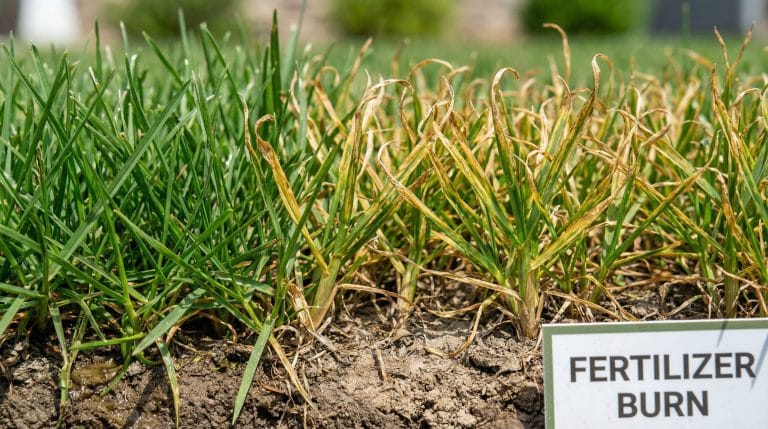
Dog urine deposits concentrated nitrogen directly onto the grass. The center of the spot gets a nitrogen burn that kills the grass, while the outer ring sometimes turns dark green from a lighter dose. The reason these spots return is that most homeowners reseed without flushing the soil first. The salt and nitrogen compounds stay in the root zone, and the new seedlings get burned again.
The fix is to drench the area with water repeatedly over several days before reseeding. This dilutes the nitrogen and salt concentration in the soil. For chemical spills – gasoline, fertilizer concentrate, herbicide overspray – the same principle applies. The University of Kentucky Extension notes that spilled lawn mower gasoline is a common cause of bare spots and requires thorough flushing, sometimes combined with replacing the top few inches of soil in severe cases (UK Extension, 2021).
Soil pH and Shade: Two Causes Most Homeowners Miss
credit: https://www.whygoodnature.com/
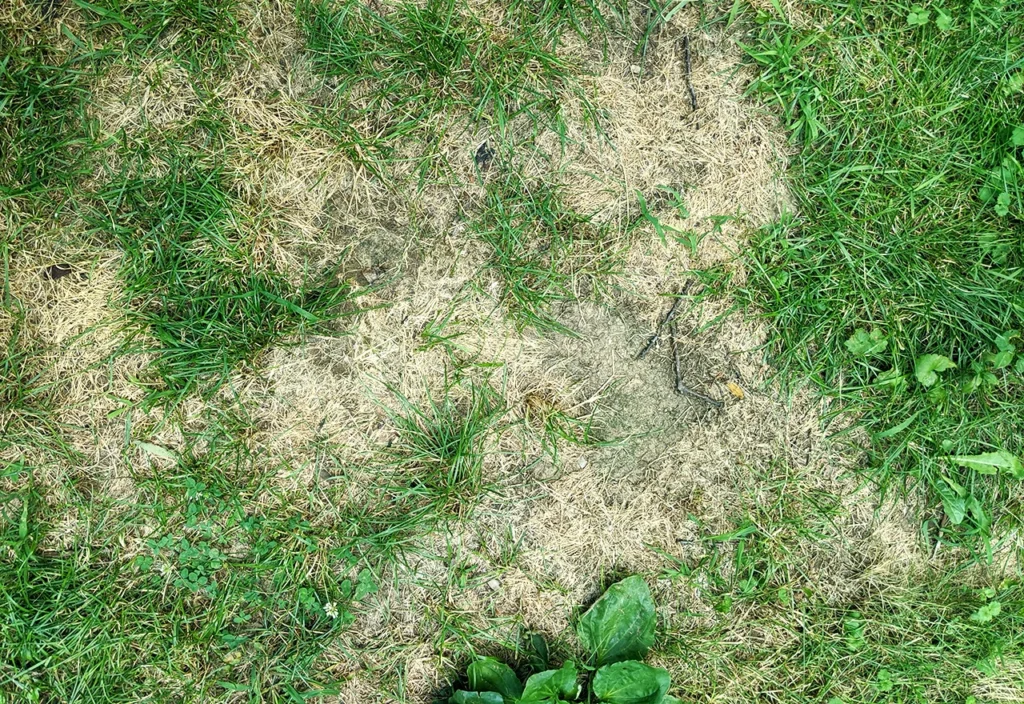
Soil pH is one of the most common causes of bare spots that homeowners never diagnose because the grass doesn’t look obviously burned or diseased – it just struggles. Purdue University Turfgrass Science puts the acceptable pH range for turfgrass at 6.0 to 7.5. Outside that range, the grass can’t absorb nutrients properly even if the soil has plenty of fertilizer. A soil test from your local extension office or a home test kit will tell you exactly where you stand. Apply pelletized lime to raise pH, or sulfur to lower it.
Shade stress is different from disease and compaction but produces similar results: thin, pale patches that keep dying back. Most common turfgrasses need 4-6 hours of direct sunlight per day. Areas under dense tree canopies or on the north side of fences and buildings may never support a standard grass mix. The fix is to reseed with a shade-tolerant variety – creeping red fescue or a shade-mix blend – or to reframe that area as a mulched bed rather than a lawn. No amount of reseeding a shade-intolerant grass in full shade will produce lasting results.
Common Mistakes That Make Bare Spots Return Faster
- Reseeding without fixing the cause: New seedlings hit the same soil conditions and fail within weeks. Diagnose first.
- Seeding at the wrong time: Cool-season grasses (Kentucky bluegrass, fescue, ryegrass) establish best from late August through mid-October. Warm-season grasses (bermuda, zoysia) fill in during late spring when soil temperatures hold above 65°F (Clemson HGIC).
- Skipping the soil prep: Seed thrown onto hard, dead thatch does not germinate reliably. Rake out dead material, loosen the top 2-3 inches of soil, and press seed into contact with soil before watering.
- Underwatering new seed: Germinating seed needs consistent moisture – light watering 2-3 times per day until it reaches 2 inches tall, then a gradual shift to deep, less-frequent watering.
Frequently Asked Questions
Why do bare spots in my lawn keep coming back after I reseed?
The seed is covering the symptom without fixing the cause. If the spot was caused by compaction, grubs, dog urine, or poor pH, new seed will fail in the same way. Identify the cause and correct it before any planting.
How do I know if grubs are causing my bare spots?
Lift a section of dead turf at the edge of the bare spot. If it pulls up easily like a loose carpet and you find more than five white C-shaped larvae per 12-inch square of soil, grubs are the problem (University of Minnesota Extension, 2024).
What soil pH does grass need to grow well?
Most turfgrasses grow best between pH 6.0 and 7.5. Below 6.0, nutrients become locked in the soil and grass can’t absorb them. A soil test from your county extension office or a home kit will confirm where your lawn stands (Purdue University Turfgrass Science).
Can I reseed a bare spot caused by dog urine right away?
No. Flush the area with heavy watering over several days first to dilute the nitrogen and salt concentration in the soil. Reseeding immediately puts new seedlings into the same burned conditions.
When is the best time to reseed bare spots?
For cool-season grasses (fescue, bluegrass, ryegrass), late August through mid-October is the best window. For warm-season grasses (bermuda, zoysia, centipede), wait until soil temperatures are consistently above 65°F, typically late spring (Clemson HGIC).
Do I need to aerate before reseeding a bare spot?
If soil compaction is the cause, yes – aeration is a required step, not optional. If compaction is not the cause, loosening the top 2-3 inches with a hand rake is usually enough to get good seed-to-soil contact.