Dog Urine Lawn Spots Repair: Get Grass Back in Dead Rings
Dog urine lawn spots repair comes down to three moves: confirm the spot really is urine damage, flush the root zone with water so the new grass is not planted into the same problem, then fill the hole in the way your grass type allows. Spreading warm-season grasses such as bermudagrass and zoysiagrass usually knit the spot closed on their own while they are actively growing. Clumping grasses such as tall fescue will not, so they need spot seeding, plugs or a piece of sod. Timing follows your grass family and season, not one national date.
This guide is about the grass only. If your concern is the animal itself, especially if it may have eaten something from a treated lawn, call your veterinarian or the ASPCA Animal Poison Control Center. Nothing below is advice about the dog.
First, make sure it is actually urine damage
Plenty of lawn problems make a round brown spot, and repairing the wrong one wastes a season. Before you rake anything, look closely at the spot and the grass around it.
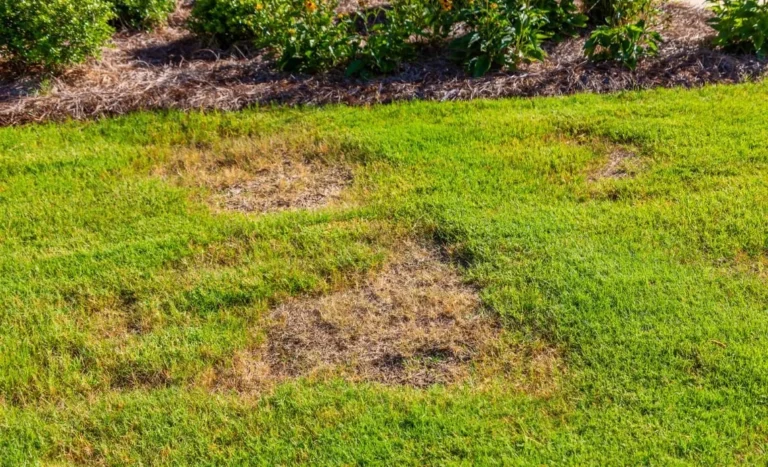
Kansas State University's turfgrass lawn problem solver, which we read on September 25, 2026, describes animal urine damage as starting with a gray-green, wilted look that quickly fades to light brown, with a brown center of roughly 3 to 6 inches across surrounded by a lush, deep-green ring. It also notes that foxes, deer, geese and cats can cause the same injury, so the spot is not proof of which animal was there.
Use this quick comparison before you commit to a repair:
| What you see | Points toward | Points away from urine |
|---|---|---|
| Straw-colored center, dark green ring, 3 to 6 inches | Urine damage | |
| Cottony growth or water-soaked, matted blades | Fungal disease | |
| Turf peels back like a loose carpet | Grubs feeding on roots | |
| Stripes or a shape matching a spreader or spill | Fertilizer or chemical burn | |
| Spot keeps growing outward week after week | Disease or insects |
Both Kansas State and NC State Extension make the same distinction: urine spots lack the cottony mycelium and water-soaked blades of disease, and disease spots usually lack the actively growing dark-green edge. If you are not sure which one you are looking at, our guide to why grass dies in circular patches walks through the other round-spot causes one at a time.
When to stop diagnosing at home. If the spots are spreading, appearing where no animal goes, or look different from the pattern above, take a sample or photos to your county Cooperative Extension office or a lawn-care professional. A repair made on a wrong guess will fail the same way the first grass did.
Why the grass died, and why that matters for the repair
The chemistry explains the repair order. Kansas State attributes the damage mainly to the highly concentrated salts in urine. NC State Extension's publication "Dogs and Turfgrass Interactions" by Grady Miller and Ray McCauley, which we read on September 25, 2026, names nitrogen, salts and lactic acid, and says lactic acid has recently been identified as the main culprit for grass death. The dark green ring is the nitrogen at a lower dose acting like fertilizer, the same response you would get from dropping a handful of concentrated fertilizer on the lawn.
The two sources weight the causes differently, and that is worth knowing honestly. For the repair, the practical conclusion is the same either way: the soil in that spot has taken a concentrated dose of something the grass cannot tolerate, and fresh seed or sod dropped straight into it is being asked to grow in the conditions that killed the last plants.
It also explains why a few popular fixes do not help. NC State says attempts to flush or neutralize urine with baking soda or gypsum are not recommended. Adding more fertilizer to a burned spot works against you too, because nitrogen is part of the original dose.
Dog urine lawn spots repair, step by step
Step 1: Decide whether the grass is dead or just injured
Grass that is yellowed or dull but still has some green at the base may recover once the root zone is cleaned out. Grass that is fully straw-colored, brittle and pulls up with no resistance is dead, and water will not bring it back. Give a yellowed spot a couple of weeks of good watering before you tear it out.
Step 2: Flush the spot
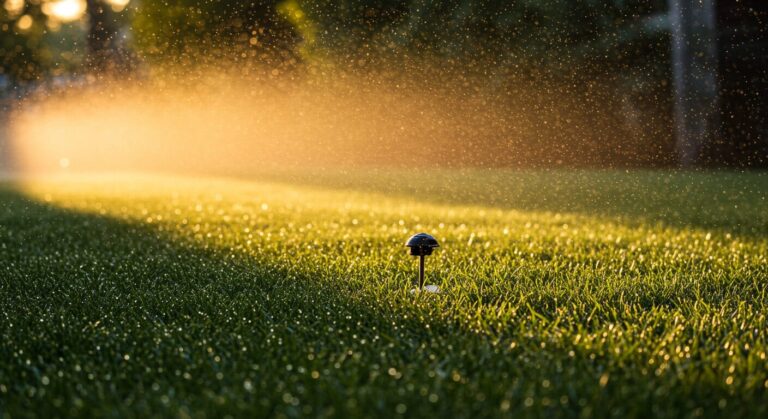
Soak the dead or injured spot and a little beyond its edge with a slow, deep watering on more than one day before you replant. Kansas State lists irrigating affected spots and deep irrigation during dry periods among its management steps. The goal is to move what is left of the concentrated dose down and out of the top few inches where new roots will live. Go slowly enough that the water soaks in instead of running off; if water beads and runs away, our note on why grass recovery is so slow covers the soil conditions that also hold new grass back.
Step 3: Clear the dead material
Rake out the dead grass hard enough to see soil. Loosen the top inch or so with a hand rake or garden fork so seed or plugs have somewhere to root. If the spot has sunk, add a thin layer of clean topsoil to bring it level with the surrounding lawn, so mower wheels do not scalp the new grass.
Step 4: Fill the spot the way your grass grows
This is where the right answer changes by grass type, and it is the step most repair advice gets wrong.
- Spreading warm-season grasses (bermudagrass, zoysiagrass). NC State says grasses with a spreading growth habit will naturally fill in damaged areas over time, and that recovery may take as little as a couple of weeks when bermudagrass and zoysiagrass are actively growing. In practice that means flush, clear, keep it watered, and let the runners do the work during the growing season. If the lawn is heading into dormancy for the winter, the spot will wait until spring.
- Clumping grasses (tall fescue). NC State is direct: tall fescue has a clumping growth habit, will not naturally fill in dead spots, and must be spot-seeded, plugged or sodded. For cool-season lawns, fall is the usual window for seeding.
- Any grass. NC State notes that dead spots in all turfgrasses may be sodded or plugged, and that material from the edge of your own lawn can be used for the plugs, which guarantees a match.
Not sure which family you have? Our 5-minute key to identifying your grass type sorts it out before you buy anything.
Step 5: Match the seed or sod to the lawn
NC State points out that store-bought spot repair kits often contain a quick-germinating cool-season grass such as ryegrass, and that the grass in these kits often will not match the lawn, especially in warm-season lawns. A ryegrass patch in a bermudagrass lawn can look fine for a few weeks and then stand out as a different color and texture, or thin out when the heat arrives. Use seed of the same species as the rest of the lawn, or plugs cut from it. If you are weighing seed against a piece of sod for a larger patch, our sod vs seed comparison lays out the trade-offs.
Step 6: Keep it moist and keep traffic off
New seed needs the surface kept consistently moist until it is up and growing, and new sod or plugs need regular watering until they root into the soil below. Keep foot traffic, and anything else that would trample the patch, off it until the new grass is established.
Step 7: Watch for weeds in the gap
NC State warns that urine damage opens the turfgrass canopy, which encourages weeds, particularly crabgrass, annual bluegrass and other annual weeds. A bare spot is an invitation. The faster you get grass back into it, the less room weeds have. If you use any weed control near a newly seeded spot, the product label is the governing instruction, including whether it can be used on new seedlings at all.
Tolerance: which grasses hold up better
If you have a lot of repeat spots and are choosing seed for the repair, tolerance is worth knowing. NC State reports that bermudagrass and zoysiagrass are more tolerant of lactic acid than cool-season grasses, and that among cool-season species tall fescue is the most tolerant, followed by creeping red fescue, then perennial ryegrass, and finally Kentucky bluegrass.
Tolerance is not immunity. Kansas State states that urine can injure every turfgrass species in any climate. A more tolerant grass buys you smaller or slower spots, not a lawn that never gets them.
What repair cannot do
This is the part most repair guides skip. Every step above fixes a spot that already exists. None of it stops the next one. If the same spots keep reappearing in the same places after each repair, the cause is still active, and repair alone will become a cycle of reseeding. Kansas State puts it bluntly: the only way to be assured of animal urine not damaging turf is to completely remove the pet from the lawn.
Managing the animal is outside what this site covers. For anything about the dog's health, diet or habits, talk to your veterinarian. Be cautious of lawn sprays or supplements sold on the promise of preventing spots; ask your vet before giving an animal anything.
Repair also cannot make up for a lawn that is already struggling. A thin, drought-stressed or compacted lawn will be slower to close a spot than a dense, well-watered one, whatever you plant.
A simple timing guide by grass family
| Grass family | Best repair window | What usually works |
|---|---|---|
| Warm-season spreading (bermudagrass, zoysiagrass) | Late spring through summer, while actively growing | Flush, clear, water, let runners fill in; plug if slow |
| Cool-season clumping (tall fescue) | Early fall, with spring as a second choice | Flush, clear, spot-seed with matching seed, or plug or sod |
| Cool-season mixes (Kentucky bluegrass, perennial ryegrass, fine fescue) | Early fall | Flush, clear, spot-seed with the same blend |
Your local window depends on your climate and frost dates. Your county Cooperative Extension office publishes seeding dates for your area, and those beat any general rule.
Frequently asked questions
Will a dog urine spot grow back on its own?
It depends on the grass. NC State Extension says spreading grasses such as bermudagrass and zoysiagrass will naturally fill in damaged areas over time, sometimes in a couple of weeks while actively growing. Clumping grasses such as tall fescue will not fill in on their own and need seeding, plugging or sod.
Should I put baking soda or gypsum on dog urine spots?
No. NC State Extension says attempts to flush or neutralize urine with baking soda or gypsum are not recommended. Water is the tool for moving what is left out of the root zone before you replant.
How do I tell a urine spot from lawn fungus?
Kansas State and NC State both describe urine spots as straw-colored centers with a lush dark green ring and no cottony growth or water-soaked, matted blades. Disease spots usually lack that dark green edge. If spots are spreading or you cannot tell, take a sample to your county Extension office.
Can I use a patch repair kit?
You can, but check what grass is in it. NC State notes many kits contain a quick-germinating cool-season grass such as ryegrass, which often will not match the lawn, especially warm-season lawns. Seed of your own species, or plugs from your own lawn, blend in better.
Why does the ring around the spot stay dark green?
At a lower dose, the nitrogen in urine acts like fertilizer. NC State compares it to dropping a handful of concentrated fertilizer on the lawn: the center gets too much and dies, the edge gets just enough to green up.