Sod vs Seed: Which Establishment Method Fits Your Lawn
Sod gives you an instantly usable lawn, at a higher cost, and it needs frequent watering for the first few weeks while its roots knit into your soil. Seed costs less, develops a deeper root system over a full season, but leaves bare or thin soil exposed until it fills in. Plugs sit in between, mainly for spreading warm-season grasses like zoysia and St. Augustine that establish poorly from seed. The sod vs seed decision comes down less to preference than to your grass type, your timing, and how much bare ground you can tolerate while it fills in.
The Real Difference Isn't Speed, It's Root Development
Sod arrives pre-grown on a thin layer of soil or a biodegradable mat, with roots that are already established in that layer. Once laid, its job is to root down into your native soil, which typically takes a few weeks of consistent watering before it can be treated like an established lawn. Seed starts with nothing: it has to germinate, put down its first roots, and then continue developing a deeper root system over the course of a full growing season. That slower path has a real advantage, not just a cost: a lawn grown from seed generally develops a deeper, more extensive root system than sod does, because it never went through the shock of being cut, rolled and transplanted. That deeper root system tends to hold up better to drought and heat stress once the lawn matures.
Cost, Stated Honestly and Without a Number
Sod costs meaningfully more than seed for the same area, and that gap holds true whether you buy premium seed or a budget mix, because sod is a grown, harvested, delivered product and seed is not. Exact prices vary by region, supplier and grass species too much to state a figure here that would still be accurate by the time you read it. What's worth knowing directionally: if budget is the deciding factor, seed is almost always the cheaper route, and the gap is usually large enough to matter, not marginal.
Timing: When Each Method Actually Works
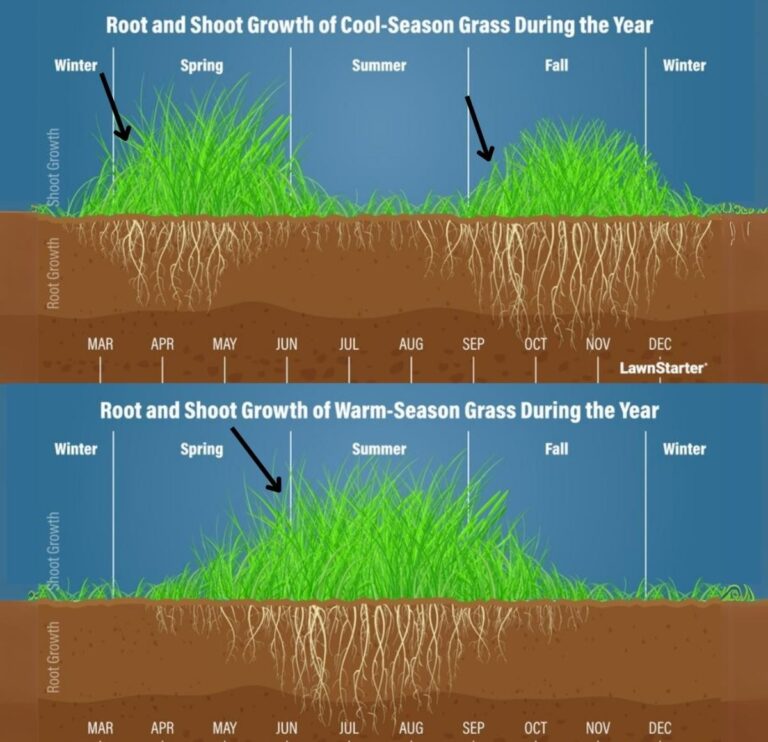
Timing depends on grass type, not the calendar alone. As reported by Colorado State University Extension, cool-season grasses (bluegrass, ryegrass, fescues) can be seeded anywhere from March through September, but the strongest results come from planting in mid-August to mid-September, when soil is still warm from summer but heat stress and weed competition are both easing off. Warm-season grasses (bermudagrass, buffalograss) are seeded on the opposite calendar, April through July, since they need warm soil to germinate and won't establish before dormancy if seeded too late in the season. If you're not yet sure which of the two families your lawn belongs to, cool-season versus warm-season grass explains how to tell before you commit to either seeding window.
Sod sidesteps most of this. Because it's already grown, sod can generally be laid over a longer window than seed, including outside a species' ideal seeding dates, as long as the ground isn't frozen and you can keep it watered through establishment. That flexibility is one of sod's real advantages for a homeowner working around a specific event or deadline, not just a marketing point.
When Sod Is the Better Call
Sod earns its cost in a few specific situations: a sloped area where bare soil would wash out before seed could germinate, since sod acts as an immediate erosion barrier; a yard that needs to be usable within weeks rather than a season, for a sale, an event, or simply patience running out; and warm-season species like St. Augustinegrass that are rarely sold as seed in the US at all, making sod or plugs the only practical route. The best grass for shade guide covers St. Augustine's shade advantages if that's the species pulling you toward sod in the first place.
When Seed Is the Better Call
Seed makes more sense for a larger area where the cost gap with sod becomes significant, for a homeowner who can tolerate several weeks of thin or bare-looking lawn while it fills in, and for anyone who wants to match seed exactly to their site's sun and shade conditions rather than accepting whatever blend a sod farm happens to grow. Seed also lets you choose a specific cultivar bred for your climate zone; sod farms typically grow a narrower range of varieties suited to regional demand. If you're deciding what to plant in the first place, choosing grass seed for your area walks through matching species to region, shade and traffic before you get to the sod-or-seed question at all, and if lower upkeep is part of the motivation, low-maintenance grass narrows the species list further.
Plugs: The Middle Path for Spreading Warm-Season Grasses
Plugs are small, individually rooted sections of grass, typically used for zoysia and St. Augustinegrass, planted on a grid across bare or thinning soil and left to spread and fill in over one to two growing seasons. They cost less than sod but more than seed for the same area, and they work specifically because these species spread aggressively by above- and below-ground runners once established, unlike bunch-type grasses that only grow where they were planted. Plugs are a poor fit for cool-season species, which mostly don't spread this way, and for St. Augustine specifically, plugs or sod are the only real options since it's rarely sold as seed at all.
Preparing the Ground Matters More Than the Method
Whichever method you choose, the ground it goes into matters more than the choice itself. Compacted, poorly graded or weed-infested soil undermines sod as readily as it undermines seed, just on a different timeline: sod can mask a bad seedbed for a season before the roots hit a compaction layer and the lawn declines anyway. If chemical control of existing vegetation is part of your prep, the product label is the legal instruction for how it's applied, and your state's Cooperative Extension service is the right resource for cultural alternatives and timing, not a generic online rate. And if what you're actually clearing is a whole lawn to switch grass families rather than patching one bare spot, changing your grass type covers the fuller renovation process this same ground prep feeds into.
FAQ
Is sod always better than seed if I can afford it?
Not automatically. Sod wins on speed and erosion control, but seed generally develops deeper roots over time and lets you match the exact grass variety to your site. "Better" depends on your timeline, budget and how much bare ground you can tolerate meanwhile.
How much more expensive is sod than seed?
The gap is consistently significant, but exact figures vary too much by region, supplier and species to state a reliable number here. Get local quotes for both before deciding if cost is your deciding factor.
Can I use seed for warm-season grasses like St. Augustine?
Generally no. St. Augustinegrass is almost never sold as seed in the US and is established from sod or plugs. Bermudagrass and centipedegrass are more commonly available as seed among warm-season species.
Do plugs work for cool-season grass like tall fescue?
No. Plugs work because spreading warm-season grasses like zoysia and St. Augustine fill in on their own from a grid of small sections. Cool-season grasses mostly grow as bunches and don't spread the same way, so seed or sod are the practical choices.
How long does sod need extra watering before it's established?
It varies by season, soil and grass species, but the general pattern is a few weeks of frequent, consistent watering to let roots knit into the soil beneath, tapering off as the sod becomes self-sufficient. Your Cooperative Extension service can give a schedule matched to your grass type and climate.