How to Identify Grass Type: A 5-Minute Lawn Key
The fastest way to identify your grass type is to run it through a short physical key rather than scroll through a photo catalog. First, note what your lawn does in winter and in July, since that single observation splits cool-season from warm-season grass immediately. Then check blade width, blade tip shape and whether the grass clumps or spreads. Most lawns land on a family, and often a specific grass, in under ten minutes with nothing but your own eyes and hands.
That is different from how most grass-identification pages work. They hand you a dozen species with a photo and a paragraph each and expect you to self-diagnose from memory. This page runs the other direction: a sequence of yes-or-no observations, each one narrowing the field, until you have an answer or a clear reason you cannot get one without outside help.
Start with what your lawn does in winter and in July
This is the single most reliable signal, and it costs nothing to check.
- Stays green through winter, struggles or browns in the hottest weeks of July or August: you almost certainly have a cool-season grass.
- Goes tan or brown at the first hard frost and does not green up again until late spring, but powers through summer heat: you have a warm-season grass.
- A little of both, greening early, holding through most of summer but thinning in the worst heat, then browning at the first freeze: you may be in the transition zone, where cool-season and warm-season lawns are both common and neither one has an easy year. If that description fits, our guide to transition zone lawn care covers why the advice written for either side alone tends to fail you.
If you moved in mid-season and have not watched a full year yet, skip to the blade and growth-habit tests below; they work without a winter-to-summer memory.
Cool-season, warm-season or the transition zone
Cool-season grasses (tall fescue, Kentucky bluegrass, perennial ryegrass, fine fescues) are the default across the northern half of the country. Warm-season grasses (bermudagrass, zoysia, St. Augustine, centipede) dominate the Deep South and Southwest. In between sits a band, often called the transition zone, where summers run too hot for cool-season grass to be comfortable and winters run too cold for warm-season grass to stay green. If your winter-and-July answer above was mixed, that band is very likely where you are.
Knowing which side you are on before you go further matters, because it changes what the blade and habit tests should be pointing you toward.
The blade: width, tip shape and texture
Pull a single healthy blade and look at it closely away from the rest of the lawn.
- Width. Narrow blades, roughly the width of a thin pencil line, point toward fine fescue or bentgrass. Medium blades, closer to a standard paperclip wire, cover the broad middle: Kentucky bluegrass, bermudagrass, zoysia, perennial ryegrass and tall fescue. Wide, coarse blades usually mean St. Augustine or a coarse tall fescue.
- Tip shape. A boat-shaped tip that comes to a point like the bow of a canoe is a strong tall fescue or bluegrass signal. A tapered, needle-like tip leans toward fine fescue or bermudagrass.
- Color and surface. Dark green with a glossy shine usually means ryegrass or bluegrass. A duller, lighter green often points to fescue or centipede.
None of these three alone is conclusive. Together, they usually rule out most of the field.
The habit: clumping or spreading
Grab a small patch and see how the plants are arranged at the base.
- Clumping (bunch-type) grasses grow as individual tufts and do not send out runners. Tall fescue and perennial ryegrass grow this way, which is why a bare patch in a tall fescue lawn stays bare until you reseed it.
- Spreading grasses send out above-ground runners (stolons) or below-ground runners (rhizomes) and fill in bare spots on their own. Kentucky bluegrass, bermudagrass and zoysia all spread this way, though at very different speeds.
This is not just an identification clue. It is also the reason a bare patch in a bermudagrass lawn often fixes itself over a season while the same bare patch in a tall fescue lawn never will.
The cool-season shortlist
Once you know you are in cool-season territory, narrow further:
- Tall fescue: coarse to medium blade, boat-shaped tip, clumping habit, stays reasonably green through moderate heat.
- Kentucky bluegrass: medium blade, boat-shaped tip, spreads by rhizomes, forms a dense, uniform lawn but is more heat- and drought-sensitive than tall fescue.
- Perennial ryegrass: narrow to medium blade, glossy, clumping, germinates fast and is frequently mixed into blends and used for overseeding.
- Fine fescue: narrow, almost wiry blade, shade-tolerant, clumping, common in mixes for low-light areas.
The warm-season shortlist
- Bermudagrass: fine to medium blade, aggressive spreader by both stolons and rhizomes, goes fully dormant and tan-brown after frost.
- Zoysia: stiff, medium blade, dense and slow-spreading, tolerates heat and moderate shade better than bermudagrass.
- St. Augustine: broad, coarse blade with a blunt tip, spreads by stolons, common in the Gulf Coast states, shade-tolerant relative to bermudagrass.
- Centipede grass: light green, coarse-ish blade, slow spreading, low fertility needs.
When you genuinely cannot tell
A visual key has honest limits, and this is where most catalog-style pages stop being useful. You may not be able to tell from a physical key alone if:
- Your lawn is a blend of two or three grasses sold together as a mix, which is extremely common with cool-season lawns.
- You have a warm-season lawn in full winter dormancy, when nearly every species looks the same shade of tan.
- The lawn came with the house and nobody knows what the original sod or seed was.
In any of these cases, two routes actually work. First, contact your state's Cooperative Extension office; many will identify a plug or a photo, and it is a free service in most states. Second, if the lawn came with a newer home, ask the builder or the original sod supplier what species they laid; sod is almost always sold under a named species or named blend, not a mystery grass.
What knowing your grass actually changes
Identification is not the end goal. It is the input that makes every other lawn decision correct instead of average. Mowing height, fertilizing months, watering schedule, aeration timing and overseeding timing all shift depending on whether you have a cool-season or warm-season grass, and by how much depends on the specific species. Once you have an answer, our lawn care calendar builds a schedule from your grass family and your own first frost date rather than handing you one national list of months.
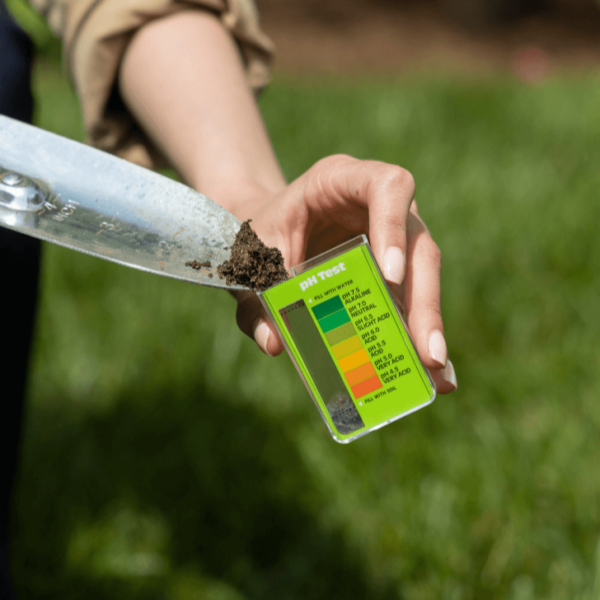
If you are still deciding what to plant rather than diagnosing what is already growing, see cool-season vs warm-season grass for how the two families differ in what they actually need from you, or the lowest-maintenance grass options if upkeep is the deciding factor. And if you want to check what is happening below the surface at the same time, our guide to testing your lawn soil at home is a reasonable next stop.
FAQ
Can a phone app identify my grass type accurately?
Photo-identification apps can get you close, especially for common species, but they struggle with mixed lawns, dormant warm-season grass, and the visual overlap between several fine fescues. Treat an app result as a starting guess to confirm with the blade and habit checks above, not a final answer.
Why does my lawn look like two different grasses in patches?
That is common and usually means it is a mix, either seeded as a blend originally or overseeded with a different species at some point (perennial ryegrass over an existing lawn is a frequent cause). It is not necessarily a problem; some patchiness in texture is normal in a blended lawn.
Does grass type actually matter that much for care, or is it mostly the same for every lawn?
It matters more than most people expect. A cool-season lawn and a warm-season lawn want opposite things at the same time of year in some cases, most obviously with fertilizing and overseeding timing. Treating them the same is one of the more common reasons a lawn care routine fails to produce results.
I just moved in and have never seen this lawn through a full year. What should I do?
Run the blade-width and growth-habit tests first, since they do not depend on a season history. If you still cannot narrow it down, wait for one full season if you can, since the winter-and-July test is the most reliable one on this page, or take a plug to your local Cooperative Extension office.
Is it possible to have a lawn that is genuinely two grasses on purpose?
Yes. Many cool-season lawns are seeded as a blend of tall fescue, Kentucky bluegrass and perennial ryegrass specifically because the three cover for each other's weaknesses. If your blade tests keep returning two plausible answers, a deliberate blend is a likely explanation, not a testing failure.