How Soil pH Affects Grass: A Homeowner’s Guide
TL;DR
- Most lawn grasses grow best at a soil pH between 6.0 and 7.0, where nutrients stay available to the roots (Purdue University Extension).
- When pH drops below 6.0 or climbs above 7.5, nutrients get “locked up” in the soil and your grass starves even if you keep fertilizing.
- Centipedegrass is the main exception, preferring acidic soil from 5.0 to 6.0, so never lime it like other lawns.
- The only reliable way to know your pH is a soil test, available through your county extension office for around $10 to $20.
- Lime raises pH and elemental sulfur lowers it, but both work slowly, with full results taking 6 to 18 months.
What Is Soil pH and Why Does It Matter for Grass?
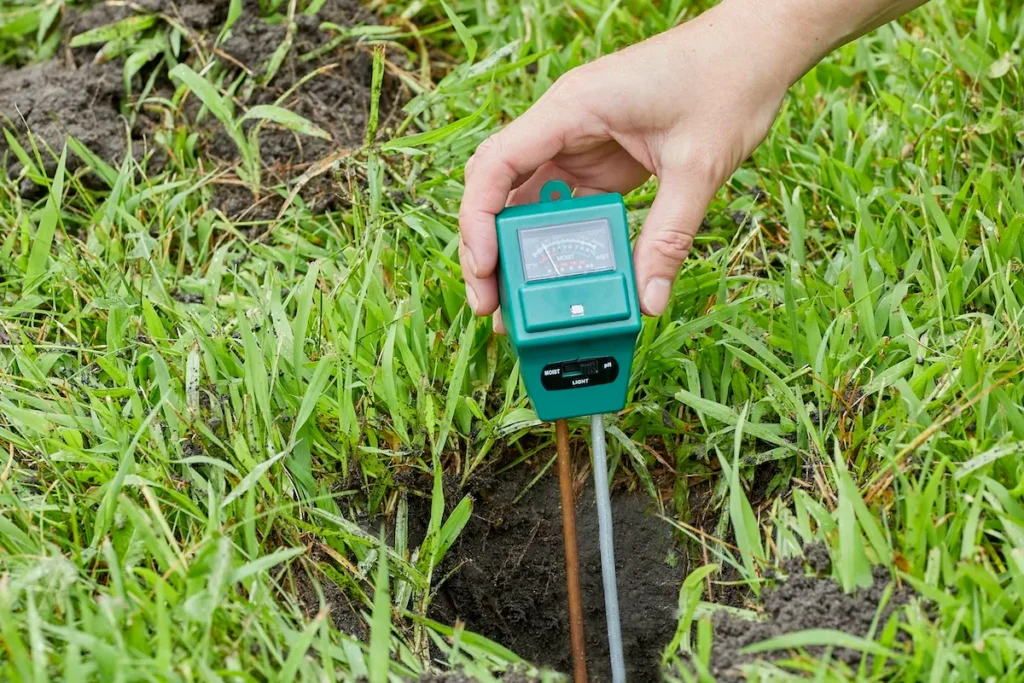
Soil pH measures how acidic or alkaline your soil is on a scale from 0 to 14, with 7 being neutral. Anything below 7 is acidic, and anything above 7 is alkaline. For grass, this single number decides whether the roots can actually pull nutrients out of the ground.
The scale is logarithmic, so the jumps are bigger than they look. A soil at pH 5.5 is ten times more acidic than one at 6.5, and 100 times more acidic than 7.5. That’s why a reading that seems “close enough” can still cause real problems.
Think of pH like the temperature of bathwater. A few degrees off and you notice immediately, even though the number barely moved.
How Does Soil pH Affect Grass Growth?
Soil pH controls nutrient solubility, which is how easily nutrients dissolve in soil water so roots can absorb them. In the 6.0 to 7.0 range, nitrogen, phosphorus, and iron stay soluble and available. Outside that window, they bind to soil particles and become unreachable.
In acidic soil below 6.0, phosphorus binds with iron and aluminum to form compounds the grass cannot easily take up. At very low pH, aluminum can reach levels that stunt root growth outright (Penn State Extension, 2024).
In alkaline soil above 7.5, the opposite happens. Iron and manganese become insoluble even when they’re abundant, which often shows up as yellowing blades, a condition called chlorosis.
Here’s the practical takeaway: bad pH wastes your fertilizer. If the soil chemistry is off, you can pour on nitrogen all season and the grass still won’t use most of it.
What Is the Ideal Soil pH for Different Grass Types?
Most lawn grasses grow best between 6.0 and 7.0, but the exact target depends on your grass species. Warm-season and cool-season grasses have slightly different comfort zones, and a couple of types break the rules entirely.
Being inside the right range matters far more than hitting one perfect number. Chasing an exact 6.5 isn’t worth the effort if you’re already sitting comfortably at 6.3.
| Grass Type | Season | Ideal pH Range | Notes |
|---|---|---|---|
| Kentucky bluegrass | Cool-season | 6.5 to 7.2 | Less tolerant of acidic soil than other cool-season grasses |
| Tall fescue | Cool-season | 6.0 to 7.0 | Handles slightly acidic conditions well |
| Perennial ryegrass | Cool-season | 6.0 to 7.0 | Tolerant of mild acidity |
| Bermuda | Warm-season | 5.8 to 7.0 | Performs best in the mid-6 range |
| Zoysia | Warm-season | 5.8 to 7.0 | Similar tolerance to Bermuda |
| St. Augustine | Warm-season | 6.5 to 7.5 | Prefers more alkaline conditions than most |
| Centipedegrass | Warm-season | 5.0 to 6.0 | Thrives in acidic soil, easily harmed by lime |
Ranges from Penn State Extension (cool-season) and University of Arkansas Extension (warm-season).
What Are the Signs Your Lawn’s pH Is Off?
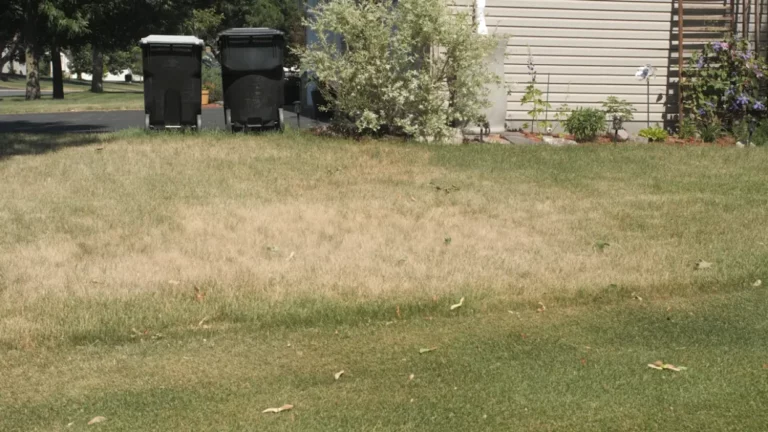
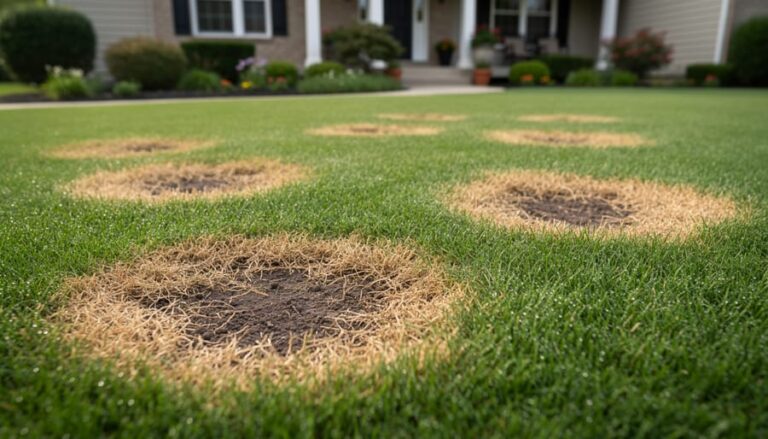
The clearest sign of a pH problem is grass that stays thin, yellow, or weak no matter how much you fertilize. When nutrients are locked out by bad chemistry, feeding the lawn doesn’t fix the underlying issue.
Yellowing blades despite regular fertilizing often point to iron lockout in alkaline soil. Moss is another clue, since it tends to move into moderately to strongly acidic soil where grass struggles (Penn State Extension). Persistent weed pressure can also follow soil that has drifted below 5.5.
These symptoms overlap with other lawn problems like compaction, drought stress, or disease, so they only suggest a pH issue. A soil test confirms it.
How Do You Test and Correct Soil pH?
Start with a soil test, since it’s the only reliable way to know your pH and how much amendment your soil actually needs. Collect 10 to 15 small samples from a depth of 4 to 6 inches across the lawn, mix them into one composite sample, and send it to your county extension lab for around $10 to $20.
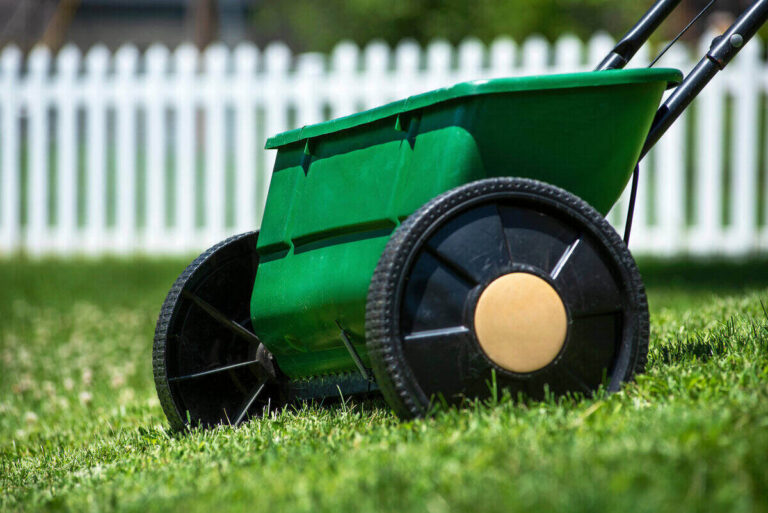
To raise pH in acidic soil, apply ground agricultural limestone. Dolomitic lime is the better pick if your test also shows low magnesium. Lime acts slowly and shouldn’t be applied all at once, so spread larger corrections over a 6-month period and retest in about three years (Purdue University Extension).
To lower pH in alkaline soil, use elemental sulfur in split applications, typically spring and fall. Lowering pH is harder and slower than raising it, and on strongly alkaline soil it may not be practical at all. In that case, switching to a more alkaline-tolerant grass like St. Augustine is often the smarter move.
| Amendment | Purpose | Speed | Notes |
|---|---|---|---|
| Ground agricultural lime | Raises pH (fixes acidity) | Slow, 6 to 18 months | Clay soils need more than sandy soils |
| Dolomitic lime | Raises pH, adds magnesium | Slow, 6 to 18 months | Best when magnesium is also low |
| Elemental sulfur | Lowers pH (fixes alkalinity) | Slow, split applications | Harder and costlier than liming |
Common Mistakes That Hurt Your Lawn’s pH
- Liming without a soil test first: Adding lime to soil that doesn’t need it pushes pH too high and locks out iron. Always test before you amend.
- Treating centipedegrass like every other lawn: Lime can damage centipedegrass unless pH drops below 5.0. This grass wants acidic soil, so liming it on schedule is a common and costly error.
- Trying to fix pH all at once: Dumping a heavy lime or sulfur load expecting fast results doesn’t work, since both amendments act over months. Correct gradually and retest.
- Relying on fertilizer to fix pH: Fertilizer feeds the grass but won’t change soil chemistry. If pH is the problem, only lime or sulfur will fix it.
Frequently Asked Questions
What is the best soil pH for grass?
Most lawn grasses grow best at a soil pH between 6.0 and 7.0, where nutrients stay soluble and available to the roots. The exact target depends on your grass type, with centipedegrass preferring a more acidic 5.0 to 6.0.
How does low soil pH affect grass?
In acidic soil below 6.0, phosphorus binds with iron and aluminum and becomes unavailable to the grass. Very low pH can also raise aluminum to levels that stunt root growth, leading to thin, weak turf.
How much does a soil pH test cost?
A soil test through your county extension office typically runs about $10 to $20. Lab results are more precise than DIY kits and usually include lime or sulfur recommendations.
How long does it take to change soil pH?
Lime and sulfur work slowly. Most homeowners see measurable change within 3 to 6 months, but the full effect can take 12 to 18 months depending on soil type, application rate, and weather.
Can I just add lime to fix a yellow lawn?
No. Yellowing in alkaline soil comes from iron lockout, and adding lime raises pH further and makes it worse. Test your soil first, since lime only helps lawns that are actually too acidic.
Why does my grass stay yellow even after fertilizing?
When soil pH is off, nutrients get locked in the soil and the roots can’t absorb them, so fertilizer doesn’t help. Yellow blades despite feeding often signal a pH problem confirmed only by a soil test.
The Bottom Line
Soil pH decides whether your grass can use the nutrients already in the ground. Test your soil before reaching for lime or sulfur, match your target to your grass type, and correct gradually. Get the chemistry right and your existing fertilizer starts pulling its weight.