Is My Grass Dormant or Dead? The Test That Actually Works
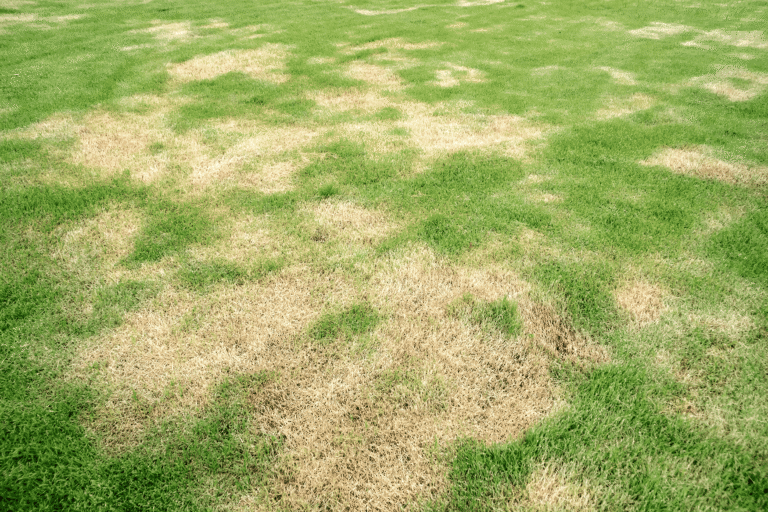
Run three fast physical checks before deciding: tug a small patch of the brown grass gently (dormant grass resists; dead grass pulls free easily), check the crown at the base of the plant (a firm, whitish crown means it is alive; a brown, brittle or mushy crown means it is not), and note whether the browning is even across the whole lawn (usually dormancy) or patchy (more often a real problem). Which answer is likely also depends heavily on your grass family and the month, so check that first.
Getting this wrong is not just an inconvenience. Renovating a lawn that was only dormant wastes money and tears up grass that would have recovered on its own. Waiting out a lawn that is actually dead, or that has a real problem like grub damage, can cost you the entire fall repair window while you watch and wait for nothing.
Before you test: which grass family, and what month is it
The same brown lawn means very different things depending on these two facts.
- Brown cool-season grass (tall fescue, Kentucky bluegrass, ryegrass) in the hottest weeks of summer: usually dormancy, a normal stress response, not a crisis.
- Brown warm-season grass (bermudagrass, zoysia, St. Augustine, centipede) in summer: more likely a real problem, since summer is this grass family's active growing season and it should be green.
- Brown warm-season grass after the first hard frost, through winter: completely normal dormancy, not a diagnosis at all.
If you are not certain which family you have, our grass identification key settles that in a few minutes and changes which of the readings above applies to you.
The tug test: how to do it, and the one case where it lies to you
Grab a small clump of the brown grass at the base and pull gently but firmly.
- Resists, stays rooted: likely dormant. The plant is alive below the brown blades.
- Pulls free easily, with little resistance: more likely dead, or the roots have already failed.
The one common exception: if a section of turf lifts up like a loose piece of carpet across a broad area, with almost no root resistance at all, that is a classic sign of grub damage, not simple dormancy. Grubs feed on the roots themselves, which is why the turf comes up so easily. A reader who runs a standard tug test on grub-damaged turf can get a "dead" reading and start renovating over an active infestation that a targeted response would have handled instead. If the turf lifts like a mat rather than pulling a few blades at a time, see our guide to grub damage in lawns before doing anything else.
The crown: what firm versus mushy means
The crown is the small area at the base of the plant, right at or just below soil level, where the roots and the above-ground growth meet. It is the part of the plant that has to survive for the grass to come back.
- Firm and whitish or pale: the plant is alive, even if every visible blade above it is brown.
- Brown, brittle, or soft and mushy: the plant has died back at the point that matters most, and new growth from that crown is unlikely.
Checking a handful of crowns across different parts of the lawn gives a more reliable read than checking just one, since condition can vary across a yard.
Even browning versus patches
Look at the pattern across the whole lawn, not just close up on one spot.
- Even, uniform browning across the entire lawn or large uniform sections: consistent with dormancy, especially if it lines up with the seasonal pattern for your grass family above.
- Irregular patches, especially patches that are dead-flat brown next to areas that are still green: more consistent with a localized problem such as disease, grub damage, a dry spot from uneven irrigation, or heat stress concentrated in one area. Our guide on why grass looks burnt without heat covers several of the localized causes worth ruling out.
The wait-and-see test, and what three weeks actually costs you
A common recommendation is to water the brown area consistently for two to three weeks and watch for green regrowth. It is a valid test, but it is not a free one, and almost nothing else you will read says so plainly. If you are running this test in late summer or early fall, those two to three weeks can consume the entire cool-season overseeding window, which closes about 45 days before your first frost date. You could get a correct answer from the water test and still lose the one good repair window of the year in the process.
A better sequence: run the fast physical tests (tug, crown, pattern) first, since they take minutes rather than weeks. If they give you a consistent answer, act on it. Only fall back on the slower water test if the fast tests genuinely disagree with each other, and if you are inside or near your overseeding window when that happens, weigh the cost of the wait against the cost of seeding now on a section that may turn out to have been fine anyway. If you are not sure where your window falls, our fall overseeding timing guide walks through how to find it.
The verdict, and what it means you should do
If the fast tests say dormant: do not water heavily, fertilize, or reseed the area while your grass family's normal dormancy period is in effect. Watering a dormant warm-season lawn heavily in winter or a dormant cool-season lawn heavily in peak summer heat generally does not bring it back early and can add stress in some conditions. Let it follow its normal cycle and reassess when the season turns.
If the fast tests say dead, and it is a section, not the whole lawn: that section is a repair candidate through overseeding or, for a larger area, sod, once you are inside the right seasonal window for your grass type.
If the fast tests say dead across most or all of the lawn: that is a bigger decision than a normal seeding job, and whether to repair in place or consider a fuller renovation is worth thinking through deliberately rather than rushing. See our guide on renovating vs repairing a lawn for that decision.
FAQ
Can dormant grass die if the dormancy lasts too long?
Yes, in extreme or prolonged drought or cold, a lawn that starts out genuinely dormant can eventually die if the stress continues long enough or water is withheld entirely for an extended period. The exact survival window depends on the species, prior lawn health and how severe the stress is, and this varies enough that no single number applies to every lawn.
Should I fertilize brown grass to help it come back?
No, not while it is dormant. A dormant lawn is not actively growing and generally cannot use fertilizer effectively during that period; wait until it is showing active new growth in its normal growing season.
How long does it typically take dormant grass to green back up?
It depends on the grass family and how the season turns, and this site does not publish a specific timeframe as a promise, since it varies by conditions. Cool-season grass typically responds within a couple of weeks of cooler, wetter conditions returning; warm-season grass responds to sustained warm soil temperatures in spring.
My whole lawn is brown but one section came back green faster than the rest. Does that mean something is wrong with the slow section?
Not necessarily on its own. Sun exposure, soil compaction, drainage and even mowing pattern can all affect how quickly different parts of a lawn respond. If the slow section stays brown well after the rest of the lawn has recovered, it is worth checking that section specifically with the tug and crown tests again.
Is the tug test reliable on newly seeded grass?
No. Very young grass has shallow, undeveloped roots regardless of whether it is healthy, so a gentle tug test is not a useful signal on recent seeding. Judge new seedlings by color and new growth instead.