The Ultimate Lawn Watering Guide: How Much, How Often
TL;DR
- Most lawns need 1 to 1.5 inches of water per week, counting rainfall, split into 2-3 deep sessions rather than daily shallow ones (Scotts, 2024)
- Water between 6 and 10 a.m. – cool air reduces evaporation, and blades dry before nightfall to avoid fungal disease (Colorado State University Extension, 2023)
- Warm-season grasses like Bermuda and Zoysia need 0.75 to 1 inch per week; cool-season grasses like Kentucky Bluegrass need 1 to 1.5 inches (Virginia Cooperative Extension, 2024)
- The tuna can test is the simplest way to measure your sprinkler output: run the system until an empty tuna can holds 1 inch of water
- Watering deeply but infrequently builds deeper roots, which makes grass more drought-resistant and reduces disease pressure
How Much Water Does a Lawn Actually Need Each Week?
credit: https://ngturf.com/
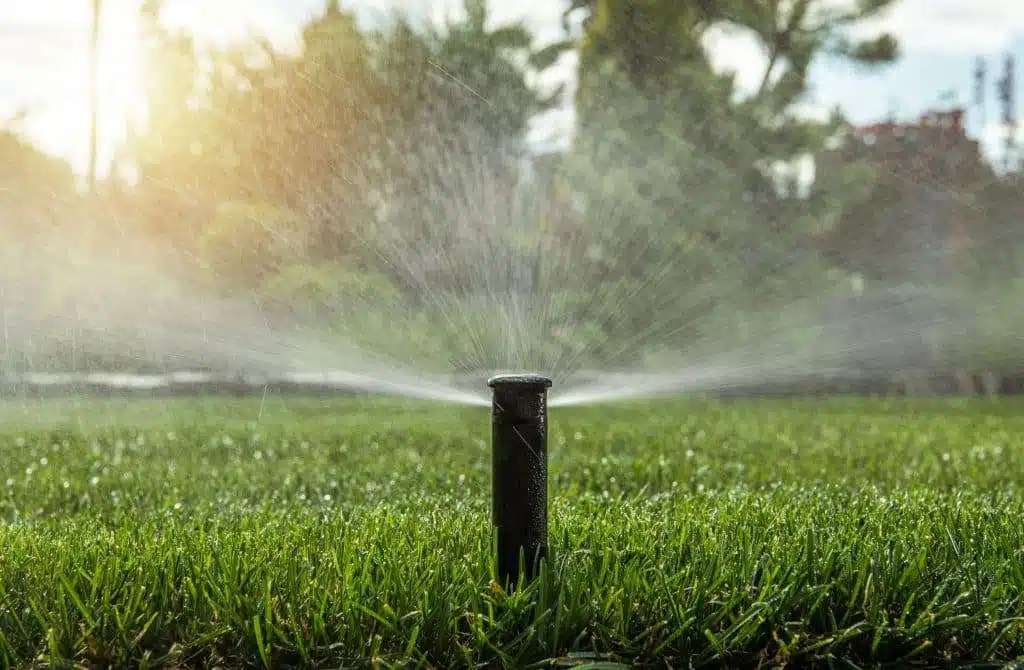
Most lawns need 1 to 1.5 inches of water per week, whether that comes from rain, irrigation, or both (Scotts, 2024). That amount should soak the top 6 to 8 inches of soil, which is where most turfgrass roots grow.
The single biggest mistake homeowners make is watering a little every day. Short, shallow watering keeps roots near the surface because the roots never need to reach down. Deep, infrequent watering – two or three sessions per week that each apply 0.5 inches – trains roots to grow deep. Deeper roots draw moisture from a larger volume of soil, which means your lawn holds up much better during dry stretches.
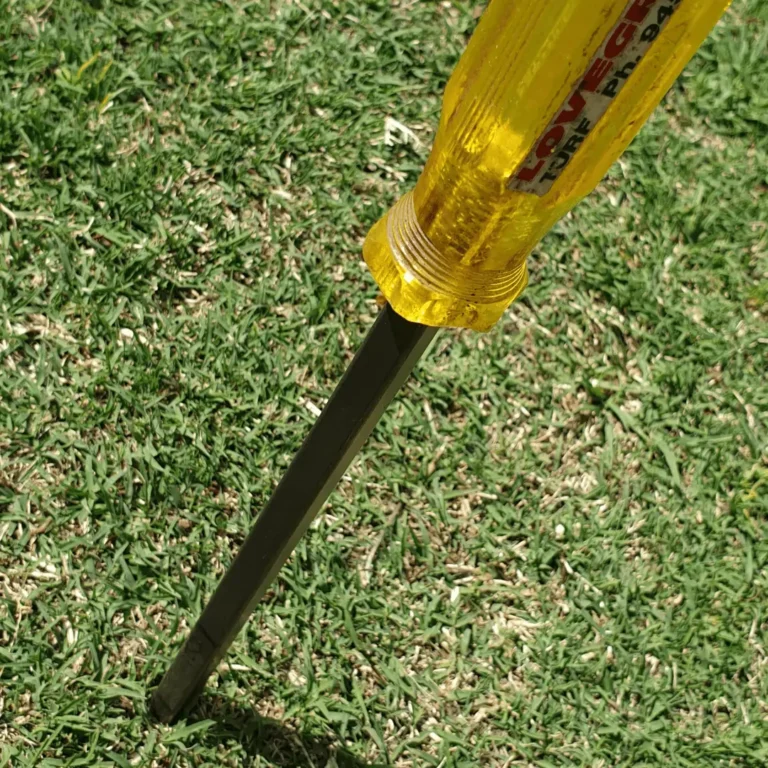
Use the screwdriver test to know when to water: push a standard screwdriver into the soil. If it won’t slide 6 inches in without real effort, the lawn is dry and needs water. If it goes in easily, hold off.
What Time of Day Should You Water Your Lawn?
Water between 6 and 10 a.m. This is the best window because air temperatures are lower, wind is calm, and the soil can absorb the water before the day heats up (UF/IFAS Extension). Grass blades that get wet in the morning also have time to dry out by midday, which reduces fungal disease pressure significantly.
Evening watering is the worst option, not just a bad one. When you water after dark, the blades stay wet for 8 to 12 hours. That extended wetness is exactly what diseases like brown patch and dollar spot need to take hold. Colorado State University Extension has noted that grass staying wet longer overnight directly increases fungal risk (CSU Extension, 2023).
If 6 a.m. irrigation is not possible, water between 4 and 6 p.m. as a fallback. The blades still have time to dry before nightfall, and you lose less water to evaporation than you would at midday.
How Much Water Your Grass Type Needs
Grass type changes everything. Warm-season grasses are generally more water-efficient than cool-season grasses. Here’s the breakdown by common species:
| Grass Type | Season | Weekly Water Need | Drought Tolerance |
|---|---|---|---|
| Bermuda grass | Warm | 0.75-1 inch | High |
| Zoysia | Warm | 0.75-1 inch | High |
| St. Augustine | Warm | 1-1.25 inches | Moderate |
| Tall Fescue | Cool | 1-1.25 inches | Moderate-High |
| Kentucky Bluegrass | Cool | 1-1.5 inches | Low-Moderate |
| Perennial Ryegrass | Cool | 1-1.5 inches | Low |
| Fine Fescue | Cool | 0.75-1 inch | High |
Sources: Virginia Cooperative Extension, 2024; MSU Extension, 2004
Warm-season grasses – Bermuda, Zoysia, and Centipede – can survive short dry spells by going dormant. The crown stays alive underground and the lawn greens back up within 2 to 3 weeks once water returns. Cool-season grasses like Kentucky Bluegrass can also go dormant, but they’re at risk of crown death after roughly 4 to 6 weeks without water (whatgrassisthis.com, 2025).
If you let a cool-season lawn go dormant intentionally, give it at least 0.5 inches every 2 to 3 weeks to keep the crowns hydrated. Stop foot traffic on it while it’s dormant – the crowns are fragile.
How Soil Type Affects Your Watering Schedule
Soil type determines how fast water moves through the ground, which changes how long you need to run the sprinkler and how often to water.
Sandy soil drains quickly. Water moves through it fast and doesn’t stay in the root zone long, so lawns on sandy soil need more frequent watering – every 3 days or so rather than twice a week – even though each session requires less water to reach the 4-inch depth (Weed Man, 2024).
Clay soil holds water longer, which sounds like a win until you oversaturate it. Clay also absorbs water slowly, so if you run a sprinkler too fast, water runs off the surface instead of soaking in. Water in shorter cycles on clay – 10 to 15 minutes on, 30 minutes off, then another cycle – to let the water absorb before the next round.
Loam sits in the middle. It holds moisture well and drains reasonably, making it the easiest soil to water correctly.
The Tuna Can Test: How to Measure What Your Sprinkler Actually Puts Out
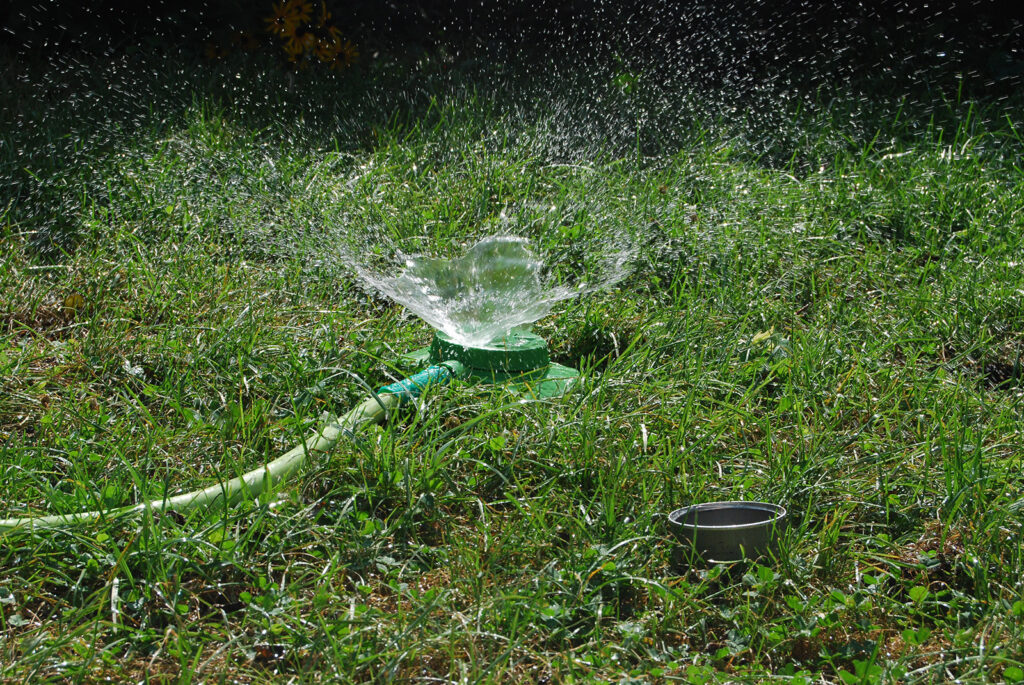
credit: https://lawntolakemidwest.org/
Most homeowners have no idea how much water their sprinkler system actually delivers. The spray pattern, head type, and water pressure all affect output, and a fixed spray nozzle can put down twice as much water as a rotary nozzle in the same amount of time (IFA Country Stores, 2020).
Here’s the test: set 3 to 5 empty tuna cans (the standard 6 oz size) across the watering zone. Run the sprinkler for 15 minutes, then measure the water depth in each can. Multiply by 4 to get your hourly rate. Use that number to calculate how many minutes you need to run the system to hit 0.5 or 1 inch.
Place cans at different distances from the sprinkler head. If some cans fill significantly more than others, you have uneven coverage and will end up with dry and soggy patches across the lawn.
Seasonal Adjustments: Spring, Summer, and Fall Watering
Watering needs change across the season. Running the same schedule in April that you used in August will overwater your lawn in spring and underwater it in summer.
Spring: Start with one watering session per week for about 20 minutes, applying roughly 0.5 inches. The soil is still cool and often retains moisture from winter precipitation. As temperatures rise past 70°F in May and June, increase to two sessions per week (IFA Country Stores, 2020).
Summer: This is when demand peaks. Two to three sessions per week applying 1 to 1.5 inches total is the standard for most of the US. In regions where summer temperatures consistently exceed 90°F – Texas, Arizona, Florida, the deep South – warm-season grasses may need the high end of that range. Cool-season grasses in hot transition-zone climates often go semi-dormant in July regardless of watering; mow higher (3 to 4 inches) to reduce stress and shade the soil.
Fall: Cut back to one or two sessions per week for cool-season grasses, which are entering their active fall growing period and need less supplemental water. For warm-season grasses, taper off watering in September and October as growth slows before dormancy.
Common Watering Mistakes That Hurt Your Lawn
- Watering at night: Blades stay wet for hours, which creates ideal conditions for brown patch, dollar spot, and pythium blight. Water in the morning.
- Daily shallow watering: Encourages roots to stay in the top inch of soil, making the lawn fragile during any heat or dry stretch. Water 2-3 times per week and water deep.
- Ignoring rainfall: Running a timed irrigation system after 2 inches of rain just pours money down the drain. Install a rain sensor or use a smart controller. EPA WaterSense estimates that weather-based smart controllers save thousands of gallons per household per year (EPA WaterSense, 2024).
- Watering on a fixed timer regardless of season: A schedule that works in August will overwater in April and underwater during a drought. Adjust the schedule every 4 to 6 weeks or use a smart controller that reads local weather data.
- Running sprinklers midday: Water evaporates before it can soak into the soil, especially on hot, windy summer days. UF/IFAS Extension specifically flags midday irrigation as wasteful and potentially harmful due to leaf scorch risk.
Frequently Asked Questions
How much water does a lawn need per week?
Most lawns need 1 to 1.5 inches of water per week, including rainfall (Scotts, 2024). Apply that amount in 2 to 3 deep sessions rather than daily light sprinkles. One inch of water across 1,000 square feet works out to roughly 623 gallons, so checking how much your system actually delivers before setting a schedule matters.
What is the best time of day to water grass?
Water between 6 and 10 a.m. The combination of cool temperatures, calm air, and morning sun means water absorbs into the soil efficiently and grass blades dry out before nightfall. Evening watering leaves blades wet overnight, which significantly raises the risk of fungal diseases like brown patch.
How do I know if I’m overwatering my lawn?
Look for soft, spongy soil that stays wet between waterings, yellowing grass, or a strong fungal smell at the surface. Overwatered lawns also tend to develop thatch faster and attract pests. If you can squeeze a handful of soil and water drips out, it’s too wet. Scale back to one fewer watering session per week and reassess.
Should I water my lawn every day?
No. Daily watering is one of the most common lawn care mistakes. It keeps moisture near the surface, which encourages shallow root growth and makes the lawn much more vulnerable to drought and heat. Two to three deep waterings per week give roots time to dry slightly, which pushes them to grow deeper into the soil.
How long should I run my sprinkler to get 1 inch of water?
It depends on your system. A fixed spray head nozzle typically takes about 30 minutes to deliver 1 inch, while a rotary nozzle may take 90 minutes or more to deliver the same amount (IFA Country Stores, 2020). Run the tuna can test to get an accurate number for your specific setup.
What happens if I let my lawn go dormant instead of watering?
Warm-season grasses like Bermuda and Zoysia can go dormant safely and green back up within 2 to 3 weeks when water returns. Cool-season grasses like Kentucky Bluegrass tolerate 4 to 6 weeks of dormancy before crown death becomes a real risk. If you let the lawn go dormant, give it at least 0.5 inches every 2 to 3 weeks to keep the crowns alive, and stay off the grass to avoid damaging the crowns (whatgrassisthis.com, 2025).