Why Grass Looks Burnt Without Heat: 6 Real Causes and Fixes
TL;DR
- Grass looks burnt without heat most often because of fungal disease, white grubs, dog urine, fertilizer burn, dull blade scalping, or winter desiccation, not sun damage.
- White grub damage lifts up like loose carpet when you tug it, and watering will not bring it back.
- Dog urine burns leave a dead center ringed by darker, faster-growing green grass from the nitrogen.
- Cool-season grass can survive four to six weeks dormant before it risks dying, so brown does not always mean dead (Iowa State Extension, 2024).
- Run a tug test and a scratch test first, then match the pattern to the cause before you treat anything.
What Does It Mean When Grass Looks Burnt Without Heat?
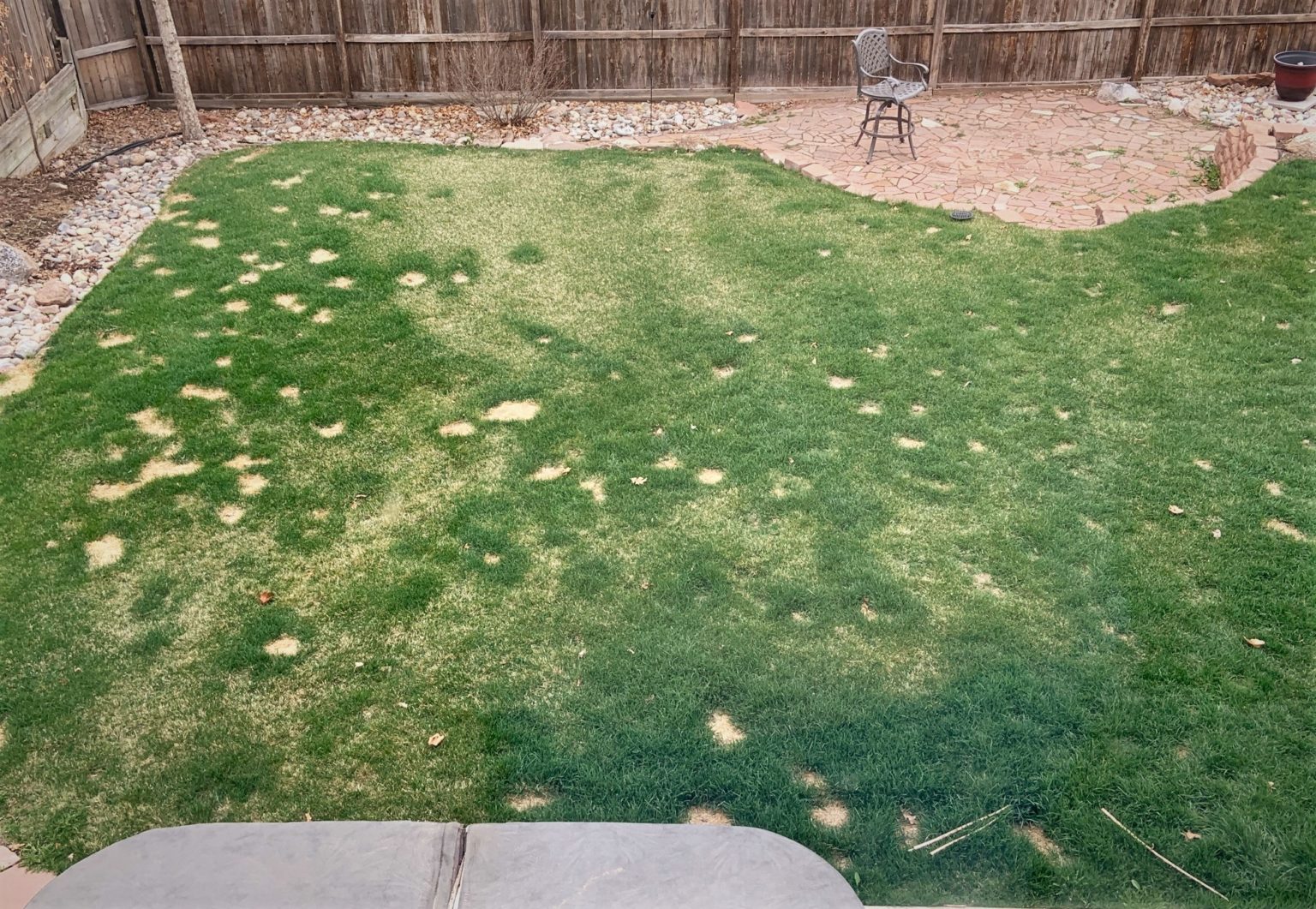
credit: https://organolawn.com/
Burnt-looking grass without heat usually means something is killing or stressing the blades from below, not the sun scorching them from above. The common culprits are fungal disease, root-eating grubs, dog urine, over-applied fertilizer, a dull mower blade, or winter dry-out. Each leaves a different pattern, so the shape and spread of the brown areas tell you more than the color does.
Heat and drought turn a whole lawn an even tan. When you see scattered patches, rings, streaks, or a brown spot with a green edge instead, the cause is almost always one of the six below.
How Do You Tell Dormant Grass From Dead Grass?
Dormant grass is alive and will green back up, while dead grass will not, and the tug test is the fastest way to tell them apart. Grab a handful of brown blades and pull gently. Dormant grass resists because the roots still hold; dead grass lifts out with little to no root.
You can also do a scratch test. Scrape a stem or crown at the soil line with a fingernail. Green or white tissue underneath means the plant is alive. Cool-season grasses like Kentucky bluegrass go brown to protect their crowns during stress and can stay dormant for four to six weeks without real harm, but past six weeks they start to die (Iowa State Extension, 2024).
Could a Fungal Disease Be Making Your Grass Look Burnt?
Yes, lawn fungus is one of the most common reasons grass browns without heat, and it shows up as distinct circles, rings, or spotted blades rather than an even tan. Two of the usual suspects are dollar spot and brown patch.
Dollar spot leaves small, straw-colored circles roughly the size of a silver dollar, and individual blades show tan lesions with a reddish-brown border. Early in the morning you may see white, cobweb-like fungal growth on the affected grass before the dew dries. Brown patch shows up in warm, humid weather as larger light-brown circles from a few inches to several feet across, often with a smoky gray edge of active growth (Penn State Extension, 2024).
The fungal tell is pattern. If you see rings, defined circles, or lesions on the blades themselves, you are likely looking at disease, not drought. For a firm diagnosis, your local extension office can test a turf sample.
Why Does Grass Turn Brown in Patches That Peel Up Like Carpet?
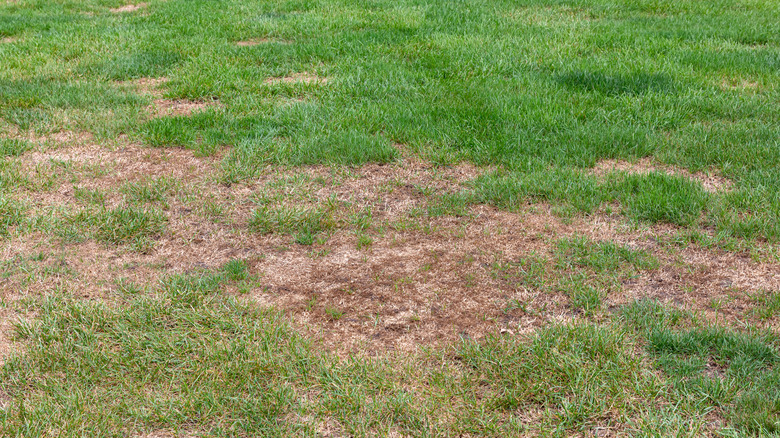
credit: https://globalideas.org.au/
Grass that browns in irregular patches and peels up like loose carpet is the signature of white grub damage. Grubs are the C-shaped larvae of beetles such as Japanese beetles and European chafers, and they eat grass roots from below. With the roots gone, the turf has nothing anchoring it.
The peel test confirms it. Grab a handful of the brown grass and pull up. If it rolls back like old carpet and you find white, C-shaped larvae in the top few inches of soil, you have grubs. Two other clues: the lawn feels spongy underfoot, and raccoons, skunks, or birds dig it up at night hunting the grubs.
Here is the part that catches people off guard. Grub damage often appears in well-watered lawns, and watering will not fix it because the root system is already gone. Damage typically shows up in late summer or early fall.
Why Is There a Brown Spot With a Green Ring Around It?
A dead brown center surrounded by a ring of darker, faster-growing green grass is classic dog urine damage. The high nitrogen in the urine burns the grass at the point of contact, while the diluted edge acts like a light dose of fertilizer and makes the surrounding grass greener.
This green-ring pattern is the easy way to rule grubs and fungus out. Grub damage peels up and has no green ring; fungal damage shows rings or lesions but not a fertilized green halo. Female dogs squatting in one spot tend to cause round burns, while repeat use of the same area widens them. Flushing the spot with water soon after helps dilute the nitrogen before it kills the crown.
Can Fertilizer or a Dull Blade Burn Your Grass?
Yes, both over-applied fertilizer and a dull mower blade can make grass look burnt with no heat involved. Too much fertilizer, or fertilizer dropped in concentrated streaks, pulls moisture out of the grass and leaves brown stripes or blotches that follow your spreader path.
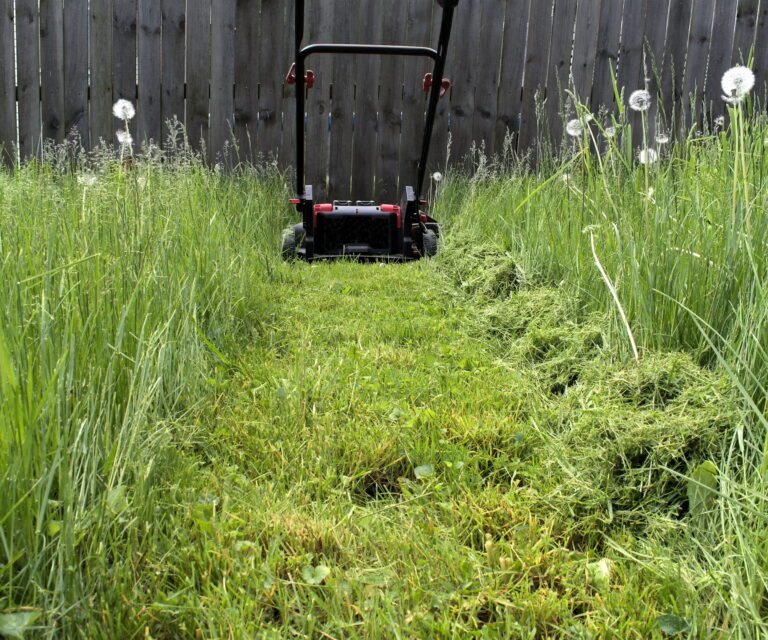
A dull blade is the sneakier cause. Instead of cutting cleanly, a dull blade tears and shreds the grass tips, and those frayed ends dry out and turn whitish-brown across the whole lawn within a day or two of mowing. Cutting too short, called scalping, does the same thing by stressing the crown. The fix is simple: sharpen or replace the blade, and follow the one-third rule, never removing more than a third of the blade height in a single mow.
Cost and Effort to Fix Each Cause
| Cause | Typical Pattern | DIY Fix | Estimated Cost |
|---|---|---|---|
| Fungal disease | Rings, circles, blade lesions | Fungicide, improve airflow and watering timing | $20 – $60 for fungicide |
| White grubs | Irregular patches, peels like carpet | Apply nematodes or grub control product | $20 – $50 per application |
| Dog urine | Dead center, green ring | Flush with water, reseed the spot | $10 – $25 for seed and topsoil |
| Fertilizer burn | Streaks following spreader path | Water deeply to flush, reseed dead areas | $10 – $25 |
| Dull blade or scalping | Whitish frayed tips, whole lawn | Sharpen or replace blade, raise cut height | $5 – $15 to sharpen |
| Winter desiccation | Tan, brittle on exposed spots | Water during winter warm spells, reseed in spring | $10 – $25 |
Cost figures are estimates based on common retail pricing for consumer lawn products and will vary by region and lawn size.
Common Mistakes That Make the Problem Worse
- Watering grub-damaged grass: the roots are already eaten, so extra water does nothing but waste money.
- Treating for fungus when it is actually grubs: match the pattern first, because the wrong product solves nothing.
- Mowing with a dull blade after damage appears: shredded tips invite more disease and brown the lawn further.
- Giving up on dormant grass too early: cool-season lawns can sit brown for weeks and still recover with proper watering.
Frequently Asked Questions
Why does my grass look burnt when it has not been hot?
Burnt-looking grass without heat usually comes from fungal disease, white grubs, dog urine, fertilizer burn, or a dull mower blade. The pattern tells you which one. Even circles point to fungus, peeling patches point to grubs, and a brown spot with a green ring points to dog urine.
How can I tell if my brown grass is dead or just dormant?
Pull a handful of blades. Dormant grass resists because the roots still hold, while dead grass lifts out with almost no root. You can also scratch a crown at the soil line; green or white tissue means it is still alive.
Why does my grass peel up like a carpet?
That is the classic sign of white grub damage. The larvae eat the grass roots, so the turf loses its anchor and rolls back when you tug it. You will often find white, C-shaped grubs in the soil underneath.
Why is there a green ring around the dead spot in my lawn?
That pattern is almost always dog urine. The concentrated nitrogen burns the center while the diluted edge fertilizes the surrounding grass and turns it darker green. Flushing the area with water soon after can limit the damage.
Can a dull lawn mower blade really make grass turn brown?
Yes. A dull blade tears the grass instead of cutting it, and the frayed tips dry out and turn whitish-brown within a day or two across the whole lawn. Sharpening or replacing the blade fixes it.
How long can grass stay brown before it is actually dead?
Cool-season grasses can survive about four to six weeks of dormancy without lasting harm, but beyond six weeks they risk dying (Iowa State Extension, 2024). Water dormant lawns lightly during long dry stretches to keep the crowns alive.