Grass Types Explained: Choosing the Right Lawn Grass
TL;DR
- The single most important grass decision is whether you need a cool-season or warm-season variety, based on where you live.
- Cool-season grasses (Kentucky bluegrass, tall fescue, perennial ryegrass) thrive between 50-80°F and are best for the Northern US (Sunday Lawn Care, 2025).
- Warm-season grasses (Bermuda, zoysia, St. Augustine, centipede) thrive between 80-95°F and suit the Southern US (Backyardboss, 2024).
- The transition zone – roughly Virginia through Kansas – is the trickiest region; zoysia or tall fescue are your best options there.
- Mowing height, drought tolerance, and shade tolerance vary significantly by species; matching grass to your specific site conditions matters as much as matching it to your climate.
What Are the Two Main Types of Lawn Grass?
credit: https://www.lawnstarter.com/
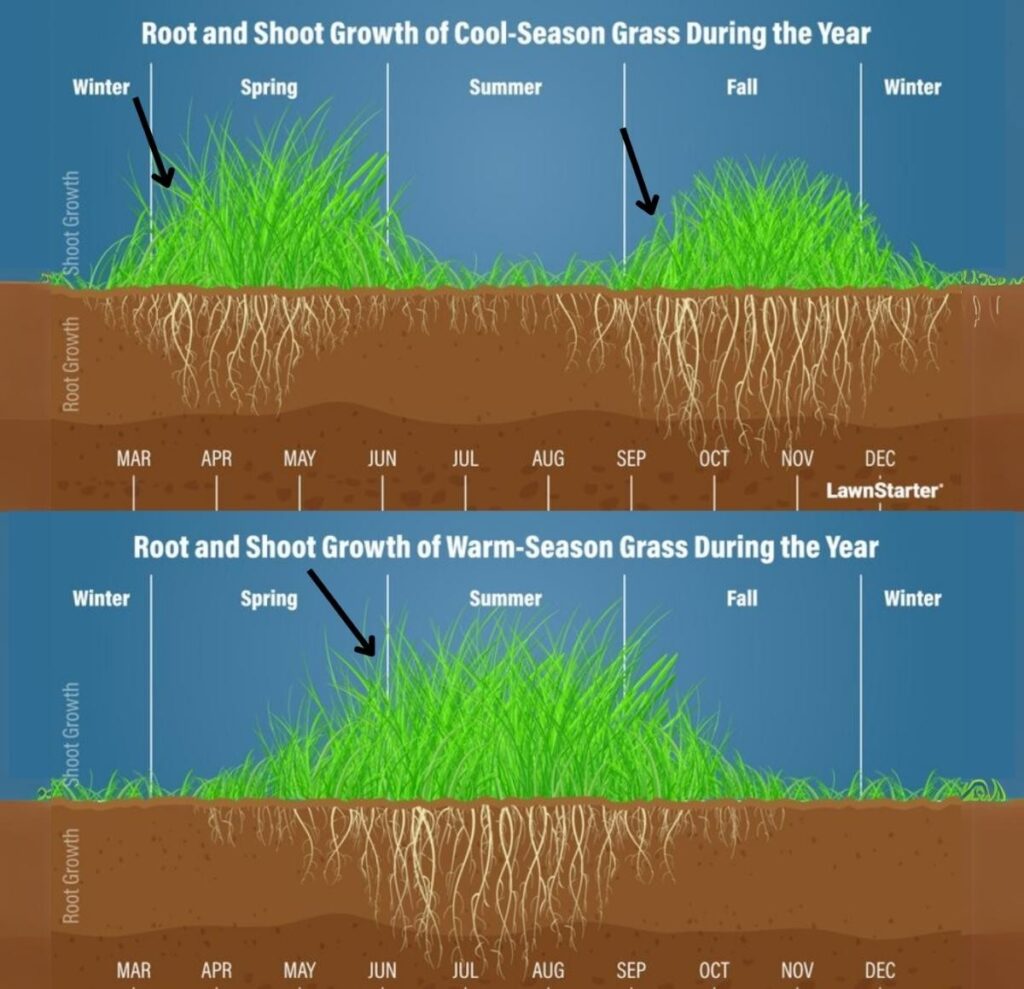
There are two broad categories of lawn grass: cool-season and warm-season. Every grass species you’ll encounter at a garden center or sod farm falls into one of these two groups. The category tells you when that grass grows actively, when it goes dormant, how much water it needs, and how it will perform in your specific climate.
Cool-season grasses do most of their growing in spring and fall, when temperatures sit between 50°F and 80°F (Sunday Lawn Care, 2025). Warm-season grasses peak in late spring through summer, when temperatures climb to 80°F-95°F (Backyardboss, 2024). Plant the wrong type for your region and you’re fighting your climate every season instead of working with it.
Cool-Season Grasses: Which Ones and Where They Work
Cool-season grasses are the right choice for the Northern US – the Midwest, Pacific Northwest, and most of the Northeast (Sod Solutions, 2025). They green up early in spring and stay green well into fall. Without regular summer watering, they can go semi-dormant during heat spikes, but they’ll bounce back when temperatures drop.
The four most common cool-season grasses:
- Kentucky bluegrass spreads through underground rhizomes, which means it self-repairs bare spots over time. It produces a dense, fine-textured lawn but needs more water than most cool-season options and prefers full sun. Optimal mowing height: 2-4 inches (LawnStarter, 2025).
- Tall fescue is the workhorse of the cool-season group. It handles heat, drought, and moderate shade better than Kentucky bluegrass, making it a strong pick for the transition zone. Mow it at 2-4 inches.
- Fine fescue (including creeping red, chewings, and hard fescue varieties) is your go-to for shady spots and low-maintenance lawns. It needs less fertilizer and water than bluegrass.
- Perennial ryegrass germinates in 5-7 days (Penn State Extension, 2016), faster than any other common grass type. It’s frequently mixed with Kentucky bluegrass or used for overseeding thin or damaged turf.
| Grass | Best Region | Mowing Height | Drought Tolerance | Shade Tolerance |
|---|---|---|---|---|
| Kentucky bluegrass | Northern US | 2-4 in. | Low | Low |
| Tall fescue | North + Transition zone | 2-4 in. | Moderate | Moderate |
| Fine fescue | Northern US | 2-3 in. | Moderate | High |
| Perennial ryegrass | Northern US | 1.5-3.5 in. | Low | Low-Moderate |
Warm-Season Grasses: Which Ones and Where They Work
Warm-season grasses are the right choice for the Southern US – anywhere with hot summers and mild winters (Lawn Specialties, 2024). They go dormant and turn brown in winter when temperatures drop below 50°F, but they come back strong every spring. They generally use less water than cool-season grasses during their active growing season.
The four most common warm-season grasses:
- Bermuda grass is aggressive, fast-spreading, and handles foot traffic and heat better than almost any other turf grass. It needs full sun and frequent mowing – common Bermuda is mowed at 1.5-2.5 inches, hybrid varieties at 0.5-1.5 inches (LawnStarter, 2025). It also has the highest fertilizer demand of the warm-season group.
- Zoysia is slow-growing, which means fewer mowing sessions per season. It tolerates some shade (about 4 hours of direct sun minimum) and is one of the only warm-season grasses with enough cold hardiness to survive in parts of the transition zone (Penn State Extension, 2016).
- St. Augustine grass produces a thick, coarse-bladed lawn and handles shade better than Bermuda or zoysia. It spreads by stolons (above-ground runners) and is the dominant warm-season grass in Florida and the Gulf Coast.
- Centipede grass is the low-maintenance option of the South. It needs minimal fertilizer, grows slowly, and stays relatively weed-free once established. It does not handle heavy foot traffic or drought as well as Bermuda.
| Grass | Best Region | Mowing Height | Drought Tolerance | Shade Tolerance |
|---|---|---|---|---|
| Bermuda | Southern US | 0.5-2.5 in. | High | Low |
| Zoysia | South + Transition zone | 0.5-2 in. | Moderate-High | Moderate |
| St. Augustine | Gulf Coast, Florida | 3-4 in. | Moderate | Moderate-High |
| Centipede | Southeast US | 1.5-2 in. | Moderate | Low-Moderate |
What Is the Transition Zone and Which Grass Works There?
credit: https://www.lawnandpest.net/
The transition zone is the band of the US running roughly from Virginia through Kansas to Northern California where summers are too hot for most cool-season grasses and winters are too cold for most warm-season species (Nature’s Seed, 2025). It’s the hardest region in the country to grow a lawn.
Your two best options in the transition zone are tall fescue and zoysia. Tall fescue handles the heat better than other cool-season grasses and stays green through most of the year. Zoysia goes dormant in winter but survives the cold and fills in densely during summer. Some homeowners overseed zoysia or Bermuda with perennial ryegrass each fall to maintain winter color, though managing two grass types adds complexity to your fertilizer and mowing schedule.
If you’re unsure which zone you’re in, the USDA plant hardiness zone map lets you look up your zip code.
How Shade, Soil, and Foot Traffic Should Affect Your Choice
Climate zone gets you to the right category – cool-season or warm-season – but your specific yard conditions determine which species within that category is the best fit.
Shade is the most common factor that narrows the choice. If your yard gets less than 4-6 hours of direct sun per day, Bermuda and centipede are out. Fine fescue handles deep shade better than any other common turf grass in the North; St. Augustine handles it best in the South.
Foot traffic matters if you have kids, dogs, or a heavily used backyard. Kentucky bluegrass and Bermuda both recover well from wear because of their spreading growth habits. Tall fescue, fine fescue, and centipede are bunch-type or slow-spreading grasses that take longer to fill in after damage.
Soil pH also plays a role. Kentucky bluegrass prefers a pH of 5.8-7.0 (Pennington, 2024). Centipede grass is unusually tolerant of acidic soils and actually performs poorly if you over-lime it. Most grasses do best at pH 6.0-7.0; a simple soil test from your county extension office costs under $20 and takes the guesswork out of it.
Common Mistakes When Choosing a Lawn Grass
- Buying the seed that looks best on the bag without checking the climate zone: A bag labeled “sun and shade mix” at a big-box store may be a cool-season blend that’ll struggle all summer in Georgia. Always read the species list on the label, not just the marketing copy.
- Mixing cool-season and warm-season grasses: They have different mowing heights, fertilizer schedules, and active growth periods. Mixing them makes it nearly impossible to meet the needs of either type (Nature’s Seed, 2025).
- Choosing a full-sun grass for a shaded yard: Bermuda planted under tree canopy will thin out and die over two to three seasons. Match the grass species to the actual sun conditions in your yard, not the sunniest spot.
Frequently Asked Questions
What is the difference between cool-season and warm-season grass?
Cool-season grasses grow actively in spring and fall at temperatures of 50-80°F and are best for the Northern US. Warm-season grasses peak in summer at 80-95°F and suit the South. Plant the wrong type for your climate and the grass will go dormant or thin out during its peak growing season.
What grass type is best for the transition zone?
Tall fescue is the most reliable cool-season option in the transition zone because it handles summer heat better than Kentucky bluegrass. Zoysia is the most cold-tolerant warm-season option. Many homeowners in the transition zone use one or the other rather than mixing types.
Can I mix different grass types in my lawn?
You can mix species within the same category – cool-season mixes of Kentucky bluegrass, perennial ryegrass, and fine fescue are common and work well. Mixing cool-season and warm-season types is not a good idea; they require different mowing heights, fertilizer timing, and watering schedules (Nature’s Seed, 2025).
What grass grows best in the shade?
Fine fescue is the best cool-season grass for shade. St. Augustine handles shade best among warm-season grasses. Bermuda grass and centipede grass need 5-6 hours of direct sun to perform well and will thin out in shadier spots (The Lawn Farm, 2024).
How do I know what type of grass I already have?
Look at the blade width, texture, and growth habit. Bermuda and zoysia produce fine, dense blades and spread laterally. Tall fescue grows in clumps with wider blades. Kentucky bluegrass has a distinctive boat-shaped blade tip. If you’re still not sure, your local county extension office can identify a grass sample, usually at no charge.
When is the best time to plant grass seed?
Cool-season grasses should be seeded in late summer to early fall (late August through September) when soil is still warm but air temperatures are dropping. Warm-season grasses are best seeded in late spring to early summer once nighttime temperatures consistently stay above 60°F (LawnStarter, 2025).
Quick Summary: Matching Grass to Your Situation
- Northern US (cold winters, mild summers): Kentucky bluegrass for a classic lawn; tall fescue if you want more drought and heat tolerance; fine fescue for shade or low-input situations.
- Southern US (hot summers, mild winters): Bermuda for high-traffic, full-sun lawns; zoysia for lower maintenance and some shade tolerance; St. Augustine for shaded Gulf Coast yards; centipede for minimal-fertilizer situations in the Southeast.
- Transition zone (Virginia to Kansas): Tall fescue or zoysia. Get a soil test first, check your actual sun hours, and pick one species rather than trying to blend types.