Why Compacted Soil Stops Grass Growth and How to Fix It
TL;DR
- Compacted soil stops grass growth because tight, packed dirt blocks the air, water, and nutrients that roots need to spread.
- Heavy foot traffic, clay-heavy ground, and mowing on wet soil are the most common causes of compaction.
- A screwdriver that won’t push 6 inches into damp soil is the quickest backyard test for a compaction problem.
- Core aeration is the standard fix, and pros charge $75 to $206 per service, averaging about $140 (Angi, 2026).
- Aerate in your grass’s growing season (fall for cool-season turf, late spring for warm-season), then overseed the open holes.
What Is Compacted Soil and Why Does It Stop Grass From Growing?
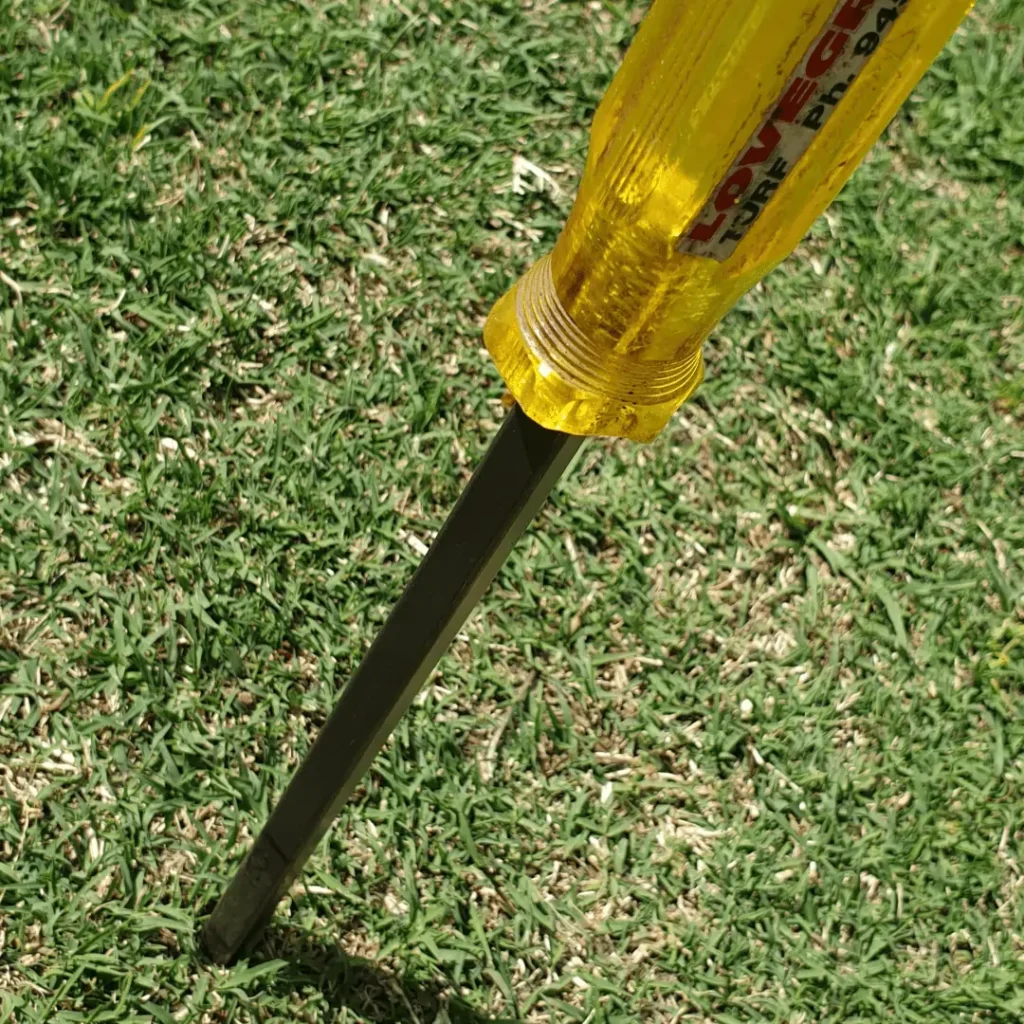
credit: https://www.lovegroveturf.com/
Compacted soil is ground where the particles have been pressed so tightly together that air pockets disappear. Grass roots need those air pockets to breathe, absorb water, and push outward. When the pore space collapses, roots stall near the surface and the grass above thins, yellows, or dies off.
Think of healthy soil like a sponge full of tiny holes. Roots, water, and oxygen all move through those gaps. Compaction squeezes the sponge flat, so nothing moves freely anymore.
Clay soils compact the fastest because their particles are small and flat, and they stack together like wet paper. Sandy soils resist compaction better because their larger, rounder grains leave more room between them.
What Causes Soil to Become Compacted?
Soil gets compacted when steady weight or pressure pushes the particles together over time. The usual sources are foot traffic, vehicle or equipment weight, and natural settling, and the problem gets worse on clay-heavy ground or soil that’s worked while wet.
Walking the same path across the yard, kids playing in one spot, or a dog running the fence line all pack the top few inches of soil. High-traffic lanes are almost always the first patches to thin out.
Mowing or driving on saturated soil is one of the fastest ways to cause damage. Wet soil has no structure to resist the load, so the weight presses the particles flat and they stay that way once the ground dries.
New-construction lots are often compacted before the first blade of grass goes in, because heavy machinery rolls over the same ground for months. That’s why builder-grade lawns so often struggle in their first few years.
How Do You Know If Your Soil Is Compacted?
The fastest check is the screwdriver test: push a 6-inch screwdriver into the soil a day after rain or watering. If it slides in easily, your soil is fine. If you have to lean on it or it stops short, the soil is compacted.
A few other signs point to the same problem. Water that puddles or runs off instead of soaking in usually means the surface is sealed too tight. Grass that stays thin and weak in the same spots every year, despite watering and feeding, is another tell.
Heavy weed pressure can also signal compaction. Many common weeds tolerate packed soil far better than turfgrass does, so they fill in where the grass gives up.
| Sign | What It Means | Quick Confirmation |
|---|---|---|
| Screwdriver won’t sink 6 inches | Top layer is packed too tight for roots | Test after rain when soil is damp |
| Water puddles or runs off | Surface is sealed, blocking absorption | Watch the yard during a soaking rain |
| Thin grass in the same spots yearly | Roots can’t establish in those areas | Check if those spots are high-traffic lanes |
| Weeds outcompeting the grass | Soil favors weeds over turf | Note which weeds appear (knotweed, plantain) |
How Do You Fix Compacted Soil?
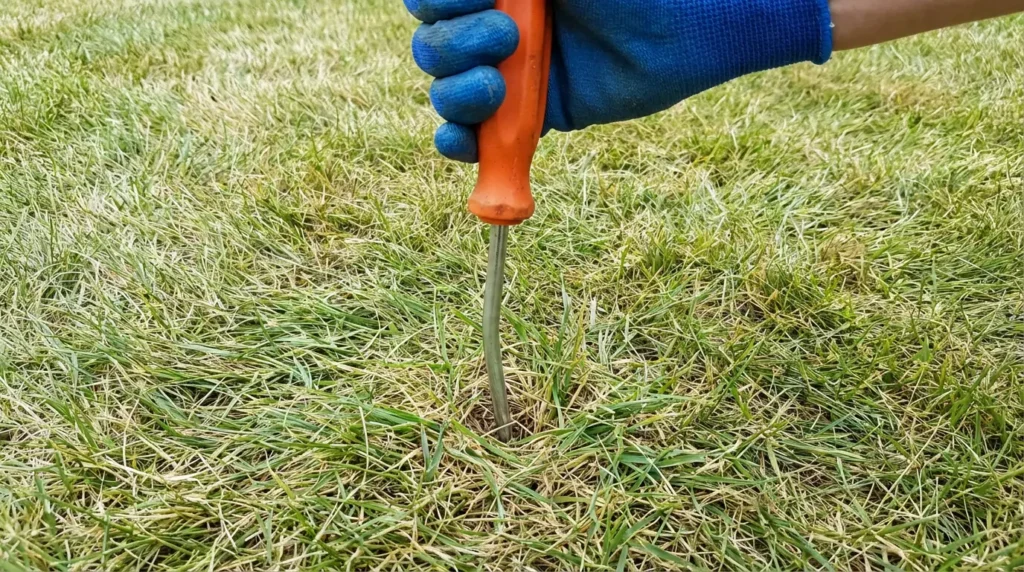
Core aeration is the standard fix. A core aerator pulls out thousands of small soil plugs, opening channels that let air, water, and roots move again. Spike aeration, which just pokes holes, helps less because it can press the surrounding soil even tighter.
Hiring a pro to aerate a typical quarter-acre lawn runs $75 to $206, with homeowners paying about $140 on average (Angi, 2026). Most pros charge $0.10 to $0.35 per square foot (Angi, 2026).
The DIY route is cheaper if you have the time. A walk-behind core aerator rents for roughly $65 to $110 per day, plus a way to haul it, and a quarter-acre lawn takes 2 to 3 hours for a first-timer (LawnGuru, 2026).
After aerating, leave the plugs on the lawn to break down on their own, then overseed and topdress with a thin layer of compost. The open holes give new seed and organic matter a direct path into the root zone. For ongoing relief, top-dressing with compost once a year slowly improves soil structure from the surface down.
| Fix | Average Cost | Best For |
|---|---|---|
| Professional core aeration | $75 – $206 per service (Angi, 2026) | Most lawns, especially larger or heavily compacted ones |
| DIY core aeration (rental) | $65 – $110 per day (LawnGuru, 2026) | Small to mid-size lawns when you have a few free hours |
| Compost top-dressing | Cost of compost only | Long-term soil improvement alongside aeration |
When Should You Aerate to Relieve Compaction?
Aerate during your grass’s active growing season so it recovers fast and fills the open holes. For cool-season grasses like Kentucky bluegrass and fescue, early fall is the prime window. For warm-season grasses like Bermuda and zoysia, late spring into early summer works best.
Timing matters because aeration stresses the lawn briefly. Doing it when the grass is growing strong lets it heal the plug holes within a couple of weeks. Aerating during summer heat or winter dormancy leaves the lawn open and slow to recover.
Most lawns benefit from aeration once a year (Today’s Homeowner, 2025). Heavy clay soil or high-traffic yards may need it twice, while sandy soil that rarely compacts can often go longer between sessions.
Common Mistakes That Keep Grass From Recovering
- Aerating wet or bone-dry soil: damp soil lets the tines pull clean plugs, while wet soil smears and dry soil barely breaks. Water lightly a day before.
- Choosing spike aeration over core aeration: spikes can press the soil tighter around each hole, so on compacted clay they often make the problem worse, not better.
- Skipping overseeding after aeration: the open holes are the best seedbed you’ll get all year, so seeding right after aeration gives the biggest payoff.
- Ignoring the cause: aerating a path that gets daily foot traffic only buys time. Rerouting the traffic or adding a stepping-stone path fixes the source.
Frequently Asked Questions
Why does compacted soil stop grass from growing?
Compacted soil presses the particles together until the air pockets between them disappear. Grass roots need those pockets to take in oxygen, water, and nutrients, so when they collapse, roots stall near the surface and the grass thins and weakens.
How much does it cost to fix compacted soil with aeration?
Professional core aeration costs $75 to $206 per service, with an average around $140 (Angi, 2026). Renting a core aerator to do it yourself runs about $65 to $110 per day (LawnGuru, 2026), plus a few hours of your time.
How can you tell if your soil is compacted?
Push a screwdriver 6 inches into damp soil. If it won’t go in easily, the soil is compacted. Puddling water, thin grass in the same spots each year, and heavy weed growth are other common signs.
Can you fix compacted soil without aeration?
You can improve it slowly by top-dressing with a thin layer of compost each year and keeping traffic off the area, but core aeration gives the fastest relief on lawns that are already packed tight. Compost and aeration together work better than either alone.
How often should you aerate compacted soil?
Most lawns do well with aeration once a year, timed to the grass’s growing season (Today’s Homeowner, 2025). Heavy clay or high-traffic lawns may need it twice a year, while sandy lawns that rarely compact can often wait longer.
What grass grows best in compacted soil?
No grass thrives in tightly compacted soil, but tall fescue tolerates it better than most cool-season types thanks to deep, aggressive roots. The better long-term move is to relieve the compaction first, then seed whatever suits your climate.