Why Grass Dies in Random Areas: Causes and Fixes
TL;DR
- Most random dead patches trace back to one of four causes: white grubs, dog urine, lawn fungus, or dry spots in the soil.
- The fastest field test is the tug test. Grass that peels up like loose carpet points to grubs eating the roots.
- Dog urine leaves a brown center ringed by darker green grass, and the patch stays firmly rooted when you pull it.
- Treat grubs only when you count 10 or more per square foot, since a healthy lawn shrugs off a few.
- Match the fix to the cause: curative insecticide for grubs, water and dilution for urine, smarter watering for fungus, and reseeding for bare dry spots.
What Makes Grass Die in Random Spots?

credit: https://www.epicgardening.com/
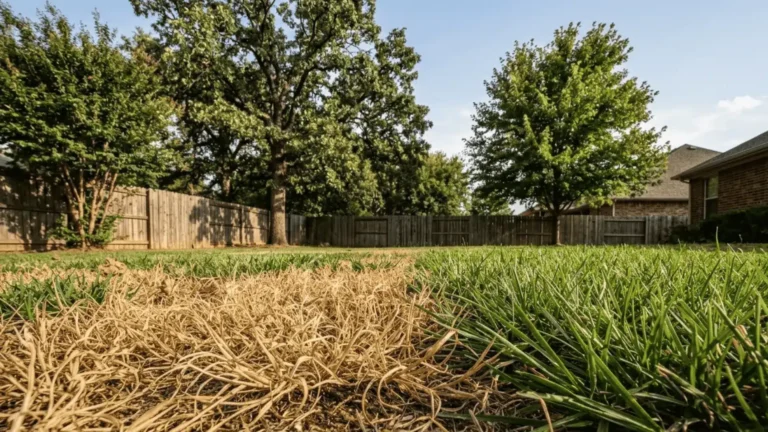
Grass dies in random areas when one small part of the lawn loses something the rest still has: roots, water, or a safe nitrogen balance. The patches look random because the trigger is local. A dog picks the same corner, grubs hatch in one strip of soil, or a fungus takes hold where the turf stays wet overnight.
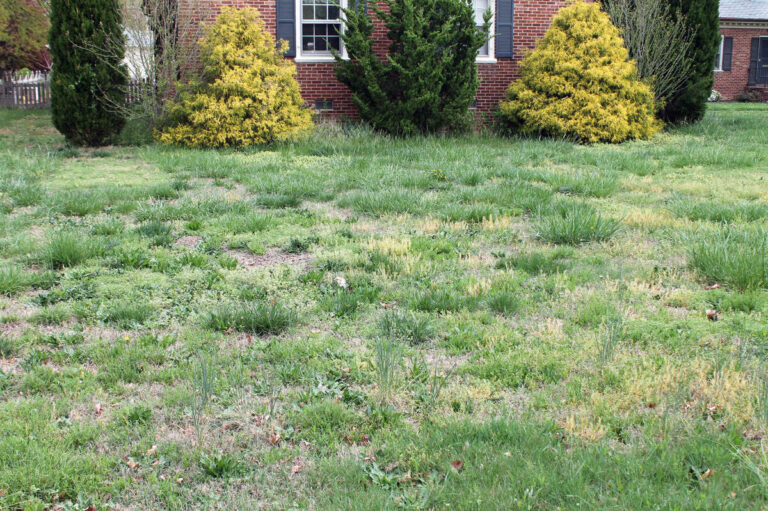
That local pattern is your biggest clue. Whole-lawn problems usually point to watering, mowing, or soil issues across the board. Scattered patches almost always mean a pest, a pet, a disease, or a dry pocket the sprinkler keeps missing.
The four causes below cover the large majority of cases for a typical US home lawn. Work through the diagnostic section first, then jump to the cause that matches what you see.
How Do You Tell What’s Killing Your Grass?
Start with the tug test, then look at the shape of the patch and any animal activity. Grab a handful of dead grass and pull up. If it lifts away with no resistance, like rolling back a rug, the roots are gone and grubs are the likely cause. If it holds firm, the roots are fine, which points to dog urine, fungus, or a dry spot.
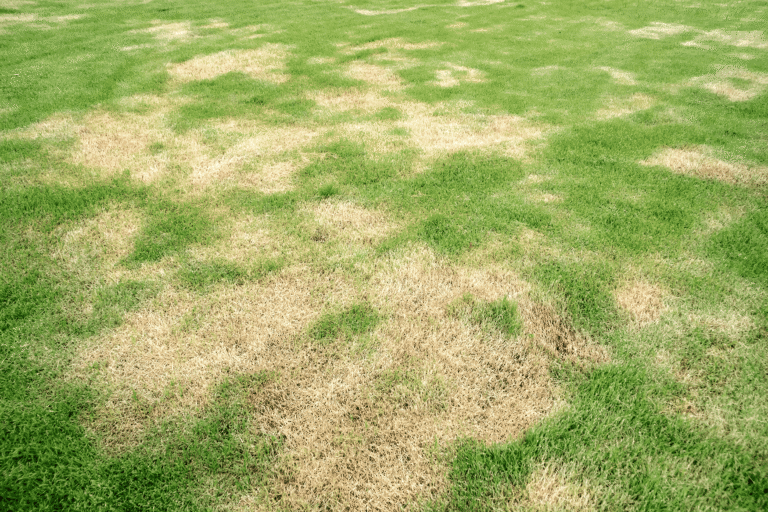
Next, read the pattern. Dog urine makes a brown center inside a ring of extra-green grass. Fungus tends toward rough circles or rings several inches to a few feet across. Dry spots follow the gaps in your sprinkler coverage. Grub damage shows up as irregular, spreading patches, often with skunks or raccoons tearing up the turf at night to eat the larvae.
| Cause | What the patch looks like | Tug test result | Main fix |
|---|---|---|---|
| White grubs | Irregular, spreading brown patches; torn-up turf from animals | Lifts like loose carpet | Curative insecticide if 10+ grubs per square foot |
| Dog urine | Brown center inside a dark green ring | Stays rooted | Water the spot, dilute, or reseed |
| Lawn fungus | Roughly circular or ringed patches in warm, humid weather | Stays rooted | Water in the morning; fungicide if it spreads |
| Dry spots | Patches that line up with sprinkler gaps or slopes | Stays rooted | Fix watering, then reseed bare areas |
One more check. Drought-stressed grass usually greens back up after a good soak, while grub-killed grass stays dead no matter how much you water it.
Why White Grubs Kill Grass in Patches

credit: https://myfertilizingcompany.com/
White grubs kill grass because they live in the soil and eat the roots, so the blades wilt and die even when you keep watering. Grubs are the C-shaped, soft white larvae of beetles like Japanese beetles and masked chafers. They feed hardest in late summer and early fall, which is when most homeowners notice the damage.
To confirm them, cut a one-foot square of sod, peel it back, and count the larvae in the top two to three inches of soil. A heavy population of 10 or more annual grubs per square foot can kill the grass outright. Healthy, well-watered turf often handles 5 to 10 without obvious damage, so the count matters more than the sight of a single grub.
For curative treatment, products with trichlorfon or carbaryl target grubs that are actively feeding. Timing is the catch: applications work best when grubs are young and near the surface, and they fall flat once the larvae mature in mid-fall. Water any product in with at least half an inch of irrigation so it reaches the root zone.
Why Dog Urine Burns Brown Spots Into the Lawn
Dog urine burns the grass because it carries a concentrated dose of nitrogen, and too much nitrogen in one spot scorches the roots the same way an overdose of fertilizer would. The result is a dead brown center surrounded by a ring of lush, dark green grass that got just enough nitrogen to thrive instead of burn.
The tug test is the giveaway here. Urine does not damage the roots, so the dead patch stays anchored when you pull it. That rooted, ringed look separates urine spots from grub damage almost every time.
The simplest fix is dilution. Rinse the spot with water soon after your dog goes, and encourage your dog to drink more so the urine is less concentrated. For lasting repair, rake out the dead grass and reseed. Fescue and ryegrass handle urine better than Kentucky bluegrass, so they are smart choices for a backyard that doubles as a dog run.
Why Lawn Fungus Creates Circular Dead Patches
Lawn fungus kills grass in rough circles or rings because fungal diseases like brown patch attack the blades and spread outward from a single point. Brown patch thrives in hot, humid weather and gets a foothold when the lawn stays damp overnight, which is why late-evening watering makes it worse.
Look for tan or brown patches from a few inches to a couple of feet across, sometimes with a darker, smoky edge in the morning dew. Unlike grub damage, the turf stays rooted, since the fungus is working on the blades rather than the roots.
The first fix is a watering change. Water early in the morning so the grass dries by midday, and avoid watering at night. Improve airflow and drainage where you can, and skip heavy nitrogen during peak summer heat, since lush new growth feeds the disease. If patches keep spreading, a lawn fungicide labeled for brown patch can slow it down.
Why Dry Spots and Compaction Cause Random Browning
Dry spots and compacted soil cause random browning because some parts of the lawn never get the water they need, even when the rest looks fine. Sprinkler coverage is rarely perfect. Slopes, edges, and spots shaded by a head that points the wrong way dry out first and brown out while the lawn around them stays green.
Compacted soil makes it worse. Foot traffic, a parked trailer, or heavy clay packs the soil tight, so water runs off instead of soaking in and roots stay shallow. These patches stay rooted in the tug test and tend to green back up after a deep soak, which separates them from grubs.
Fix the water first. Run your sprinklers during a cycle and watch where the spray lands, then adjust heads to cover the dry zones. Core aeration in spring or fall loosens compacted soil and helps water reach the roots. Reseed any spots that stay bare once the watering is sorted out.
Common Mistakes That Cost You More in the Long Run
- Treating for grubs without counting first: insecticide does nothing for urine, fungus, or dry spots, so confirm 10-plus grubs per square foot before you spend money on a product.
- Watering a brown patch harder and hoping it recovers: grub-killed and fungus-killed grass will not bounce back from more water, and overwatering can feed the fungus.
- Spraying fungicide on a grub problem: the two need opposite treatments, so the wrong product wastes time while the patch keeps spreading.
- Watering late at night: that habit keeps the lawn damp for hours and gives brown patch the conditions it needs to take hold.
Frequently Asked Questions
Why does my grass die in random patches but not all over?
Random patches almost always come from a local trigger: grubs hatching in one strip of soil, a dog using the same corner, fungus in a damp spot, or a dry zone your sprinkler misses. Whole-lawn browning usually points to watering, mowing, or soil problems instead.
How can I tell if grubs are killing my grass?
Cut and peel back a one-foot square of sod and count the white, C-shaped larvae in the top few inches of soil. The dead grass also lifts away like loose carpet because the roots are gone, and you may see skunks or raccoons digging at night.
How do I stop dog urine from killing my lawn?
Rinse the spot with water soon after your dog goes to dilute the nitrogen, and keep your dog well hydrated so the urine is less concentrated. For repair, rake out the dead grass and reseed with a more tolerant grass like fescue or ryegrass.
What does lawn fungus look like compared to grub damage?
Fungus shows up as roughly circular or ringed patches in hot, humid weather, and the turf stays firmly rooted because the disease attacks the blades. Grub damage is irregular, spreads outward, and lifts up easily since the roots have been eaten.
When should I treat my lawn for grubs?
Treat only after you confirm a damaging population, generally 10 or more grubs per square foot, since healthy turf tolerates a few. Apply curative products while grubs are young and feeding near the surface, and water them in. Treatments fail once the larvae mature in mid-fall.