Transition Zone Lawn Care: The Trade-Off Nobody States
In the transition zone, no grass has an easy year, and choosing one means choosing which season you protect. Cool-season grass, usually tall fescue, stays green longer through fall, winter and spring but can take real damage in the hottest weeks of summer. Warm-season grass, usually zoysia or bermudagrass, shrugs off summer heat without effort but goes tan-brown for a longer stretch of the year than it would further south. There is no third option that avoids both trade-offs; the honest task is picking which weak season you would rather manage.
That trade-off is why advice written for a purely cool-season or purely warm-season climate keeps failing readers here. A cool-season fertilizing calendar assumes a summer the grass can coast through comfortably. A warm-season calendar assumes winters mild enough that dormancy is brief. Neither assumption holds in this band, which runs roughly across the middle of the country from Kansas and Oklahoma east through Missouri, Tennessee, Virginia and into parts of the Mid-Atlantic.
What the transition zone actually is, and how to tell if you are in it
The transition zone is not a strict line on a map so much as a band where both cool-season and warm-season grasses are commonly grown, and where extension services in states like Missouri, Tennessee, Virginia, Kansas and Oklahoma maintain turf programs covering both. If your winter-and-summer check looks like this, you are likely in it: your lawn stays reasonably green through winter but visibly struggles in the worst two or three weeks of summer heat, or the reverse, it goes fully dormant and brown for a real stretch of the cold season rather than staying green year-round. Our grass identification key walks through this check along with blade and growth-habit tests if you are not sure which family is already growing in your yard.
Tall fescue: the cool-season default, and its summer weak point
Tall fescue is the most common cool-season choice across the transition zone, and for good reason: it holds color longer into fall and winter than bermudagrass or zoysia, and it tolerates the region's cold snaps without going fully dormant most years. Its clumping growth habit also means it does not spread aggressively into beds or walkways.
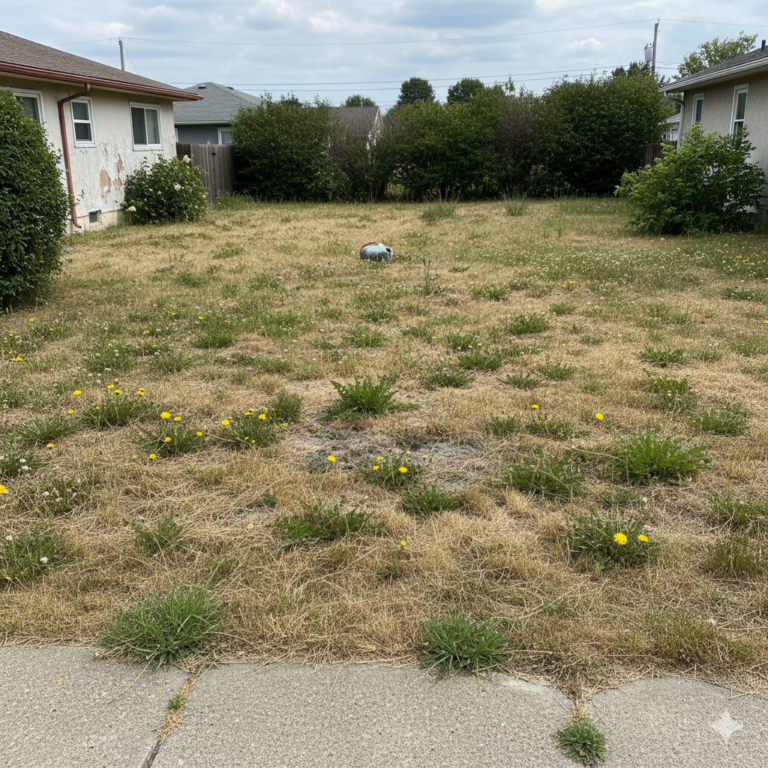
The trade-off shows up in the hottest weeks of summer, when tall fescue slows growth and can thin or brown under sustained heat and drought stress, particularly on lawns that were mowed too short heading into summer or that go without supplemental water during a dry stretch. This is a known, expected weak point of the species in this climate, not a sign that something is specifically wrong with your lawn. If your fescue browns hard every July and recovers every fall, that pattern is consistent with normal transition-zone heat stress; see our guide on dormant vs dead grass if you want to confirm it is stress rather than a real problem.
Zoysia and bermudagrass: the warm-season options, and the long dormant stretch
Zoysia and bermudagrass both handle transition-zone summer heat far better than tall fescue, staying dense and actively growing through the hottest stretch of the year with less water stress. Zoysia spreads slowly and tolerates a bit more shade than bermudagrass; bermudagrass spreads aggressively and wants full sun to perform well.
The trade-off runs the other direction from tall fescue: both go dormant and tan-brown at the first hard frost and typically do not green back up until well into spring, a longer dormant stretch here than either grass experiences in its home range further south. A homeowner who picks zoysia or bermudagrass in the transition zone is trading a shorter green season for a much easier summer.
Why "just plant both" does not work
Mixing a cool-season and warm-season grass in the same lawn on purpose is not a workable middle path. The two families have different mowing heights, different active growth periods and, most importantly, opposite dormancy patterns, so at almost any point in the year one is actively growing while the other is dormant or struggling. The result in practice is not a lawn that is always green; it is usually a lawn where one grass gradually crowds out the other, or a patchy, uneven appearance year-round. The exception some transition-zone homeowners do use deliberately is overseeding a dormant warm-season lawn with annual or perennial ryegrass purely for winter color, which is a cosmetic choice, not an attempt to run two permanent grasses together.
Building your actual schedule once you have picked a side
Once you know which family you are managing, the schedule itself follows the same logic as anywhere else, just compressed by the region's shorter comfortable stretches on both ends. Our lawn care calendar, built from grass family and your own average first frost date rather than a fixed month list, is the right next stop for the actual task-by-task timing. If you have a cool-season tall fescue lawn, fall overseeding timing is the single highest-value task on your calendar, since it is when tall fescue does most of its recovering from summer stress.
Managing the lawn through its weak season
Whichever grass you have, the lawn's weak season is a period to protect, not to push. For tall fescue in summer, that means mowing a bit taller to shade the soil and roots, watering deeply but infrequently rather than a light daily sprinkle, and holding off on fertilizing during the hottest stretch, since a stressed lawn generally cannot use it well. For zoysia or bermudagrass through their long winter dormancy, that means minimizing foot traffic on the dormant, brittle turf and not attempting to green it up early with heavy watering or fertilizer, since dormant grass in cold weather is not in an active growth state and will not respond the way it would in season.
FAQ
Is tall fescue or zoysia the better choice for a transition-zone lawn?
Neither is objectively better; it depends which trade-off you would rather live with. Tall fescue gives you more green months and an easier winter at the cost of summer stress; zoysia or bermudagrass gives you an easier summer at the cost of a longer brown dormant stretch.
Can I overseed my dormant bermudagrass with ryegrass for winter color?
Yes, this is a common cosmetic practice in the transition zone and elsewhere in warm-season territory. It is done for appearance during dormancy, not as a repair strategy, and the ryegrass typically fades out on its own as the bermudagrass resumes growth in spring.
Why does my fescue lawn look worse than my neighbor's every summer?
Differences in mowing height, watering consistency and soil condition through the hottest weeks often explain more of the visible difference than the grass itself. A taller mowing height and consistent deep watering during summer heat both reduce visible stress on tall fescue.
Is there a grass that actually handles both seasons well in this zone?
Not one without a real compromise attached. Every option commonly recommended for the transition zone, tall fescue, zoysia and bermudagrass among them, is a trade-off between a longer green season and better summer heat tolerance, not a grass that excels at both.
How do I know for sure I am in the transition zone and not just a cooler or warmer part of one climate?
The clearest signal is the pattern itself: real winter dormancy or real summer stress showing up in the same lawn in the same year, rather than one or the other. If your area's Cooperative Extension service runs turf guidance covering both cool-season and warm-season species, that is a strong sign you are in this band.