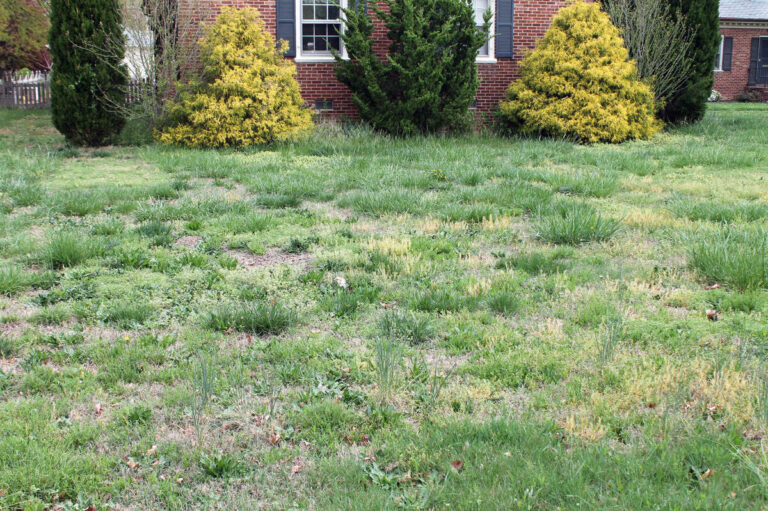
How Often Should You Really Mow Your Grass?
TL;DR
- Most lawns need mowing every 5-7 days during the active growing season
- The one-third rule governs everything: never cut more than one-third of the grass blade in a single mow
- Cool-season grasses (Kentucky bluegrass, tall fescue, ryegrass) peak in spring and fall; warm-season grasses (Bermuda, Zoysia, St. Augustine) peak mid-summer
- Mowing height is as important as mowing frequency – cool-season grasses should stay at 3 inches or higher (Purdue Extension)
- Stop mowing when grass goes dormant – not on a fixed calendar date
What Is the Right Mowing Frequency for a Home Lawn?
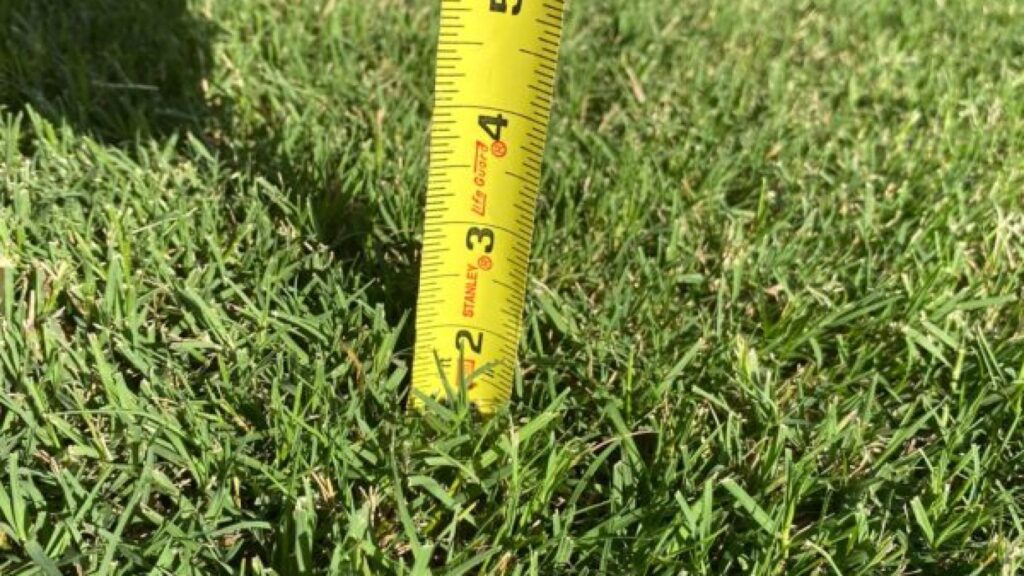
credit: https://turfmasterslawncare.com/
Most lawns should be mowed every 5-7 days during the growing season. That said, the calendar is not your real guide – your grass height is. The one-third rule is the governing principle: never remove more than one-third of the grass blade’s height in a single mow. If your mower is set to 3 inches, cut when the grass reaches 4 inches. That gap between 3 and 4 inches tells you exactly when to mow.
Purdue Extension puts it plainly: at a 3-inch cut height, you might be mowing twice a week in early spring and once every 2-3 weeks in summer. The grass tells you when, not the week.
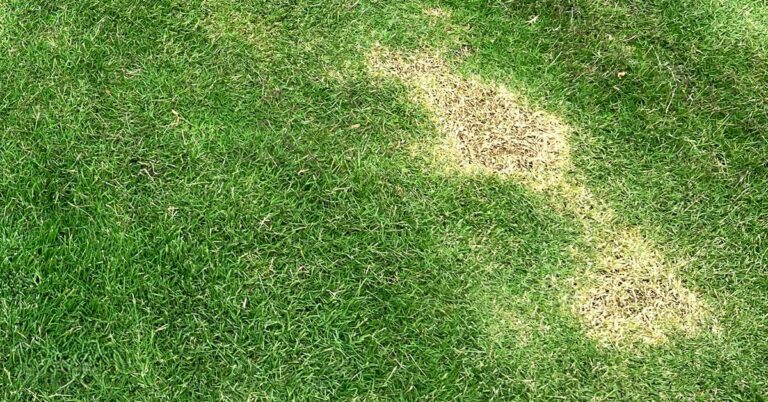
Skipping this rule is where things go sideways. Cut off too much at once and you remove the leaf surface the plant uses to produce food. The grass goes into stress, the tips turn brown, and you end up with that scalped, hazy look that takes weeks to recover from.
How Grass Type Changes Your Mowing Schedule
Not all grass grows the same way, and the gap between cool-season and warm-season grass is big enough to change your entire mowing calendar.
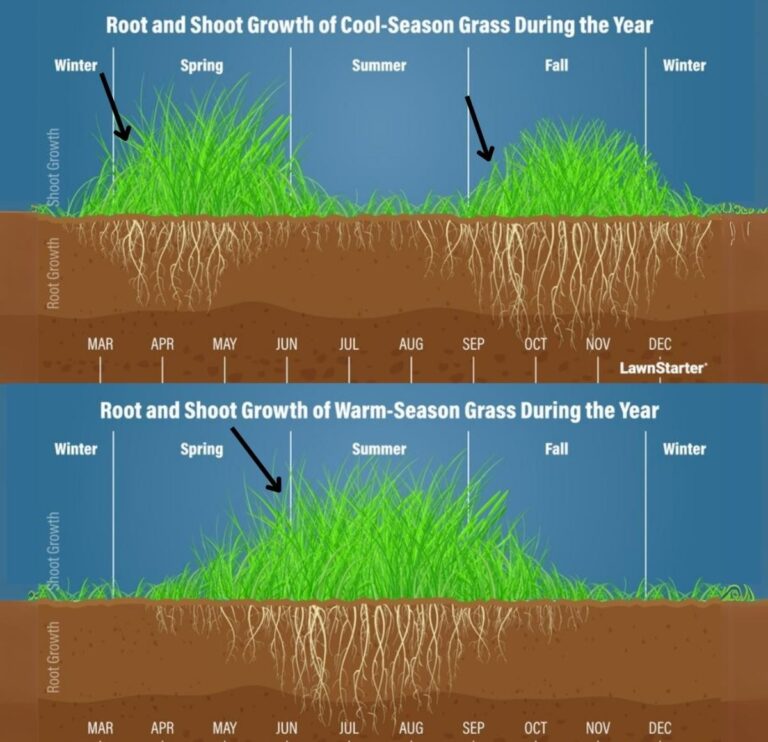
Cool-season grasses – Kentucky bluegrass, tall fescue, perennial ryegrass, fine fescues – grow fastest in spring and fall when soil temperatures are between 50°F and 65°F. Purdue Extension recommends setting cool-season lawns at 3 inches or higher and leaving it there year-round. Expect to mow weekly – sometimes twice a week – from April through June, then again in September and October. Growth slows significantly in July and August.
Warm-season grasses – Bermuda, Zoysia, St. Augustine, Centipede – hit their stride in late spring through summer. These grasses thrive in heat and should be kept shorter, between 1-2.5 inches for Bermuda and Zoysia depending on the variety. During peak summer heat, plan on mowing every 5-7 days, or even every 3-5 days for aggressive Bermuda. They go dormant in fall and stop growing entirely in winter.
| Grass Type | Peak Season | Mow Height | Mow Frequency (Peak) |
|---|---|---|---|
| Kentucky Bluegrass | Spring / Fall | 2.0-3.5 in | Every 5-7 days |
| Tall Fescue | Spring / Fall | 2.5-4.0 in | Every 5-7 days |
| Perennial Ryegrass | Spring / Fall | 2.0-3.5 in | Every 5-7 days |
| Fine Fescue | Spring / Fall | 2.5-4.0 in | Every 7-10 days |
| Bermuda | Summer | 1.0-2.0 in | Every 3-7 days |
| Zoysia | Summer | 1.0-2.5 in | Every 5-7 days |
| St. Augustine | Summer | 2.5-4.0 in | Every 5-7 days |
| Centipede | Summer | 1.0-2.0 in | Every 7-10 days |
Height ranges sourced from Purdue Extension and Penn State Extension turfgrass management guides.
How Mowing Frequency Changes by Season
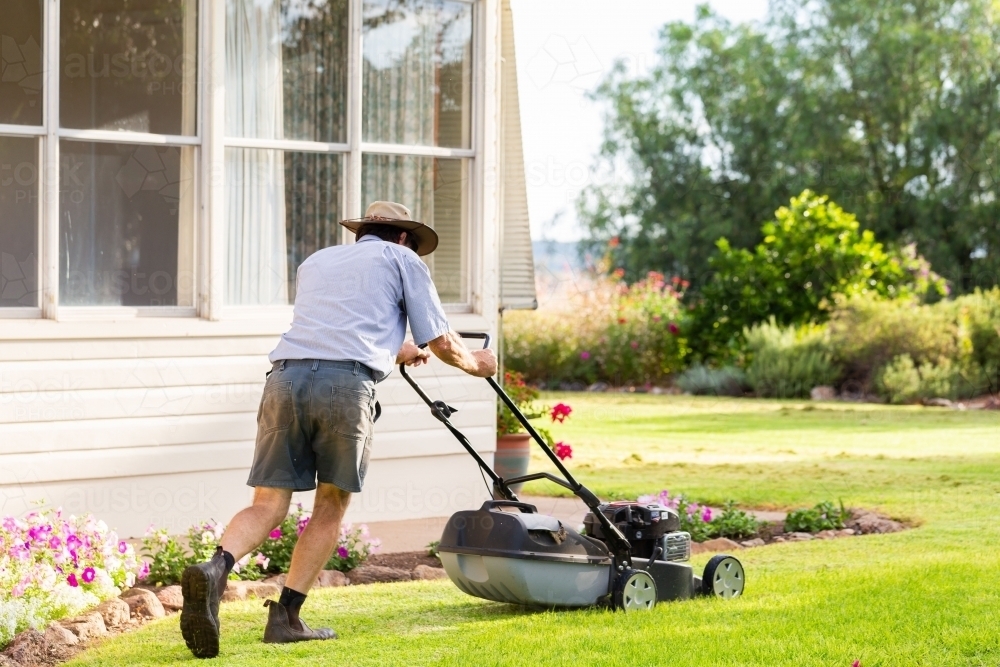
credit: https://www.austockphoto.com.au/
Mowing frequency is not a fixed number – it shifts with the seasons, and treating it like a set schedule is one of the most common mistakes homeowners make.
Spring is the most demanding season for the mower. Cool-season grasses are growing fast, fueled by rain and mild temperatures. Plan on mowing at least once a week, and twice a week during peak growth in May. Michigan State University Extension notes that rapid spring growth may require mowing every four to five days to stay within the one-third rule (MSU Extension, Mowing Lawn Turf, e0013).
Summer divides depending on your grass. Cool-season lawns slow way down in July and August – you may go two to three weeks between mows. Raise your mower deck slightly to help the grass handle heat stress, which also reduces how often you need to get out there. Warm-season lawns are at their busiest right now, often needing weekly cuts or more.
Fall brings cool-season grasses back to life. September and October are close to spring in terms of growth rate. Keep mowing as long as the grass is actively growing – Purdue Extension advises continuing through late October or early November and avoiding the urge to cut low before winter.
Winter means no mowing for cool-season lawns in most of the country. Warm-season grasses go dormant and also stop needing cuts. If you get a surprise warm stretch, one light pass is fine, but never mow frozen or frost-covered grass.
Signs You Are Mowing Too Often or Not Often Enough
Mowing too often at too low a height causes more lawn damage than almost any other maintenance mistake. Grass mowed below its ideal height develops shallow roots, struggles in drought, and becomes an easy target for weeds and fungal disease.
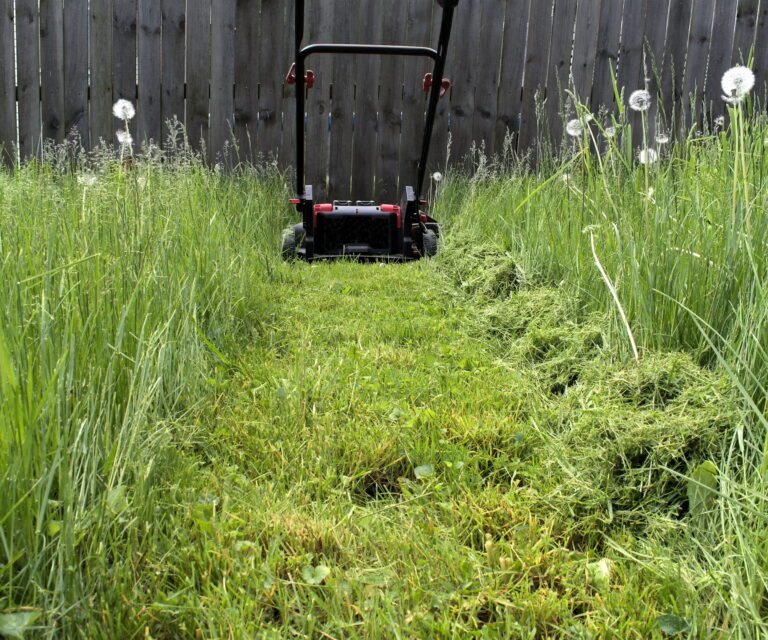
Not mowing often enough has its own set of problems. Let a cool-season lawn go from 3 inches to 6 inches and you’ve lost the ability to follow the one-third rule without taking multiple passes over several days. You’ll also have a matted, clumping mess that can suffocate lower growth.
Watch for these signals:
- Grass tips turning brown or tan shortly after mowing – you cut too low or removed too much at once
- Clumps of clippings left on the lawn after mowing – the grass was too long, indicating you waited too long between mows
- Visible yellowing of lower grass blades – too little sunlight reaching the base, usually from infrequent mowing
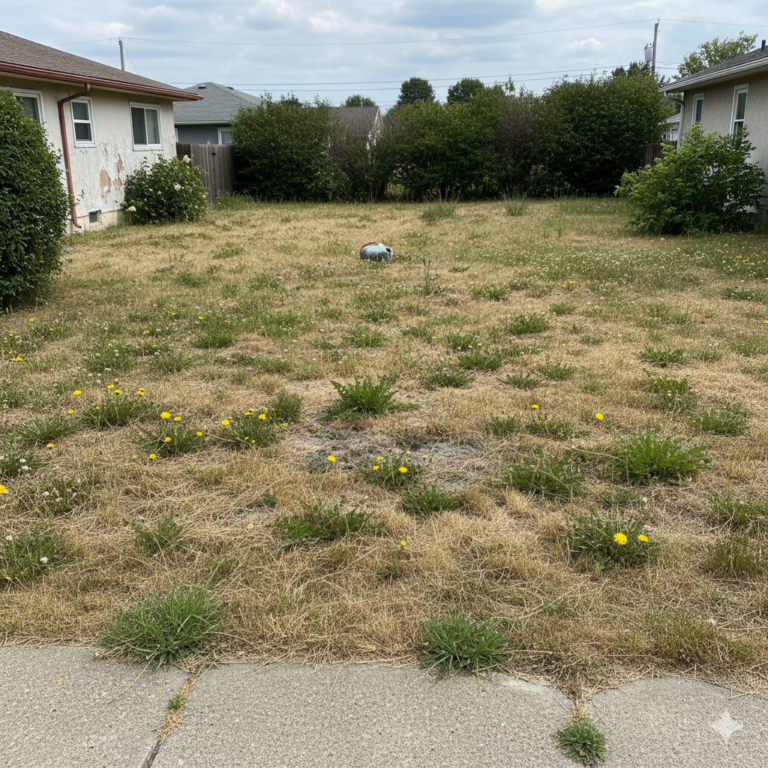
- Lawn looking thin and weedy – low mowing height combined with infrequent mowing lets weeds fill in gaps
Return clippings to the lawn whenever you follow the one-third rule – they break down quickly and return nitrogen to the soil. Only bag clippings if the lawn got away from you and the clumps are thick enough to block sunlight.
Common Mowing Mistakes That Cost You More
- Mowing on a fixed day of the week: Grass doesn’t care what day it is. Mow when the height tells you to, not when Sunday rolls around.
- Setting the deck too low for your grass type: Bermuda can handle 1.5 inches; Kentucky bluegrass at 1.5 inches is getting scalped. Know your grass.
- Mowing wet grass: Wet blades clump, clog the deck, and spread fungal disease. Let it dry first.
- Using dull blades: A dull blade tears the grass instead of cutting it cleanly. Torn tips turn brown within a day or two and invite disease. Sharpen blades every 20-25 hours of use, or at least once per season.
- Skipping fall mowing: Heading into winter with grass that’s too long invites snow mold and matting. Keep mowing through the fall until growth truly stops.
Frequently Asked Questions
How often should you mow your grass?
Most lawns need mowing every 5-7 days during the active growing season. The real trigger is height, not the calendar. Follow the one-third rule: mow when your grass is about one-third taller than your target cut height, and don’t cut more than that amount off at once.
What happens if you mow your lawn too often?
Mowing too often at too low a height weakens the grass by removing too much leaf surface, which the plant uses to produce energy. It leads to shallow root systems, brown tips, and a lawn that struggles to compete with weeds. The damage compounds over time.
Should you mow more in spring or summer?
For cool-season lawns (Kentucky bluegrass, fescue, ryegrass), spring is the busiest season – weekly mowing is the minimum and twice a week is sometimes needed. Summer growth slows significantly. For warm-season lawns (Bermuda, Zoysia), summer is the peak mowing season.
What is the one-third rule in lawn mowing?
The one-third rule means never removing more than one-third of the grass blade’s total height in a single mow. If your target is 3 inches, mow when grass reaches 4 inches – you’re cutting 1 inch off 4 inches of growth. Cutting more than this stresses the plant and can cause browning and thinning (Purdue Extension).
Should you bag or mulch grass clippings?
Mulch and return clippings to the lawn when you’re following the one-third rule – short clippings break down within days and return nutrients to the soil. Bag clippings only when the lawn got overgrown and clumps are thick enough to block sunlight to lower grass.
When should you stop mowing in the fall?
Keep mowing cool-season grass through late October or early November, or as long as it’s actively growing. Purdue Extension advises against a hard stop date – watch the growth rate and stop when the grass is no longer putting on height between sessions.