Why Some Areas of Your Lawn Never Grow Properly – and How to Fix Each One
TL;DR
- Lawn areas that refuse to grow almost always have a specific, fixable cause – most commonly soil compaction, wrong pH, too much shade, or pest damage.
- Most grasses need soil pH between 6.0 and 7.0 to use the nutrients already in the ground; outside that range, fertilizer won’t help (Purdue University Extension).
- A screwdriver pushed into the soil is a quick field test for compaction: if it won’t go 6 inches in, your soil is too dense for healthy root growth.
- Bare spots caused by grubs, fungal disease, or dog urine each look similar from a distance but require completely different fixes.
- Start by diagnosing the cause before spending money on seed, sod, or fertilizer – seeding over an unresolved problem just wastes the seed.
Why the Same Spot Keeps Failing No Matter What You Do
credit: https://homegardenandhomestead.com/
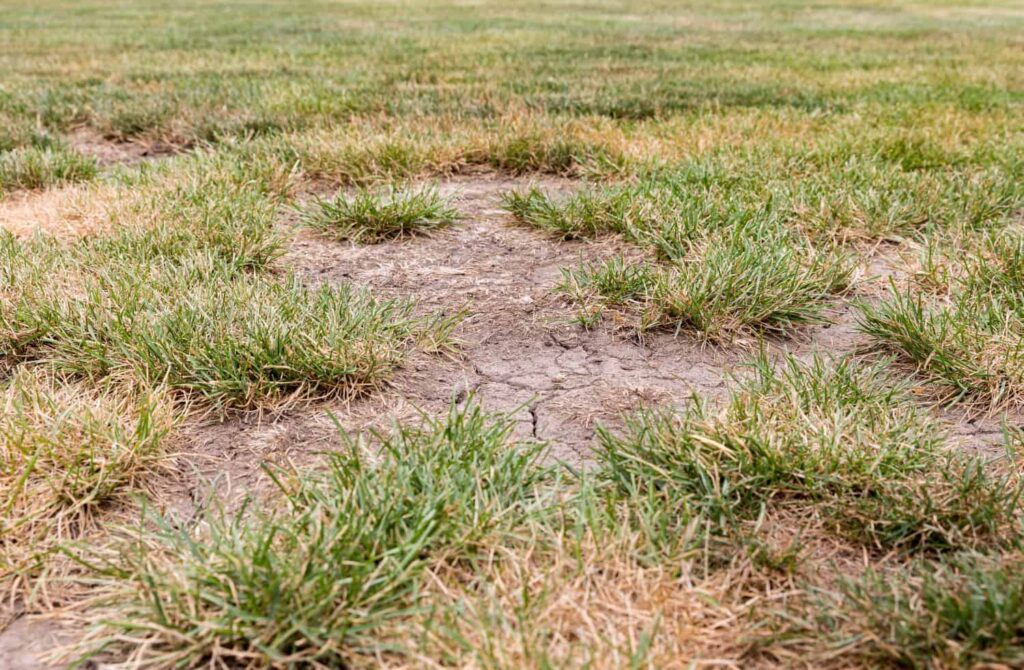
Lawn areas that consistently fail to grow are telling you something specific about that location. The conditions in one corner of your yard can be dramatically different from conditions ten feet away – different drainage, different compaction, different sun exposure – and turfgrass is sensitive to all of it.
Throwing seed at a bare patch without fixing the underlying problem is like painting over a water stain. The stain comes back. The same logic applies here: identify the cause first, then repair.
The six causes below cover the vast majority of problem spots in US home lawns.
Soil Compaction: The Most Overlooked Reason Grass Quits
Compacted soil is the most common reason certain lawn areas fail year after year. When soil particles are packed tightly together, water, air, and nutrients can’t reach the root zone – and grass roots can’t push through to establish.
You can test it in 30 seconds. Push a standard screwdriver straight into the soil. If it goes 6 inches without much resistance, compaction is not the problem. If you have to force it or it stops at 2-3 inches, you’re dealing with compacted soil (Lawn Love, 2025).
Core aeration is the fix. A core aerator pulls small plugs of soil out of the ground, opening up channels for water, air, and nutrients to move freely. According to Penn State Extension, a compacted layer as thin as one-quarter to one-half inch can significantly block water infiltration and nutrient penetration. Aerate cool-season grasses (Kentucky bluegrass, fescue, ryegrass) in early fall; warm-season grasses (Bermuda, Zoysia) in late spring to early summer. Follow up with overseeding while the holes are open for best results.
Wrong Soil pH: Why Your Fertilizer Isn’t Working
Soil pH is the reason a lawn can have plenty of nutrients in the ground and still look terrible. If the pH is off, grass simply cannot absorb what’s already there – including the fertilizer you’re putting down.
Most lawn grasses need a pH between 6.0 and 7.0. Per Purdue University Extension, keeping pH in this range ensures nutrients stay soluble and accessible to roots. Below 5.5, nitrogen, phosphorus, and potassium all become less available. Above 7.5, iron becomes insoluble and grass turns yellow even when iron is present in the soil (Terra Lawn Care, 2026).
The fix depends on which direction your pH is off. If it’s too low (acidic), apply ground agricultural limestone – sometimes called lime. If it’s too high (alkaline), sulfur can help, though Purdue Extension notes that lowering pH in heavily buffered Midwest soils with sulfur is slow and often impractical.
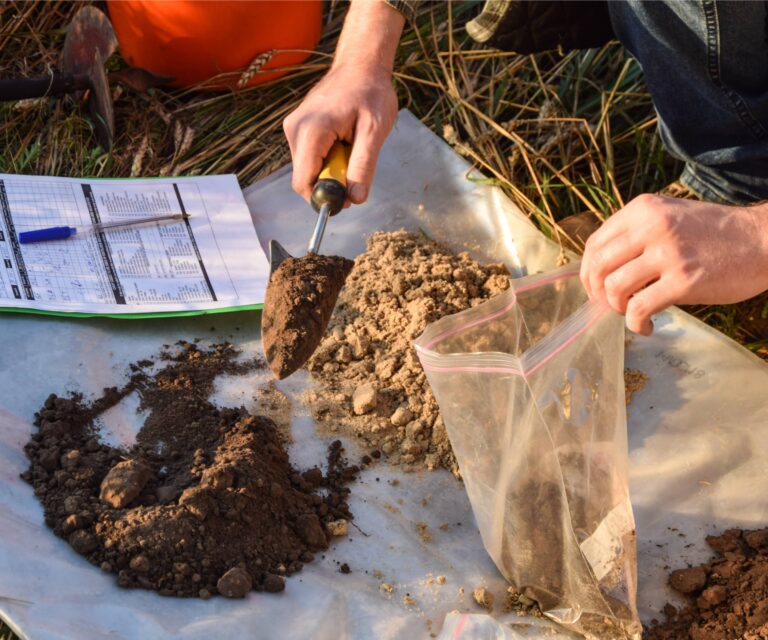
A soil test tells you exactly what you’re dealing with and how much amendment to apply. Your local county extension office can run one, or you can mail samples to a university lab. Scotts/Miracle-Gro recommends always testing before applying any pH amendment, since applying lime to soil that doesn’t need it creates a different problem (Scotts Miracle-Gro, 2025).
Too Much Shade: When the Problem Is the Tree, Not the Grass
Grass needs sunlight to photosynthesize, and most turfgrass varieties need at least 4-6 hours of direct sun per day to stay healthy. Areas under dense tree canopies, next to fences, or on the north side of a structure often fall short of that minimum.
This is one of the few lawn problems where the fix is a management decision, not a soil fix. You have three options:
- Thin out tree limbs to let more light through. This is worth trying if you’re losing 1-2 hours of sun to a canopy that can be pruned.
- Reseed with a shade-tolerant variety. Fine fescues (creeping red, chewings, hard fescue) are the best choice for shaded northern lawns. Zoysia tolerates moderate shade in the South.
- Stop fighting it and convert the area. Ground covers like pachysandra, hostas, or mulched beds are a practical solution when the shade is too dense for any grass to survive long-term.
Seeding shade-tolerant varieties in early fall gives seed the best chance in transition zones.
Grubs, Dog Urine, and Chemical Spills: Spotting the Pattern
Pest and chemical damage looks like bare patches from a distance, but the shape and pattern of the damage usually gives away the cause.
| Damage Type | What It Looks Like | When It Appears |
|---|---|---|
| White grubs | Irregular brown patches that pull up like loose carpet | Late summer into fall |
| Dog urine | Round, dark green ring with dead center | Anytime; more visible in hot weather |
| Fungal disease | Circular or irregular tan/brown patches, sometimes with a darker border | Spring and fall with heavy moisture |
| Gasoline or herbicide spill | Dead zone with a sharp, defined edge | Shortly after the spill occurs |
| Buried debris (rocks, concrete, wood) | Patch that never responds to any treatment | Year-round |
Grub damage is confirmed by peeling back the dead turf. If you find 5 or more white C-shaped larvae per square foot, grub treatment is the priority before any reseeding (University of Minnesota Extension).
Dog urine damage responds to heavy watering to flush nitrogen salts from the soil. Then reseed once the soil is diluted out.
Drainage Problems and Low Spots: Too Much Water Kills Grass Too
Low spots that collect standing water after rain are just as hostile to grass as drought-stressed areas. Waterlogged soil pushes oxygen out of the root zone, and most turfgrasses will thin and die in areas where water sits for more than 24-48 hours.
Conversely, slopes shed water too fast. Grass on a steep grade may receive full sun and regular irrigation but still stress out because the water runs off before it soaks in. Soil erosion on slopes creates uneven surfaces where some patches receive normal moisture and others get almost none (Bob Vila, 2023).
For low spots, topdressing with a sand-compost mix can gradually raise the grade. For severe drainage issues, a French drain or regrading may be necessary. On slopes, erosion-control mixes with perennial ryegrass establish quickly and hold the soil while slower grasses fill in.
Why Reseeding Fails When You Don’t Fix the Cause First
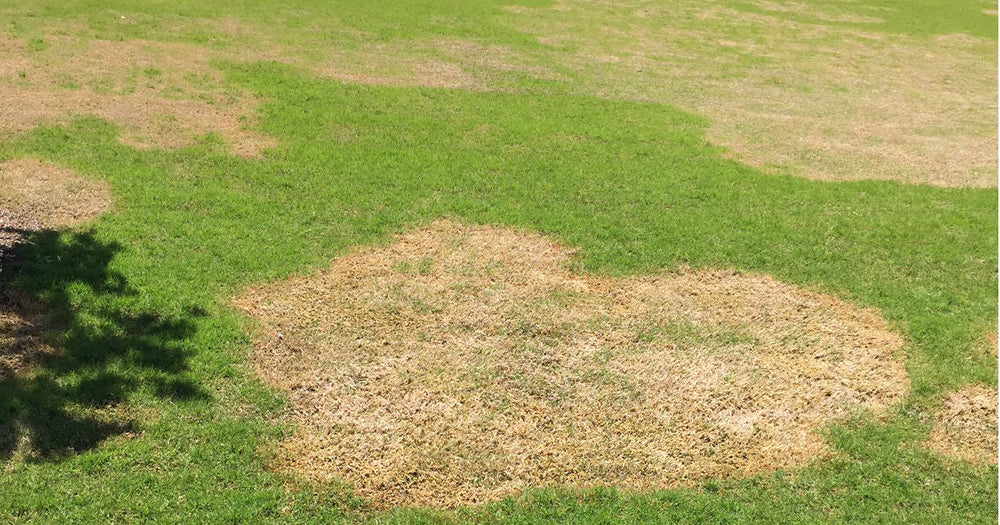
Seeding into a problem area without resolving the underlying issue is the most common reason lawn repairs don’t hold. The seed germinates, the new grass looks promising for a few weeks, and then the same conditions that killed the original stand kill the new one too.
Fix the cause, then seed. The right seed timing matters as much as the fix itself. For cool-season grasses across most of the northern US, late August through September is the best seeding window – soil is still warm, air temperatures are cooler, and the grass establishes roots before winter. For warm-season grasses in the South, late spring is the window. Penn State Extension confirms fall as the optimal repair window for Pennsylvania and similar northern climates.
Common Mistakes That Waste Your Time and Money
- Seeding without a soil test: You may be fighting a pH or compaction problem that no amount of seed will solve. A basic soil test costs $15-30 at most county extension offices.
- Using the wrong grass variety for your light conditions: Bermuda seeded into deep shade will not survive, no matter how well you prepare the soil. Match the seed to the actual conditions on that spot.
- Reseeding in the wrong season: Cool-season grass seed put down in July during peak summer heat faces enormous stress. Time your repair to the active growing season for your grass type.
Frequently Asked Questions
Why does the same spot in my lawn keep dying every year?
A recurring bare spot almost always points to a persistent condition – compaction, buried debris, a drainage issue, or a pH problem – rather than a surface-level fix. Pull back the dead turf, probe the soil, and test the pH before reseeding. Fixing the cause is the only way to stop the cycle.
How do I know if I have a soil pH problem?
The clearest signs are fertilizer that seems to do nothing, persistent moss growth, or grass that looks pale and thin despite regular watering. A soil test confirms it. Your county cooperative extension office can run one for around $15-30, and the results will tell you exactly how much lime or sulfur to apply.
Can I fix shade problems by planting different grass seed?
Yes, to a point. Fine fescues handle shade better than most cool-season grasses, and Zoysia is the most shade-tolerant warm-season option. However, per returf.com, there is no permanent fix for deep shade. If a spot gets fewer than 3 hours of direct sun daily, no grass variety will thrive there long-term.
What does grub damage look like vs. other bare spots?
Grub-damaged turf feels spongy underfoot and the dead grass pulls up easily in sections, like a rug that’s been cut loose from the floor underneath. If you peel back a square foot of dead turf and find 5 or more white, C-shaped larvae, grubs are the cause (University of Minnesota Extension).
When is the best time to reseed a bare spot in my lawn?
For cool-season grasses (fescue, bluegrass, ryegrass) in the northern US, late August through September is the best window. Soil temperature is still warm enough for germination, but the air is cooling down, which reduces stress on new seedlings. For warm-season grasses (Bermuda, Zoysia, St. Augustine) in the South, late spring once soil temperatures hit 65-70°F consistently.
Do I need to aerate before reseeding a bare spot?
If the soil in that area is compacted, yes. Core aeration before overseeding improves seed-to-soil contact and gives new roots room to establish. The combination of aeration plus overseeding in the same season consistently produces better results than seeding alone (Trim Line Landscape, 2026).