Everything You Need to Know About Grass Health
TL;DR
- Healthy grass starts underground: soil pH between 6.0 and 7.0 is the foundation for nutrient absorption (Purdue University Extension).
- The one-third rule is the single most important mowing guideline – never cut more than one-third of the blade height in a single pass.
- Most lawns need about 1 inch of water per week, applied deeply and infrequently rather than lightly every day (Missouri University Extension).
- Nitrogen fertilizer timing matters as much as the amount: apply to cool-season grasses primarily in fall, not mid-summer.
- Test your soil every one to two years to catch pH and nutrient problems before they show up as brown patches or weeds.
What Actually Determines Grass Health?
Grass health is the result of four factors working together: soil chemistry, mowing habits, watering depth, and fertilizer timing. Fix one and ignore the others and your lawn will still struggle.
Most visible grass problems – yellowing, thin patches, persistent weeds – are symptoms of something happening at the soil level. A lawn that looks bad in July usually reflects decisions made in April or skipped the previous fall.
The good news is that none of this requires expensive equipment or a horticulture degree. It mostly requires doing the right things at the right time of year.
Why Soil pH Is the Starting Point for Grass Health
Soil pH is the single most controllable factor affecting grass health. Most turfgrasses grow best when soil pH sits between 6.0 and 7.0 – the range where nutrients stay soluble and accessible to grass roots (Purdue University Extension).
Outside that window, fertilizer you buy and apply becomes largely useless. In acidic soil below 5.5, phosphorus locks up and aluminum can reach levels that stunt root growth. In alkaline soil above 7.0, iron becomes insoluble, and grass turns yellow even though the nutrient is present in the soil.
The fix depends on which direction you’re off. Low pH (too acidic) calls for lime. High pH (too alkaline) calls for elemental sulfur. Neither works overnight – expect six to eight weeks before you see results (LawnStarter, 2026).
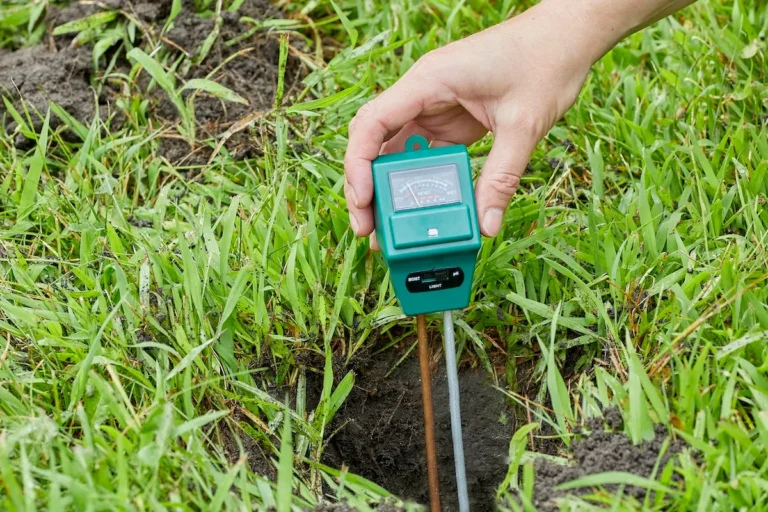
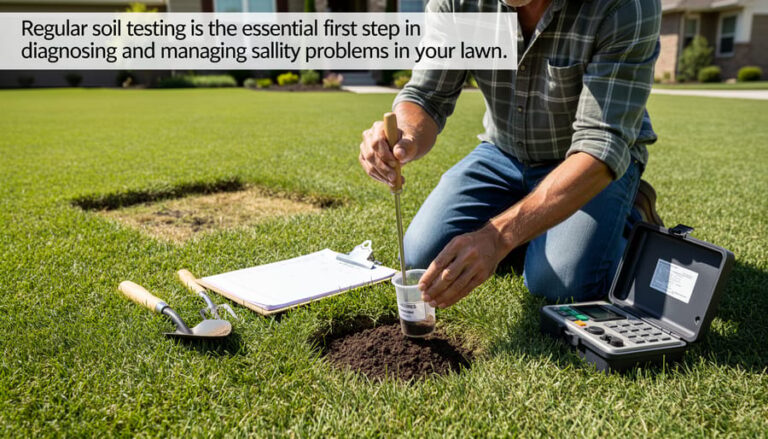
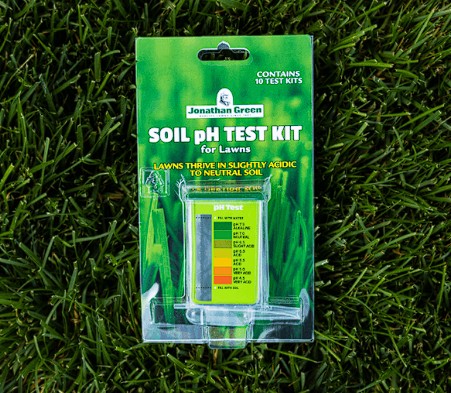
Get a soil test before you add anything. Your local county extension office can send you a kit for a few dollars, and the results will tell you exactly how much lime or sulfur to apply per 1,000 square feet. Testing every one to two years is enough for most established lawns (Erbert Lawns, 2025).
How Mowing Height and Frequency Affect Grass Health
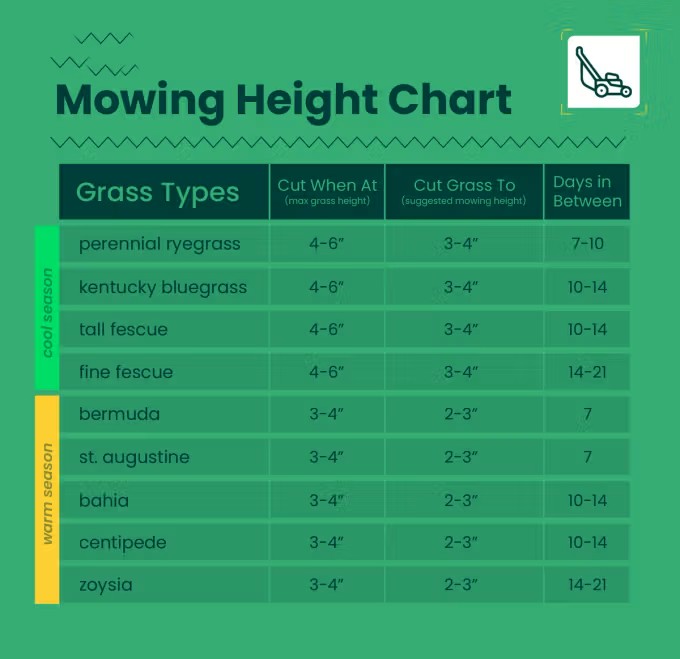
Mowing correctly does more for grass health than most homeowners realize. The one-third rule is the standard: never remove more than one-third of the grass blade height in a single mow (USGA Turf Management).
Here’s why it matters. Grass leaves are where photosynthesis happens. Cut too much at once and you remove the plant’s energy source. The grass has to pull reserves from its roots to recover, which weakens the root system over time and leaves turf thin and weed-prone.
For Kentucky bluegrass and tall fescue – the most common cool-season grasses – maintain a height of 3 to 4 inches and mow when the lawn hits 4.5 to 6 inches (Missouri University Extension). Warm-season grasses like Bermuda grass are kept shorter, typically 1 to 2 inches.
A dull blade makes all of this worse. Dull mower blades tear grass rather than cut it cleanly, which stresses the turf and turns the tips brown. Sharpen your blade at least once per season, or after every 25 hours of mowing.
How Much Water Grass Actually Needs
Most lawns need about 1 inch of water per week, including rainfall (Missouri University Extension). The mistake most homeowners make is watering lightly and often, which keeps moisture near the surface and encourages shallow roots.
Deep, infrequent watering is better. Apply enough water to soak 6 to 8 inches into the soil, then let the top few inches dry out before watering again. Deeper roots draw moisture from a larger volume of soil and hold up better during summer heat and drought.
Morning is the best time to water – ideally between 5 a.m. and 9 a.m. Water applied at night sits on grass blades for hours, which increases the risk of fungal disease.
During extended summer drought, cool-season grasses like Kentucky bluegrass may go dormant and turn brown. That’s not death – it’s a survival mechanism. Apply about 1.5 inches every two weeks during dormancy to keep the crown hydrated, then let the lawn recover naturally when temperatures cool in fall (Missouri University Extension).
When and How to Fertilize for Better Grass Health
Fertilizer timing is where most homeowners get it wrong. The right schedule depends on whether you have cool-season or warm-season grass, and the two are almost exactly opposite.
Cool-season grasses (Kentucky bluegrass, tall fescue, perennial ryegrass) should get their primary nitrogen application in fall, with a lighter application in spring only if the lawn is sparse. Avoid fertilizing cool-season grasses in summer – the grass isn’t actively growing and excess nitrogen can stress it (Penn State Extension).
Warm-season grasses (Bermuda, Zoysia, St. Augustine) are the opposite. Fertilize in late spring and summer when they’re actively growing, and stop four to six weeks before the first expected frost.
The NPK ratio on the fertilizer bag – nitrogen, phosphorus, and potassium – should be guided by your soil test results. Phosphorus and potassium levels can only be determined by testing. Nitrogen can’t, but most established lawns benefit from one to two annual applications (Penn State Extension).
Grass Health Problem Reference Table
| Symptom | Likely Cause | Fix |
|---|---|---|
| Yellow patches across the lawn | Soil pH too high or too low | Soil test, then apply lime or sulfur as needed |
| Thin, bare spots | Compacted soil or low nitrogen | Core aerate in fall, overseed, apply fall nitrogen |
| Persistent weeds (especially moss) | Acidic soil below 6.0 | Apply lime to raise pH; moss thrives in acid soil |
| Brown tips after mowing | Dull mower blade | Sharpen or replace blade; raise cutting height |
| Grass wilts quickly after watering | Shallow roots from frequent light watering | Switch to deep, infrequent watering cycles |
| Dark green streaks, rest looks pale | Uneven fertilizer application | Use a broadcast spreader; calibrate before spreading |
| Spongy feel underfoot | Thatch buildup exceeding 0.5 inches | Dethatch in early fall or spring |
Mistakes That Quietly Damage Grass Health
Scalping the lawn in spring is one of the most common and damaging habits. Dropping the mower deck to the lowest setting for the first cut of the season removes too much blade at once, exposes the crown, and sets the lawn back weeks. Keep the first spring cut at your normal height.
Watering every day for a few minutes is another one. It looks like good lawn care but it trains roots to stay shallow. Give the lawn a deep soak two or three times a week instead.
Applying fertilizer in August on cool-season grass is a reliable way to burn your lawn and encourage disease. The grass is stressed from heat and not actively growing – fertilizer at that point does more harm than good.
Skipping fall aeration on compacted soil means your overseeding and fertilizer next season won’t penetrate. Core aeration – which pulls small plugs from the soil – is one of the highest-return lawn care tasks a homeowner can do, and early fall is the right time for cool-season grasses.
Frequently Asked Questions
What is the ideal soil pH for grass?
Most turfgrasses grow best in soil with a pH between 6.0 and 7.0. Within that range, essential nutrients remain soluble and grass roots can absorb them efficiently. Below 5.5, aluminum toxicity and phosphorus lockout become real problems (Purdue University Extension).
How often should you water your lawn?
Most lawns need about 1 inch of water per week from rainfall or irrigation. Water deeply two to three times per week rather than daily. Deep watering encourages roots to grow down 6 to 8 inches, which improves drought resistance and overall grass health (Missouri University Extension).
When should you fertilize cool-season grass?
Apply nitrogen to cool-season grasses primarily in fall, when the grass is actively growing and storing nutrients for winter. A light spring application is fine if the lawn has bare spots. Avoid summer fertilization entirely on cool-season turf (Penn State Extension).
Why does my grass turn yellow even after I fertilize?
Yellow grass after fertilizing usually means a pH problem, not a nutrient shortage. If soil pH is outside the 6.0 to 7.0 range, grass can’t absorb the fertilizer you’re applying. Get a soil test before spending money on more fertilizer.
How do I know if my grass needs aeration?
Press a screwdriver into the soil. If it doesn’t push in easily to a depth of 6 inches, the soil is compacted and aeration will help. Lawns with heavy clay soil, high foot traffic, or a thatch layer over 0.5 inches are strong candidates for annual core aeration.
What does the one-third rule mean for mowing?
The one-third rule means you should never cut more than one-third of the grass blade height in a single mow. If your lawn is 4.5 inches tall and you want to maintain it at 3 inches, that’s a legal cut. Removing more than one-third at once stresses the grass, thins the turf, and opens space for weeds.