Simple Lawn Care System That Actually Works in 2026
TL;DR
- A simple lawn care system comes down to four tasks: mow at the right height, water deeply but less often, fertilize twice a year, and leave your clippings on the lawn.
- Mow cool-season grass at 3 inches or higher – lawns kept at this height have up to 50-80% fewer weeds than lawns cut short (University of Maryland Extension, 2026).
- Water 1 inch per week total, ideally in one or two sessions rather than short daily sprinkles.
- Grass clippings left on the lawn supply the equivalent of one full fertilizer application per year (University of Minnesota Extension).
- You do not need a spreader, aerator, or any special equipment to start – just a mower set to the right height.
What Is a Simple Lawn Care System?

A simple lawn care system is a repeatable routine built on four actions: mowing at the correct height, watering the right amount, fertilizing twice a season, and letting clippings feed the soil. That’s it. No weekly treatments, no complicated product rotation, no expensive equipment required to get started.
The reason most lawns struggle has nothing to do with missing a specialty product. It’s almost always one of three things: cutting the grass too short, watering too often in shallow bursts, or skipping fertilizer entirely. Fix those three habits and the lawn takes care of a lot of the rest on its own.
How to Mow Without Wrecking Your Lawn
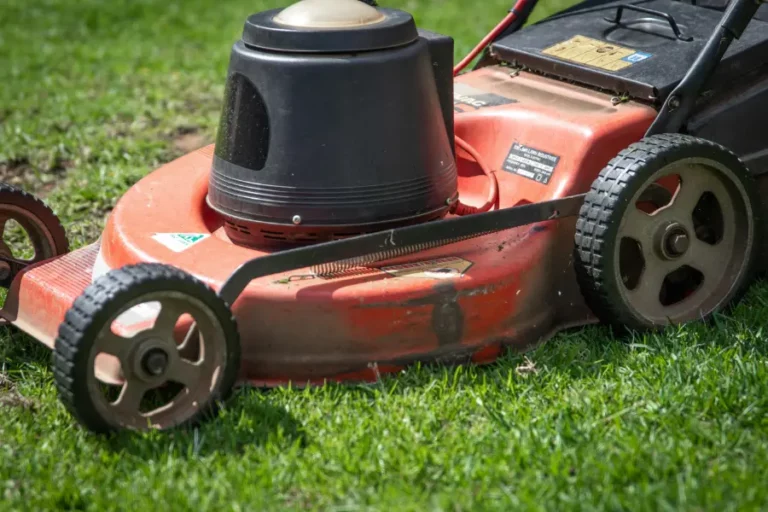
Set your mower to 3 inches and leave it there. For most cool-season grasses – Kentucky bluegrass, tall fescue, perennial ryegrass – 3 inches is the sweet spot where roots grow deep and weeds struggle to get established (Purdue Extension, University of Maryland Extension, 2026).
The one rule that matters most is called the one-third rule: never remove more than one-third of the grass blade in a single mow. If you’re keeping the lawn at 3 inches, mow before it reaches 4.5 inches. Cut more than a third at once and you’re putting the plant into shock, which slows recovery and invites weeds and disease.
Mowing frequency follows growth, not a calendar. In spring when grass is pushing hard, that might mean mowing every five to six days. In the heat of July when growth slows, every ten to fourteen days is fine. Don’t mow wet grass – wet blades tear instead of cut and clump on the deck.
| Situation | What to Do |
|---|---|
| Grass is 4 inches, you want 3 inches | Mow now – you’re right at the one-third limit |
| Grass shot up to 6 inches (vacation, rain delay) | Mow to 4 inches first, then 3 inches a few days later |
| Hot dry stretch in July | Raise the deck one notch, let it grow slightly longer |
| Late fall before dormancy | Drop to about 2.5 inches on the last cut of the season |
Sharp blades matter more than most people realize. A dull blade tears the grass instead of cutting it, leaving ragged white tips and making the lawn more susceptible to disease (Illinois Extension). You don’t need to sharpen after every mow – once or twice per season is enough for a typical residential lawn.
How Much Water Your Lawn Actually Needs
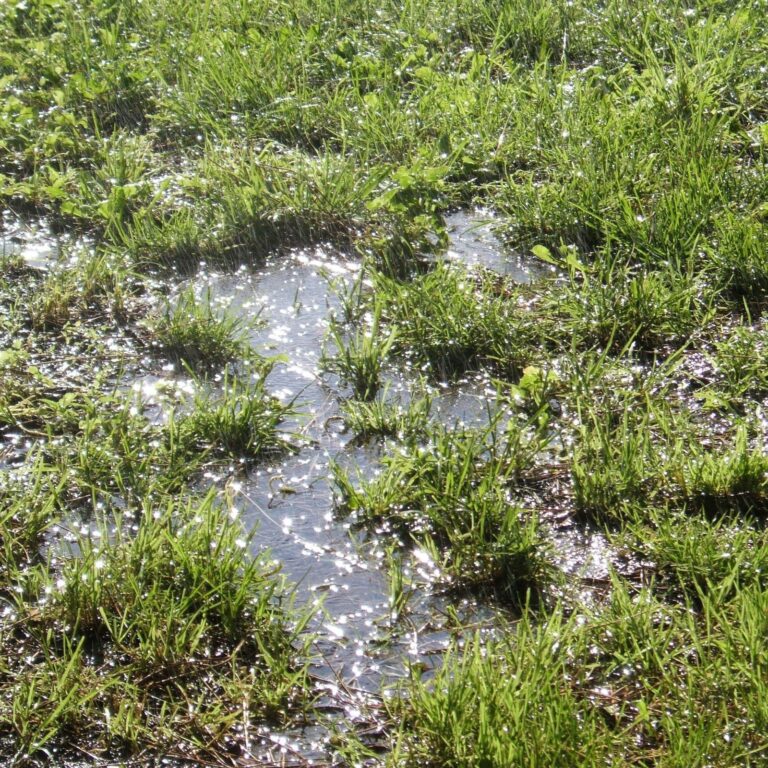
Your lawn needs about 1 inch of water per week from rain or irrigation combined (University of Maryland Extension, 2026). The mistake most homeowners make is watering every day for 10 minutes. Short, frequent watering keeps moisture at the surface and trains roots to stay shallow. Shallow roots mean the grass wilts fast the moment a dry spell hits.
Water deeply and less often instead. One or two sessions per week of about 20-30 minutes each – depending on your sprinkler output – gets water down 6 inches into the soil where roots can find it (LawnLove, 2026).
The easiest way to check if you’ve hit 1 inch is to set an empty tuna can on the lawn while the sprinkler runs. When it’s full, you’ve applied roughly 1 inch. Do this once so you know how long your sprinkler takes, and you won’t need to think about it again.
In midsummer, if the lawn turns bluish-gray or footprints stay visible after you walk across it, that’s the lawn showing early drought stress – time to water. If rain covers your 1 inch that week, skip the sprinkler entirely.
When and How to Fertilize (Without Overdoing It)
Fertilize cool-season grass twice a year: once in early fall (September) and once in spring (April or May). Fall is the more important of the two. Grass roots are actively storing energy for winter, so a fall feeding builds the foundation for a strong lawn the following spring (Purdue Extension).
A spring application of roughly 1 pound of nitrogen per 1,000 square feet keeps the lawn green through the summer growing season. Skip summer fertilizing – excess nitrogen in hot weather can burn grass and push growth the plant can’t sustain (LawnStarter, 2025).
You do not need anything fancy. A basic slow-release granular fertilizer from a hardware store works fine. Scotts Turf Builder and Pennington products are widely available and straightforward for beginners. Follow the bag’s rate instructions – applying more than directed does not make the lawn greener faster.
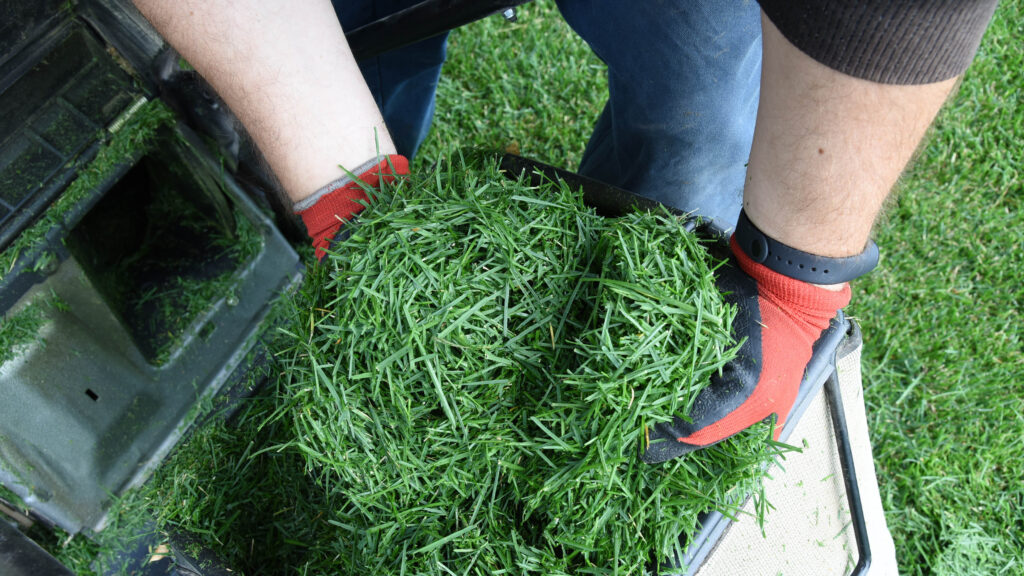
Here’s a free shortcut: skip the bag altogether some of the time. Grass clippings left on the lawn after mowing decompose and return nitrogen to the soil – the equivalent of one full fertilizer application per year (University of Minnesota Extension). Just don’t leave thick clumps sitting on the grass; if clippings are heavy, make a second pass over them to break them up.
The Seasonal Schedule at a Glance
You don’t need a month-by-month plan. A simple four-season structure covers everything.
| Season | Core Tasks |
|---|---|
| Spring (March-May) | Start mowing when grass hits 4 inches; apply fertilizer in late April or May; water as needed if rainfall is low |
| Summer (June-August) | Mow on growth, not schedule; water 1 inch per week in deep sessions; no fertilizer |
| Fall (September-November) | Apply fall fertilizer in September; mow at normal height until late fall; drop deck slightly for final cut |
| Winter (December-February) | No mowing needed; this is a good time to sharpen blades and do a basic mower check before spring |
Three Mistakes That Make Lawn Care Harder Than It Needs to Be
Cutting the grass short to avoid mowing more often is the most common mistake beginners make. Low mowing stresses roots, dries out the soil faster, and opens the door for crabgrass and other weeds to move in (University of Maryland Extension, 2026). Mow higher and you actually mow less often because the lawn is healthier and grows more steadily.
Watering on a fixed daily schedule regardless of rainfall wastes water and keeps roots shallow. Check whether it rained before running the sprinkler.
Skipping the fall fertilizer and applying in summer instead is the third mistake. Summer fertilizer pushes top growth the plant can’t support in heat. Fall fertilizer feeds the roots when the plant is actually ready to absorb and store it.
Frequently Asked Questions
What is the simplest lawn care routine for a beginner?
Mow at 3 inches, water 1 inch per week in one or two sessions, and fertilize in spring and fall. Leave clippings on the lawn after mowing. That four-step routine handles the fundamentals for most residential lawns in the US.
How often should you mow your lawn?
Mow based on how fast the grass grows, not on a set schedule. In spring, that’s often every five to seven days. In summer heat, every ten to fourteen days is common. The rule is to never cut more than one-third of the grass blade at a time (Kansas State University).
Why does my lawn have so many weeds even when I mow regularly?
The most likely cause is mowing too short. Grass cut below 3 inches lets sunlight reach the soil surface, which is exactly what weed seeds need to germinate. Raise your mowing height and weeds become much harder to establish (University of Maryland Extension, 2026).
Can you skip fertilizing and still have a decent lawn?
You can get by without purchased fertilizer if you consistently leave clippings on the lawn. Decomposed clippings supply the equivalent of one full fertilizer application per year (University of Minnesota Extension). A lawn that never receives any fertilizer will gradually thin out over time, especially in high-traffic areas.
How do I know if I’m watering enough?
Your lawn needs about 1 inch of water per week total from rain and irrigation. Set a tuna can on the lawn while the sprinkler runs – when it’s full, you’ve reached roughly 1 inch. Signs of underwatering include a bluish-gray color and footprints that stay visible after walking across the grass (Purdue Extension).
Does it matter when during the day you water?
Water in the early morning when possible. Morning watering gives the grass time to dry out before evening, which reduces the conditions that encourage lawn fungus. Watering at night leaves the blades wet for hours and can encourage disease over time.