Why Your Lawn Is Growing Unevenly: Causes and Fixes
TL;DR
- Uneven lawn growth is most often caused by soil compaction, pH imbalance, or thatch buildup blocking water and nutrients from reaching roots.
- Soil pH below 5.5 or above 7.5 can lock out nutrients even when fertilizer is applied correctly, causing thin or patchy grass (Purdue University Extension).
- A thatch layer thicker than half an inch physically blocks water, air, and nutrients from reaching the soil surface (Penn State Extension).
- Compacted soil reduces pore space, restricts rooting depth, and creates dry spots and bare paths in turf (Utah State University Extension).
- The fix for all three starts the same way: a soil test from your local cooperative extension office, which typically costs $15 to $25.
Why Lawns Grow Unevenly in the First Place
Uneven lawn growth happens when grass in one area gets what it needs and grass nearby does not. The usual cause is a soil problem, not a grass problem. Compaction, pH swings, and thatch buildup all work against grass the same way: they cut off the root zone from water, oxygen, and nutrients.
Most homeowners reach for fertilizer first. That is the wrong move if the soil itself is blocking nutrient uptake. You can put down all the nitrogen you want, but if the pH is off or the soil is packed too tight, your grass simply cannot use it.
How Soil Compaction Causes Patchy, Thin Grass
credit: https://www.walmart.com/
Compacted soil is the most common reason for uneven growth patterns, especially in high-traffic areas like a path to the back gate or the strip between the sidewalk and street.
Healthy soil is roughly 50% pore space – tiny openings that allow water, oxygen, and nutrients to flow freely to plant roots. When soil compacts, those pores shrink dramatically. Utah State University Extension describes the result as reduced gas exchange and low oxygen in the root zone, which is the primary driver of plant decline in compacted soils.
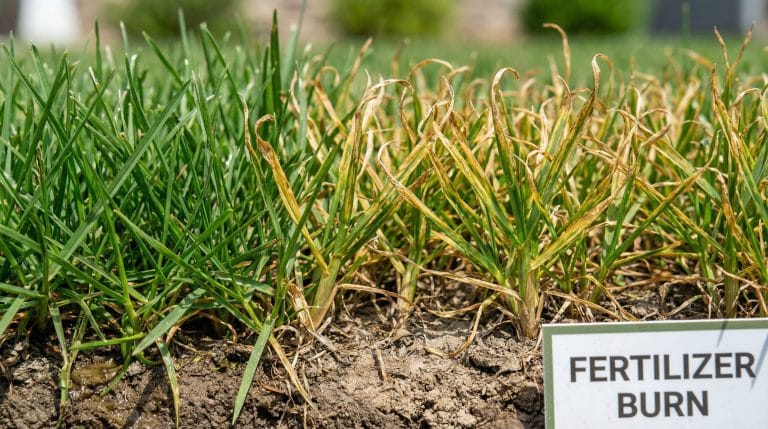
What you see on the surface: bare paths, sparse patches, dry spots that don’t recover after watering, and weeds like dandelions and plantain moving into areas where grass has given up.
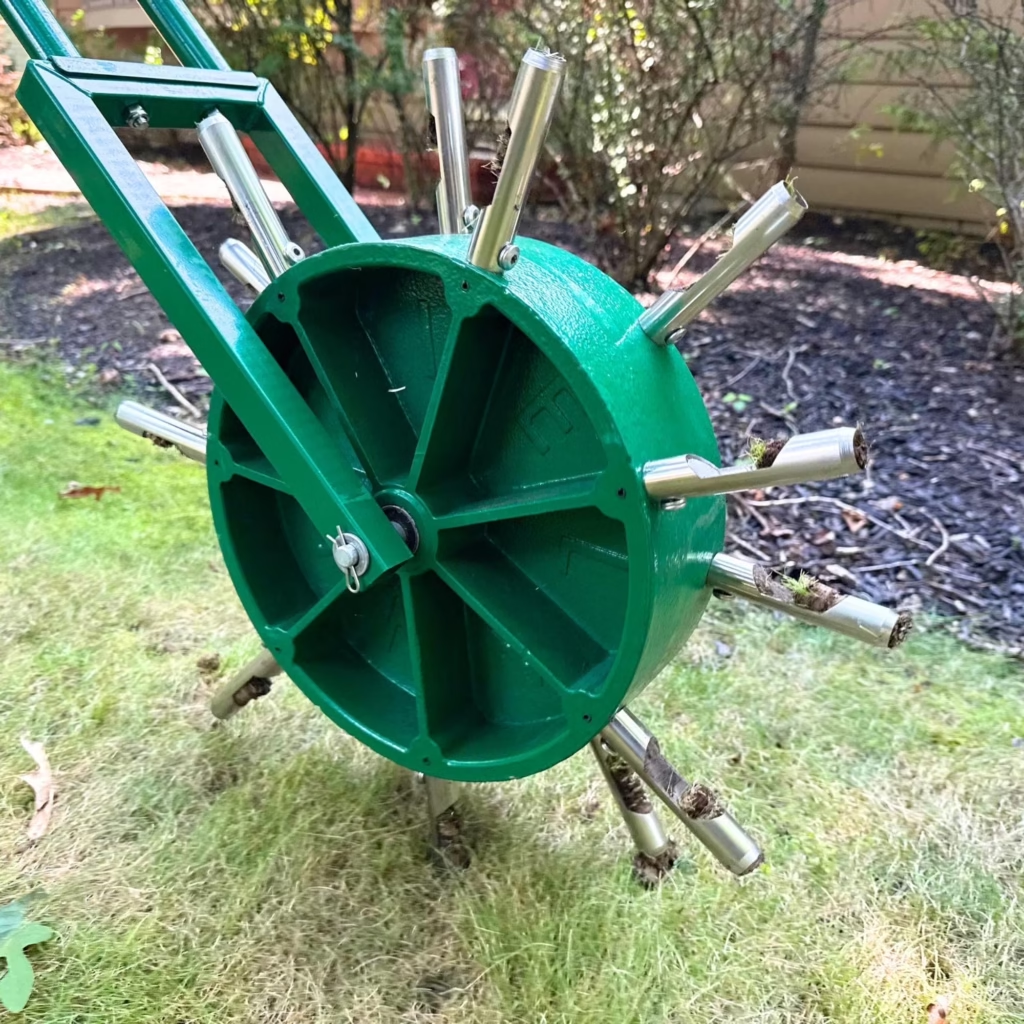
The fix is core aeration, not spike aeration. Hollow tines pull out actual plugs of soil, which opens up pore space and gives grass roots room to spread. Solid spikes just push soil aside and can actually worsen compaction around the hole. Rent a core aerator in early fall for cool-season grasses (Kentucky bluegrass, fescue, ryegrass) or in late spring for warm-season grasses like Bermuda or Zoysia.
How Soil pH Imbalance Creates Uneven Growth
pH imbalance causes uneven growth that looks exactly like a fertilizer deficiency – because it is one, in a way. When pH is off, nutrients are present in the soil but chemically unavailable to the grass.
Purdue University Extension puts the optimal pH range for turfgrass at 6.0 to 7.0. Below 5.5, phosphorus becomes harder to absorb and aluminum can reach levels that stunt roots. Above 7.5, iron becomes insoluble and grass turns yellow in patches even though iron is in the soil.
The reason growth looks uneven rather than uniformly bad is that pH varies across a lawn. Soil near a concrete foundation or sidewalk often reads more alkaline due to lime leaching from the concrete. A low spot that stays wet may turn more acidic over time from leaching and organic matter breakdown.
| Symptom | Likely pH Problem | Soil Amendment |
|---|---|---|
| Yellow patches, fertilizer not working | Too alkaline (above 7.0) | Elemental sulfur or acidifying fertilizer |
| Thin grass, more weeds and moss | Too acidic (below 6.0) | Ground agricultural limestone (lime) |
| Patchy growth near sidewalk or driveway | Alkaline runoff from concrete | Sulfur application near affected area |
| Stunted growth despite fertilizing | pH blocking nutrient uptake | Soil test first, then amend accordingly |
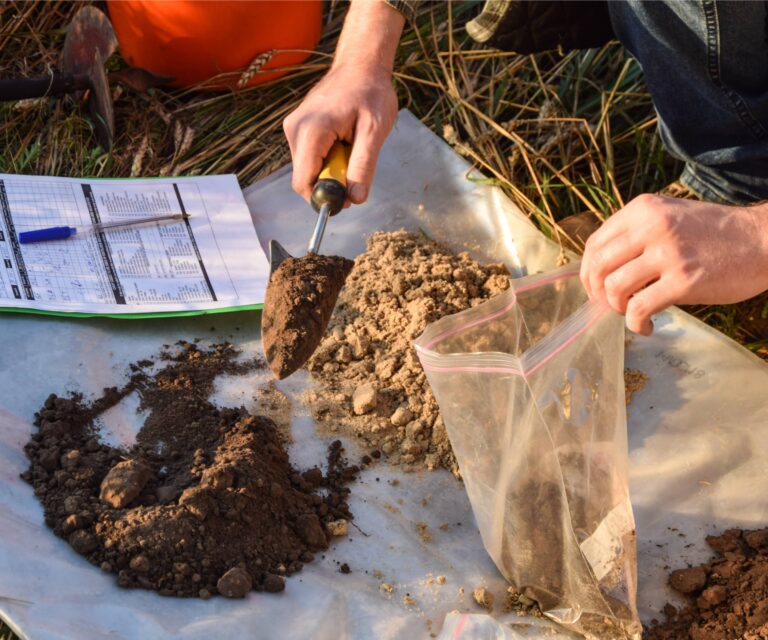
A basic soil test from your county cooperative extension office – available in most states for $15 to $25 – tells you the pH and gives specific lime or sulfur recommendations by the pound per 1,000 square feet. Do not guess and apply amendments without testing. A big pH swing in either direction can set your lawn back by a full season.
How Thatch Buildup Blocks Uniform Growth

credit: https://homewaresinsider.com/
Thatch is the layer of dead and living shoots, stems, and roots that accumulates between green grass blades and the soil surface. A thin layer (under half an inch) is fine. Once it crosses half an inch in cool-season lawns, it becomes a problem.
Penn State Extension describes thatch as a physical barrier to water and nutrient penetration. The layer also becomes a home for fungal disease and insects. Grass growing on top of a thick thatch layer puts roots into the thatch itself rather than the soil, which leaves those roots exposed to heat and drought. That is why thatch problems show up as irregular browning during summer dry spells – some patches go dormant or die while others nearby stay green.
Compaction and low pH both speed up thatch buildup because they reduce the microbial activity that would otherwise break it down. Oklahoma State University Extension notes that heavy, compacted soils do not allow adequate air, water, and nutrient exchange to support the bacteria and fungi that decompose thatch.
Dethatch cool-season lawns in late summer to early fall, and warm-season lawns in late spring (mid-June is the target for Bermuda and Zoysia, per University of Missouri Extension). Power raking and vertical cutting remove thatch mechanically, but core aeration is gentler and provides the added benefit of reducing compaction at the same time.
How to Find Out Which Problem You Actually Have
Start with a soil probe, a long screwdriver, or even a butter knife. Push it into the ground in the thin or bare areas and again in healthy areas. If it goes in easily in one spot and fights you in another, compaction is part of the problem.
Then do a thatch check. Pull back the grass in a thin spot and look at the base. If you see a spongy brownish layer more than half an inch thick sitting above the soil line, thatch is a factor.
For pH, there is no shortcut that actually works. Cheap at-home pH meters are not reliable enough to base amendments on. Send a sample to your local cooperative extension lab. The University of Maryland Extension recommends this approach for any serious turf problem because it also identifies nutrient deficiencies that mimic pH issues.
Mistakes That Make Uneven Growth Worse
- Applying fertilizer without a soil test: If pH is blocking nutrient uptake, more fertilizer is wasted money. A soil test first tells you whether amending pH will do more good than another fertilizer application.
- Aerating with solid spikes instead of hollow tines: Spike aerators compact soil around the hole rather than removing it. Only core aeration meaningfully reduces compaction.
- Dethatching at the wrong time of year: Dethatching cool-season lawns in summer or warm-season lawns in early spring causes stress the grass cannot recover from quickly. Time it to match the grass’s active growth window.
- Applying too much lime or sulfur at once: Large pH corrections applied all at once can shock the turf. Work in smaller applications over two seasons and retest before applying more.
Frequently Asked Questions
Why is my lawn growing unevenly even after fertilizing?
If fertilizing is not fixing the problem, soil pH is almost certainly the cause. Nutrient lockout from pH imbalance looks identical to a fertilizer deficiency. A soil test from your county extension office will confirm whether pH is blocking uptake before you spend more on fertilizer.
How thick does thatch have to be before it causes problems?
Penn State Extension puts the threshold at half an inch for most cool-season grasses. Once thatch exceeds that depth, it starts physically blocking water and nutrients from reaching the soil. You can measure it by cutting a small plug from the lawn and looking at the layer between the green blades and the soil surface.
Can I fix uneven lawn growth by aerating alone?
Core aeration helps with both compaction and thatch, and it improves soil conditions for pH amendments to work faster. But if pH is outside the 6.0 to 7.0 range, aeration alone will not fix uneven growth. It works best as part of a broader program that includes a soil test and appropriate amendments.
What type of grass grows best in compacted soil?
No grass thrives in severely compacted soil, but tall fescue has a deeper, more penetrating root system than Kentucky bluegrass and handles moderate compaction better. That said, the right fix is to aerate the existing soil rather than switch grass types.
How often should I test my lawn’s soil pH?
Penn State Extension recommends testing every three to four years under normal conditions. Test sooner if you have made lime or sulfur applications, are seeding or overseeding, or if you notice sudden patches of thin or yellowing grass that do not respond to watering or fertilizing.