Beginner Lawn Care Mistakes You Should Avoid
TL;DR
- Cutting grass too short is the single most common beginner mistake – never remove more than one-third of the blade in a single mow (USDA turfgrass research).
- Overwatering causes more damage than underwatering, according to Purdue University Extension – water deeply once or twice a week, not daily.
- Fertilizing at the wrong time or using too much nitrogen burns grass and weakens roots.
- Skipping a soil test means you’re guessing on pH and nutrients, often wasting money on products that won’t work.
- Most lawn problems beginners blame on drought, pests, or poor seed are actually caused by incorrect mowing height, watering habits, or fertilizer timing.
What Most Beginners Get Wrong About Lawn Care
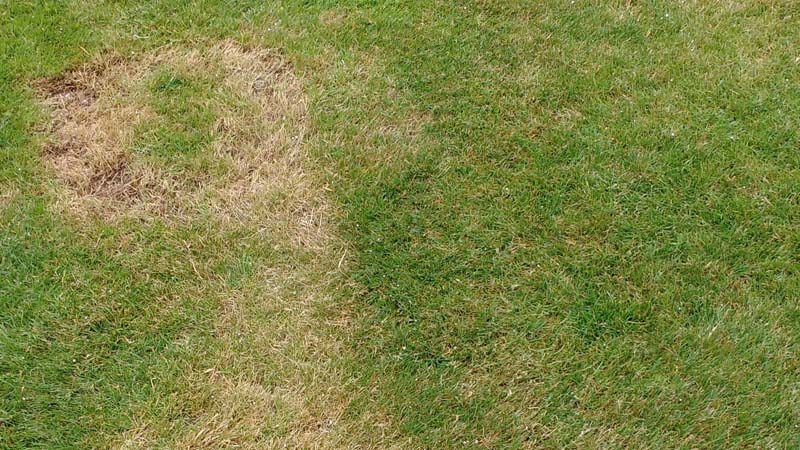
credit: https://simplelawncare.co.uk/
Most beginner lawn care mistakes fall into four categories: mowing too low, watering too often, fertilizing incorrectly, and skipping soil prep. Each one is easy to fix once you know what’s happening and why.
A 2025 survey by Golf Course Lawn Store found that 65% of U.S. homeowners say weeds are their biggest lawn challenge. The cause in most cases isn’t bad seed or poor soil – it’s bare, stressed turf created by mowing and watering mistakes that let weed seeds germinate. Address the root mistakes, and weeds have far less room to move in.
Cutting Grass Too Short (Scalping)
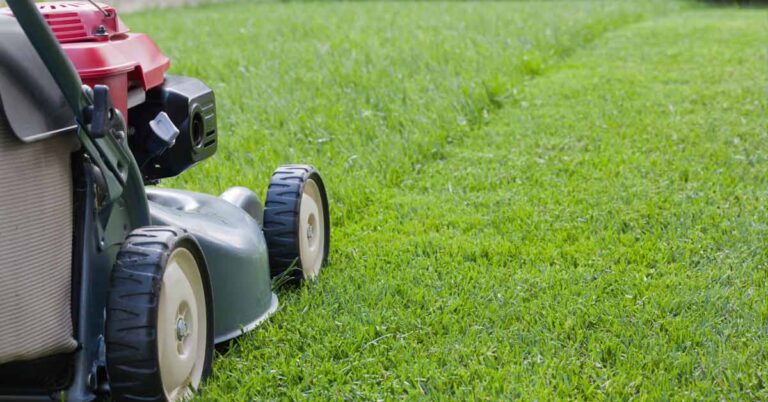
Mowing too low is the most widespread beginner mistake. Cutting grass below its recommended height exposes the soil, stresses the crown of each grass plant, and creates an opening for crabgrass and other weeds to take hold.
The fix is the one-third rule: never remove more than one-third of the grass blade in a single mow. This principle dates to 1950s USDA research on Kentucky bluegrass, which found that removing more than one-third of the leaf surface can temporarily halt root growth (mysoiltesting.com, 2025). For most cool-season lawns in the northern U.S., that means keeping grass at 3 to 3.5 inches and mowing when it reaches 4.5 inches.
Scalping doesn’t just look bad. It reduces the leaf surface available for photosynthesis, which is how the plant makes food. Cut enough blade away and the grass can’t sustain itself, let alone compete with weeds.
A dull mower blade makes this worse. Blades need sharpening after about 25 hours of use, which for most homeowners means twice a year (LawnLove, 2025). A dull blade tears the grass instead of cutting it clean, leaving ragged ends that turn brown and invite disease.
| Grass Type | Recommended Mow Height | Mow When It Reaches |
|---|---|---|
| Kentucky Bluegrass | 2.5 – 3.5 in | 4.5 – 5 in |
| Tall Fescue | 3 – 4 in | 4.5 – 6 in |
| Bermudagrass | 1 – 1.5 in | 2 – 2.25 in |
| Zoysia | 1 – 2 in | 1.5 – 3 in |
| St. Augustine | 3.5 – 4 in | 5 – 6 in |
Watering Too Often Instead of Too Deeply
Daily light watering is one of the most common beginner watering habits, and it produces shallow roots that can’t survive summer heat or drought. Deep, infrequent watering teaches grass roots to grow down where moisture and nutrients are stable.
Purdue University Extension’s turfgrass specialists recommend watering to err on the dry side rather than overwater. Their research lists the consequences of overwatering as increased crabgrass pressure, greater disease incidence, shallow rooting, and wasted water (Purdue Extension, AY-7-W). The first sign your lawn needs water isn’t brown color – it’s a blue-green tint and footprints that stay visible after you walk across the grass.
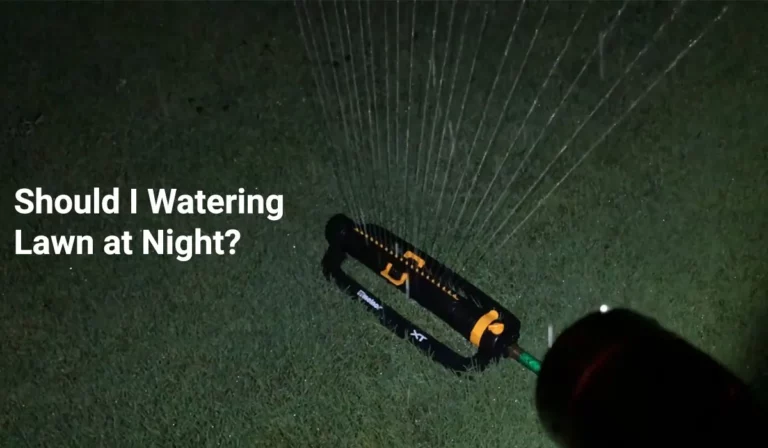
Watering deeply once or twice a week gives most established cool-season lawns what they need. Early morning is the right time – between 4 and 8 a.m. according to Purdue Extension – because water pressure is higher, wind distortion is minimal, and evaporation loss is negligible. Watering at night raises disease risk because the turf stays wet for hours.
One practical check: push a screwdriver 6 inches into the soil after watering. If it goes in with little resistance, you’ve watered enough. If it hits hard ground at 2 inches, you haven’t.
Fertilizing at the Wrong Time or in the Wrong Amount
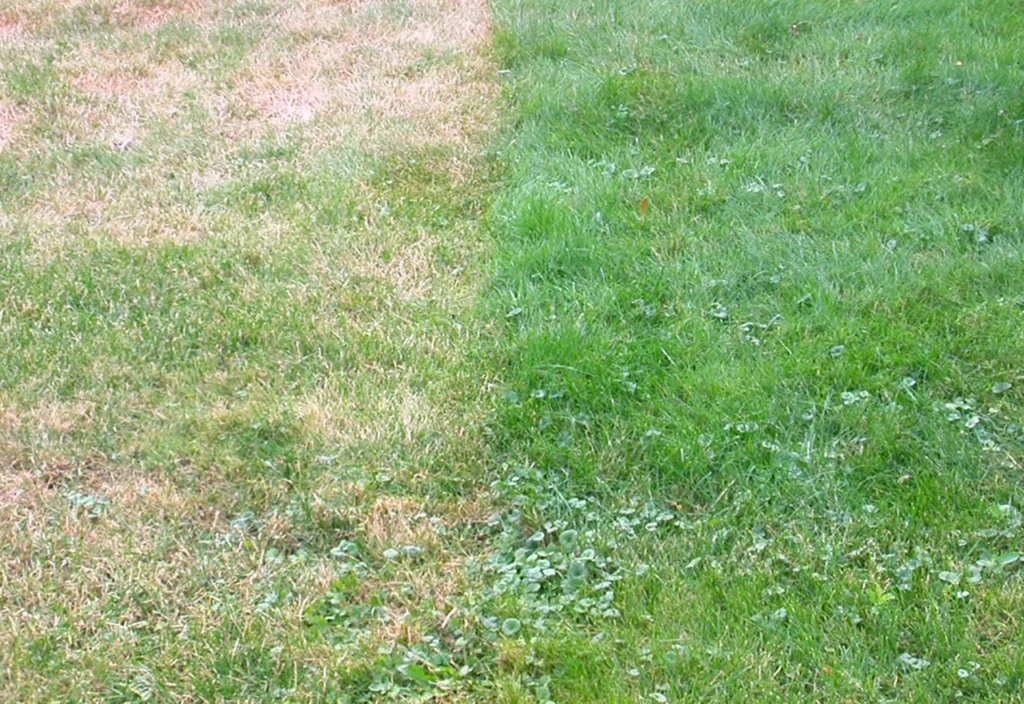
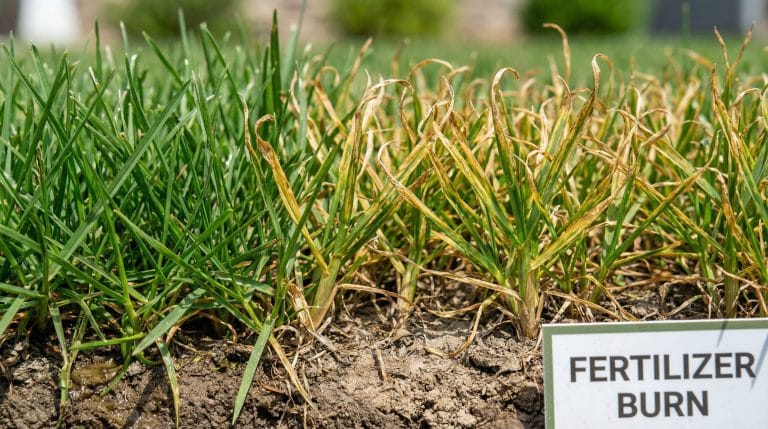
Fertilizer applied at the wrong time or in excess doesn’t feed your lawn – it burns it. Fertilizer burn happens when excess nitrogen and salts pull moisture out of the grass roots, dehydrating the plant and causing yellow or brown patches (TruGreen, 2025).
The timing mistake beginners make most often is fertilizing cool-season grasses like Kentucky bluegrass or tall fescue in the heat of summer. These grasses are naturally stressed in July and August. Applying a high-nitrogen fertilizer on a stressed, drought-affected lawn in 90-degree heat is how you end up with scorched brown patches.
Cool-season grasses should be fertilized primarily in fall (September through November) when they’re actively growing and absorbing nutrients. A lighter application in early spring is acceptable once grass has resumed active growth, not before.
Warm-season grasses like Bermudagrass and zoysia follow the opposite schedule – fertilize in late spring through summer when they’re actively growing, and stop applications in early fall before dormancy.
Men’s Journal and This Old House both note that fertilizing too early in spring triggers surge growth before roots are ready, which diverts energy away from root development and weakens the lawn against summer heat and disease (Men’s Journal, 2026; This Old House, 2026).
| Grass Type | Best Fertilization Window | Avoid |
|---|---|---|
| Kentucky Bluegrass | Sept – Nov, light app in April | June – August |
| Tall Fescue | Sept – Nov, light app in April | June – August |
| Bermudagrass | Late May – August | After Sept 1 |
| Zoysia | Late May – August | After Sept 1 |
| St. Augustine | April – August | After Sept 1 |
Skipping the Soil Test
Most beginners skip soil testing because it seems like an extra step. It is, in fact, the first step – and skipping it means every fertilizer and amendment decision after that is a guess.
A soil test measures pH and the levels of phosphorus, potassium, calcium, and magnesium in your soil, then tells you exactly what to add and how much (Penn State Extension). Without that data, you can apply the right fertilizer at the right time of year and still get poor results because the soil pH won’t let grass roots absorb the nutrients you’ve put down.
Penn State Extension explains that pH determines a lawn’s ability to take up nutrients. Soil pH that’s too low (below 6.0) or too high (above 7.5) locks up nutrients at the root level. You can spend money on Scotts Turf Builder or Pennington products all season and see little improvement if your soil pH is off.
Most university extension programs – Penn State, Purdue, University of Georgia – offer soil testing for $15 to $25 through county extension offices. It’s the cheapest thing you can do to avoid wasting money on products your soil doesn’t need.
The University of Georgia Cooperative Extension puts it plainly: when a lawn is thinning out or developing dead patches, a soil test is the first step to ruling out underlying nutrition or pH problems (UGA Extension, 2015). A stressed lawn with a nutrient deficiency is also more susceptible to disease and insects.
Common Beginner Mistakes at a Glance
| Mistake | What It Causes | The Fix |
|---|---|---|
| Mowing too short | Weed pressure, disease, brown patches | Follow the one-third rule; keep cool-season grass at 3-3.5 in |
| Daily light watering | Shallow roots, crabgrass, disease | Water deeply once or twice a week, early morning |
| Fertilizing in summer heat | Fertilizer burn, dead patches | Match fertilizer timing to grass type and season |
| Too much nitrogen at once | Surge growth, weak roots | Use slow-release fertilizer, follow label rates |
| Skipping soil test | Wasted products, pH lockout | Test soil before any fertilizer or amendment purchase |
| Dull mower blade | Torn grass, brown tips, disease entry | Sharpen blades every 25 hours of use |
Frequently Asked Questions
How short should I cut my grass?
For most cool-season grasses like Kentucky bluegrass and tall fescue, keep your mowing height at 3 to 3.5 inches and mow when the grass reaches 4.5 to 5 inches tall. Warm-season grasses like Bermudagrass can be kept shorter, around 1 to 1.5 inches. The one-third rule applies to all types – never remove more than one-third of the blade in a single session.
How often should I water my lawn?
An established lawn generally needs 1 to 1.5 inches of water per week, delivered in one or two deep sessions rather than daily light watering. Deep watering encourages roots to grow down; frequent shallow watering keeps roots near the surface where heat and drought stress them. Water between 4 and 8 a.m. to minimize evaporation and disease risk (Purdue Extension).
When is the right time to fertilize my lawn?
Cool-season grasses (Kentucky bluegrass, fescue, perennial ryegrass) should be fertilized mainly in fall – September through November – with a lighter application in early spring. Warm-season grasses (Bermuda, zoysia, St. Augustine) should be fertilized from late spring through late summer. Fertilizing cool-season grass in mid-summer or warm-season grass after early fall increases burn risk and weakens the turf.
Do I really need to test my soil before fertilizing?
Yes, and it’s the step that saves the most money over time. Without a soil test, you don’t know your soil’s pH or which nutrients are actually deficient. A pH that’s too acidic or too alkaline prevents grass roots from absorbing fertilizer even when it’s present in the soil. Penn State Extension and the University of Georgia Cooperative Extension both recommend a soil test as the starting point for any lawn improvement program.
Why does my grass turn brown after I mow?
Brown tips after mowing usually point to a dull mower blade. A sharp blade cuts cleanly; a dull one tears the grass blade and leaves jagged ends that dry out and discolor. Sharpen your blades after every 25 hours of mowing – roughly twice a year for most homeowners. Brown patches shortly after fertilizing point to fertilizer burn; flush the area with deep watering to dilute the salt concentration.
What’s the number one beginner lawn care mistake?
Mowing too short. It’s the most common mistake and the one that causes the most downstream problems, including weed pressure, disease susceptibility, and drought damage. Set your deck to the right height for your grass type, follow the one-third rule, and sharpen your blade regularly – and you’ll eliminate most of the problems beginners spend the rest of the season trying to fix.