Why Your Lawn Needs Aeration (And When to Do It)
TL;DR
- Your lawn needs aeration because compacted soil blocks air, water, and nutrients from reaching the grass roots, which thins out the turf over time.
- Core aeration pulls small plugs of soil (about ½ to ¾ inch wide, 2 to 4 inches deep) to open up the soil and let roots breathe [1].
- A compacted layer as thin as ¼ to ½ inch can seriously slow water from soaking in [1].
- Professional aeration runs about $75 to $205, with most homeowners paying around $140 [3]. A DIY core aerator rental runs roughly $80 to $120 per day [4].
- Aerate cool-season grass in early fall or spring, and warm-season grass in late spring to early summer, when the grass can recover quickly.
What Does Lawn Aeration Actually Do?
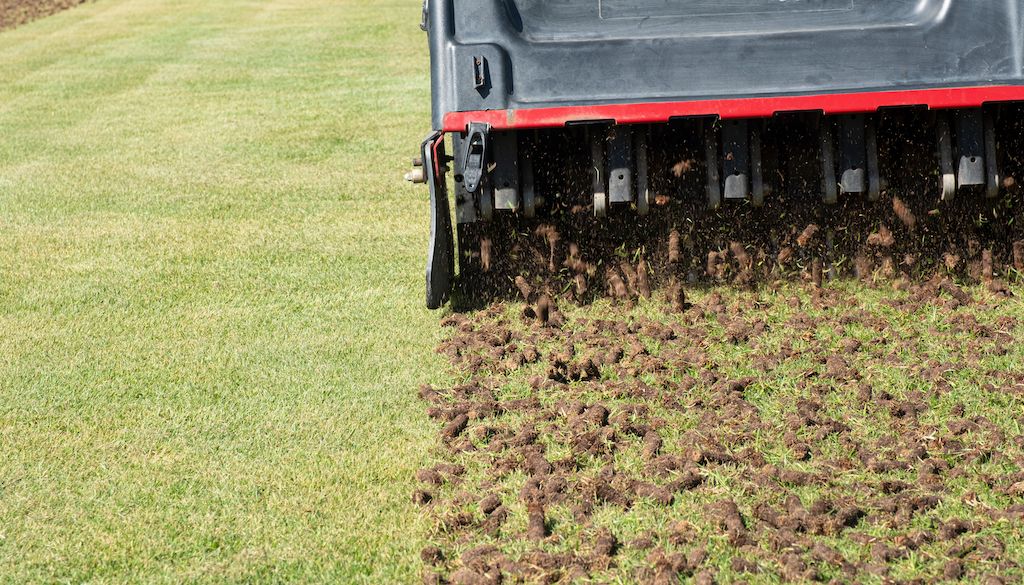
Lawn aeration pokes or pulls holes in the soil so air, water, and nutrients can reach the grass roots. The most effective method, core aeration, removes small plugs of soil rather than just poking holes. This loosens packed dirt and gives roots room to grow deeper.
Think of compacted soil like a crowded subway car. The grass roots are stuck shoulder to shoulder with no room to spread out and nothing reaching them. Aeration opens up space so water and nutrients can move through. Loosening compacted soil increases the availability of water and nutrients and raises oxygen levels in the soil, which stimulates root growth [2].
There’s a real difference between the two tools. A core aerator has hollow tines that pull plugs out of the ground. A spike aerator uses solid spikes that just push the soil sideways. Solid tines or spikes actually increase soil compaction by compressing the soil into a denser mass [1]. For real results, use a core aerator.
Why Does Compacted Soil Hurt Your Lawn So Much?
Compacted soil chokes off the root zone, and it doesn’t take much to cause problems. A compacted layer as thin as one-fourth to one-half an inch can greatly impede water infiltration and gas exchange between the soil and the atmosphere [1].
Compaction comes from everyday use. Foot traffic, pets running the same paths, parked equipment, and leftover construction soil all press the dirt into a dense mat. Compaction occurs primarily in the soil surface, where even a thin packed layer chokes the root zone [1].
When soil packs down, grass roots can’t grow long and the lawn struggles. Aeration loosens that compacted soil and stimulates root growth by raising oxygen levels at the roots [2]. You’ll often see the signs first: water pooling after rain, thin patches in high-traffic spots, and grass that browns fast in summer heat.
How Aeration Helps Beyond Just Loosening Dirt
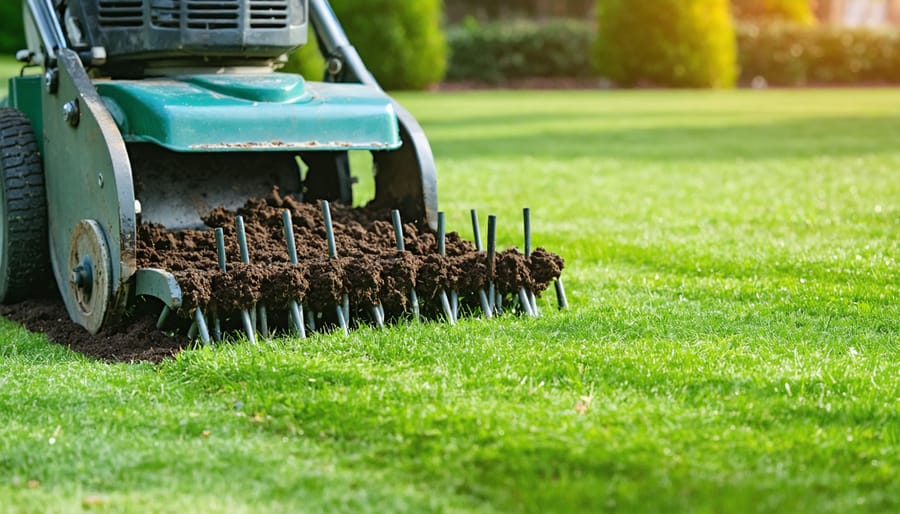
Aeration does more than break up packed soil. It also helps manage thatch, the layer of dead stems and roots that builds up between the green grass and the soil surface. Core aeration increases the activity of soil microorganisms that feed on the thatch [2].
A thin thatch layer is fine, even helpful. The problem starts when it gets too thick. A layer up to about ½ inch can benefit the lawn, but past that it blocks water and air. When the aerator pulls cores, those soil plugs land on top of the thatch and feed the microbes that break it down.
Aeration also makes a lawn tougher in dry weather. It increases the lawn’s drought tolerance because of enhanced root growth and improves overall health, while reducing water runoff and improving drainage [2]. Deeper roots reach water that shallow roots never touch.
How Much Does Lawn Aeration Cost?
Professional lawn aeration costs about $75 to $205, with most homeowners paying around $140 [3]. The price depends mostly on lawn size, soil condition, and whether you bundle other services like overseeding.
If you’d rather do it yourself, renting a core aerator is the cheaper route. Here’s how the common options compare.
| Option | Typical Cost | What’s Included |
|---|---|---|
| Professional service | $75 – $205 (avg $140) | Pro brings commercial-grade equipment and aerates the whole lawn [3] |
| DIY core aerator rental (per day) | $80 – $120 | You rent a motorized core aerator and do the work yourself, plus fuel [4] |
| DIY core aerator rental (4 hours) | $55 – $75 | Half-day rental for smaller lawns you can finish quickly [4] |
Renting often comes with a refundable deposit on top of the daily rate, usually around $150. For a small lawn, the rental can cost more than just hiring a pro, so price both before you decide.
When Should You Aerate Your Lawn?
Aerate when your grass is actively growing so it can heal the holes quickly. The right window depends on your grass type. Cool-season grasses such as Kentucky bluegrass and tall fescue are best aerated in the fall, when there is less heat stress [2].
For warm-season grasses like Bermuda or Zoysia, late spring into early summer works best, since that’s their peak growing stretch. Aerating in those active-growth windows lets the grass quickly recover from the holes the cores leave behind [2].
Timing also depends on soil moisture. Aerate when the soil is moist but not soaking wet. Dry, hard ground keeps the tines from pulling clean plugs, and soggy ground turns into a muddy mess.
Common Aeration Mistakes That Waste Your Time and Money
- Using a spike aerator instead of a core aerator: Spikes push soil sideways and make compaction worse, so the lawn ends up no better off [1].
- Aerating soil that isn’t compacted: Sandy soils rarely compact, so aerating them gives little benefit and just stresses the grass [2].
- Raking up the soil cores too soon: The plugs feed thatch-eating microbes as they break down, so let rainfall and foot traffic crumble them naturally [2].
- Aerating at the wrong time of year: Aerating cool-season grass in summer heat slows recovery and invites weeds into the open holes [2].
Frequently Asked Questions
How much does lawn aeration cost?
Professional aeration runs about $75 to $205, with most homeowners paying around $140 [3]. A DIY core aerator rental costs roughly $80 to $120 per day, plus a refundable deposit and fuel [4].
How often should you aerate your lawn?
Most lawns do well with aeration once a year or once every couple of years. High-traffic yards and heavy clay soils benefit from yearly aeration, while sandy or lightly used lawns can go longer between sessions.
Can you aerate your lawn yourself instead of hiring a pro?
Yes. You can rent a core aerator for about $80 to $120 a day and do it yourself [4]. It’s physically demanding work, though, so DIY makes the most sense for small to mid-size lawns.
What happens if you never aerate your lawn?
Compacted soil keeps choking the roots, so the grass thins out, browns faster in heat, and water pools instead of soaking in. Over time the turf gets weaker and more open to weeds.
Is core aeration or spike aeration better?
Core aeration is better. It removes plugs and truly loosens the soil, while spike aeration pushes the soil into a denser mass and can make compaction worse [1].
Sources
- University of Maryland Extension, “Lawn Aeration,” 2024.
- Clemson Cooperative Extension Home & Garden Information Center, “Aerating Lawns” / “Why You Should Aerate Your Lawn,” 2025.
- HomeAdvisor, “How Much Does Lawn Aeration Cost?,” 2025.
- Angi, “How Much It Costs to Rent an Aerator,” 2026.