Why Your Lawn Gets Worse During Hot Weather – and What to Do About It
TL;DR
- Hot weather damages lawns primarily through heat stress and drought stress, which are related but not the same problem.
- Cool-season grasses (Kentucky bluegrass, fescue, ryegrass) start struggling once air temperatures consistently exceed 85°F (Landscape Management, 2025).
- Brown or patchy summer grass is often dormancy, not death – cool-season turf can stay dormant for up to 4 weeks before permanent damage becomes a real risk (TurfCare Supply, 2023).
- The two biggest mistakes homeowners make are shallow daily watering and mowing too short – both make heat stress worse.
- Stop fertilizing during a heat wave; applying fertilizer to heat-stressed grass pushes top growth the roots can’t support and causes more damage (Simple Lawn Solutions, 2022).
What Heat Stress Actually Does to Grass
credit: https://www.bigblogofgardening.com/
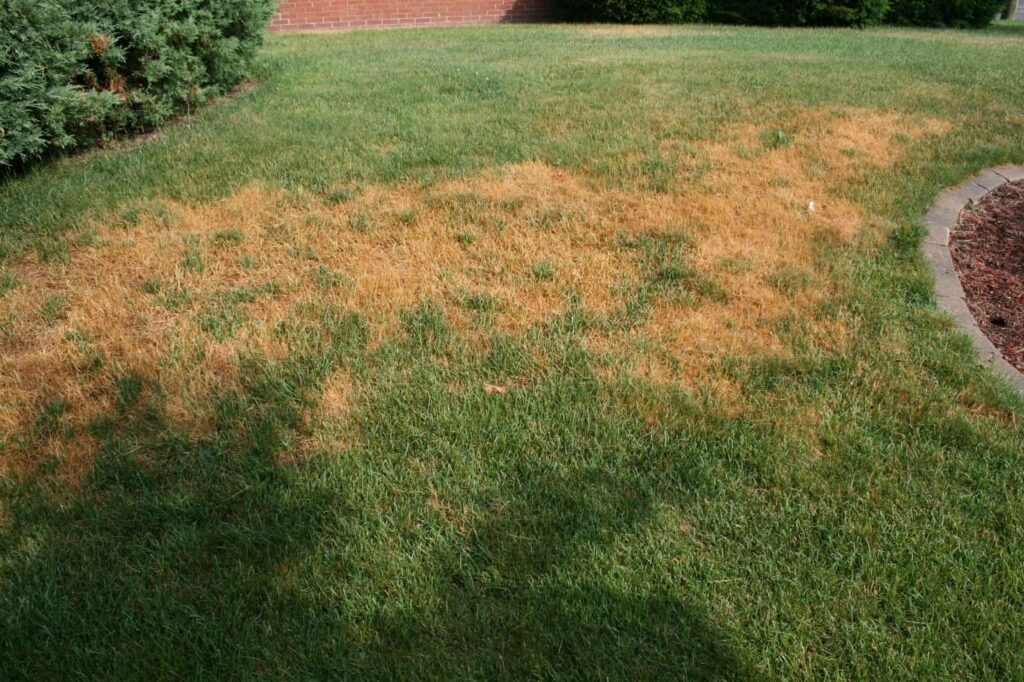
Your lawn gets worse in hot weather because grass is a plant with a temperature comfort zone, and summer in most of the US blows right past it. Cool-season grasses like Kentucky bluegrass, tall fescue, and perennial ryegrass grow best between 60°F and 75°F (Penn State Extension). Once air temperatures climb above 85°F consistently, their growth and health start to decline (Landscape Management, 2025).
Above that threshold, two things happen at the same time. The grass has to work harder just to maintain basic functions – photosynthesis slows, carbohydrate reserves get burned up faster than they’re replenished, and root development stops (Michigan State University Turfgrass Science). Meanwhile, soil moisture evaporates faster, so even a lawn that was watered yesterday can be stressed by afternoon.
Warm-season grasses – Bermuda, zoysia, St. Augustine – handle this much better. They grow best in the 80-95°F range and typically don’t show stress until temperatures push well past 100°F (Landscape Management, 2025). If you’re in the South and your neighbors’ Bermuda looks fine while your tall fescue is struggling, that’s why.
The Difference Between Dormancy and Dead Grass
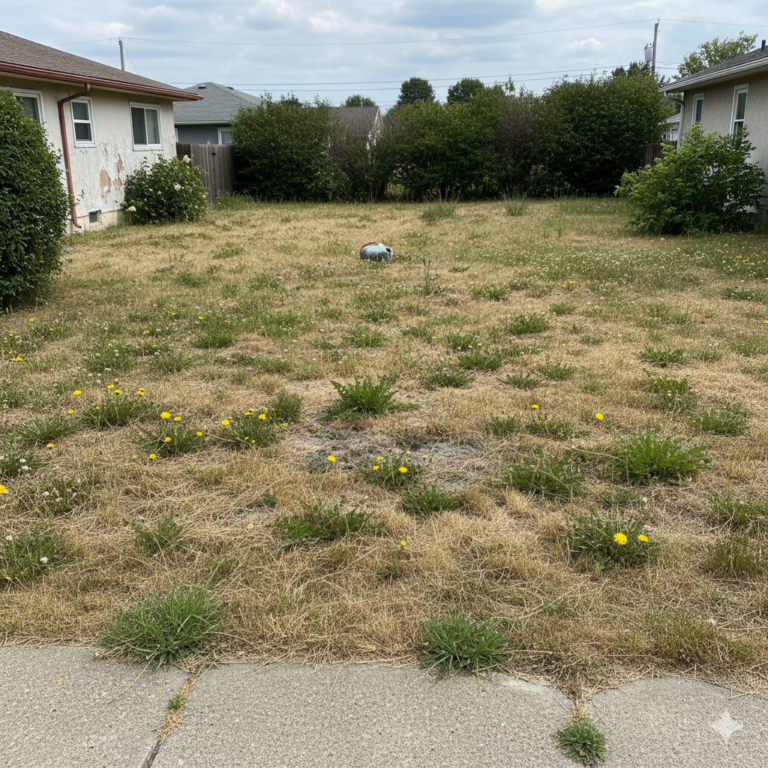
Dormancy is a self-defense move. When heat and drought push cool-season grass past its limits, it goes brown and stops growing to conserve what energy and moisture it has left. This looks alarming, but it’s normal survival behavior, not death.
Cool-season turf can stay dormant for up to 4 weeks before the risk of permanent tissue damage becomes serious (TurfCare Supply, 2023). The grass will come back green once temperatures drop and moisture returns – usually in early fall. If your lawn stays brown into September despite regular watering, that’s when you should start looking for an underlying problem like compaction, thatch buildup, or pest activity (Hemlock Landscapes, 2025).
The easiest way to tell dormant from dead: pull on a tuft of grass. Dormant grass holds its roots; dead grass pulls out with no resistance.
Why Common Lawn Care Habits Make It Worse
Several things that feel helpful during summer actually speed up the damage.
Shallow, frequent watering is the most common mistake. Watering a little every day keeps moisture in the top inch of soil, which is exactly where it evaporates fastest. Roots follow water – so shallow watering trains roots to stay near the surface, where soil temperatures are highest. Deep, infrequent watering (1 to 1.5 inches, two to three times per week) pushes roots down into cooler soil layers where they can actually survive a heat wave (Seacoast Turf Care, 2025).
Mowing too short is the other major problem. Short grass exposes the soil surface directly to the sun, raising soil temperatures and accelerating moisture loss. Penn State Extension’s turfgrass research shows that turf mowed at 4 inches retains significantly more soil moisture and maintains lower soil temperatures than turf mowed at 2 inches during summer stress (Penn State Extension). Raise your mowing height to 3.5-4 inches for cool-season grass once temperatures climb into the mid-80s and higher.
Fertilizing during a heat wave causes real damage. Fertilizer pushes top growth, and a stressed lawn doesn’t have the root capacity to support that growth. The result is a lawn that looks like it’s being pushed harder than it can handle – and often is (Simple Lawn Solutions, 2022).
How Summer Heat Makes Weeds and Pests Worse
credit: https://blog.nutrilawn.com/
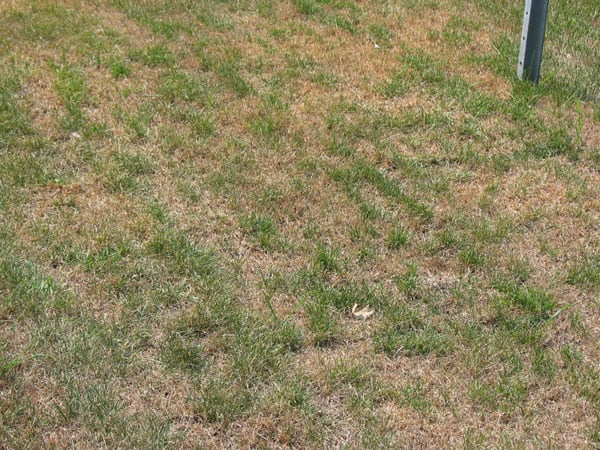
A stressed lawn is a lawn with weakened defenses. When heat and drought push grass into dormancy, it thins out, opens up bare patches, and loses the density it normally uses to crowd out weeds. Crabgrass, spurge, and other summer annuals move fast into those gaps.
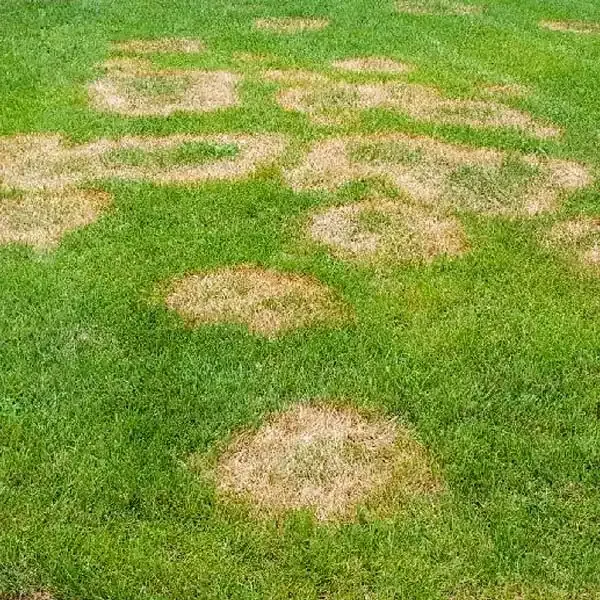
Pest pressure follows the same pattern. Common summer insects like chinch bugs and sod webworms target stressed, heat-weakened turf. They find it easier to feed and harder for the grass to recover. If you notice irregular brown patches that don’t match the shape of drought patterns, check for insect activity before assuming the heat alone is the cause (Benson Enterprises, 2024).
Fungal disease is a risk too, especially in humid regions. Overnight moisture sitting on warm grass is prime breeding ground for brown patch, dollar spot, and other summer diseases. This is one reason a single watering in the early morning – rather than evening watering – matters more in summer than any other season.
What You Can Do Right Now
| Action | When to Do It | Why It Helps |
|---|---|---|
| Raise mowing height to 3.5-4 inches | Immediately, before the next mow | Shades soil, reduces surface temperature, slows moisture loss |
| Water deeply 2-3x per week instead of daily | Switch this week | Trains roots deeper, where soil is cooler |
| Water in early morning (6-8 AM) | Every watering session | Reduces fungal risk; less evaporation loss |
| Stop fertilizing | Suspend until temperatures drop below 85°F | Fertilizing stressed grass causes more damage, not less |
| Leave grass clippings on the lawn | Every summer mow | Clippings act as light mulch, slowing surface moisture loss |
| Hold off on herbicides and pest sprays | Until heat breaks | Stressed turf is more easily injured by chemical treatments |
Mistakes That Make Summer Lawn Damage Worse
- Mowing when the grass is wet or wilted from afternoon heat; mow in the morning instead when blades are firm.
- Watering at night, which leaves grass wet through the warm evening hours and feeds fungal growth.
- Letting foot traffic concentrate on the same paths during heat stress; stressed grass doesn’t bounce back from compression quickly. If you notice footprints lingering in the grass after you walk across it, the lawn is already stressed and needs less traffic, not more.
- Assuming brown grass is dead and reseeding in the middle of summer; fall is the right time to overseed cool-season grass, not July or August.
Frequently Asked Questions
Why does my lawn turn brown in the summer even when I water it?
Brown summer grass is usually dormancy, not death. Cool-season grasses like Kentucky bluegrass and fescue go dormant when heat stress gets too intense, even with some irrigation. The grass survives in this state for up to 4 weeks (TurfCare Supply, 2023). If you want to keep it green, you’ll need to water deeply and consistently – 1 to 1.5 inches per week – throughout the heat period.
How do I know if my grass is dormant or actually dead?
Pull a small tuft firmly. Dormant grass holds its roots in the soil; dead grass pulls out cleanly with little resistance. Dormant grass also tends to brown uniformly across the lawn, while dead sections are often patchy or tied to a specific stress event like a pest infestation or chemical burn.
Should I fertilize my lawn during a heat wave?
No. Fertilizer applied to heat-stressed grass causes additional damage by pushing top growth that the weakened roots can’t support. Wait until temperatures consistently drop below 85°F before feeding a cool-season lawn again (Simple Lawn Solutions, 2022).
How often should I water my lawn in hot weather?
Water deeply two to three times per week rather than lightly every day. The target is 1 to 1.5 inches of water per session, delivered in the early morning. This pushes roots deeper into cooler soil and reduces the surface evaporation that makes shallow watering so inefficient in summer.
When will my lawn recover from summer heat stress?
Cool-season lawns like Kentucky bluegrass typically recover within two to four weeks after temperatures drop and fall rains return (Hemlock Landscapes, 2025). Tall fescue, which has a deeper root system, often bounces back faster. If your lawn is still brown by mid-October despite watering, look for compaction, thatch, or pest damage as the underlying cause.
Does the type of grass I have matter for summer heat?
It matters a lot. Warm-season grasses like Bermuda and zoysia are built for summer and grow best in the 80-95°F range. Cool-season grasses like Kentucky bluegrass, perennial ryegrass, and tall fescue start declining above 85°F. If you’re in a transition zone (the Carolinas, Virginia, Kansas, Missouri) and struggling every summer, switching to a more heat-tolerant variety like Bermuda or a heat-tolerant tall fescue blend is worth considering for long-term results.