Why Water Isn’t Absorbing Into Your Lawn Soil: A Diagnostic Guide
TL;DR
- Water that pools on the surface or runs off instead of soaking in is a sign of compacted soil, a thatch barrier, or hydrophobic soil – three distinct problems with different causes.
- Compacted soil is the most common cause; foot traffic, mowing, and time press soil particles together until water simply can’t move through (University of Minnesota Extension).
- A thatch layer thicker than 1/2 inch physically blocks water before it reaches the soil (Texas A&M AgriLife Extension).
- Hydrophobic soil develops when organic compounds coat soil particles with a waxy film – common in sandy soils and during or after drought.
- To identify your cause, do a simple screwdriver test and a visual inspection of the soil surface before spending money on any treatment.
What It Means When Water Won’t Soak Into Your Lawn
credit: https://greenmanlawncare.co.uk/
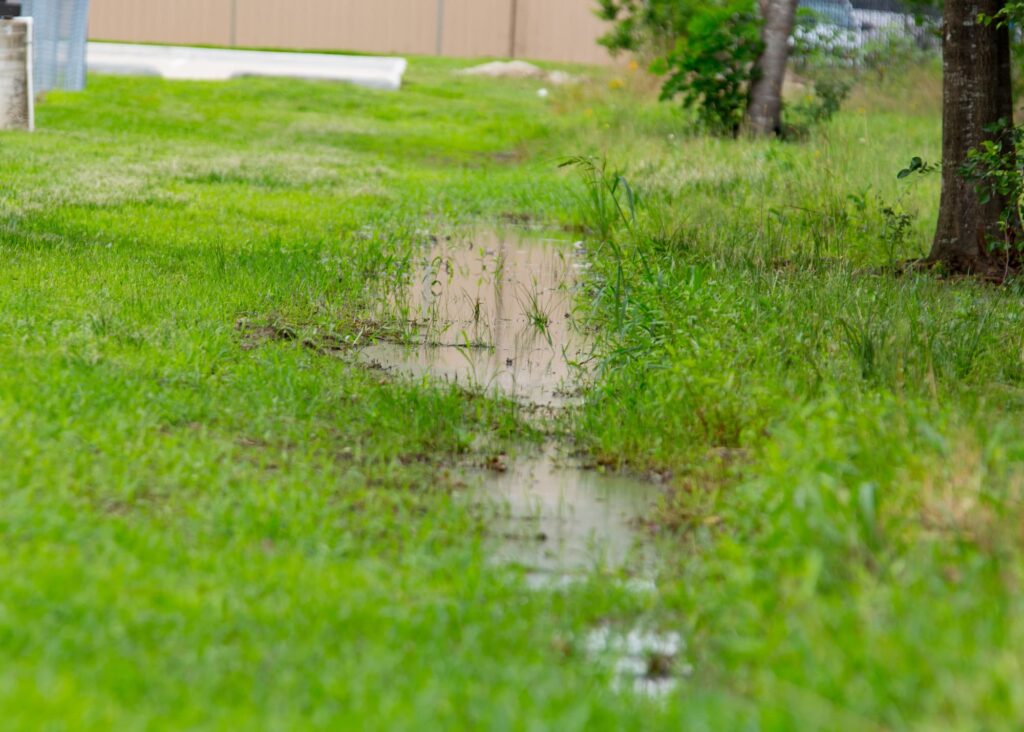
When water pools on the surface of your lawn or runs off to the street instead of soaking in, the soil is failing to absorb it at a normal rate. This is called poor water infiltration. It’s a soil structure problem, not a watering schedule problem, and watering more often will not fix it.
Three separate conditions cause this: soil compaction, thatch buildup, and hydrophobic soil. Each one looks similar from the surface – puddles, runoff, dry patches despite irrigation – but they have different causes and require different diagnosis. Getting the right diagnosis first saves you time and money.
Cause 1: Compacted Soil
Compacted soil is the most common reason water won’t absorb into a lawn. When soil particles are pushed tightly together, the large pore spaces that normally carry water downward through the soil profile disappear. Water hits a dense layer and sits there, or flows sideways off the surface instead of moving down to the root zone.
According to the University of Minnesota Extension, a compacted soil has a reduced rate of both water infiltration and drainage specifically because large pores move water downward more effectively than small ones. Once those pores are compressed out of existence, infiltration nearly stops.
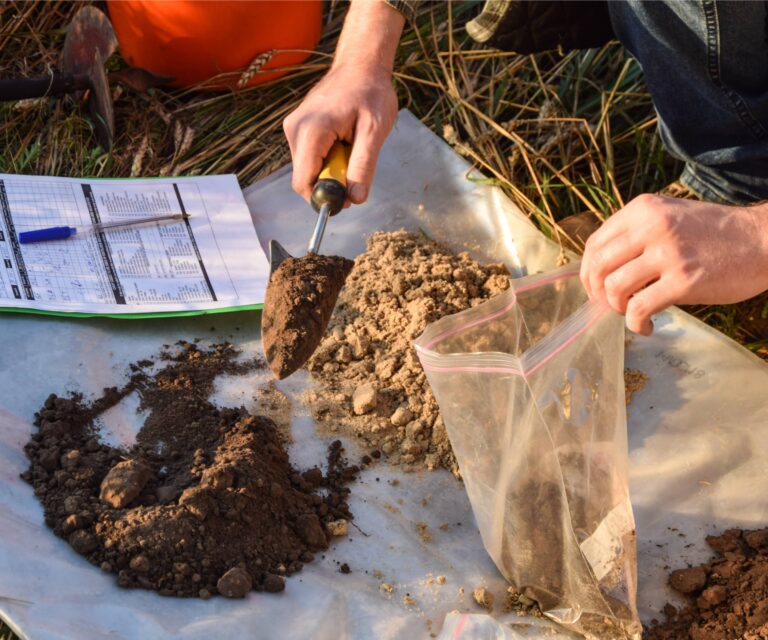
How to identify compacted soil: Push a thin metal skewer or a standard flathead screwdriver straight into your lawn with steady, even pressure. In healthy, uncompacted soil it should penetrate 6 inches without much resistance. If it stops at 2 or 3 inches, or you have to force it, compaction is your problem (LawnMowerGuru, 2023).
Common causes include regular foot traffic, mowing the lawn when the soil is wet, parking vehicles on the grass, and years of normal use with no aeration. The University of Nebraska-Lincoln Extension notes that mowing wet soil is one of the most consistent ways to create compaction over time.
What Compacted Soil Looks Like
- Footprints that stay visible for more than an hour after walking on the lawn
- Water pooling or running off during rain or irrigation
- Thin, struggling grass in high-traffic areas
- Hard, dense soil that doesn’t give underfoot
Cause 2: Thatch Buildup
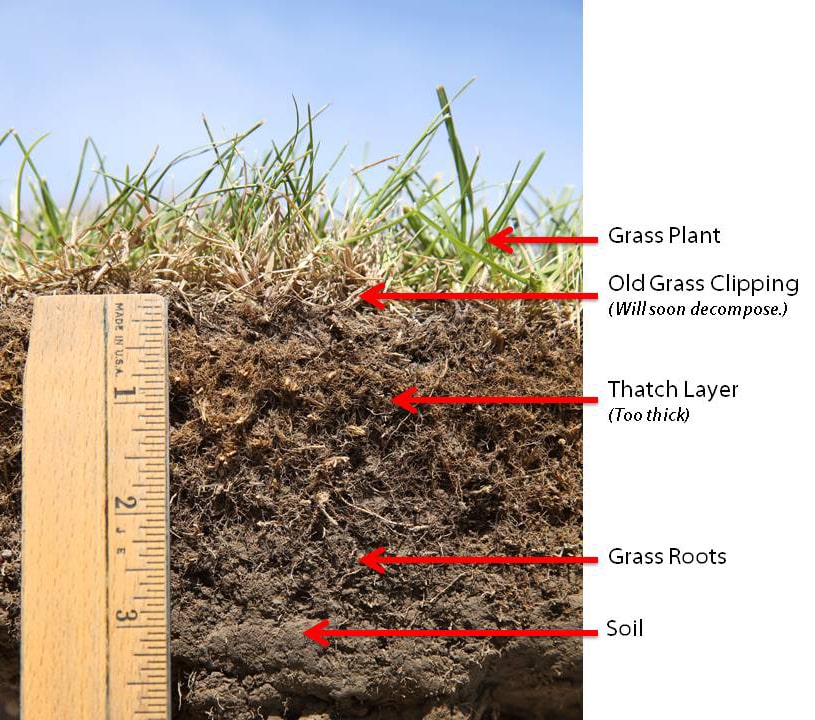
Thatch is the layer of dead and living organic matter that sits between the green grass blades and the soil surface. A thin layer – between 1/4 and 1/2 inch – is actually beneficial. It moderates soil temperature and reduces moisture loss. Once it exceeds 1/2 inch, it starts working against you.
A thatch layer thicker than 1/2 inch can block water from reaching the soil, increase surface drying, and contribute to dry patches even when the rest of the lawn looks fine (Texas A&M AgriLife Extension). Think of dense thatch as a loosely woven mat sitting on top of your soil – water hits it, spreads across the surface, and evaporates before it ever reaches the roots.
How to identify thatch as your cause: Cut a small plug of turf with a knife and look at the cross-section. You’ll see the green grass on top, then a brownish spongy layer, then the actual soil. Measure that spongy middle layer. If it’s thicker than 1/2 inch, thatch is contributing to your water problem.
Colorado State University Extension confirms that water frequently runs off thatchy turf even under normal irrigation, especially when the thatch layer has dried out and gone hydrophobic itself.
Grasses Most Prone to Thatch Buildup
Some grass types produce thatch far faster than others. Kentucky bluegrass is one of the fastest thatch accumulators. Bermuda grass and zoysia are also prone to heavy buildup if mowing, fertilizing, and watering aren’t balanced. According to Michigan State University Extension, compacted soils and overwatering both speed up thatch formation, which means these problems often exist together.
Cause 3: Hydrophobic Soil
Hydrophobic soil is soil that actively repels water instead of absorbing it. You’ll see water bead up on the surface the same way water beads on a freshly waxed car. This is caused by waxy organic compounds – produced by decomposing plant material and certain soil fungi – that coat individual soil particles and break the normal surface tension that draws water into the soil.
Sandy soils are the most vulnerable. Sand particles have a smaller surface area and fewer fine particles to retain moisture, which means they dry out faster and develop these water-repellent coatings more easily (Jimboomba Turf Group, 2026). But any soil that has gone through an extended dry period can develop hydrophobic conditions.
How to identify hydrophobic soil: Dig up a small amount of dry soil from an affected area and drop it into a glass of water. Hydrophobic soil floats. Normal soil sinks quickly. You can also pour a small cup of water slowly onto a dry patch – if the water beads and sits rather than soaking in within 30 seconds, the soil has hydrophobic properties.
Here’s the frustrating part: the more a hydrophobic lawn dries out, the harder it becomes to re-wet. The waxy coatings strengthen as the soil stays dry. Regular irrigation that cycles through wet and dry too quickly can make this worse over time, not better.
How to Tell Which Cause You Have
Run through this quick field test before doing anything else. Each test takes under five minutes.
| Symptom | Most Likely Cause | Field Test |
|---|---|---|
| Water pools everywhere, footprints stay visible | Compacted soil | Screwdriver test – stops before 6 inches |
| Water pools in patches, not uniformly | Thatch or hydrophobic soil | Cut plug, measure thatch layer |
| Water beads on surface like on wax | Hydrophobic soil | Float soil in water glass |
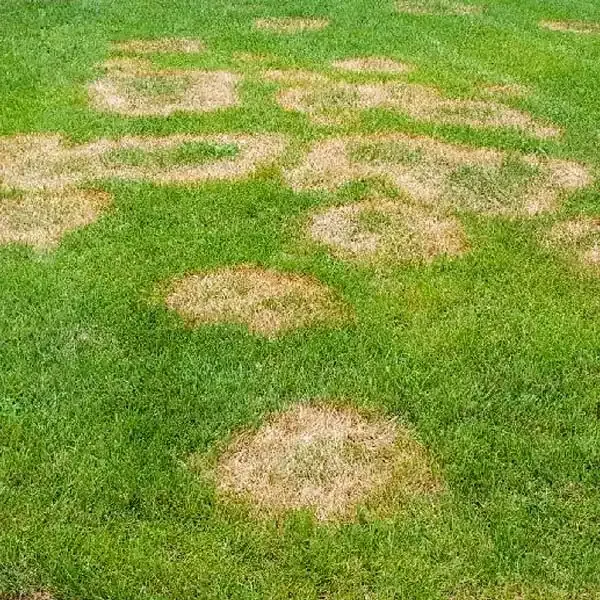
| Dry patches surrounded by healthy green | Hydrophobic soil or thatch | Probe the dry patch and measure thatch |
| Hard, dense soil, especially under high-traffic areas | Compacted soil | Screwdriver test + visual |
| Spongy, thick brown layer between grass and soil | Thatch buildup | Cross-section plug measurement |
Many lawns have more than one issue at the same time. It’s common to find compaction and thatch together – Michigan State University Extension notes these two problems frequently reinforce each other. Identify the dominant cause first, then consider whether a second issue is also present.
Mistakes That Make the Problem Worse
credit: https://warelandscaping.com/
- Watering more frequently when you see dry patches: this won’t fix compaction or hydrophobia, and it encourages the shallow rooting that makes all three conditions worse over time.
- Mowing when the soil is wet: every pass of the mower on saturated soil adds to compaction. Wait until the lawn is dry enough to walk on without leaving impressions.
- Ignoring thatch for multiple seasons: thatch thicker than 3/4 inch can develop its own hydrophobic layer, giving you two problems in one.
- Assuming the problem is the grass variety: water runoff is almost always a soil structure issue. Replacing grass without addressing the underlying soil condition will produce the same result.
Frequently Asked Questions
Why is water pooling on my lawn instead of soaking in?
Water pools when soil can’t absorb it fast enough. The three most common causes are soil compaction, a thick thatch layer, or hydrophobic soil conditions. You can run a simple screwdriver test and a visual plug inspection to identify which problem you’re dealing with before treating it.
How do I know if my soil is compacted?
Push a screwdriver into the lawn with steady pressure. It should slide in 6 inches without much effort. If it stops at 2 to 3 inches, your soil is compacted. Visible footprints that stay on the lawn for more than an hour and water that runs off during irrigation are also clear signs (LawnMowerGuru, 2023).
What is hydrophobic soil and how does it form?
Hydrophobic soil is soil that repels water rather than absorbing it. It forms when waxy organic compounds from decomposing plant matter coat soil particles, breaking the normal surface tension that pulls water into the soil. Sandy soils and soils that go through extended dry periods are most at risk.
How thick does thatch have to be before it blocks water?
A thatch layer thicker than 1/2 inch can interfere with water infiltration. At 3/4 inch or more, it becomes a meaningful barrier. Texas A&M AgriLife Extension recommends measuring thatch by cutting a cross-section plug and checking the brown organic layer between the grass and the soil.
Can you have compaction and hydrophobic soil at the same time?
Yes, and it’s more common than most homeowners realize. Compacted soil dries out unevenly and can develop hydrophobic coatings in the drier zones. Thatch contributes to both problems. If your screwdriver test shows compaction but the soil is also repelling water, you likely have two conditions to address – not one.