Essential Lawn Maintenance Tasks: The Complete Homeowner Guide
TL;DR
- The six essential lawn maintenance tasks are mowing, watering, fertilizing, aerating, edging, and weed control.
- Mow cool-season grasses at 2.5-3.5 inches; warm-season grasses like Bermuda at 0.5-1 inch (Purdue University Extension).
- Water 1 inch per week, applied in the early morning to reduce evaporation and disease pressure.
- Professional lawn aeration averages $75-$206 and should happen once a year for most yards.
- Fall is the most important fertilization window for cool-season lawns; warm-season lawns peak in late spring and summer.
What Are the Essential Lawn Maintenance Tasks?
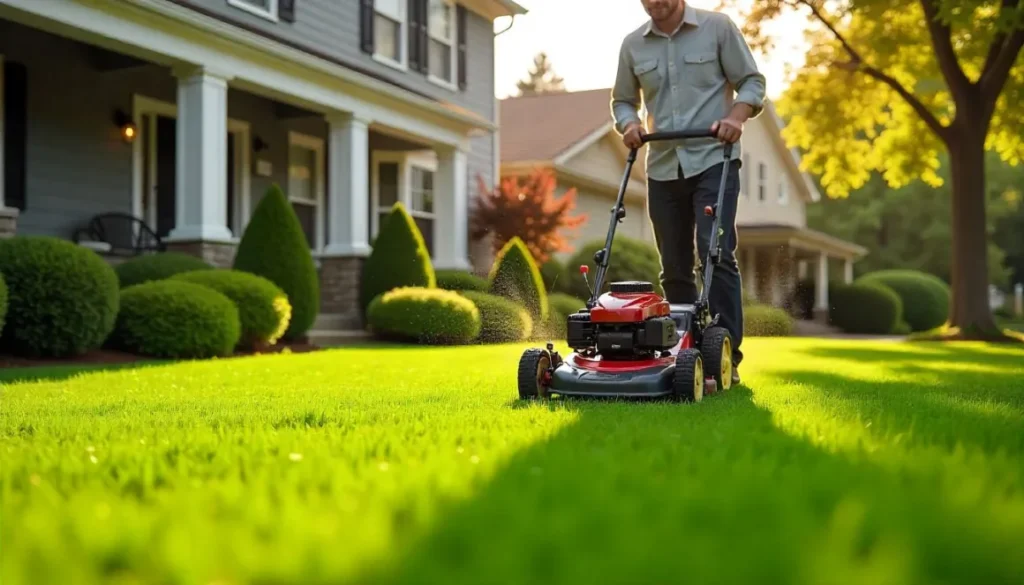
The six essential lawn maintenance tasks are mowing, watering, fertilizing, aerating, edging, and weed control. Every lawn needs all six, though the timing and frequency shift depending on your grass type, region, and season. Miss one for long enough and you’ll see it show up as thin spots, weed pressure, or a lawn that just never looks quite right.
Here’s how each one works and when to do it.
Mowing: Height and Frequency Matter More Than You Think
Mowing at the right height is the single fastest way to improve how your lawn looks and how well it resists weeds. Most homeowners cut too short, which stresses the grass and opens bare soil where weeds move in.
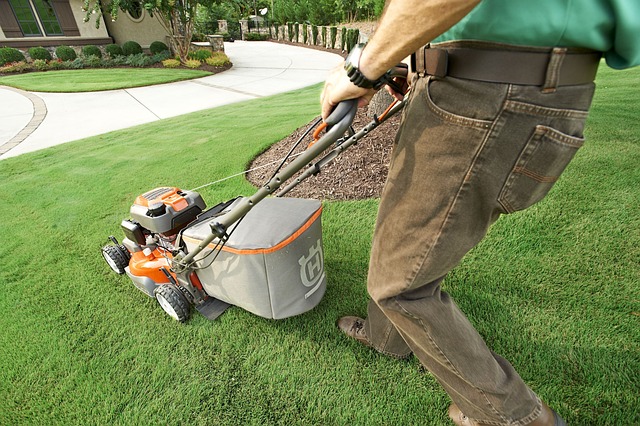
Purdue University Extension recommends mowing cool-season grasses like Kentucky bluegrass, perennial ryegrass, and fine fescue at 2.5-3.5 inches. Tall fescue holds up better at 3-4 inches. Warm-season grasses like Bermuda and Zoysia should stay in the 0.5-1 inch range. Never remove more than one-third of the blade height in a single pass – cutting too much at once shocks the plant and leaves the lawn looking brown and scalped.
Mow based on how fast the grass is growing, not on a fixed day of the week. In spring when cool-season grass is surging, you may need to mow twice a week. In summer heat or drought, once every 10-14 days is often enough. Leave the clippings on the lawn – Penn State Extension research found that recycled clippings return 46-59% of the nitrogen applied as fertilizer back to the soil over a three-year period.
Watering: 1 Inch Per Week, Morning Only
Most lawns need about 1 inch of water per week, from rainfall or irrigation combined. The timing matters as much as the amount. Water in the early morning, before 10 a.m. if possible. Evening watering leaves grass wet overnight, which creates ideal conditions for fungal diseases like brown patch and dollar spot.
Deep, infrequent watering trains roots to grow down rather than staying shallow near the surface. Running a sprinkler for 15 minutes every day produces shallow roots that dry out fast during heat waves. One deep session two to three times per week builds a more drought-tolerant lawn. A simple soil probe or a screwdriver pushed into the ground will tell you whether the top 6 inches of soil are moist – that’s your target depth.
In summer, cool-season grasses like Kentucky bluegrass may go dormant during extended heat above 90°F. That’s normal. Don’t overwater trying to force them green; let them rest and they’ll recover in fall.
Fertilizing: Timing Is the Whole Game
Fertilizing at the wrong time wastes money and can damage your lawn. The goal is to feed grass when it’s actively growing and able to use the nutrients.
For cool-season grasses, fall is the most important fertilization window. Cooler temperatures and regular rainfall let grass store nitrogen in the roots for a stronger spring green-up. Purdue Extension recommends applying 1 pound of nitrogen per 1,000 square feet in mid-September, with a second application after the final mow of the year. A light spring feeding in April or early May is also standard.
For warm-season grasses like Bermuda and Zoysia, the schedule flips. Fertilize in late spring once the lawn has fully greened up, with follow-up applications through summer. Stop feeding 4-6 weeks before the first expected frost to avoid stimulating tender new growth that can’t survive a freeze.
| Grass Type | Primary Fertilization Window | Secondary Window |
|---|---|---|
| Kentucky bluegrass | Early September – November | Light feed in April |
| Perennial ryegrass | September – October | April |
| Tall fescue | September – October | April |
| Bermuda | Late May – August | None after late summer |
| Zoysia | Late May – July | None after late summer |
Always do a soil test before fertilizing. Penn State Extension offers soil testing through county extension offices. The test tells you what your lawn actually needs rather than guessing, and it checks pH – most cool-season grasses prefer a pH between 6.0 and 7.0.
Aerating: Fixing Soil Compaction Before It Kills the Grass
Lawn aeration removes small plugs of soil from the turf to open up channels for air, water, and nutrients to reach the roots. If your lawn has heavy clay soil, gets a lot of foot traffic, or shows water pooling after rain, it probably needs aeration.
For most lawns, aerate once a year in fall (cool-season grass) or late spring (warm-season grass). High-traffic or clay-heavy yards can benefit from aerating twice annually. Core aeration – where a machine removes actual plugs of soil – is more effective than spike aeration, which only presses holes into the ground without removing anything.
Professional aeration averages $75-$206 for a typical yard, with most homeowners paying around $140 (Angi, 2026). LawnStarter puts the range at $107-$202 for a 1/8 to 1/4 acre lot (LawnStarter, 2026). You can rent a core aerator for around $100 per day, though it’s a physically demanding machine to operate, particularly on sloped or fenced yards.
Pair aeration with overseeding and starter fertilizer to get the best results. The open soil channels give grass seed direct soil contact, which dramatically improves germination rates.
Edging and Trimming: The Detail Work That Makes the Whole Lawn Look Better
Edging and string trimming are the lawn maintenance tasks most people skip or rush, and you can always tell. A clean edge along driveways, sidewalks, and garden beds makes an average lawn look intentional. A ragged edge makes a great lawn look neglected.
Edge 2-4 times per season along hard surfaces using a rotary edger, half-moon edger, or the edging function on a string trimmer. For the areas a mower can’t reach – around fence posts, tree bases, mailboxes, and landscape features – run a string trimmer set to the same height as your mower deck. Matching the trim height to your mowing height is the step most homeowners miss; if the trimmed areas are shorter, they’ll brown out faster in heat and show up as ragged streaks across the lawn.
Weed Control: Prevention Works Better Than Treatment
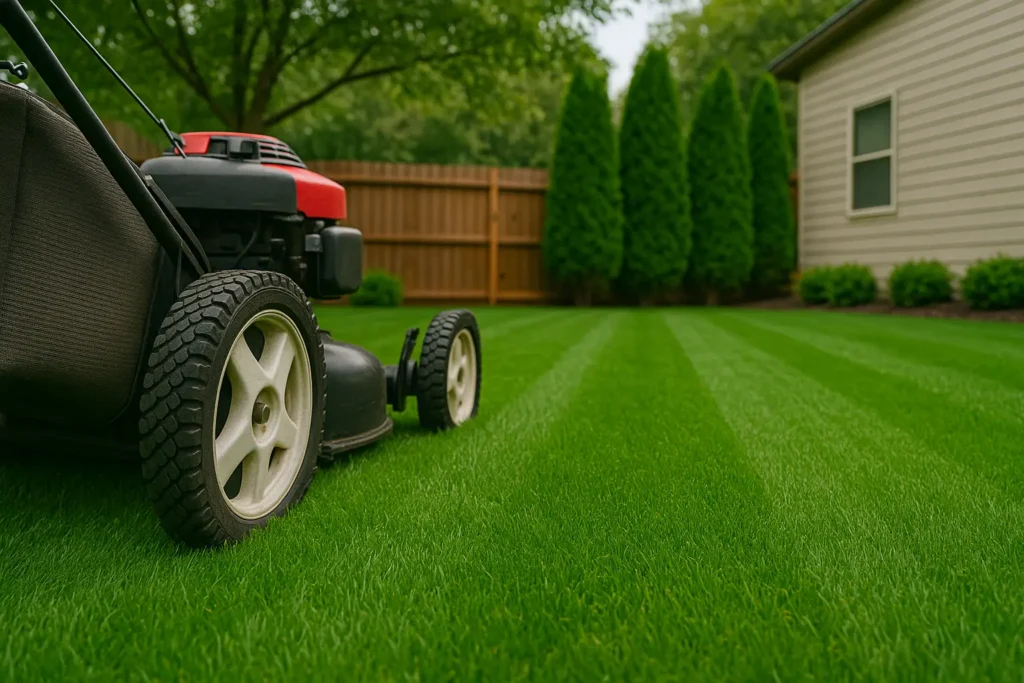
Controlling weeds is mostly about prevention – keeping the lawn thick enough that weeds can’t get a foothold. A well-mowed, properly fertilized, and aerated lawn is the best long-term weed control strategy available.
For chemical control, there are two categories to know. Pre-emergent herbicides stop weed seeds from germinating and should go down in early spring before soil temperatures hit 55°F – roughly when forsythia blooms in most of the northern US. Timing matters: apply them too late and the weeds have already sprouted. Post-emergent herbicides treat weeds that are already growing. Products containing 2,4-D, MCPP, and dicamba handle most common broadleaf weeds like dandelions, clover, and plantain (Purdue Extension, 2023). Always read the label before applying; most broadleaf herbicides should not go down within 4 weeks of overseeding.
Seasonal Lawn Maintenance Task Schedule
| Season | Task | Notes |
|---|---|---|
| Early spring | Soil test, light fertilize (cool-season), pre-emergent | Don’t fertilize heavy before the lawn is actively growing |
| Spring | Mowing begins, edging, spot weed control | Match mowing height to grass type |
| Summer | Weekly mowing, deep watering, trim around obstacles | Raise deck height to shade roots; avoid heavy fertilizer |
| Early fall | Aeration, overseeding, primary fertilization (cool-season) | Best window for cool-season grass repair |
| Late fall | Final mow at 2 inches, winterize mower | Don’t let grass go into winter too long or too short |
| Winter | Mower tune-up, soil test, order seed for spring | Avoid walking on frozen turf |
Common Mistakes That Cost You More in the Long Run
- Cutting grass too short: Scalping the lawn exposes soil to sunlight, which speeds weed germination and dries out roots faster during heat waves. Stay at or above the recommended mowing height for your grass type.
- Watering at the wrong time: Evening watering leaves the grass wet overnight and raises the risk of fungal disease. Water early in the morning and water deeply, not daily.
- Skipping the soil test: Fertilizing without knowing your soil pH and nutrient levels often means applying the wrong thing. A soil test from your local extension office typically costs $10-$20 and removes the guesswork.
- Aerating at the wrong time: Aerating cool-season grass during summer heat puts the lawn under additional stress. Stick to early fall, when grass can recover and fill in the open plugs before winter.
Frequently Asked Questions
What are the most essential lawn maintenance tasks?
The six essential tasks are mowing, watering, fertilizing, aerating, edging, and weed control. Mowing and watering happen throughout the growing season. Fertilizing, aerating, and overseeding are timed to match your grass type and the seasonal growth cycle.
How often should you mow your lawn?
Mow based on growth rate, not a fixed schedule. During peak spring growth, some lawns need mowing twice a week. In summer heat, once every 10-14 days is often enough. The consistent rule is to never remove more than one-third of the grass blade height in a single pass (Purdue University Extension).
When should you aerate your lawn?
Aerate cool-season lawns in early fall, from late August through October. Aerate warm-season lawns in late spring, after the grass has fully greened up and temperatures are consistently warm. Avoid aerating during drought, extreme heat, or frozen ground conditions.
How much does professional lawn aeration cost?
Professional aeration averages $75-$206 for a typical residential yard, with most homeowners paying around $140 (Angi, 2026). Prices depend on yard size, soil type, and geographic location. Renting a core aerator runs around $100 per day if you prefer to do it yourself.
What happens if you skip lawn fertilization?
Grass that isn’t fertilized becomes thin, loses color, and struggles to outcompete weeds. Cool-season lawns that skip fall fertilization often come in pale and patchy the following spring. Warm-season lawns that miss summer feeding thin out and allow weeds to take hold during the peak growing season.
Can you do all essential lawn maintenance tasks yourself?
Yes. Mowing, watering, edging, and basic weed control are straightforward DIY tasks. Aerating and overseeding require more equipment – either a rented core aerator or hiring a pro – but are manageable for most homeowners. Fertilizing is DIY-friendly once you have a soil test in hand to guide your product and rate selection.
Quick Recap: Your 6 Essential Lawn Maintenance Tasks
- Mow at the correct height for your grass type and never remove more than one-third of the blade at once.
- Water 1 inch per week in the early morning, not in the evening.
- Fertilize cool-season grass primarily in fall; warm-season grass in late spring through summer.
- Aerate once a year (or twice for compacted or high-traffic yards) at the right time of year for your grass type.
- Edge and trim consistently to match your mowing height and keep the lawn looking clean at borders.
- Control weeds with pre-emergent herbicide in early spring, and keep the lawn thick enough through good mowing and fertilizing to limit weed pressure year-round.