Why Your Grass Is Not Growing Properly
TL;DR
- The most common causes of poor grass growth are wrong soil pH, compacted soil, incorrect watering, mowing too short, and the wrong grass type for your climate zone.
- Grass grows best in soil with a pH between 6.0 and 7.0; outside that range, nutrients lock up in the soil and roots cannot access them (Penn State Extension).
- Compacted soil blocks water, air, and nutrients from reaching grass roots – a screwdriver that won’t push 4-6 inches into the ground is your warning sign.
- Mowing below 2.5 inches on cool-season grasses puts the plant into survival mode and invites weeds to fill the gaps (University of Missouri Extension).
- Start with a soil test ($15-$25 at most county cooperative extensions) before spending money on fertilizer or overseeding.
What Causes Grass to Stop Growing?
credit: https://meyersturfandnursery.com/
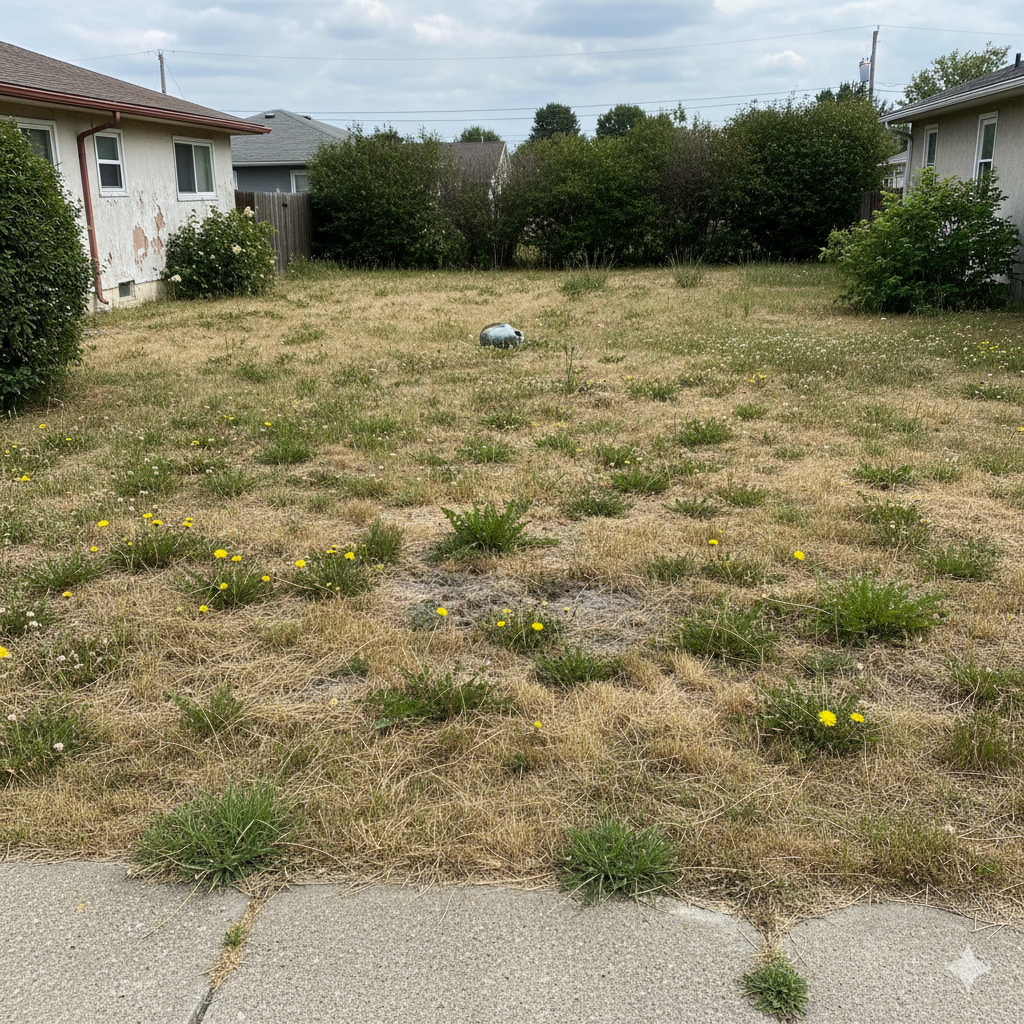
Grass stops growing when at least one of its basic requirements is cut off: the right soil chemistry, adequate water and oxygen at root depth, enough sunlight, and a mowing height that keeps the plant healthy. Most lawns that look thin, patchy, or stalled are dealing with more than one problem at the same time.
The good news is that most of these issues are fixable once you identify the actual cause. The mistake most homeowners make is applying more fertilizer or seed without diagnosing the root problem first, which wastes both money and time.
How Soil pH Blocks Grass Growth Before You Even Notice
If your soil pH is off, grass cannot absorb the nutrients already sitting in the soil, even if you fertilized last month. For most lawn grasses, the ideal pH range is 6.0 to 7.0 (Penn State Extension). Below 6.0, nutrients like phosphorus and iron become chemically unavailable to roots. Above 7.0, the same thing happens with iron and manganese, and you’ll see pale, yellowish blades that don’t respond to fertilizer.
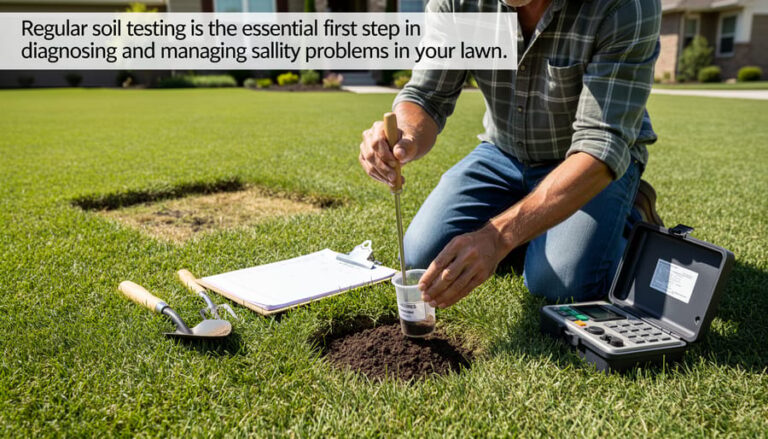
The fix starts with a soil test, not a bag of lime. Test first so you know how far off your pH is and which direction you need to move it. Most county cooperative extension offices process tests for $15-$25 and tell you exactly how much lime (to raise pH) or sulfur (to lower it) your lawn needs per 1,000 square feet.
Why Compacted Soil Is Often the Real Problem
Compacted soil is the most misdiagnosed lawn problem because the grass above it can look like it just needs water or fertilizer. The actual issue is that the soil particles are pressed so tightly together that water, air, and nutrients cannot reach the root zone.
Here’s a quick test: push a standard flathead screwdriver into the soil. If you can’t get it 4-6 inches deep without real effort, your soil is compacted (Men’s Journal, 2026). Grass roots in compacted soil stay shallow, which makes the whole lawn weaker, drier, and slower to recover from heat or foot traffic.
Core aeration is the standard fix. It physically removes plugs of soil to open up pore space for oxygen and water movement. Do it in early fall for cool-season grasses like Kentucky bluegrass or tall fescue, or in late spring for warm-season grasses like bermudagrass or zoysia (Lawn Care Center, 2025). After aerating, overseed bare patches and apply a thin layer of compost to help rebuild soil structure.
The Watering Mistakes That Stall Grass Growth
Both overwatering and underwatering stop grass from growing, and they produce similar symptoms – thin turf, yellowing blades, and patchy areas – so it’s easy to misread which problem you have.
Underwatering is straightforward: grass goes dormant or dies when it can’t access enough moisture. Most lawns need about 1 inch of water per week during the growing season, applied deeply and infrequently rather than a little every day. Deep watering encourages roots to go down further, which makes the grass more drought-tolerant.
Overwatering is less obvious. Waterlogged soil forces out the oxygen roots need to function, and it creates conditions where root rot and fungal disease spread quickly (MSU Extension). If your lawn feels spongy underfoot, water is pooling rather than draining, or you’re seeing gray or white patches in the morning, back off irrigation and let the soil dry out for 3-5 days before resuming a normal schedule.
The simplest guide for most US homeowners: water once or twice a week at about 0.5 inches per session, early in the morning before heat kicks in.
How Mowing Height Determines Whether Grass Thrives or Struggles
credit: https://globalideas.org.au/
Cutting grass too short is one of the fastest ways to wreck a lawn. Mowing below the recommended height strips away the leaf area the plant needs for photosynthesis, forces roots to stay shallow, and opens the soil surface to direct sunlight where weed seeds can germinate freely.
University of Missouri Extension turfgrass specialist Brad Fresenburg found that raising mowing height from 2.5 to 3.5 inches reduces annual weed populations by up to 80 percent. That alone is a strong reason to raise your deck a notch.
The one-third rule is the standard guideline from University of Minnesota Extension: never remove more than one-third of the grass blade in a single mow. If your lawn is at 5 inches and you cut it to 2.5 inches in one pass, that’s a significant shock to the plant. Step the height down over two or three mowing sessions instead.
| Grass Type | Recommended Mowing Height | Notes |
|---|---|---|
| Kentucky Bluegrass | 2.5-3.5 in | Go taller in summer heat |
| Tall Fescue | 3.0-4.0 in | Shade tolerant; keep taller under trees |
| Perennial Ryegrass | 2.5-3.5 in | Recovers well from mowing stress |
| Bermudagrass | 1.0-2.0 in | Warm-season; goes dormant in winter |
| Zoysia | 1.5-2.5 in | Slow-growing; avoid scalping |
| St. Augustine | 3.0-4.0 in | Shade tolerant; scalping causes slow recovery |
Wrong Grass Type: A Problem Fertilizer Cannot Solve
Planting a cool-season grass like Kentucky bluegrass in Georgia, or a warm-season grass like bermudagrass in Minnesota, guarantees poor results no matter how well you manage everything else. Grass species are bred for specific temperature ranges and seasonal growth patterns.
Cool-season grasses (bluegrass, fescue, ryegrass) grow actively in spring and fall, go semi-dormant in summer heat, and stay green through mild winters. They’re the right choice for the northern US roughly from USDA zones 3-6.
Warm-season grasses (bermudagrass, zoysia, St. Augustine, centipede) grow aggressively in summer, go dormant and turn brown in fall, and come back in late spring. They’re suited to zones 7-10. Planting them north of their range means they spend most of the year dormant or dead-looking.
If you’re not sure what grass type your lawn has, take a small sample to your local cooperative extension office for identification before spending money on seed or fertilizer.
Nitrogen Deficiency vs. Other Causes: How to Tell the Difference
A nitrogen shortage makes grass look pale, yellowish-green, and slow-growing – and so does a soil pH problem, compaction, and drought. The fastest way to tell them apart is to look at which leaves are affected first.
Nitrogen deficiency shows up on the oldest, lowest leaves first. The lower blades turn light green, then yellow-brown, while newer growth at the top stays relatively green (Kansas State University Turfgrass). If you see yellowing across the whole lawn uniformly, pH or compaction is more likely the cause than a nutrient shortage.
Before applying a nitrogen fertilizer, run a soil test. If the test shows adequate nitrogen but the lawn is still pale, the problem is something preventing nutrient uptake – usually pH or compaction – not a shortage of fertilizer.
Common Mistakes That Make Grass Problems Worse
- Fertilizing without a soil test: You may be adding nutrients the lawn doesn’t need while the actual problem (wrong pH, compaction) goes unaddressed. A $15-$25 soil test tells you exactly what to apply.
- Overseeding onto compacted soil: Seed dropped onto hard, compacted ground won’t germinate properly. Roots can’t push through dense soil, so even if the seed sprouts, the grass stays thin and shallow. Aerate before overseeding.
- Mowing wet grass: Wet grass clumps under the deck, cuts unevenly, and spreads fungal disease across the lawn. Wait until the blades are dry, ideally mowing in the late morning after dew has burned off.
- Using a dull mower blade: A dull blade tears grass rather than cutting it cleanly, leaving ragged edges that turn brown and create entry points for disease. LawnStarter recommends sharpening your blade at least 3 times per mowing season.
- Ignoring shade: Grass needs 3-6 hours of direct sunlight daily. In areas getting less than that, standard lawn grasses won’t thrive regardless of what else you do. Switch to a shade-tolerant variety like fine fescue or St. Augustine, or consider a ground cover alternative.
Frequently Asked Questions
Why is my grass not growing even though I water it regularly?
Watering alone can’t fix a soil problem. If the soil is compacted, waterlogged, or has the wrong pH, grass roots can’t access the water and nutrients they need even when you’re watering on schedule. Do the screwdriver test to check for compaction, and get a soil test to check pH before adding more water or fertilizer.
What is the fastest way to get grass to grow?
The fastest results come from addressing the actual limiting factor: aerate if compacted, adjust pH if it’s outside the 6.0-7.0 range, raise the mowing height if you’ve been cutting too short, and water deeply rather than frequently. Applying a nitrogen fertilizer on top of unaddressed soil problems will give you minimal results.
How much sunlight does grass need to grow?
Most lawn grasses need at least 3-6 hours of direct sunlight per day to grow properly. Shade-tolerant varieties like fine fescue or St. Augustine can manage with as little as 3 hours, but no grass thrives in full shade year-round. If a tree or structure is blocking light, thinning the canopy or switching to a ground cover may be a better long-term solution than continuing to fight the grass.
What does nitrogen-deficient grass look like?
Nitrogen-deficient grass turns pale green or yellow starting with the oldest, lowest leaves first, while newer growth stays relatively green. The lawn may look uniformly washed out rather than patchy. If the yellowing is spotty or random, pH imbalance or fungal disease is more likely the cause than nitrogen deficiency alone.
How often should I aerate my lawn?
Core aerate once a year as a minimum if your lawn gets regular foot traffic. High-traffic lawns benefit from aeration twice per year – once in early fall for cool-season grasses and once in late spring for warm-season grasses. Sandy soils compact less quickly and may only need aeration every 2-3 years.
Can I fix a patchy lawn by just adding more grass seed?
Not without addressing the underlying cause. Seed dropped onto compacted or pH-imbalanced soil has poor germination rates and the new grass will struggle just as much as the existing grass. Identify and fix the root cause first – aerate, adjust pH, improve drainage – then overseed for the best results.