Why Grass Becomes Weak After Rain: Causes and Fixes
TL;DR
- A little rain helps your lawn, but heavy or prolonged rain weakens grass by saturating the soil and pushing oxygen out of the root zone.
- Waterlogged soil suffocates roots within days, and warm wet conditions let fungal diseases like brown patch blight large areas in as little as 6 to 8 hours (UNH Extension, 2019).
- Heavy rain also washes out nitrogen and potassium, compacts the soil, and erodes bare spots, all of which leave grass yellow and thin.
- The single worst thing you can do is mow wet grass, which spreads fungal spores across the whole lawn (Clemson HGIC, 2025).
- Wait until the ground firms up, then aerate, reseed bare patches, and apply a light balanced fertilizer to bring it back.
Why Does Grass Get Weak After Heavy Rain?

credit: https://www.tomsguide.com/
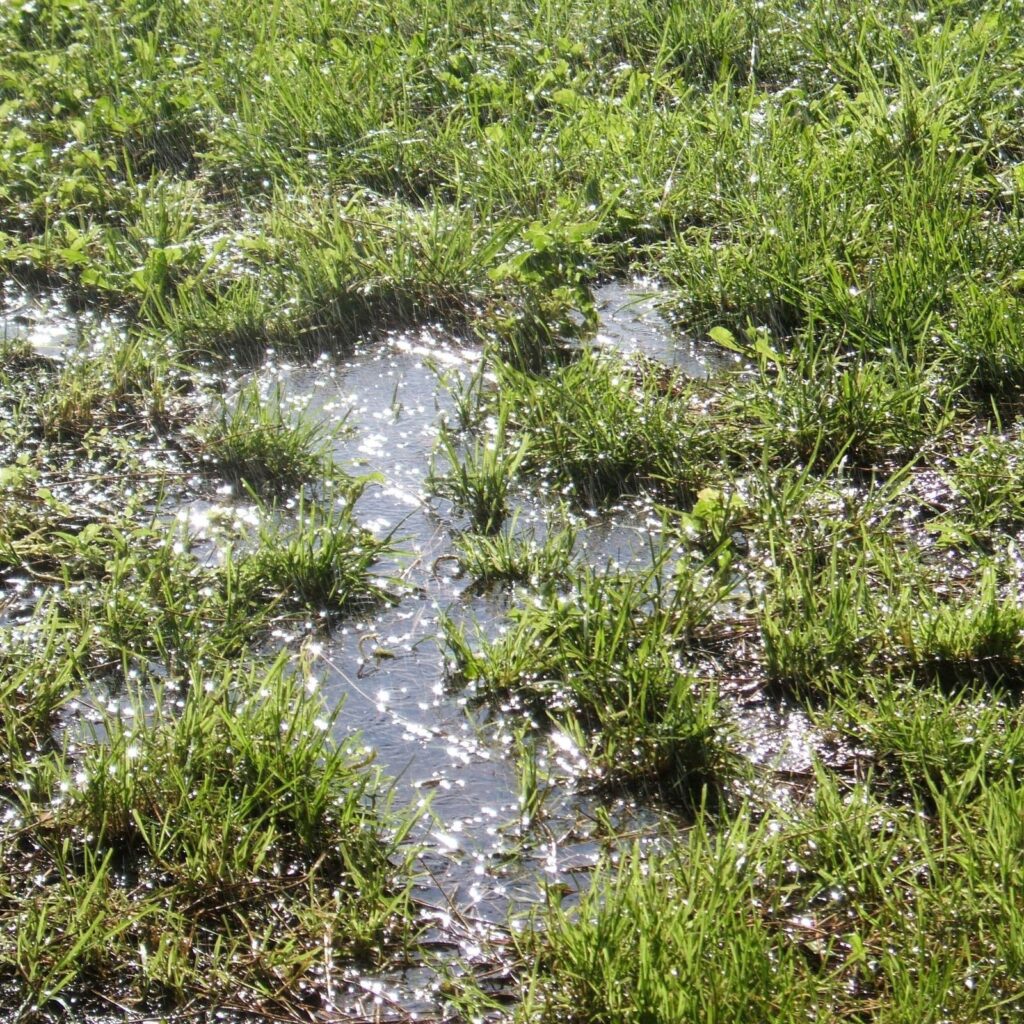
Grass gets weak after heavy rain because saturated soil pushes air out of the spaces around the roots. Grass roots need oxygen to absorb water and nutrients, and when water fills every pore in the soil, the roots start to suffocate. This is called an anaerobic, or oxygen-starved, condition.
Light, steady rain is good for a lawn. The problem starts when water arrives faster than the soil can drain it. Prolonged saturation reduces the oxygen available to roots and causes yellow leaves, root rot, and dead patches. Once the roots weaken, the whole plant struggles, and the lawn turns thin, pale, and prone to disease.
Most rain damage shows up a few days to two weeks after the storm, not during it. That delay is why a lot of homeowners blame drought and water more, when the real cause was too much water all along.
What Actually Happens to Grass Roots in Waterlogged Soil?
In waterlogged soil, the roots can’t breathe, so they stop pulling in water and nutrients. Gases move very slowly through water, so once the soil fills up, oxygen exchange with the air above almost stops. The fine root hairs that do most of the absorbing begin to die off, and the grass turns brown or yellow.
Think of it like trying to breathe with your head underwater. The grass is surrounded by moisture but starving for air. The longer the soil stays saturated, the more root tissue dies, and the slower the lawn recovers once things dry out.
Clay-heavy soil makes this worse. Fine clay particles bind tightly and drain slowly, so a clay lawn can sit like a shallow lake for a day or more after the rain stops.
How Rain Triggers Lawn Fungus and Disease
credit: https://www.homesandgardens.com/
Warm, wet conditions after rain are the perfect setup for fungal disease, the fastest way grass goes from green to dead. Brown patch, caused by the fungus Rhizoctonia solani, is the most common and damaging disease of home lawns in much of the US (Clemson HGIC, 2025).
Brown patch takes hold when grass blades stay wet for about 10 hours or more and night temperatures sit above roughly 68°F. Under those conditions the fungus can blight a large area of turf within 6 to 8 hours (UNH Extension, 2019). It shows up as circular brown patches anywhere from a few inches to several feet wide.
The disease also spreads on equipment. Mowing or walking across wet, infected turf carries spores to clean parts of the lawn. That’s why timing your mowing matters as much as the rain itself.
| Rain-Driven Problem | What It Does to Grass | What Helps |
|---|---|---|
| Waterlogged soil | Starves roots of oxygen, causes root rot and yellowing | Aerate once the soil firms up; improve drainage |
| Fungal disease (brown patch) | Blights circular patches fast in warm, wet weather | Water in the morning only; never mow wet grass |
| Nutrient leaching | Washes out nitrogen and potassium, leaves grass pale | Apply a light balanced fertilizer after recovery |
| Soil compaction | Squeezes out air pockets, shallow roots | Core aerate; stay off the wet lawn |
| Erosion and bare spots | Exposes soil, invites weeds | Reseed and topdress thin areas |
Why Your Lawn Looks Yellow and Thin After a Storm
Your lawn looks yellow and thin after a storm because heavy rain flushes nutrients out of the soil. Hard rain washes away nitrogen and potassium, the nutrients grass leans on most for color and growth. Without them, the grass can’t green back up on its own and stays pale and weak.
Compaction adds to it. When soil is saturated, the weight of the water plus any foot traffic collapses the air pockets roots need, leaving the grass with shallow, stressed roots. A quick test: if you can’t push a screwdriver 3 to 4 inches into the ground, the soil is compacted.
Walking or mowing across the lawn while it’s still soft makes compaction worse. The fix is patience first, then aeration once the ground has firmed back up.
Common Mistakes That Make Rain Damage Worse
- Mowing the lawn while it’s still wet. This compacts soft soil and drags fungal spores across the whole yard, turning a small problem into a lawn-wide one (Clemson HGIC, 2025).
- Watering in the evening on top of an already-soaked lawn. Grass that stays wet overnight is exactly what brown patch needs, so any extra watering should happen early in the morning.
- Piling on high-nitrogen fertilizer to “fix” the yellow color. Heavy nitrogen during warm, wet weather feeds the fungus and makes disease worse, not better.
- Walking across the soggy lawn to inspect the damage. Foot traffic on saturated soil compacts it further, so wait a day or two for the ground to firm up before you survey the damage.
- Mowing too short after a storm. Scalping stresses grass and opens it up to fungal infection, so keep the blades at the higher end of the recommended range.
Frequently Asked Questions
Why does grass get weak after heavy rain?
Heavy rain saturates the soil and pushes oxygen out of the root zone, so the roots can’t absorb water or nutrients and begin to die back. The grass turns yellow and thin, and warm wet conditions add fungal disease on top of that. Light rain does the opposite and helps the lawn.
How long does it take a lawn to recover after heavy rain?
Most lawns start bouncing back within one to two weeks once the soil drains and dries out, assuming the roots weren’t badly damaged. Bare or diseased patches take longer and usually need reseeding. Aerating once the ground firms up speeds recovery by getting air back to the roots.
Should I mow my lawn right after it rains?
No. Wait until the grass blades and the soil surface have dried. Mowing wet grass compacts soft soil and spreads fungal spores across the lawn, and a wet cut is ragged and uneven.
What is the brown circular patch in my lawn after rain?
That’s most likely brown patch, a fungal disease that thrives when grass stays wet and nights are warm (UNH Extension, 2019). It forms circular patches from a few inches to several feet wide. Water only in the morning, avoid mowing wet grass, and improve drainage to slow it down.
Can too much rain kill my grass?
Yes, if the soil stays saturated long enough. Prolonged waterlogging starves the roots of oxygen and causes root rot and dead patches. Grass in low spots and poorly drained clay soil is most at risk because the water sits the longest.
How do I fix a waterlogged lawn?
Stay off it until the soil firms up, then core aerate to get air and drainage back into the root zone. Reseed bare patches, topdress with a thin layer of compost to improve soil structure, and apply a light balanced fertilizer to replace washed-out nutrients. For yards that flood every time it rains, look at grading or a drainage solution like a French drain.