Common Reasons a Lawn Mower Loses Power
TL;DR
- The most common reasons a lawn mower loses power are a clogged air filter, old or contaminated fuel, a fouled spark plug, and a dirty carburetor.
- A clogged air filter starves the engine of oxygen and is usually the first thing to check — it takes about 5 minutes to inspect and costs $5–$10 to replace.
- Fuel sitting longer than 30 days starts to degrade and gum up the carburetor, especially if it contains ethanol.
- A dull blade puts extra mechanical load on the engine and can cause power loss in thick grass.
- Start with the air filter and fuel before touching anything else — those two fixes resolve most weak-mower complaints.
What It Means When a Lawn Mower Loses Power
credit: https://www.homesandgardens.com/
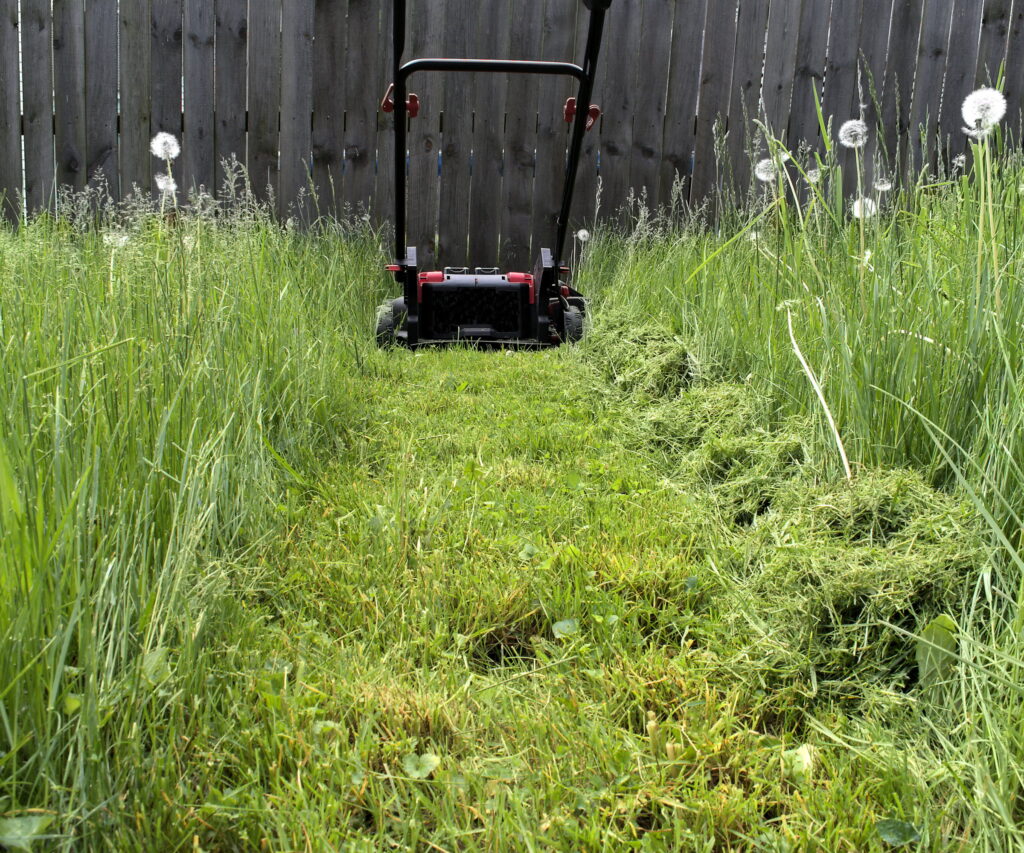
A lawn mower loses power when the engine can’t get enough air, fuel, or spark to run at full capacity. The result is a mower that bogs down in the middle of a pass, surges and sputters, or struggles the moment it hits thick grass — even though it starts up fine.
The good news: most power-loss problems are fixable in your driveway with basic tools. You don’t need to haul the mower to a shop unless you’ve already worked through the list below and nothing helped.
A Dirty Air Filter Is the First Thing to Check
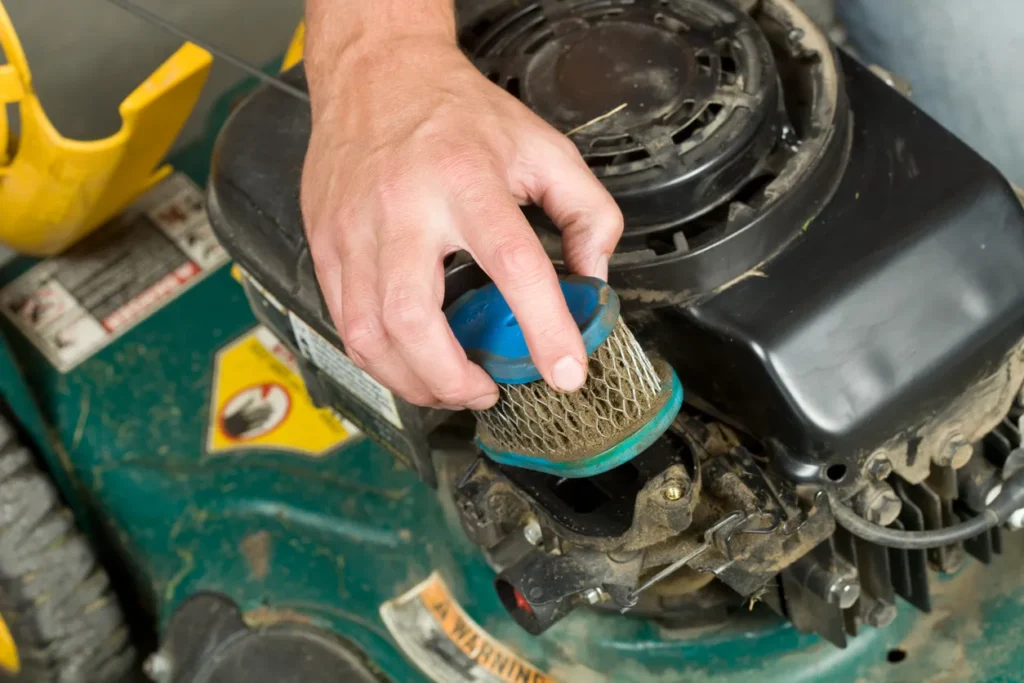
A clogged air filter is the most common cause of power loss in a gas-powered lawn mower. The filter’s job is to clean incoming air before it enters the engine. When it gets packed with dirt, grass dust, and debris, it restricts airflow and throws off the fuel-to-air ratio the engine needs to run properly.
A clogged filter causes the engine to run “rich” — too much fuel, not enough air — which leads to reduced power, rough running, and black exhaust smoke (Jack’s Small Engines). Your mower may feel strong at startup but fade after a few minutes once the engine warms up and the restriction tightens.
Check the air filter every 25 hours of use, or once a month during peak mowing season. Foam filters can be cleaned with mild soap and water, then left to air-dry completely before reinstalling. Paper cartridge filters — the kind on most Briggs & Stratton and Honda GCV160 engines — should just be replaced; a new one costs $5–$10 at any hardware store and takes five minutes to swap.
Old or Contaminated Fuel Starves the Engine
Gasoline that’s been sitting in the tank for 30 days or more starts to oxidize and break down. As it does, it leaves behind a varnish-like residue that coats the carburetor jets and fuel passages, cutting off the steady fuel supply the engine needs (Champion Auto Parts).
This is the number one cause of spring startup problems. If your mower sat all winter with fuel in the tank and you didn’t add a stabilizer like STA-BIL, there’s a good chance degraded fuel is the culprit behind your power complaints now.
The fix starts with draining the old fuel completely and refilling with fresh gas. For most walk-behind mowers, regular 87-octane is fine. Avoid fuel with more than 10% ethanol (E10) — Briggs & Stratton recommends ethanol-free fuel where available, since ethanol absorbs moisture and accelerates the breakdown process. If the mower still runs rough after a fresh fill, the carburetor likely needs cleaning.
A Fouled or Worn Spark Plug Causes Inconsistent Power
The spark plug fires the fuel-air mixture in the engine cylinder. When it’s fouled with carbon, oil, or fuel residue, the spark becomes weak or inconsistent — the engine misfires, bogs down, or surges instead of holding steady RPMs (Champion Auto Parts).
Pull the spark plug and look at the electrode. A healthy plug is light gray or tan. Black and sooty means it’s been running rich (often from a dirty air filter). Oily or wet means oil is getting into the combustion chamber. Cracked or chipped? Replace it immediately — a damaged plug can misfire in a way that damages the engine over time.
Most small engine spark plugs are in the $3–$8 range. On a Briggs & Stratton 675exi or a Honda GCV160, spark plug replacement takes under 10 minutes with a spark plug socket. Replace yours every season or every 100 hours, whichever comes first — it’s cheap insurance.
A Clogged Carburetor Cuts Off Fuel Delivery
credit: https://www.lawnstuff.com/
The carburetor mixes air and fuel in the right ratio and feeds it to the engine. When old fuel leaves behind gum and varnish, the carburetor’s tiny jets get clogged, and fuel delivery becomes uneven or stops altogether. The engine may start but lose power under any load, or it may surge rhythmically as it hunts for the right fuel mixture.
The simplest fix for a mildly clogged carburetor is a can of carburetor cleaner spray (available at any auto parts store for around $6–$10). With the engine off, spray it into the carburetor intake and let it soak for a few minutes, then start the engine to flush out the residue. For more stubborn clogs, you’ll need to remove the carburetor, disassemble the bowl, and clean the jet with a thin wire or a carburetor rebuild kit.
If cleaning doesn’t work, a replacement carburetor for a common walk-behind mower — Toro Recycler, Craftsman M105, or most Husqvarna 100-series models — typically runs $15–$40 online.
A Dull Blade Makes the Engine Work Too Hard
A sharp blade slices grass cleanly. A dull blade tears and mulches it, which creates drag on the blade and puts the engine under constant heavy load — especially in thick, wet, or tall grass. The engine loses RPMs, the mower bogs down on every pass, and you’ll notice the cut quality looks ragged with shredded tips instead of clean edges.
Sharpen your blade at the start of every season, and check it again mid-season if you’re mowing frequently or have hit anything solid like a root or hidden rock. A lawn mower blade sharpening service typically runs $10–$20 at a small engine shop (Angi, 2024). You can also do it yourself with a metal file or angle grinder for about the same cost in 15–20 minutes.
After sharpening, always rebalance the blade on a blade balancer or a nail in the wall — an unbalanced blade causes vibration that accelerates engine wear.
Low Engine Oil Increases Friction and Cuts Performance
Engine oil reduces friction between moving parts inside the engine. When the oil level drops too low, friction increases, the engine runs hotter, and you’ll notice a steady decline in power. Some mowers with a low-oil shutoff feature will cut the engine entirely before damage occurs — if your mower dies suddenly and won’t restart, check the oil dipstick before anything else.
Check the oil before every mow on a flat surface. Most walk-behind mowers with Briggs & Stratton engines take SAE 30 for temperatures above 40°F, or 10W-30 for varying seasonal conditions (Briggs & Stratton). The crankcase on a typical walk-behind holds 15–18 oz of oil. Change it every season or every 50 hours of use — whichever comes first.
Thick or Wet Grass Overloads the Deck
Sometimes the mower is fine — the conditions are just too much for it. Tall, thick, or wet grass creates significantly more resistance on the cutting deck. The engine has to work harder to spin the blade through heavy material, and you’ll feel it as sluggishness or bogging on every row.
The fix is simpler than replacing parts: raise the deck height one or two notches and mow in smaller passes (no more than half the blade width at a time). If the grass is very tall, mow it twice — once at a higher setting, then again at your target height. Never try to cut off more than one-third of the grass blade in a single pass, per the standard agronomic guideline from Purdue Extension (Purdue University Extension).
Diagnosing Power Loss: Where to Start
Work through the causes in this order before reaching for tools or spending money:
| Step | What to Check | Time Required | Cost If Replaced |
|---|---|---|---|
| 1 | Air filter | 5 min | $5–$10 |
| 2 | Fuel freshness | 5 min | Varies (cost of fresh fuel) |
| 3 | Spark plug | 10 min | $3–$8 |
| 4 | Oil level | 2 min | $5–$10 per quart |
| 5 | Blade condition | 10 min | $10–$20 to sharpen |
| 6 | Carburetor | 20–45 min | $6–$40 (cleaner or replacement) |
| 7 | Deck and grass conditions | Immediate | Free |
Most power-loss issues are resolved at step 1, 2, or 3. The carburetor is the last stop — not the first.
Mistakes That Make Power Loss Worse
- Skipping the air filter and going straight to the carburetor. The air filter causes most of the same symptoms as a dirty carburetor and costs a fraction to fix. Always check it first.
- Running old fuel year to year without draining or using a stabilizer. Thirty-day-old gasoline with ethanol degrades fast enough to gum up a carburetor in a single off-season.
- Ignoring the oil level because the mower “seems fine.” A mower with low oil will run — until it doesn’t. Check it before every single mow.
- Sharpening the blade but skipping the balance check. An unbalanced blade vibrates, and that vibration works its way into the crankshaft bearings over time.
Frequently Asked Questions
Why does my lawn mower lose power when the blades engage?
Power loss specifically when blades engage usually points to an airflow or fuel delivery problem, not the engine itself. A clogged air filter or partially blocked carburetor jet makes the engine struggle the moment it takes on the extra load of spinning the blade. Check the air filter first, then the carburetor.
Can old gas cause a lawn mower to lose power?
Yes. Gasoline starts to degrade after about 30 days, and fuel with ethanol degrades even faster. The varnish residue it leaves behind coats the carburetor jets and restricts fuel flow, causing rough running, surging, and power loss. Drain old fuel, refill with fresh gas, and run the mower for a few minutes before mowing.
How do I know if my spark plug is bad?
Pull the spark plug and inspect the electrode. A black, sooty tip means it’s been running rich. An oily or wet tip means oil is in the combustion chamber. A cracked or chipped insulator means replace it immediately. If the plug looks borderline, a new one costs $3–$8 and is worth the swap rather than diagnosing further.
Why does my mower lose power in tall grass but run fine otherwise?
Thick or tall grass puts extra mechanical load on the deck and blade. If the engine is already running slightly below spec from a dirty filter or old spark plug, tall grass will expose it. Raise the deck height, reduce your cutting width, and check the blade for dullness while you’re at it.
How often should I replace the air filter on my lawn mower?
Replace the paper cartridge air filter once per season, or every 25 hours of use, whichever comes first. If you mow in particularly dusty conditions — bare soil, dry late-summer lawns, sandy soil areas — check it every 10 hours. A clogged filter is cheap to replace and one of the top causes of sluggish engine performance.
What does it mean when my lawn mower surges instead of losing power steadily?
Surging — where the engine revs up and down rhythmically — almost always points to the carburetor. The engine is hunting for the right fuel-air ratio because the jets are partially restricted. Spray carburetor cleaner into the intake, or remove and clean the carburetor bowl and jet if surging continues.