Why Weeds Take Over Lawns (and How to Stop It)
TL;DR
- Weeds take over lawns when grass gets thin, leaving open soil where weed seeds get light and room to sprout.
- The biggest causes are mowing too short, compacted or bare soil, poor watering, and skipped fertilization.
- Mowing tall fescue at 3 to 4 inches can cut weed pressure by up to 80 percent compared to short mowing (University of Maryland Extension, 2024).
- Crabgrass seeds germinate once soil hits about 50 to 55 degrees Fahrenheit for several days, so timing matters for prevention (Michigan State University Extension, 2024).
- The fix is a dense lawn: mow high, water deep and infrequently, fertilize on schedule, and apply preemergent before seeds wake up.
What Actually Causes Weeds to Take Over a Lawn?

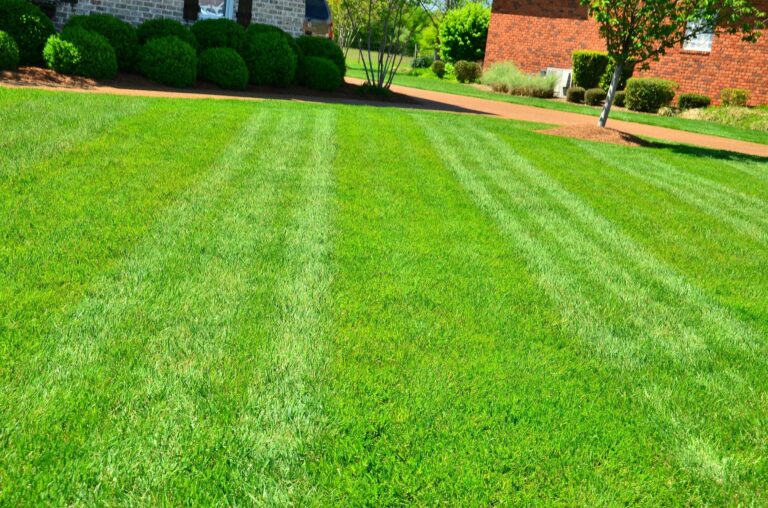
Weeds take over a lawn when the grass thins out and stops covering the soil. Weed seeds need light and open space to germinate, and a thick stand of grass denies them both. Once gaps appear from short mowing, compaction, drought, or bare patches, weed seeds already sitting in the soil get their chance.
Think of your lawn like a crowded parking lot. When every space is full of healthy grass, there’s nowhere for a dandelion or crabgrass plant to park. The moment a few spots open up, weeds move in fast.
Most lawns already hold thousands of dormant weed seeds in the top inch or two of soil. A single crabgrass plant can produce thousands of seeds in one season, which is why one bad year sets up an even worse one the next (multiple university extension programs, 2024-2026). The seeds aren’t the problem on their own. The open soil is.
Why Does Mowing Too Short Invite Weeds?
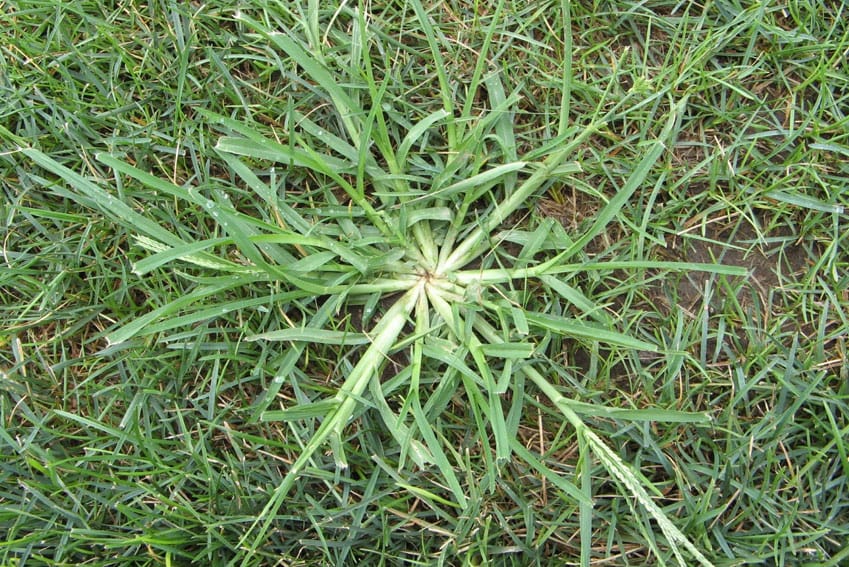
Mowing too short is one of the fastest ways to hand your lawn over to weeds. Short grass has a shallow root system, less leaf area to feed itself, and an open canopy that lets sunlight hit the soil surface where weed seeds are waiting.
The University of Missouri Integrated Pest Management program notes that weeds germinate rapidly when turf is scalped by mowing too low or mowed too infrequently, since both create an open canopy that favors weeds (University of Missouri IPM, 2010). Annual grassy weeds like crabgrass are especially a problem on thin turf.
The numbers back this up. Maintaining tall fescue at 3 to 4 inches can reduce weed pressure by as much as 80 percent compared with cutting it short, according to the University of Maryland Extension (University of Maryland Extension, 2024). Taller blades shade the soil, keep it cooler, and block the light weed seeds need to sprout.
The other half of the rule is how much you cut at once. Never remove more than one-third of the grass height in a single mow (NC State Extension, 2024). Scalping shocks the grass, slows recovery, and opens gaps.
How Soil Problems Let Weeds Win
Compacted, bare, or poor soil gives weeds the edge because struggling grass can’t form a dense, competitive stand. Weeds like prostrate knotweed and plantain tolerate compaction far better than turfgrass, so they often show up first in high-traffic strips along driveways and walkways.
Bare patches are open invitations. Soil with no grass cover gets full sun, warms quickly, and lets every weed seed in reach germinate. That’s why thin spots under trees, along fences, and in worn play areas turn weedy first.
Compaction also blocks water and air from reaching grass roots. The grass weakens, thins, and surrenders ground to weeds that don’t mind the tough conditions. Core aeration once a year on compacted lawns helps grass roots recover and close the canopy back up.
How Watering and Fertilizing Mistakes Feed Weeds
Shallow, frequent watering and skipped fertilization both thin out grass and open the door to weeds. Light daily sprinkling keeps moisture at the surface, which encourages shallow grass roots and waters weed seeds sitting right where they germinate.
Deep, infrequent watering is the better approach. Most cool-season lawns need about 1 to 1.25 inches of water per week, applied in one or two soakings rather than daily mist (NC State Extension, 2024). Deep watering pushes grass roots down and lets the surface dry between cycles, which weed seeds don’t like.
Fertilization keeps grass dense enough to crowd weeds out. A thin, underfed lawn loses the density race. Returning your grass clippings instead of bagging them recycles nitrogen and can supply up to 25 percent of a lawn’s fertilizer needs (NC State Extension, 2024). Skipping feeding entirely is a common reason lawns slowly thin and weeds creep in over a few seasons.
When Do Weed Seeds Actually Germinate?
Most lawn weeds germinate on a temperature schedule, which is why timing your prevention matters. Crabgrass and other summer annual weeds start sprouting once the soil at a 2-inch depth holds steady around 50 to 55 degrees Fahrenheit for several consecutive days (Michigan State University Extension, 2024).
The bulk of crabgrass germinates when soil sits in the 60 to 70 degree range, so the window to stop it closes fast once spring warms up (multiple extension programs, 2024-2026). Preemergent herbicide has to be down and watered in before that happens, because it works by stopping seedlings as they emerge, not by killing established plants.
Many gardeners use blooming forsythia as a rough cue, but it’s better treated as a “get ready” signal than proof crabgrass is sprouting. Forsythia responds to air temperature while crabgrass responds to soil temperature, and the two can drift apart in an odd spring (Purdue Extension turf research, via multiple sources). A 2-inch soil thermometer is the more reliable guide.
Common Weed Triggers Compared
| Trigger | Why It Causes Weeds | What to Do Instead |
|---|---|---|
| Mowing too short | Opens the canopy, exposes soil to light, shallow roots | Mow cool-season grass at 3 to 4 inches; cut no more than one-third at a time |
| Compacted soil | Weakens grass roots, favors compaction-tolerant weeds | Core aerate once a year on heavy or high-traffic lawns |
| Bare patches | Full sun and open soil let every nearby seed sprout | Overseed thin and bare spots in early fall for cool-season grass |
| Shallow watering | Keeps roots shallow, waters weed seeds at the surface | Water deeply about 1 to 1.25 inches per week in one or two sessions |
| Skipped fertilizing | Thins the grass so it can’t crowd weeds out | Fertilize on a schedule based on your grass type and soil test |
| Late preemergent | Misses the germination window for crabgrass | Apply before soil holds 50 to 55 degrees Fahrenheit |
Common Mistakes That Make Weeds Worse
- Setting the mower at the lowest deck height to “mow less often.” A shorter cut thins the grass and exposes soil, which brings more weeds and more work, not less.
- Watering a little every day. This trains grass roots to stay shallow and keeps the soil surface wet exactly where weed seeds wait to germinate.
- Ignoring bare spots until summer. Open soil in spring germinates a full crop of weeds before grass ever gets a chance to fill in.
- Applying preemergent after the forsythia has finished blooming. By then soil temperatures may already be past the germination threshold and the seeds have started sprouting.
- Pulling visible weeds but doing nothing about the thin turf that let them in. The gap just grows the next weed.
Frequently Asked Questions
Why does my lawn have so many weeds all of a sudden?
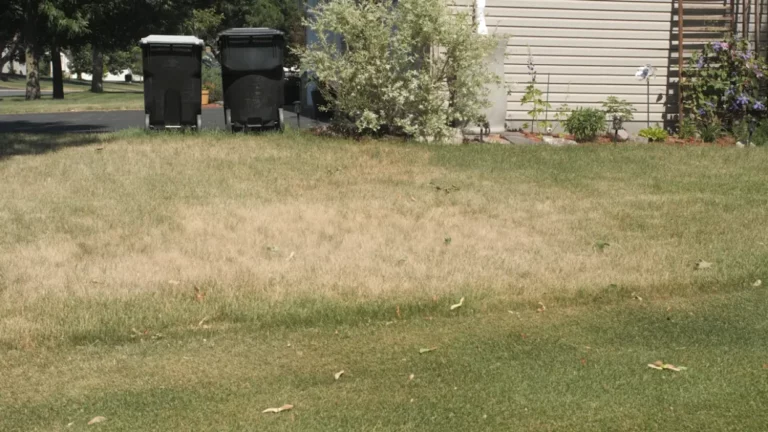
A sudden flush of weeds usually means the grass thinned out and opened up soil, often after a drought, a scalped mowing, heavy foot traffic, or a skipped feeding. Weed seeds already in the soil germinate as soon as they get light and space. Thickening the lawn back up is the long-term fix.
How do I permanently get rid of weeds in my lawn?
There’s no one-time permanent fix, since weed seeds constantly blow in and sit dormant in the soil. The closest thing to permanent control is a dense, healthy lawn that crowds weeds out, maintained with proper mowing height, deep watering, and regular fertilizing. A thick stand starves new weeds of the light and space they need.
Does mowing high really reduce weeds?
Yes. Maintaining cool-season grass like tall fescue at 3 to 4 inches can reduce weed pressure by up to 80 percent compared with short mowing (University of Maryland Extension, 2024). Taller grass shades the soil and blocks the light most weed seeds need to germinate.
When should I apply weed preventer to stop crabgrass?
Apply preemergent herbicide before the soil at a 2-inch depth holds around 50 to 55 degrees Fahrenheit for several days, which is when crabgrass starts germinating (Michigan State University Extension, 2024). In much of the country that’s early spring. Blooming forsythia is a useful “hurry up” cue, but a soil thermometer is more reliable.
Can I just pull weeds instead of treating the lawn?
Hand-pulling works for a few scattered broadleaf weeds, especially in moist soil where the whole root comes out. It won’t solve a widespread problem, because pulling leaves a bare spot that the next weed seed fills. Pair pulling with overseeding and better mowing to actually close the gap.
Why do weeds grow faster than grass?
Many lawn weeds are built to colonize disturbed, open ground quickly, producing huge numbers of seeds and germinating fast in full sun. A single crabgrass plant can drop thousands of seeds in one season. Grass competes well only when it’s already dense, which is why the goal is keeping the lawn thick rather than out-racing the weeds.