Dull Mower Blade: How to Spot One and What to Do About It
TL;DR
- A dull mower blade tears grass instead of cutting it cleanly, leaving ragged brown tips that open the lawn to disease and pests
- The clearest sign is a brownish-white cast on the lawn within a day or two of mowing (Virginia Tech Cooperative Extension, 2024)
- Sharpen the blade every 20-25 hours of mowing – about once or twice per season for most homeowners (LawnStarter, 2026)
- Professional sharpening costs $5-$15 per blade at most shops; a replacement blade runs $30-$40 (LawnStarter, 2026)
- If the blade is bent, cracked, or worn thin, replace it – sharpening a damaged blade is a safety risk
What a Dull Mower Blade Actually Does to Your Lawn
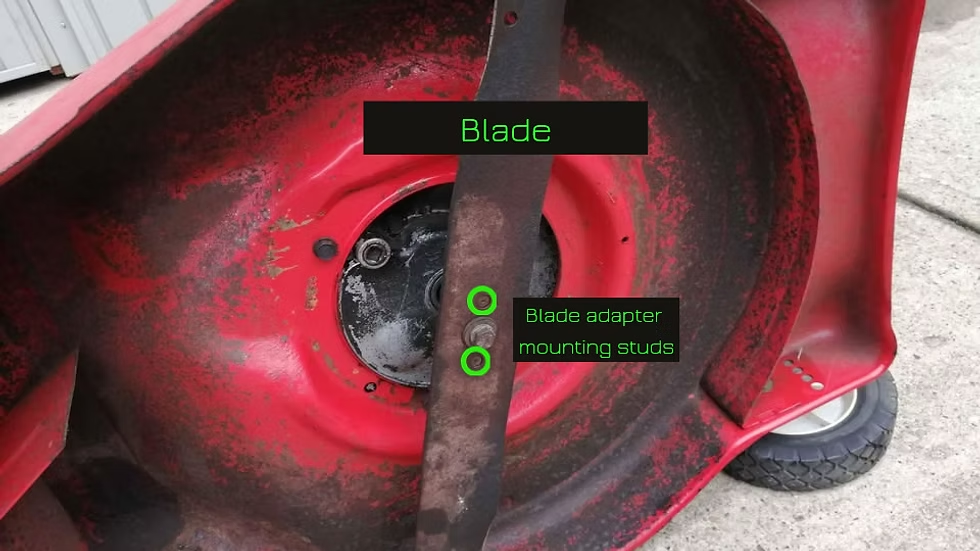
credit: https://www.maverickmowers.com/
A dull blade does not cut grass – it tears it. Instead of a clean slice through the grass stem, a dull edge grabs the blade and rips it, leaving a frayed, jagged tip. That wound dries out and turns brown within 24 to 48 hours.
Mike Goatley, turf specialist at Virginia Tech Cooperative Extension, puts it plainly: a lawn cut with dull blades will show a brownish-white cast where the torn grass tips have died (Virginia Tech, 2024). That discoloration is not drought stress or disease – it is mechanical damage from every mow.
Torn grass is also more vulnerable to fungal infections, pests, and moisture loss because the damaged tips act as open entry points for pathogens (LawnStarter, 2026). Repeated mowing with a dull blade leads to brown patches, thinning, and a lawn that looks tired no matter how much you water it.
How to Tell If Your Mower Blade Is Dull
You can spot a dull blade two ways: look at the lawn after mowing, and look at the blade itself.
Signs on the lawn:
- Grass tips look frayed or torn instead of cleanly sliced
- A brownish or whitish tint appears across the lawn one to two days after mowing
- The cut looks uneven, with some patches noticeably taller than others
- Grass clippings are clumping under the deck instead of dispersing evenly
Signs on the blade:
- The cutting edge is rounded instead of angled
- Visible nicks, dents, or chips along the edge
- The blade wobbles when you spin it by hand – this points to a balance problem, not just dullness
To inspect the blade safely: disconnect the spark plug wire first. Tip the mower with the carburetor side up so oil does not flood the air filter. Never reach under a running or unsecured mower.
How Often Should You Sharpen a Mower Blade?
credit: https://manuals.plus/
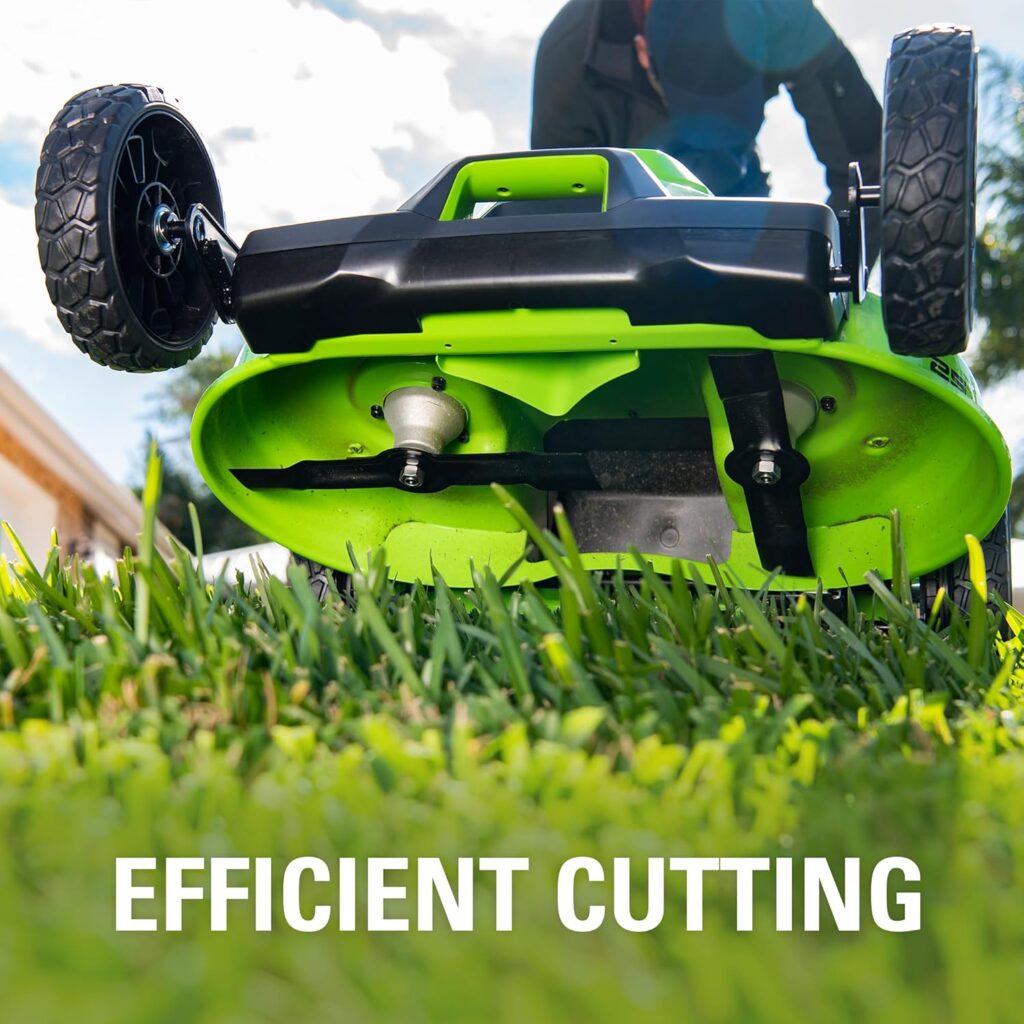
Sharpen the blade every 20-25 hours of mowing time. For the average homeowner mowing a typical suburban lot once a week for about 45 minutes, that works out to once or twice per season (LawnStarter, 2026; Greenworks, 2024).
Virginia Tech Cooperative Extension recommends sharpening at least three times per growing season for best results: once before the season starts, once in late spring, and once more in mid-to-late summer (Virginia Tech, 2024).
A few situations call for an immediate check outside the regular schedule:
- You hit a rock, tree root, or buried sprinkler head – stop and inspect before mowing again
- The mower is vibrating more than usual – a dull or unbalanced blade is the most common cause
- You are making extra passes over the same areas to get an even cut
Lawn care professionals sharpen blades far more often – sometimes weekly – because they are running equipment for hours every day through thick turf and sometimes sandy or gritty soil (LawnLove, 2026).
Sharpen vs. Replace: Which One Does Your Blade Need?
| Blade Condition | Action | Estimated Cost |
|---|---|---|
| Dull edge, no visible damage | Sharpen | $5-$15 at a shop, or DIY |
| Minor nicks along the edge | Sharpen and balance | $5-$15 at a shop |
| Deep dents, bent tip, or cracked body | Replace | $30-$40 for a new blade |
| Blade worn thin from repeated sharpening | Replace | $30-$40 for a new blade |
Professional sharpening runs $5-$15 per blade at most local mower shops or hardware stores (LawnStarter, 2026). If a shop wants more than $15-$20 per blade, a new blade is a better use of the money. Replacement blades for common mowers – Toro Recycler, Craftsman M105, Honda HRX series – typically cost $25-$45 depending on the model and whether you buy OEM or an aftermarket option like Oregon or Arnold.
A bent blade is never safe to sharpen and reuse. Bends throw the blade off balance, which puts stress on the engine crankshaft and deck bearings – a repair that can easily cost $100-$200 or more at a shop.
Common Mistakes Homeowners Make with Mower Blades
- Skipping the balance check after sharpening: A blade sharpened unevenly is heavier on one side. That imbalance causes vibration that wears down engine bearings over time. Always check balance with a blade balancer or a nail in the wall before reinstalling.
- Mowing wet grass with a dull blade: Wet grass is harder to cut even with a sharp blade. Run a dull blade through wet turf and you are tearing, clumping, and stressing the grass all at once.
- Waiting for the lawn to look bad before checking: By the time the lawn shows visible brown tips across the whole yard, the blade has been dull long enough to cause real stress to the turf. Check the blade on a schedule, not just when the lawn looks rough.
Frequently Asked Questions
How do I know if my mower blade is dull?
Look at the grass one to two days after mowing. If you see frayed, brown-tipped grass blades or a whitish cast across the lawn, the blade is tearing rather than cutting. You can also inspect the blade directly – a dull edge looks rounded rather than angled, and may have visible nicks or chips.
How often should you sharpen a mower blade?
Every 20-25 hours of mowing time, or once to twice per season for most homeowners (LawnStarter, 2026). Sharpen immediately after hitting any hard object like a rock or root, regardless of where you are in the schedule.
How much does professional blade sharpening cost?
Drop-off sharpening at a local mower shop or hardware store runs $5-$15 per blade (LawnStarter, 2026). Mobile on-site service costs more – typically $40-$75 – because you are paying for the technician’s travel time.
Can a dull blade damage my mower?
Yes. A dull or unbalanced blade causes excess vibration that stresses the engine crankshaft and deck bearings over time. Running a bent blade is a more immediate risk – it can damage the crankshaft in a single mowing session.
Should I sharpen or replace a mower blade?
Sharpen if the edge is dull but the blade body is straight, not cracked, and still has enough metal thickness. Replace if the blade is bent, cracked, has deep damage, or has been sharpened so many times it is visibly thin. A new blade for most walk-behind mowers costs $30-$40, which is not much more than two sharpening visits.
How long does a mower blade last?
With proper maintenance, a blade can handle 100-200 hours of use before it needs replacement (LawnStarter, 2026). Most homeowners replace blades every one to three years, depending on how often they mow and how much debris the blade encounters.