Why Grass Dies After Fertilizing: Causes, Signs, and Fixes
TL;DR
- Grass dies after fertilizing because fertilizer salts and excess nitrogen draw water out of the roots, dehydrating the plant in a process called fertilizer burn.
- Most lawns burn from over-application, uneven spreading, fertilizing a wet lawn, or feeding during heat above 85°F.
- A common safe rate is about 1 pound of actual nitrogen per 1,000 square feet per application.
- Yellow grass usually recovers; brown, brittle patches may be dead and need reseeding.
- The fix is to flush the soil with water for several days to move salts away from the roots.
What Causes Grass to Die After Fertilizing?
credit: https://randylemmon.com/
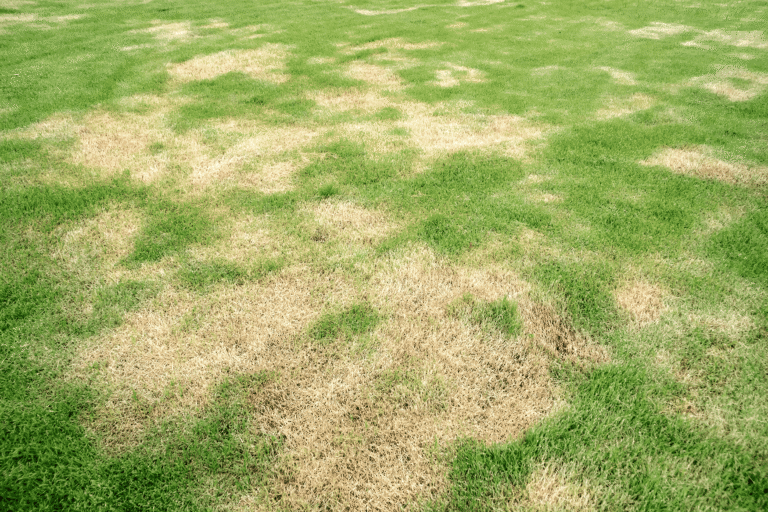
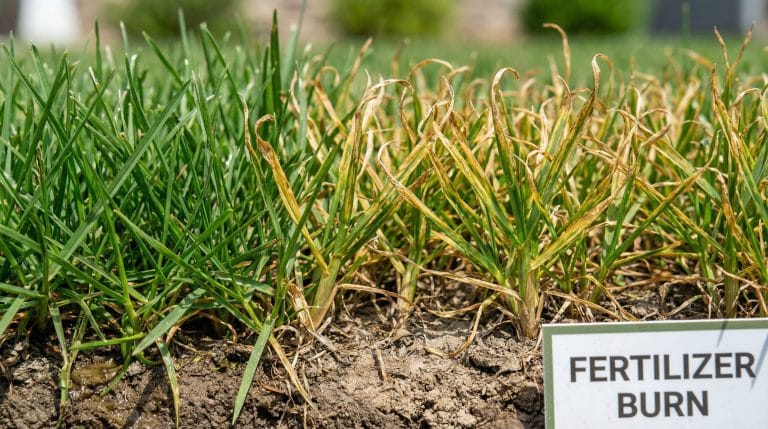
Grass dies after fertilizing because fertilizer salts build up in the soil and pull moisture out of the grass roots faster than the plant can replace it. The result is dehydration that shows up as yellow, brown, or crispy turf, often called fertilizer burn.
Despite the name, this is not a chemical scorch in the usual sense. Fertilizer nutrients like nitrogen, phosphorus, and potassium are salts. When too much sits in the soil, water moves out of the roots toward the higher salt concentration, leaving the grass dried out even when the soil feels moist.
There is a second problem stacked on top. Excess nitrogen forces fast top growth that the root system cannot keep up with, so the plant is both growing hard and losing water at the same time.
How to Tell Fertilizer Burn From Other Lawn Problems
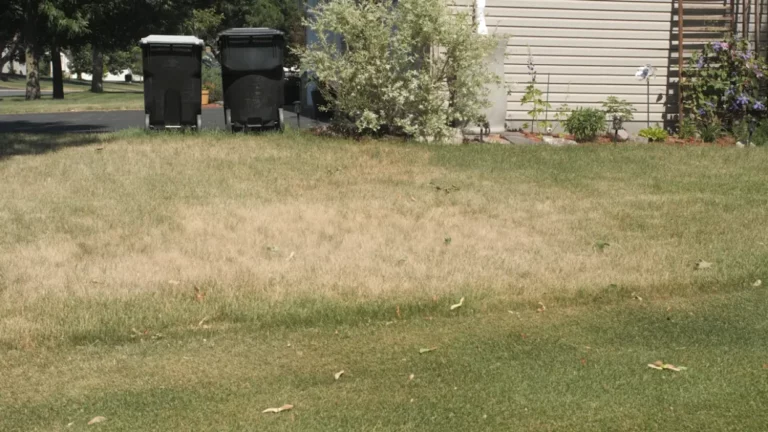
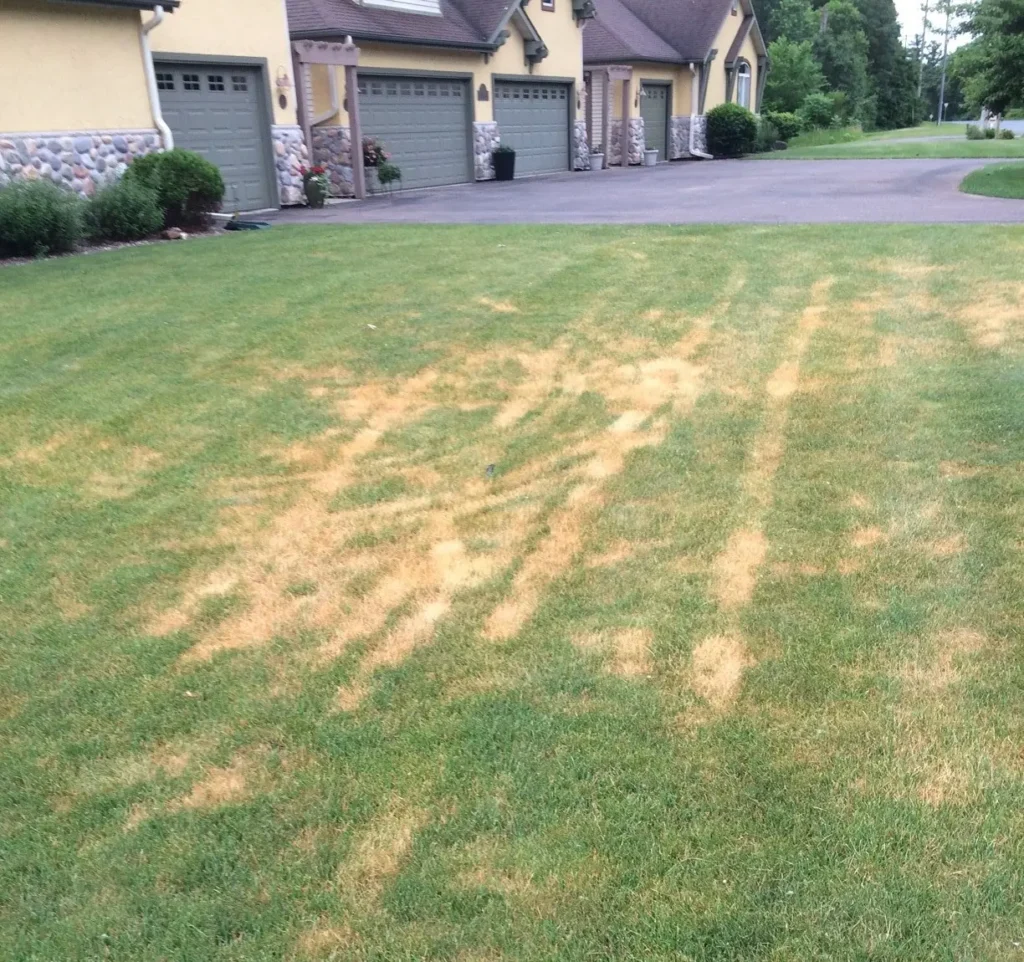
Fertilizer burn shows up as yellow or brown patches that follow the exact pattern of how you applied the product. Streaks line up with spreader passes, and you often see sharp lines between green grass and damaged grass.
A few signs point specifically to fertilizer, not disease or drought:
- Damage appears within a few days of applying, usually faster in warm or dry weather.
- The pattern is geometric: stripes from overlapping spreader rows, or heavy spots where the spreader paused or dumped product.
- You can sometimes see leftover fertilizer granules sitting on the soil surface.
- The damage does not spread outward over time, because it is not a living pathogen.
Disease tends to spread in rings or blotches that grow. Drought browning is usually even across the whole lawn. Pet urine leaves round spots, often with a dark green ring around the edge.
| Problem | Pattern | Spreads Over Time? | Quick Tell |
|---|---|---|---|
| Fertilizer burn | Stripes or spots matching spreader path | No | Lines up with how you applied product |
| Drought stress | Even browning across the lawn | No | Whole lawn dulls at once |
| Fungal disease | Rings or irregular patches | Yes | Patches enlarge day to day |
| Pet urine | Round spots, often dark green edge | No | Concentrated in dog-traffic areas |
Why Over-Application Is the Number One Cause
credit: https://ultralawn.com/
The most common reason grass dies after fertilizing is simply too much product in one spot. When salts build up past what the soil can hold, they create a concentration gradient that pulls water straight out of the roots.
A common recommendation is about 1 pound of actual nitrogen per 1,000 square feet for a single application of soluble nitrogen fertilizer. The catch is that this means 1 pound of nitrogen, not 1 pound of product. A 20% nitrogen bag means you apply 5 pounds of product to deliver 1 pound of nitrogen.
Poor soil drainage makes it worse. If salts cannot leach away, they sit in one area and keep drawing moisture from the roots. This is why “a little extra for good measure” backfires. A dull spreader habit of double-passing the edges concentrates salt right where the overlap lands.
Why Timing and Weather Decide Whether Your Lawn Burns
Fertilizing during heat or drought is one of the fastest ways to kill grass, because the plant is already moisture-stressed before the salt ever hits. Avoid fertilizing when temperatures run above 85 to 90°F or during long dry stretches.
Two timing mistakes do most of the damage:
- Fertilizing a dry lawn. When the soil is dry, granules sit on the surface instead of dissolving in, and the salts pull the little remaining moisture out of the roots.
- Fertilizing a wet lawn. Granules stick to wet blades, concentrating salt directly on the leaf tissue where it scorches.
The sweet spot is a lawn that is actively growing and well-hydrated, fed with the soil lightly moist but the blades dry. Quick-release fertilizers carry more burn risk than slow-release products, which spread the nitrogen out over weeks.
Common Mistakes That Kill Grass After Fertilizing
- Applying extra product as insurance: more nitrogen does not mean a greener lawn, it means more salt drawing water from the roots, so stick to label rates.
- Skipping the post-fertilizer watering: water moves salts down past the root zone, and skipping it leaves them sitting where they do damage.
- Fertilizing in summer heat: feeding above 85°F when grass is stressed compounds dehydration, so wait for cooler, active growth.
- Never calibrating the spreader: an uncalibrated spreader can dump far more than intended, and calibration is the only way to know your real rate.
- Using quick-release fertilizer in risky conditions: quick-release dumps nitrogen in days, so switch to slow-release when heat or dry soil is a factor.
How to Fix Grass That Burned After Fertilizing
The fix for fertilizer burn is to flush the excess salts out of the soil so the roots can take up water again. Water the affected areas deeply, then keep watering consistently for several days to dilute and move the nutrients down through the soil.
Whether the grass comes back depends on how far it went. Grass that is only slightly yellow can usually recover once the salt is flushed. Grass that has gone brown and brittle may be dead, and those patches will likely need reseeding or sod.
A soil test before you fertilize again helps you apply only what the lawn needs and skip the excess that caused the problem. Adding compost or humic acid over time improves the soil’s ability to hold water and buffer salts.
Frequently Asked Questions
Why does grass turn yellow or brown after fertilizing?
The fertilizer salts pull water out of the grass roots faster than the plant can replace it, which dries the blades to yellow or brown. The pattern usually matches how you spread the product.
How long does it take for fertilizer burn to show up?
Symptoms often appear within a few days of application, and faster in warm or dry weather. If your grass browns the same week you fertilized and the damage follows your spreader path, fertilizer is the likely cause.
Will burned grass grow back?
It depends on severity. Slightly yellow grass usually recovers after you flush the soil with water, but brown, brittle patches may be dead and need reseeding.
How much fertilizer is safe to apply?
A common guideline is about 1 pound of actual nitrogen per 1,000 square feet per application for soluble nitrogen fertilizer. Remember that is pounds of nitrogen, not pounds of product, so check the first number on the bag.
How do I fix a lawn I already over-fertilized?
Water the area deeply and keep watering for several days to flush the salts below the root zone. Hold off on any more fertilizer until the lawn recovers, and consider a soil test before the next application.
Should I water the lawn after fertilizing?
Yes, watering after fertilizing moves the salts down into the soil and lowers the risk of burn. The exception is some weed-and-feed products that need to sit on the leaf first, so always follow the label.
Bottom Line
Grass dies after fertilizing when salt and excess nitrogen overwhelm the roots and pull out their water. Stay near 1 pound of actual nitrogen per 1,000 square feet, skip the heat and the “extra for good measure,” water it in, and your lawn gets fed instead of fried. If a patch already burned, soak it for several days and reseed only what stays brown.