Why Soil Problems Are Killing Your Grass
TL;DR
- Most dead or thinning lawn patches trace back to soil problems, not pests, disease, or watering habits.
- Wrong soil pH locks nutrients away from grass roots even when you fertilize regularly – a bad pH can waste 20% to 70% of applied fertilizer.
- Compacted soil reduces nutrient uptake by 10% to 30% and can cut vertical leaf growth by up to 70%.
- The three most common soil killers are pH imbalance, compaction, and poor drainage – each has a different fix.
- Start with a soil test. It costs $15 to $30 at most county extension offices and tells you exactly what you’re dealing with.
What Soil Problems Actually Do to Your Grass
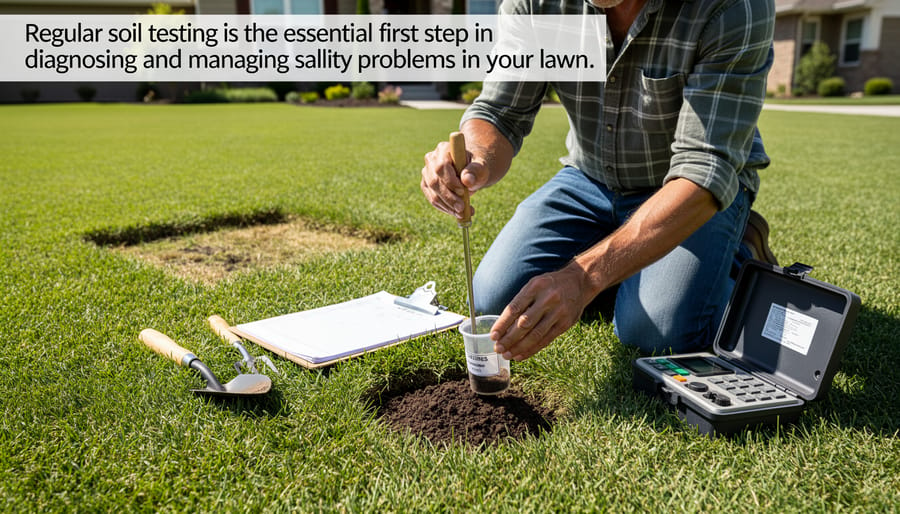
Soil problems kill grass from the roots up, and that’s why they’re so hard to spot at first. Your lawn looks fine until one day it doesn’t – and by then the damage has been building underground for months.
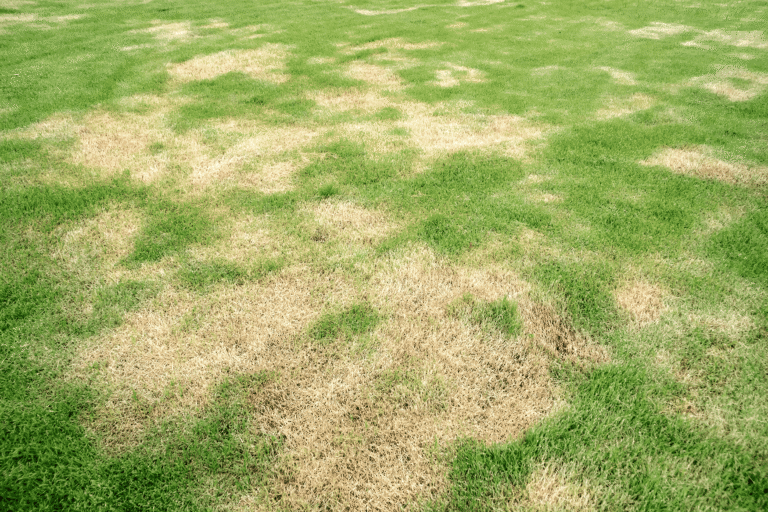
The three problems that account for most unexplained lawn decline are pH imbalance, compaction, and poor drainage. None of them look like a soil problem on the surface. They look like drought stress, fertilizer failure, fungal disease, or just a patch of “bad grass.” That’s why homeowners spend money on treatments that don’t work.
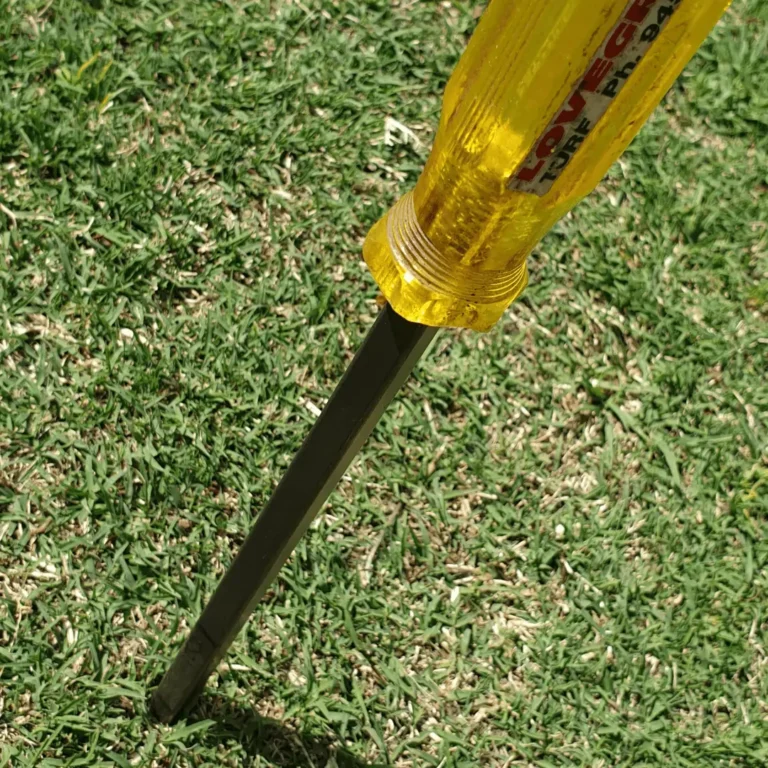
Getting a soil test is always step one. It runs $15 to $30 through your local cooperative extension office and tells you pH, nutrient levels, and organic matter content. Without it, you’re guessing.
How Wrong Soil pH Locks Out Nutrients
Wrong soil pH is the most common reason fertilizer stops working. Most turfgrasses need a pH between 6.0 and 7.0 to absorb nitrogen, phosphorus, and potassium properly. Outside that window, nutrients get chemically bound in the soil – your grass can’t pull them up no matter how much you fertilize.
If your pH drops below 5.5, the problem gets worse fast. Aluminum and manganese become more available at toxic levels, stunting root growth directly. At the same time, phosphorus, calcium, and magnesium become less available, leaving your grass visually deficient.
On the alkaline side – pH above 7.5 or 8.0 – iron becomes insoluble. That’s what causes iron chlorosis, where grass blades turn yellow even though the soil contains iron. The iron is there; the grass just can’t reach it.
The fix for acidic soil is lime. Pelletized dolomitic lime is the standard choice for homeowners – it’s easier to spread than powdered lime and adds both calcium and magnesium. The fix for alkaline soil is sulfur. How much you need depends on your current pH and your soil type, which is exactly why the test matters before you apply anything. Over-liming is a real problem; pushing pH too high is harder to correct than fixing low pH.
What Compacted Soil Does Underground
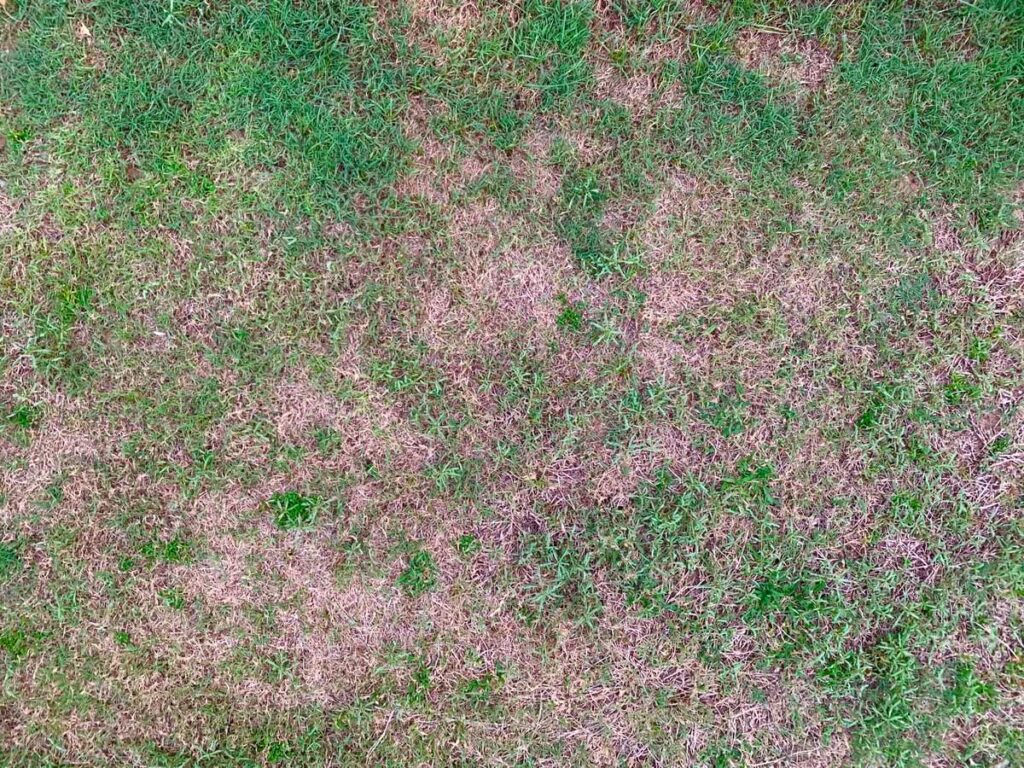
Compacted soil is a quiet killer. The lawn may look passable right up until summer heat hits, then suddenly you see patches wilting, thinning, and refusing to recover. The compaction was the cause. The heat was just the moment it showed up.
When soil particles press together, they eliminate the pore space that roots need to grow downward. Roots in compacted soil can’t develop enough force to penetrate and instead spread in a shallow horizontal mat near the surface. Those pancake-shaped roots dry out fast and can’t reach nutrients stored deeper in the soil.
The numbers behind it are significant. Compacted soil decreases nutrient uptake by 10% to 30%. Compaction can also reduce vertical leaf growth by up to 70%. Adding nitrogen fertilizer on top of compacted soil often makes things worse – it forces weak leaf growth while doing nothing for the root system.
The fix is core aeration. A core aerator pulls plugs of soil out of the ground, creating channels for water, air, and nutrients to move back in. Aeration is the primary physical correction for compacted lawns. For most home lawns, fall is the best window for cool-season grasses – the soil is still warm enough for root recovery before winter. Spring works for warm-season grasses like Bermuda and Zoysia.
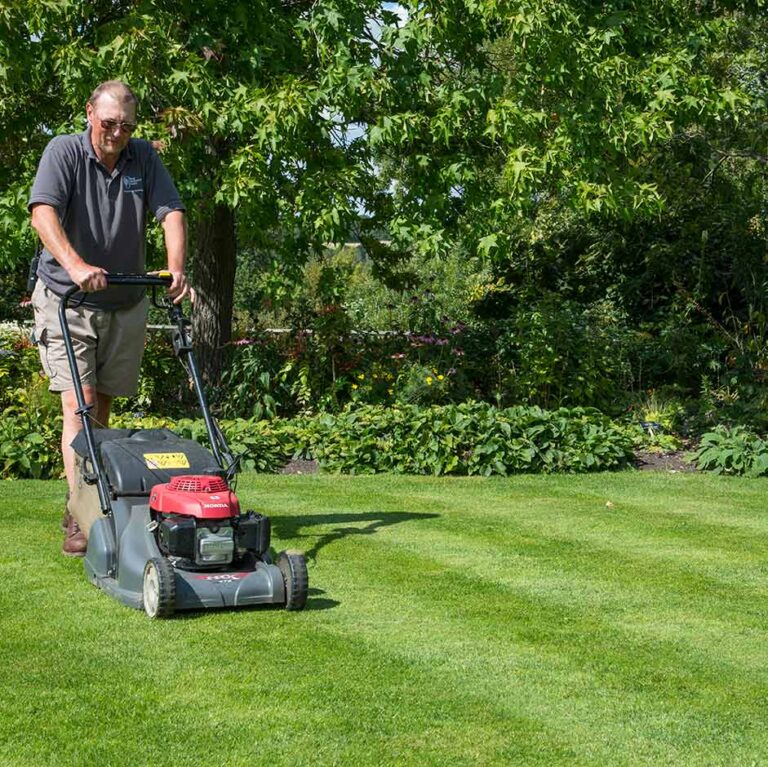
Keeping mowing height at least 3 inches promotes longer roots, which helps resist future compaction. A taller grass canopy shades the soil, slows moisture loss, and supports the deeper root structure that makes lawns resilient.
How Poor Drainage Suffocates Roots
Grass roots need oxygen. When soil stays waterlogged, oxygen gets displaced and roots essentially suffocate. When soil pore space fills with water, there’s no room for oxygen, and plant growth stops.
Poor drainage has two main causes: soil texture and site grading. Clay-heavy soils hold water tightly and drain slowly. Low spots in your yard collect runoff that has nowhere to go. Both create the same result: roots sitting in saturated soil for hours or days after rain.
You’ll see it as standing water that lingers well after neighboring yards have dried out. You’ll see it as moss moving into shady wet areas. You’ll see it as grass that looks fine in dry spells and dies in wet ones.
Poor drainage in lawns can often be corrected by breaking up compacted soil or installing drainage tile, depending on the severity of the problem. For surface drainage issues, regrading the yard to direct water away from low spots may be necessary.
For clay-heavy soil, the long-term fix is organic matter. Topdressing with compost after core aeration works it into the soil profile over time, improving drainage, water-holding balance, and microbial activity. Organic matter additions – composts, manure, spent mushroom substrate – are a standard management practice for lawns dealing with drainage and fertility issues.
Soil Problem Quick-Reference: Symptoms, Causes, and Fixes
| Soil Problem | What You See | Root Cause | Fix |
|---|---|---|---|
| Low pH (acidic, below 6.0) | Yellow patches, fertilizer that won’t work, moss | Rainfall leaching, heavy nitrogen fertilizer use | Apply dolomitic lime per soil test results |
| High pH (alkaline, above 7.5) | Yellow blades (iron chlorosis), thin grass | Naturally alkaline soil, over-liming | Apply sulfur per soil test results |
| Compaction | Thin turf, shallow roots, slow drainage, summer wilt | Foot traffic, mowing equipment, clay soil | Core aerate in fall (cool-season) or spring (warm-season) |
| Poor drainage | Standing water, moss, roots rotting | Clay soil, low grading, compaction | Aerate, topdress with compost, or regrade and install tile |
| Nutrient lockout | Fertilizer won’t work despite regular applications | pH imbalance or compaction blocking uptake | Fix pH and compaction first, then fertilize |
Mistakes That Make Soil Problems Worse
- Fertilizing without a soil test first: If pH is off, you’re paying for fertilizer that grass can’t absorb. A $15 to $30 soil test from your county extension office tells you whether fertilizing will even work. Apply lime or sulfur first if pH is outside the 6.0 to 7.0 range, then revisit your fertilizer program.
- Aerating once and stopping: Compaction comes back, especially in high-traffic yards with clay soil. Plan to aerate once a year for lawns that see regular foot traffic or mowing with a heavy riding mower. One session helps; annual sessions are what actually change soil structure over time.
- Using vinegar to lower pH: Vinegar is a popular DIY tip online, but the effect fades within hours and repeated applications can harm beneficial soil microbes. Use elemental sulfur for a lasting pH adjustment. Rate and timing matter, so follow extension recommendations for your soil type.
- Mowing too short over compacted or wet soil: Scalping stressed grass removes the leaf area it needs to photosynthesize and push root recovery. Raise your deck to at least 3 inches – 3.5 inches on fescue – until the soil problem is addressed.
Frequently Asked Questions
How do I know if my soil is the problem and not something else?
Start by ruling out the obvious: drought, disease, grubs, or a shaded area where grass won’t grow. If none of those fit, get a soil test. A test from your local cooperative extension office costs $15 to $30 and measures pH, phosphorus, potassium, and organic matter. If pH is outside 6.0 to 7.0 or nutrients are wildly out of range, the soil is your problem.
Can wrong soil pH really make fertilizer useless?
Yes. Bad pH can waste 20% to 70% of applied fertilizer nutrients. The nutrients are in the soil but chemically unavailable to grass roots outside the right pH range. Fixing pH before fertilizing is not optional if you want to see a return on what you’re spending.
How often should I test my soil?
Test every two to three years under normal conditions. If you’re actively correcting pH with lime or sulfur, test annually so you can track progress and avoid overcorrecting. Overshooting pH in either direction creates a new problem on top of the one you fixed.
What is the fastest way to fix compacted soil?
Core aeration is the standard recommendation. A core aerator pulls 2 to 3 inch plugs from the soil and opens channels for air, water, and nutrients to re-enter. You can rent a power aerator at most equipment rental businesses for $60 to $100 per day. Follow up with compost topdressing – a quarter to half inch layer raked into the holes – to improve soil structure long-term.
Will poor drainage go away on its own?
No. Standing water after rain points to a structural problem – clay soil, poor grading, or severe compaction – that doesn’t correct itself. Aeration and compost topdressing help in mild cases. Persistent drainage problems in low spots usually require regrading or a French drain installation. Drainage tile is sometimes the only lasting fix for areas with consistently saturated soil.
Does cutting grass short help or hurt a damaged lawn?
It hurts. Cutting short removes the leaf area grass needs to produce energy and push root growth. Keep mowing height at 3 inches or above, especially when the lawn is recovering from a soil problem. Taller grass height links directly to deeper root systems, which help lawns resist compaction, drought, and weeds.