When Should You Stop Mowing Your Lawn? The Answer by Grass Type and Region
TL;DR
- Stop mowing when soil temperatures drop consistently below 50°F – that is when grass growth shuts down regardless of what month it is.
- Cool-season grasses (Kentucky bluegrass, fescue, ryegrass) typically hit that threshold in mid-October through early November in northern states.
- Warm-season grasses (Bermuda, Zoysia, St. Augustine) slow down earlier, often by September or October in most of the South.
- Your last cut should leave cool-season grass at 2 to 2.5 inches and warm-season grass at 2 to 4 inches, depending on variety.
- Mowing too late on frozen or dormant grass does real damage; mowing too early in fall leaves grass vulnerable to snow mold and rodent damage.
Why Soil Temperature Matters More Than the Calendar
credit: https://www.backyardboss.net/
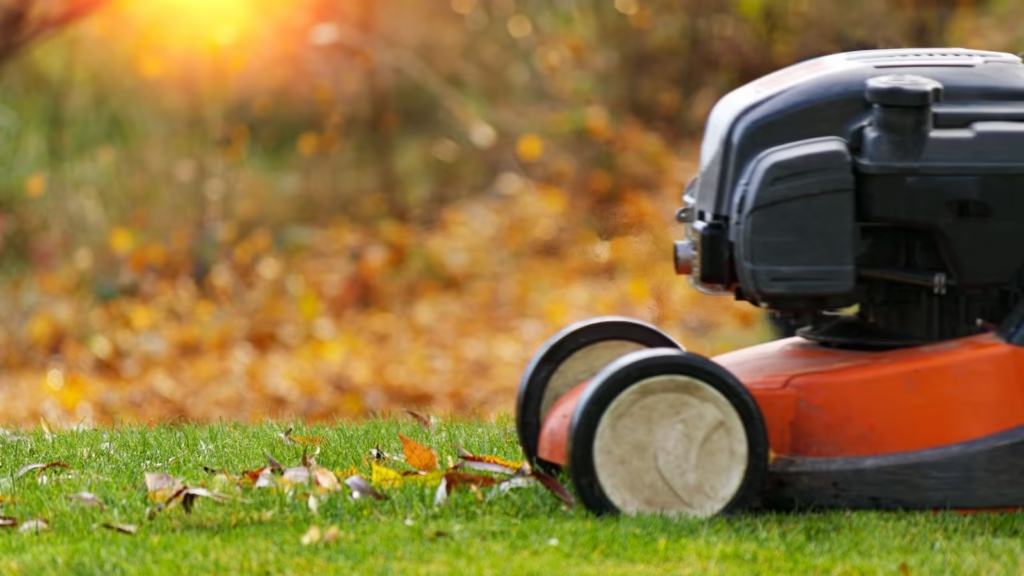
Stop mowing based on soil temperature, not the date. Grass growth shuts down when soil temperatures fall consistently below 50°F (10°C), according to Penn State Extension. That threshold does not care about the month on your calendar – it varies by several weeks depending on where you live and what kind of fall you are having.
The most accurate way to check soil temperature is to push a basic soil thermometer two to three inches into the ground and wait about a minute. If you do not have one, air temperature is a reliable shortcut: when daytime highs consistently stay below 65°F, your soil is likely sitting around 55°F and trending downward (LawnStarter, 2024).
Once growth stops, mowing is unnecessary. Mowing dormant grass with frozen or frost-covered blades tears and bruises the tissue rather than cutting it cleanly, leaving entry points for disease.
When to Stop Mowing by Grass Type
The timing varies by what is growing in your yard. Cool-season and warm-season grasses follow different temperature triggers.
| Grass Type | Common Varieties | Stop Mowing When… | Typical Last Mow |
|---|---|---|---|
| Cool-season | Kentucky bluegrass, tall fescue, perennial ryegrass | Air temps consistently below 50-55°F, soil below 45°F | Mid-October to early November |
| Warm-season | Bermuda, Zoysia, St. Augustine, centipede | Soil temps drop below 55°F | Late September to October |
Cool-season grasses stop producing leaf growth when air temperatures stay below 50°F, which research from Iowa State University confirms is when the plant shifts energy from foliage to crowns and roots. Warm-season grasses go dormant a bit earlier: soil temperatures below 55°F trigger the slowdown, and in transition-zone states like Tennessee or North Carolina, that can happen before October.
When to Stop Mowing by Region
Geography matters as much as grass type. Here is a practical breakdown for US homeowners.
Northern states (Minnesota, Wisconsin, Michigan, New England): Cool-season grasses dominate here. Expect your last mow somewhere between early and mid-October. Frost arrives early, and soil temperatures can drop quickly once nights go consistently cold. In Minnesota, mowing season typically runs late April through October (Mowrator, 2025).
Transition zone (Kansas, Missouri, Virginia, North Carolina, northern Texas): Many yards here are a mix of cool-season and warm-season grass, or one type under stress from the opposite season. Watch soil temperature directly rather than using calendar rules, since fall temperatures fluctuate more here than anywhere else in the country.
Southern states (Florida, coastal Georgia, Louisiana, southern Texas): Warm-season grasses like St. Augustine and Bermuda dominate. Growth slows by late September or October when soil starts cooling, but in South Florida’s tropical climate, mowing can continue year-round (Mowrator, 2025).
Pacific Northwest and mild-winter West Coast: Cool-season grasses often stay green through December in mild winters. Keep mowing as long as the grass is actively growing; just skip frozen-ground mornings.
What Height to Leave Your Lawn Before Winter
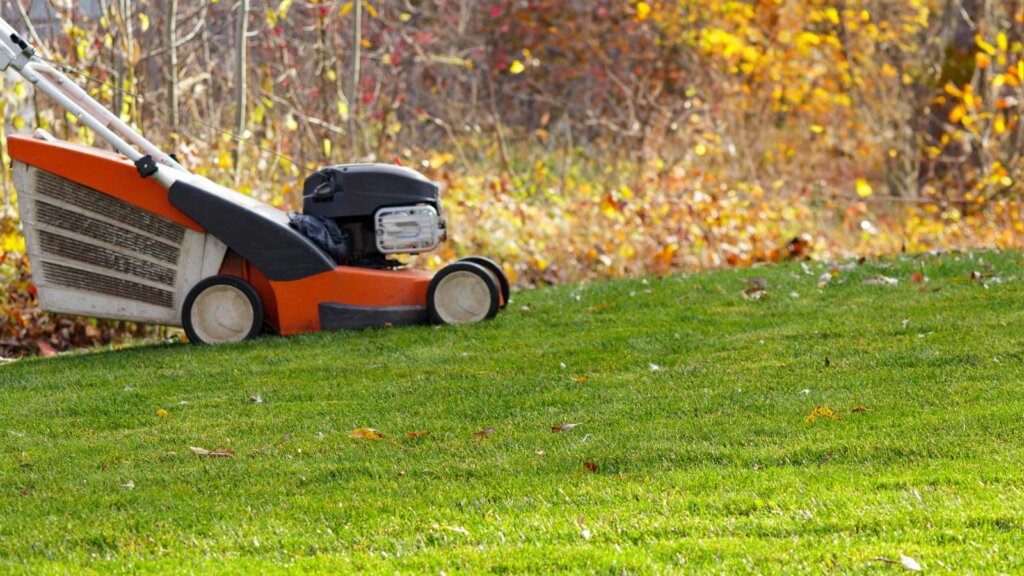
The height of your final cut affects how well the lawn survives winter and how fast it recovers in spring.
For cool-season grasses, cut to 2 to 2.5 inches before the first hard frost. Shorter grass is less susceptible to snow mold, which thrives under matted, tall blades. Voles and mice are also drawn to long grass in winter – they tunnel through tall turf under snow cover, and you will not see the damage until April (Davey Tree, 2022).
For warm-season grasses, the guidance goes the opposite direction. Finish the season at 2 to 4 inches depending on variety, slightly taller than summer height. Low-mowed warm-season grasses like Bermuda and Zoysia finish at 2 to 2.5 inches; tall-mowed types like standard St. Augustine and Bahia are better left at 3 to 4 inches to protect crowns from cold injury (LawnLove, 2025).
Do not drop to the final height in one cut. The one-third rule still applies: never remove more than one-third of the blade height in a single mow. Drop the deck gradually over two or three mowings to reach your target height.
Signs Your Lawn Is Done Growing for the Year
You do not need a thermometer to recognize the signals. Watch for these signs that growth has stopped.
- Growth has slowed to the point where you are mowing less than once every two weeks and the lawn still does not look overgrown.
- Morning frost is appearing regularly, not just as a one-off cold snap.
- Soil temperature has been tracking below 50°F for several consecutive days.
- The grass blades themselves look dull or slightly discolored rather than bright and actively growing.
One thing to keep in mind: shaded areas of your yard can stay green and keep growing a week or two longer than sun-exposed sections. If part of your lawn still looks active under a large tree, a spot mow on just that section is fine.
Mowing Mistakes That Hurt Your Lawn Going Into Winter
- Mowing frozen or frost-covered grass: Walking across frost-covered turf damages cell walls in grass blades. If there is frost on the ground, wait until it melts before mowing – even if temperatures climb above 50°F later in the day.
- Stopping too early and leaving grass too tall: Tall grass going into winter is more prone to snow mold, especially cool-season types in northern states. It also invites rodent damage under snow cover.
- Making one drastic final cut: Dropping from 4 inches to 2 inches in one session removes too much blade at once, stressing the plant before it goes dormant. Taper down gradually over the last few mows.
- Skipping the final mow entirely: Leaving grass taller than its recommended winter height creates matting risk. A clean final cut at the right height makes spring green-up faster and healthier.
Frequently Asked Questions
When should I stop mowing my lawn in fall?
Stop mowing when soil temperatures drop consistently below 50°F and grass growth slows to the point where it no longer needs cutting every one to two weeks. For most northern states, that is mid-October to early November. In the South, warm-season grasses often stop growing by late September or October.
What temperature is too cold to mow the lawn?
Avoid mowing when air temperatures are below 40°F or when frost is still on the ground. Grass blades are brittle at that point, and mowing tears rather than cuts them cleanly. Penn State Extension confirms that grass growth essentially stops once soil temperatures fall consistently below 50°F.
Should I cut my grass short before winter?
For cool-season grasses, yes – cut to 2 to 2.5 inches to reduce snow mold risk and discourage rodents from nesting in tall grass. For warm-season grasses, finish slightly taller than summer height (2 to 4 inches) to insulate crowns against cold. Never drop to the final height in a single cut.
Can I mow after the first frost?
One or two light frosts do not mean mowing season is over. If the grass is still actively growing and temperatures climb above 50°F during the day, mowing is fine. Skip any morning where frost is still visible on the blades, and mow later in the day once things have thawed and dried.
Does it hurt to mow dormant grass?
Yes. Mowing fully dormant grass – especially when the soil is frozen or the blades are frost-covered – causes physical damage. The compressed, brittle tissue does not recover the same way actively growing grass does. Once growth has genuinely stopped and temperatures are staying cold, put the mower away.
How do I know if my grass is cool-season or warm-season?
If your lawn stays green in spring and fall but struggles or goes thin in summer heat, it is cool-season grass. If it goes brown in winter but greens back up fast once temperatures warm in late April, it is warm-season. Your local university extension office can confirm the type based on your zip code.