What Causes Patchy Grass and How to Fix It
TL;DR
- Patchy grass has six main causes: poor soil, lawn disease, insect pests, drought stress, shade, and mowing mistakes — and the fix depends entirely on diagnosing the right one first.
- A soil test from a university extension lab costs $20-$35 and rules out pH or nutrient deficiencies before you spend money on anything else (LawnStarter, 2026).
- Grub infestations are confirmed by digging up a 1-square-foot section of turf — finding 10 or more white, C-shaped larvae means you have a problem that needs treatment.
- Brown patch fungal disease creates yellow rings or patches up to 3 feet wide and gets worse in hot, humid weather (Penn State Extension).
- Fixing patchy grass without identifying the cause first means the bare spots will come back.
Why Patchy Grass Rarely Has One Single Cause
Patchy grass is almost never caused by just one thing. More often, several smaller problems overlap — mowing too short, poor drainage, a pH that’s slightly off, or a dry summer that pushes stressed turf over the edge.
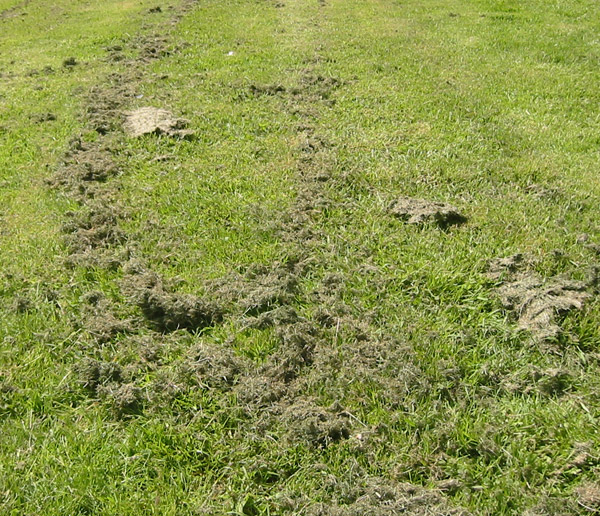
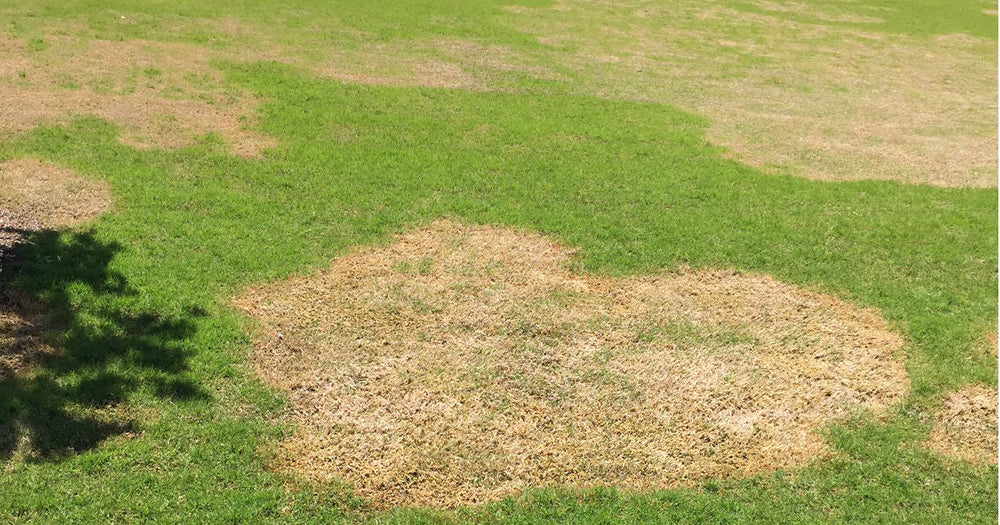
The shape, color, and location of the patches give you most of what you need to diagnose the problem. Irregular brown patches that peel up like carpet point to grubs. Circular, straw-colored rings suggest fungal disease. Thin grass under a tree is almost always a shade and root competition issue. Yellow patches in full sun during a dry August are drought stress until proven otherwise.
Start by looking at the pattern. Then confirm with a soil test or a quick turf inspection before spending money on seed, fungicide, or fertilizer.
Cause 1: Soil Problems (pH Imbalance, Compaction, or Poor Nutrition)
Soil problems are the most common underlying cause of patchy lawns, and most homeowners never check for them. When soil pH falls outside the 6.0-7.0 range that most cool-season grasses require, nutrients lock up in the soil even if you fertilize regularly — the grass simply can’t absorb them (Purdue University Extension).
Compacted soil blocks water and air from reaching roots, which causes thin, struggling turf that dies in irregular patches. This is especially common in new construction where the topsoil was stripped during grading, leaving clay subsoil behind (UGA Extension).
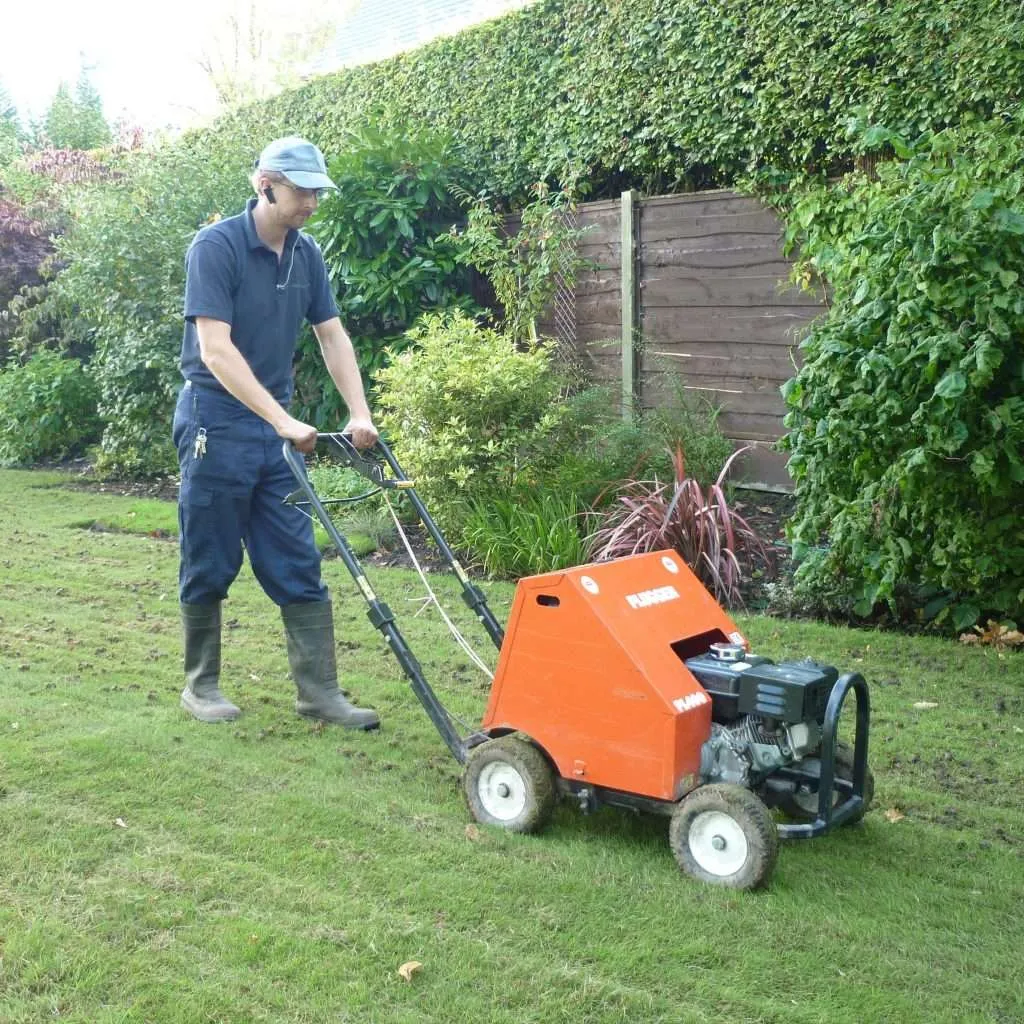
Fix: Get a soil test first. Extension office labs charge $20-$35 for a standard test that covers pH and key nutrient levels (LawnStarter, 2026). If pH is too low (acidic), apply ground limestone. If it’s too high (alkaline), apply sulfur or peat moss. For compaction, rent a core aerator in fall for cool-season grasses or early summer for warm-season varieties.
Cause 2: Lawn Disease (Fungal Patches)
Fungal disease causes irregular patches of yellow or straw-colored grass that vary in size and shape. Brown patch, one of the most common fungal diseases in US lawns, creates sunken yellow rings up to 3 feet in diameter and hits hardest under humid conditions (Penn State Extension).
Dollar spot is another frequent culprit — it produces silver-dollar-sized bleached spots that can spread across a large area during wet spring conditions. Thatch buildup makes disease worse because wet thatch holds moisture against the crown of the grass and actively invites fungal growth (Old Farmer’s Almanac).
Fix: Improve air circulation by dethatching if thatch exceeds half an inch. Water in the early morning so grass dries before nightfall. For active infections, apply a labeled lawn fungicide such as Scotts DiseaseEx, which controls common fungal diseases for up to four weeks (Scotts, 2025). Avoid over-fertilizing with nitrogen in summer, which accelerates fungal spread.
Cause 3: Insect Pests (Grubs and Chinch Bugs)
Grubs are the larval stage of beetles — Japanese beetles, June bugs, and masked chafers are the main offenders in US lawns. They feed on grass roots underground, severing the turf’s connection to the soil. The lawn looks like it’s wilting from drought even when you’re watering, and the sod peels up like loose carpet when you pull at it (Penn State Extension).
Chinch bugs cause patches that look like drought damage — tan or straw-colored areas that spread outward from a central point during hot, dry weather in July and August (Penn State Extension).
Fix: To confirm grubs, cut and lift a 1-square-foot section of turf near the edge of a damaged area. Finding 10 or more white, C-shaped larvae in the top few inches of soil means treatment is needed (LawnStarter, 2026). Preventive grub treatments containing imidacloprid or chlorantraniliprole work best when applied mid-June through mid-July, before eggs hatch. For active infestations in late summer, products containing carbaryl or trichlorfon applied and watered in can stop feeding grubs (Penn State Extension).
Cause 4: Drought and Heat Stress
Drought stress causes grass to go dormant, turning tan or straw-colored across broad areas — often the highest, most exposed parts of the lawn first. Unlike disease or grubs, drought patches tend to be large, irregular, and loosely correlated with sun exposure and slope.
Cool-season grasses like Kentucky bluegrass and tall fescue go dormant naturally during extended heat without irrigation. That’s normal. The problem is that weakened, drought-stressed turf is far more vulnerable to disease and insect damage when conditions improve.
Fix: Water deeply and infrequently — about 1 inch per week during active growth, applied in one or two sessions rather than daily light watering. Early morning is the right time. If the lawn has gone dormant, avoid heavy foot traffic and hold off on fertilizing until temperatures drop. Overseed thin, stressed areas in early fall (for cool-season grasses) once conditions improve.
Cause 5: Shade and Tree Root Competition
Grass growing under mature trees faces two problems at once: low light and root competition for water and nutrients. Most turf grasses need at least 4-6 hours of direct sun per day to stay dense. Shade-stressed grass thins out gradually, and the patches tend to follow the drip line of overhead branches.
Moss is a secondary sign of a shade-related problem. When moss takes over a shaded area, it means the grass was already stressed — the moss didn’t cause the problem, it just moved in after the grass gave way (Greensleeves Lawn Care, via Homebuilding, 2026).
Fix: Prune lower tree branches to let more light through. Switch to a shade-tolerant grass variety — fine fescues (creeping red fescue, chewings fescue) perform best under trees in cool-season climates. If shade is too dense for any grass, consider replacing the area with mulch, groundcover, or shade-tolerant plants rather than fighting a losing battle every season.
Cause 6: Mowing Mistakes (Scalping, Dull Blades, and Wrong Height)
Mowing too short is one of the most common causes of patchy, stressed turf that homeowners overlook. Cutting below the recommended height — called scalping — removes too much leaf blade at once, exposes the crown, and leaves the grass vulnerable to heat, drought, and disease. A dull blade makes it worse: instead of a clean cut, it tears the grass, leaving ragged brown tips that create a patchy, brownish appearance across the whole lawn.
Fix: Follow the one-third rule — never remove more than one-third of the grass blade in a single mow. Recommended mowing heights for common grass types:
| Grass Type | Recommended Mowing Height |
|---|---|
| Kentucky Bluegrass | 2.5 – 3.5 inches |
| Tall Fescue | 3.0 – 4.0 inches |
| Bermudagrass | 1.0 – 1.5 inches |
| Zoysia | 1.0 – 2.0 inches |
| St. Augustinegrass | 3.0 – 4.0 inches |
| Perennial Ryegrass | 2.0 – 3.0 inches |
Sharpen your mower blade at least once per season. A dull blade tears grass like a butter knife instead of cutting it clean, and torn grass tips are noticeably more prone to disease.
Quick Diagnosis Guide: Matching Patch Type to Cause
| Patch Appearance | Most Likely Cause | First Step |
|---|---|---|
| Irregular brown, peels up like carpet | Grubs | Lift turf, count larvae |
| Yellow rings or circles, 1-3 ft wide | Fungal disease (brown patch) | Dethatch, apply fungicide |
| Broad tan areas, sun-exposed spots | Drought/heat stress | Check soil moisture, water deeply |
| Thin, sparse under tree canopy | Shade + root competition | Prune branches, reseed with fine fescue |
| Pale yellow, fertilizer not working | Soil pH imbalance | Run a soil test |
| Tan spreading in hot, dry weather | Chinch bugs | Inspect grass crowns at patch edge |
| Uniform browning across whole lawn | Dull blade / scalping | Raise deck, sharpen blade |
Common Mistakes That Make Patchy Grass Worse
- Seeding bare spots without fixing the underlying cause: new seed planted over compacted soil, a grub infestation, or severe shade will fail within one season. Fix the root problem first, then seed.
- Watering every day for a few minutes: shallow, frequent watering produces shallow roots that stress and die faster during hot spells. Water deeply once or twice a week instead.
- Applying fertilizer to a diseased or grub-damaged lawn: nitrogen feeds lush top growth, but a stressed lawn with damaged roots can’t use it. You’ll worsen disease conditions and waste money.
Frequently Asked Questions
How do I know what’s causing my patchy grass?
Start by looking at the shape and color of the patches and where they appear. Circular or ring-shaped patches suggest fungal disease. Turf that peels up easily like carpet is almost always grubs. Broad, sun-exposed tan areas during dry weather are drought stress. Persistent thin patches under a tree are shade and root competition. A soil test confirms whether pH or nutrition is also a factor.
Can patchy grass fix itself without treatment?
Some patches recover on their own if the cause is drought dormancy or a one-time stress event. But patches caused by grubs, disease, or persistent soil problems won’t fill in without intervention. If the underlying cause isn’t addressed, bare spots will return even after reseeding.
When is the best time to reseed patchy areas?
For cool-season grasses like Kentucky bluegrass and tall fescue, early fall (late August through September) is the best window. Soil is still warm, air temperatures drop, and fall rains reduce the need for irrigation. Spring seeding works but competes with weed germination. Warm-season grasses like Bermuda and zoysia are best overseeded in late spring through early summer.
How much does a soil test cost?
A standard soil test through a university cooperative extension office runs $20-$35 and covers pH, phosphorus, potassium, and basic nutrient levels. A more detailed analysis costs $50-$100 (LawnStarter, 2026). You can find your nearest extension office through the USDA’s extension locator.
Do I need to dethatch before reseeding patchy areas?
Yes, if thatch exceeds about half an inch. Heavy thatch prevents seed-to-soil contact, which is the single biggest reason overseeding fails. Use a power rake (also called a dethatching machine) to slice through the thatch layer before spreading seed (Old Farmer’s Almanac). For small patches, a metal garden rake works fine.
Why does my grass keep getting patches every summer even after I reseed?
Recurring patches in the same spots every year almost always mean the underlying cause was never fixed. Grubs return annually if not treated preventively. Soil with poor drainage or wrong pH produces the same stressed turf year after year. Shade patches under trees get worse as the canopy grows. Diagnose first, then seed.