Why Your Lawn Looks Sick Overall and How to Fix It
TL;DR
- A lawn that looks sick across the whole yard usually points to one underlying cause, not many separate problems.
- The six most common culprits are improper watering, mowing too short, compacted soil, nutrient deficiency, fungal disease, and grub damage.
- Watering deep and infrequent (about 1 inch per week) fixes more sick lawns than any other single change (University of Minnesota Extension, 2023).
- Mowing height matters more than mowing frequency. Cutting below 2.5 inches stresses most cool-season grasses.
- Pull back a patch of turf. If it lifts like loose carpet, you likely have grubs, not a watering or disease problem.
What Makes a Lawn Look Sick Across the Whole Yard?
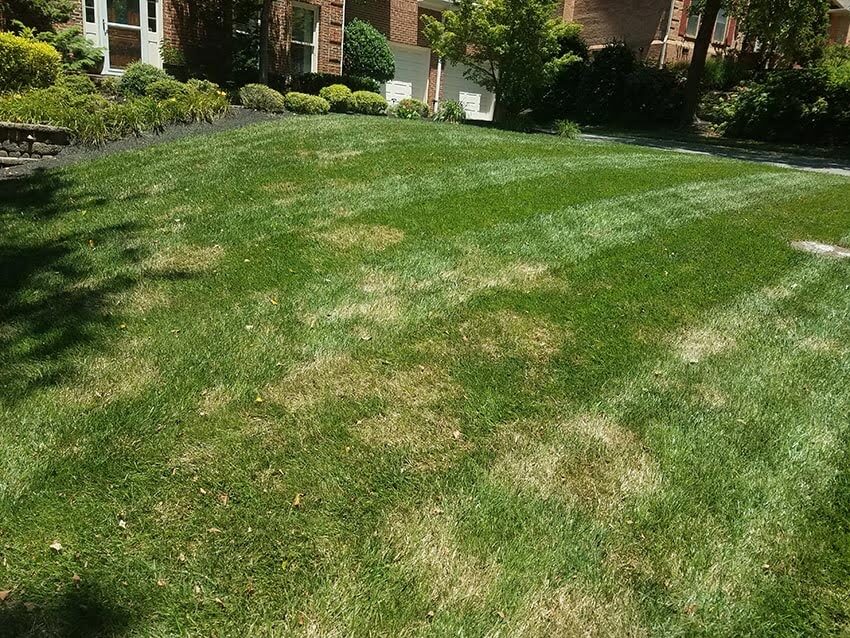
A lawn looks sick overall when the entire turf shows color loss, thinning, or uneven texture at the same time, which usually traces back to a single root cause affecting the whole growing area. Spot problems stay in patches. Yard-wide problems point to something systemic: how you water, how you mow, your soil, or a pest or disease spreading evenly through similar conditions.
The fastest way to narrow it down is to look at the pattern. Uniform yellowing often means water or nutrients. Spreading circles or patches suggest fungus. Areas that peel up easily mean grubs feeding on the roots below.
What Are the Most Common Reasons a Lawn Looks Unhealthy?
The most common reasons a lawn looks unhealthy are watering mistakes, scalping from low mowing, compacted soil, low nitrogen, fungal disease, and grub damage. Most sick lawns trace back to one or two of these rather than a rare disease.
Here is how the main causes compare and what each one looks like.
| Cause | What It Looks Like | First Fix |
|---|---|---|
| Improper watering | Uniform dull green to yellow, footprints stay visible | Water deep, about 1 inch per week, early morning |
| Mowing too short | Pale, thin, stressed turf after each mow | Raise the deck to 3 to 3.5 inches |
| Compacted soil | Hard ground, water pools, thin growth in traffic areas | Core aerate in fall (cool-season) or late spring (warm-season) |
| Nutrient deficiency | Slow growth, pale or yellow blades | Soil test, then apply nitrogen as recommended |
| Fungal disease | Spreading patches, rings, or spots | Reduce evening watering, improve airflow |
| Grub damage | Turf lifts like loose carpet, brown patches | Confirm by digging, treat in mid to late summer |
Why Watering Wrong Is the Number One Cause
Watering wrong makes more lawns look sick than any other factor, because both overwatering and underwatering produce the same dull, yellowing, weak turf across the whole yard. Most homeowners water too often and too shallow, which trains grass roots to stay near the surface where they dry out fast.
Penn State Extension recommends watering deeply and less often so moisture reaches 4 to 6 inches down, encouraging deeper roots (Penn State Extension, 2023). A simple test: place a tuna can on the lawn and run the sprinkler until it fills to about 1 inch. That is roughly a week’s worth of water for most lawns. Water early in the morning so blades dry before night, which lowers disease risk.
How Mowing Height Quietly Wrecks a Lawn
Mowing too short stresses grass and is one of the most overlooked reasons a whole lawn looks sick. When you cut more than one-third of the blade at once, the grass burns through stored energy trying to recover, which leaves it pale, thin, and open to weeds.
Most cool-season grasses (fescue, Kentucky bluegrass, ryegrass) do best at 3 to 3.5 inches. The University of Minnesota Extension recommends following the one-third rule and keeping a sharp blade, since a dull blade tears grass like a butter knife instead of slicing it clean (University of Minnesota Extension, 2023). Torn tips turn brown and give the lawn a hazy, sick look from a distance. Taller grass also shades the soil, holds moisture, and crowds out crabgrass.
When the Problem Is Soil, Disease, or Grubs
When watering and mowing are dialed in but the lawn still looks sick, the problem usually sits in the soil, a fungal disease, or grubs feeding on the roots. These are the next things to check before spending money on fertilizer or chemicals.
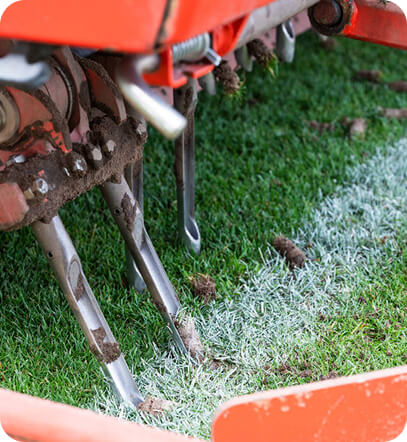
Compacted soil from foot traffic or heavy clay chokes roots and blocks water. Core aeration once a year relieves it. Fungal diseases like brown patch or dollar spot show up as spreading circles, often after warm humid nights and evening watering. Grubs, the larvae of beetles, chew grass roots in mid to late summer; if you can grab a handful of turf and peel it back like carpet, grubs are the likely cause (University of Minnesota Extension, 2023). A soil test, available through most county extension offices for a small fee, tells you whether low nitrogen or pH is the real issue before you guess.
Common Mistakes That Keep a Lawn Looking Sick
- Watering a little every day: shallow daily watering keeps roots near the surface and weakens the whole lawn. Water deeply once or twice a week instead.
- Mowing on the lowest setting to stretch time between cuts: scalping stresses the grass and invites weeds. Raise the deck and mow more often.
- Reaching for fungicide or fertilizer before testing: treating the wrong problem wastes money and can make turf worse. Confirm the cause first.
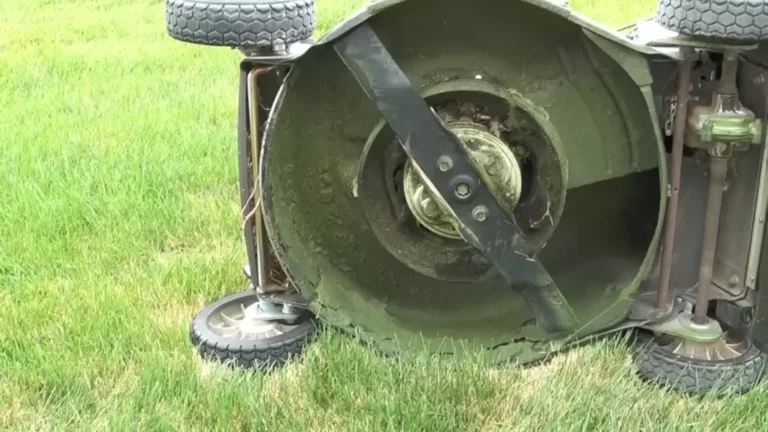
- Mowing with a dull blade all season: a dull blade shreds grass tips, which brown out and dull the whole lawn’s color. Sharpen the blade at least once a year.
Frequently Asked Questions
Why does my whole lawn look yellow but not dead?
Uniform yellowing across the whole lawn usually means a watering problem or low nitrogen. Check watering first, since both too much and too little produce yellowing. If watering is correct, a soil test will show whether the lawn needs nitrogen.
How much should I water a sick lawn?
Aim for about 1 inch of water per week, delivered in one or two deep sessions rather than daily light watering (University of Minnesota Extension, 2023). Water early in the morning so the grass dries before evening, which reduces disease risk.
Can mowing too short really make my lawn look sick?
Yes. Cutting below 2.5 inches or removing more than one-third of the blade at once stresses most cool-season grasses, leaving them pale and thin. Raising your mower to 3 to 3.5 inches often improves color within a few weeks.
How do I know if grubs are the problem?
Grab a patch of brown or thinning turf and pull. If it lifts away from the soil like loose carpet, grubs have likely eaten the roots underneath. Digging a few inches into the soil will reveal the white, C-shaped larvae if they are present.
How long does it take a sick lawn to recover?
A lawn recovering from watering or mowing mistakes often greens up within two to four weeks once the cause is corrected. Damage from grubs, disease, or compaction can take a full season and may need aeration or reseeding.
Should I fertilize a lawn that already looks sick?
Not until you know the cause. Fertilizing a lawn that is stressed from drought, disease, or grubs can do more harm than good. Run a soil test first, then fertilize only if nitrogen or another nutrient is actually low.