When to Overseed Lawn in Fall (And If You Missed It)
The reliable window for fall overseeding cool-season grass closes about 45 days before your average first frost date, so the seed has time to germinate and establish roots before winter. If you are inside that window, this weekend is a reasonable time to seed. If you are past it, dormant seeding is an option with lower and less predictable odds, and spending money on seed right now may not be worth it. Both answers depend on your own frost date, not a calendar month, since "September" means very different things in Minnesota and Georgia.
This is a cool-season task. Warm-season lawns (bermudagrass, zoysia, St. Augustine, centipede) are approaching dormancy in fall, not their growing season, and overseeding them now is not the right move; if you are not sure which family your lawn is, our grass identification key will settle it in a few minutes.
Find your date: first frost, minus 45 days
Look up your area's average first frost date through your local National Weather Service office or NOAA climate data, or a frost-date lookup tool built from the same historical records. Count back roughly 45 days from that date. That gives you a rough close-of-window date. Seeding earlier than that is generally fine and often better, since it gives the new grass more time to root before cold weather.
This site does not publish a table of frost dates by state, because an averaged state date is frequently wrong for a specific yard. Look up your own location.
Soil temperature: what to measure, and why the ranges disagree
Beyond the calendar, soil temperature is the more direct signal, since seed germination responds to soil warmth, not the date on a calendar. University turfgrass programs commonly report a workable range in roughly the mid-50s to upper 60s Fahrenheit for cool-season seed, measured a few inches down, ideally in the morning before the sun has warmed the surface.
Sources genuinely disagree at the edges of that range, and it is worth saying so rather than picking one number and presenting it as settled. Some sources put the low end near 50°F; others note that tall fescue and Kentucky bluegrass do not establish well once soil has already dropped near 50°F, meaning by the time it reads that low, you may already be past a reasonable window. The safer reading, if you are choosing between two sources that disagree: treat the higher end of the range as the real cutoff, not the lower one, especially if you are seeding late in the season with less recovery time before winter.
The conflict nobody sequences: pre-emergent and seed
If you applied, or are planning to apply, a pre-emergent herbicide this fall, read this before you buy seed. A pre-emergent works by stopping seeds low in the soil from germinating, and it cannot tell the difference between a weed seed and the grass seed you are about to put down. As reported by university extension turf programs, running a pre-emergent application and overseeding too close together in the same window generally means the new seed fails to establish. Every pre-emergent product carries its own label restriction on how long to wait before seeding, and that interval varies by product, so check the label on the specific product you used rather than assuming a standard number. If you have not yet decided whether to use one this fall at all, settle that decision before you buy seed, not after.
Warm-season lawns: why this is not your job right now
If your lawn is bermudagrass, zoysia, St. Augustine or centipede, fall is not your overseeding window; these grasses are heading into dormancy, not growth. The one common exception is overseeding a dormant warm-season lawn with annual or perennial ryegrass purely for winter color, which is a cosmetic decision some homeowners make and not a repair strategy. If your goal is genuine lawn repair rather than winter green color, that repair work belongs in late spring through early summer for warm-season grass; see our lawn care calendar for the full warm-season timeline.
If you are already late: dormant seeding and the honest odds
If your window has closed, you have two realistic choices, and neither is dishonest to consider.
Dormant seeding. Some cool-season overseeding is done deliberately late, after the ground is too cold for germination but before it freezes solid, with the intent that seed germinates as early as possible the following spring. The odds are less predictable than a proper fall seeding, since the seed sits exposed to winter weather, birds and washout for months before it ever germinates. It can work, and plenty of homeowners do it, but treat it as a lower-odds attempt, not a substitute for a well-timed fall seeding.
Waiting for spring. Spring seeding on cool-season grass is a real option, though it competes with weed pressure and a shorter cool window before summer heat arrives. For many yards, waiting and seeding properly in early spring beats a rushed dormant seeding.
Either way, do not spend money on seed "just in case" once you are clearly past a reasonable window. That decision costs less than a bag of seed and a wasted afternoon.
What actually makes overseeding fail, other than timing
Timing gets most of the attention, but several other factors decide whether seed actually establishes:
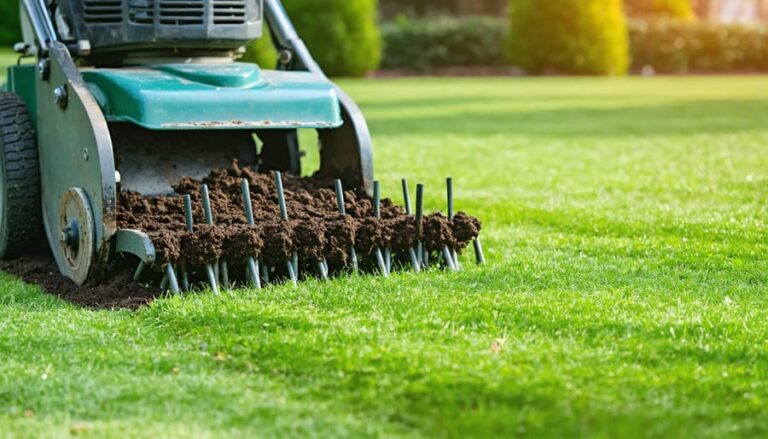
- Seed-to-soil contact. Seed sitting on top of thatch or hard soil rarely germinates well. Light raking or core aeration before seeding improves contact; see our guide on why a lawn needs aeration for when that step matters most.
- Watering consistency. New seed needs the top layer of soil kept consistently moist, not soaked, through germination, which usually means light, frequent watering rather than the deeper, less frequent watering an established lawn wants.
- Mowing height and traffic. Keep foot traffic off freshly seeded areas, and hold off on mowing until new grass has reached a height where a normal cut will not stress it.
If you seeded in the past and it came up thin anyway, our post-mortem on why a lawn looks thin even after seeding covers the most common reasons a seeding attempt underperforms, separate from timing.
FAQ
Is it too late to overseed if it is already mid-October?
Depends entirely on your frost date, not the calendar month. In much of the northern US, mid-October is likely past the 45-day window; in milder regions or a transition-zone climate, it may still be workable. Check your own frost date rather than going by the date alone.
Can I overseed and fertilize at the same time in fall?
Generally yes, a starter-type fertilizer application alongside seeding is a common and reasonable pairing; the conflict to watch for is specifically pre-emergent herbicide, not fertilizer.
Will grass seed just wash away if I seed right before a big rain?
Heavy rain right after seeding can move seed, especially on a slope. Light raking to improve seed-to-soil contact and choosing a lower-intensity rain window when possible both reduce the risk, though you cannot fully control the weather.
Do I need to aerate before overseeding, or is it optional?
It is not strictly required, but it usually improves results on compacted soil by giving seed better contact with soil rather than sitting on the surface or on thatch.
What is the actual downside of dormant seeding compared to waiting for spring?
Lower and less predictable germination, since the seed is exposed to winter weather for months before it can grow. Some homeowners still choose it because it means less bare ground over winter and a head start if it does establish; it is a trade-off, not a clearly better or worse choice than waiting.