Why Your Lawn Looks Thin Even After Seeding: 6 Reasons and How to Fix Them
TL;DR
- A thin lawn after seeding is almost always caused by poor seed-to-soil contact, wrong seeding timing, inconsistent watering, or seed that was never viable to begin with.
- Kentucky bluegrass can take 14-30 days to germinate, so some lawns aren’t actually failing – they’re just not done yet (Jonathan Green, 2024).
- Seeding on top of existing thatch or unraked soil is one of the most common reasons seeds don’t sprout.
- Pre-emergent herbicides applied before seeding will block germination completely, sometimes for 8-12 weeks (Purdue University Extension).
- The fix for most thin lawns is to reseed in late summer or early fall, when soil temps and moisture conditions favor germination and weed competition is lowest (Penn State Extension, 2025).
Why Grass Seed Fails to Fill In
credit: https://lawn.com.au/
A lawn that still looks thin after seeding has almost always hit one of six problems: bad timing, poor soil prep, inconsistent moisture, the wrong seed for the site, pre-emergent interference, or seed that simply wasn’t viable. Understanding which one you’re dealing with tells you whether to wait longer or start over.
The good news is that none of these problems are permanent. Every one of them is fixable before the next seeding window.
You May Just Need More Time
The most overlooked reason a seeded lawn looks thin is that the seed hasn’t finished germinating yet. Different grass species germinate at very different speeds, and if your mix contains Kentucky bluegrass, you could be waiting a month before you see meaningful coverage.
Here’s how long germination actually takes by species (Jonathan Green, 2024; Advanced Turf Solutions, 2024):
| Grass Species | Germination Time | Notes |
|---|---|---|
| Perennial Ryegrass | 5-10 days | Fastest cool-season option; useful in mixes |
| Tall Fescue | 7-14 days | Reliable mid-range; tolerates clay and drought |
| Fine Fescue | 10-20 days | Shade-tolerant; sensitive to dry conditions during germination |
| Kentucky Bluegrass | 14-30 days | Slowest cool-season grass; needs patience |
| Bermuda | 10-21 days | Warm-season; needs soil temps above 65°F |
| Zoysia | 21-30 days | Slow even in ideal conditions |
Wait the full germination window before concluding the seed failed. If you seeded a bluegrass-heavy mix and it’s only been two weeks, it’s too early to tell.
Poor Seed-to-Soil Contact Is the Biggest Killer
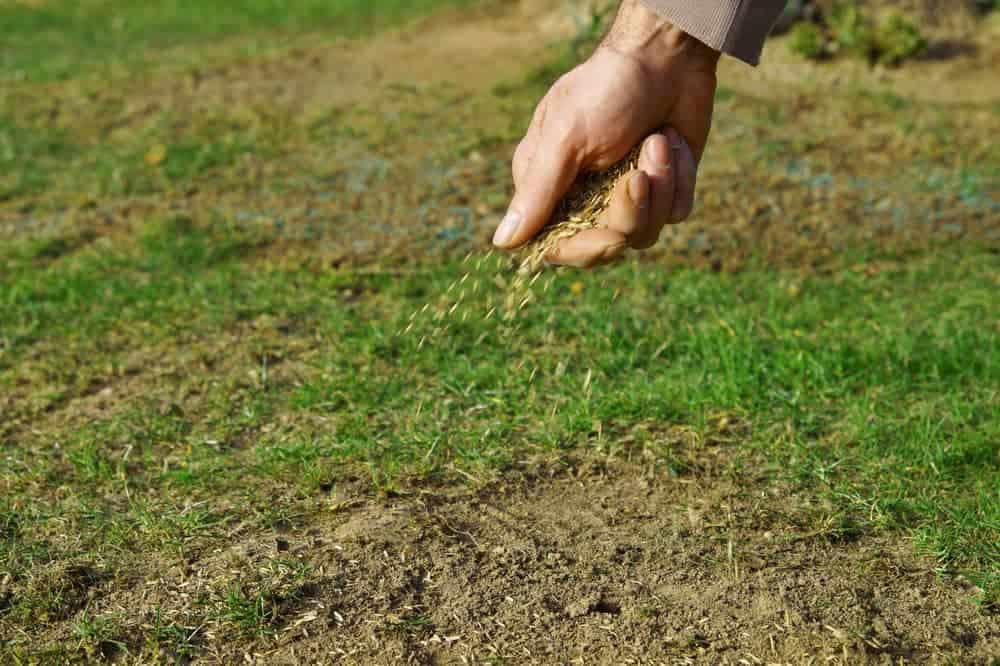
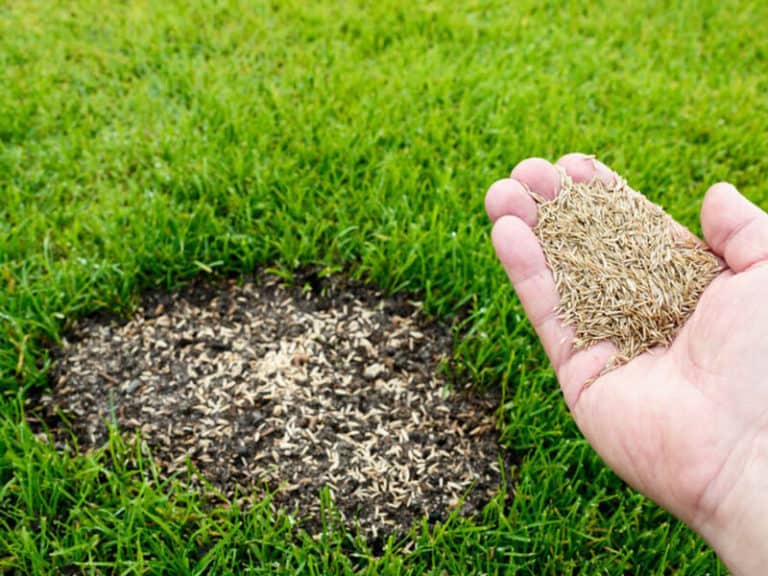
Grass seed needs direct contact with soil to germinate. Seed that lands on thatch, dead grass clippings, or loose debris sits exposed to air, sun, and birds without ever taking root. This is the single most common mistake in DIY overseeding.
Per University of Maryland Extension (2023), seed should be raked in lightly to ensure soil contact but not buried completely, since germination also requires light. Purdue University Extension recommends aerating first – punching 20-40 holes per square foot with the largest tines possible – to dramatically improve the chance of seed falling into direct contact with soil.
Before any reseeding, rake the area to remove debris and loosen the top quarter-inch of soil. On compacted lawns, core aeration is worth the rental cost.
You Seeded at the Wrong Time of Year
credit: https://yardandgardenguru.com/
Seeding outside the right temperature window means seeds sit dormant or die off before they can establish. Cool-season grasses – tall fescue, ryegrass, bluegrass – need soil temperatures between 50°F and 65°F to germinate well (Purdue University Extension).
Penn State Extension (2025) is clear on timing: late summer to early fall is the best window for cool-season grasses in most northern states. Spring seeding is possible but harder, because seedlings that sprout in spring have to survive summer heat before they’re established. Summer seedings are at high risk from heat, drought, and disease.
If you seeded in June or July and the lawn stayed thin, that’s timing, not technique. Wait for late August and try again.
Pre-Emergent Herbicide Is Blocking Germination
If you applied a crabgrass pre-emergent in spring before seeding, that’s likely the reason your seed isn’t sprouting. Pre-emergent herbicides don’t distinguish between weed seeds and grass seeds – they block all seed germination.
Most pre-emergents stay active in the soil for 8-12 weeks after application, depending on the product and rainfall (Purdue University Turfgrass Weed Control, cited in myallgreen.com, 2025). That means a product applied in April could still be blocking germination through June or July.
Check the product label for the recommended wait time before seeding. If you’re unsure whether a pre-emergent is still active, wait until late summer and seed then.
The Seed Wasn’t Viable
Old seed, improperly stored seed, or budget-bin blends often have low germination rates even under perfect conditions. Grass seed stored in a warm garage or exposed to moisture loses viability quickly.
Properly stored seed stays viable for 2-3 years in a cool, dry location, but germination rates drop with each passing year (Lawn Synergy, 2025). A bag that’s been sitting open in the shed since last fall may sprout at 40% of its labeled rate, which means thin coverage no matter how well you prep the soil.
To test viability: place 10 seeds on a damp paper towel, fold it over, keep it at room temperature, and check for sprouting in 5-10 days. If fewer than 7 of the 10 sprout, the seed has low viability and you’ll need a fresh bag (colincanhelp.com, 2026).
Watering Was Inconsistent During Germination
Germinating seeds have shallow, undeveloped root systems. If the top half-inch of soil dries out even once during the germination window, those seedlings die before they ever reach the surface.
University of Maryland Extension (2023) states that maintaining adequate soil moisture is one of the most critical factors in new turfgrass establishment. For the first 10-14 days, water lightly 2-3 times per day to keep the surface consistently moist – not soaked, not dry. After germination begins, reduce frequency but increase duration to encourage deeper root development.
Running the sprinkler once a day in the evening isn’t enough. New seed needs short, frequent watering throughout the day until it’s established.
Mistakes That Keep Thin Lawns Thin
- Skipping soil prep: Throwing seed on unraked, compacted ground is the fastest way to waste a bag of seed. Always rake, aerate, or both before seeding.
- Reseeding too soon after herbicide: Applying pre-emergent and then seeding within 8-12 weeks blocks germination completely. Check the label and wait out the residual window.
- Giving up before the window closes: Kentucky bluegrass can take 30 days to show meaningful coverage. Reseeding prematurely over seeds that are still germinating wastes both seed and effort.
- Using the wrong seed for the site: Shade-tolerant seed like fine fescue in a full-sun area, or sun-loving bluegrass under a dense tree canopy, will never fill in regardless of technique.
Frequently Asked Questions
How long should I wait before reseeding a thin lawn?
Wait at least 21-30 days after your initial seeding before deciding the seed has failed, especially if you used Kentucky bluegrass. If you seeded during a period of extreme heat, low rainfall, or right after a pre-emergent application, those are likely the cause, not the seed itself.
Why did my grass seed sprout but the lawn is still patchy?
Patchy germination usually comes from uneven seed-to-soil contact, inconsistent watering across the lawn, or variations in soil quality from one spot to another. Rake bare patches lightly, reseed at the label’s recommended rate, and water consistently. Per Wendland Nursery, adding a thin layer of soil over bare spots before reseeding helps with both contact and moisture retention.
Can I reseed over a lawn where I already applied pre-emergent?
Not until the pre-emergent has broken down. Most products remain active for 8-12 weeks. Seeding before that window closes will fail. Check your product label for the specific reseeding interval, and when possible, schedule seeding for late summer when pre-emergent season is over.
What is the best time of year to seed a thin lawn?
Late summer to early fall is the best window for most US homeowners with cool-season grass. Penn State Extension (2025) recommends mid-August through September as the target range in most northern states. Soil is warm enough for fast germination, temperatures are cooling, and weed competition drops significantly.
Does it help to add starter fertilizer when reseeding?
Yes. A starter fertilizer higher in phosphorus supports root development in new seedlings. Avoid using a combination fertilizer-and-weed-killer product on newly seeded areas, since it will damage or kill seedlings that are just emerging (Wendland Nursery). Apply plain starter fertilizer at seeding, and hold off on weed control until the new grass has been mowed at least 3 times.