7 Signs of Poor Lawn Soil (and How to Fix Each)
TL;DR
- The most common signs of poor lawn soil are water pooling after rain, ground too hard to push a screwdriver into, thin or patchy grass, creeping moss and weeds, and grass that stays pale even after fertilizing.
- Most turfgrass grows best at a soil pH between 6.0 and 7.5; below 5.5, grass struggles to absorb fertilizer (Purdue Extension; University of Florida IFAS).
- University of Massachusetts research found compacted soil cuts nutrient uptake by 10% to 30% (University of Massachusetts, via LawnStarter, 2026).
- A simple screwdriver pushed into damp soil is the fastest at-home test for compaction.
- Start with a soil test through your local extension office before buying lime, sulfur, or amendments.
What Does “Poor Lawn Soil” Actually Mean?
credit: https://mowing.expert/
Poor lawn soil is soil that can’t deliver water, air, and nutrients to grass roots the way healthy soil does. It usually shows up as one of three problems: compaction, a pH that’s too high or too low, or a texture that drains too fast or too slow.
Grass roots need pore space to breathe and pull in water. When soil particles get pressed tight, or when chemistry blocks nutrient uptake, the grass above ground pays the price. You see it as thin spots, pale color, puddles, and weeds moving in. The signs below are how that hidden problem reaches the surface.
How Do You Know If Your Lawn Soil Is Compacted?
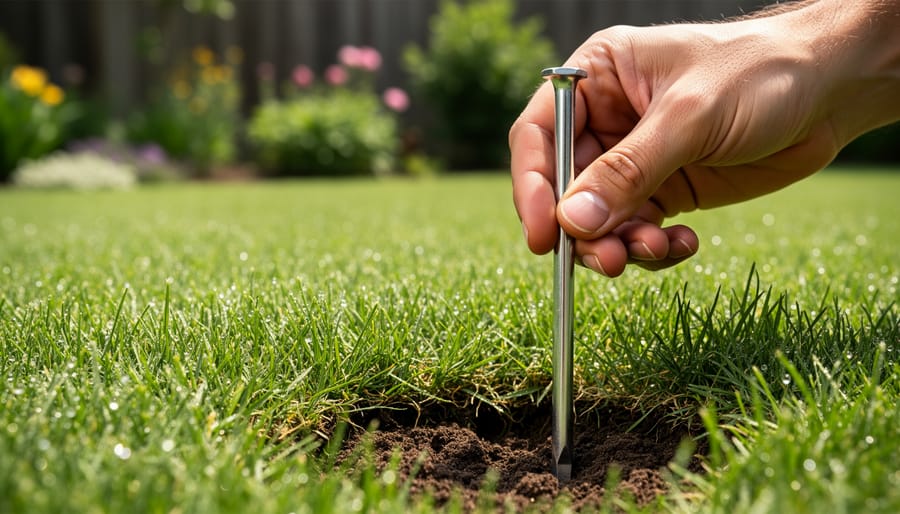
The clearest sign of compacted soil is ground that resists a screwdriver. Push a 6-inch screwdriver into the lawn a day after rain or watering. If it slides in easily, your soil is fine. If you have to lean on it, the soil is packed too tight.
Compaction comes from foot traffic, mower wheels, kids and pets, and heavy clay that packs down naturally over time. Once it sets in, roots can’t expand and water can’t soak through. University of Massachusetts research found that compacted soil decreases nutrient uptake by 10% to 30%, which is why a packed lawn can look starved even when you fertilize on schedule (via LawnStarter, 2026).
Soils high in organic matter resist compaction better because the organic material keeps the structure loose and porous. That’s the long-term fix, and it starts with knowing you have the problem.
Why Does Water Pool on My Lawn After Rain?
credit: https://www.greendrop.com/
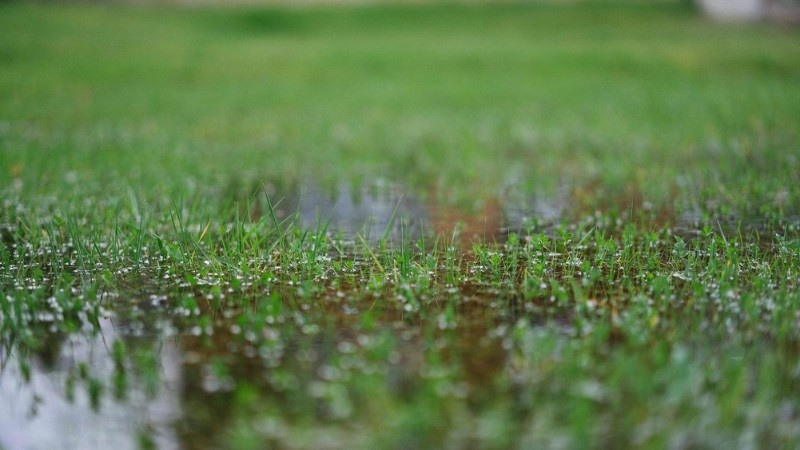
Standing water after rain points to poor drainage, almost always caused by compaction, heavy clay, or a low spot in the yard. Healthy soil absorbs rainfall within a few hours. When water sits for a day or more, the soil underneath can’t take it in.
Compacted soil leaves little room for water to move, so it pools on the surface or runs off. Clay soil makes it worse because the particles are tiny and hold water, turning the lawn soggy. That standing water then starves roots of oxygen and invites root rot and fungal disease.
If only one section pools, you may have a grading issue rather than soil-wide compaction. If the whole lawn drains slowly, the soil itself is the problem.
What Do Thin Grass and Bare Patches Tell You About Your Soil?
Thin, patchy grass that won’t fill in usually means roots can’t establish in the soil below. Compacted or nutrient-poor soil gives roots nowhere to anchor and nothing to feed on, so the grass grows weak and shallow.
Compacted areas often have thin, patchy grass that struggles because of limited root development and poor nutrient uptake. The grass may stay green in low-traffic corners and go sparse along walkways, mower paths, and play areas. That pattern is a strong hint that traffic-driven compaction is the cause.
Reseeding these spots without fixing the soil rarely works. New seed faces the same hard, starved ground the old grass died in.
Why Is My Grass Yellow or Pale Even After Fertilizing?
Grass that stays pale despite regular feeding usually has a pH problem locking nutrients away. When soil pH sits outside the right range, nutrients become chemically bound and roots can’t absorb them, so fertilizer largely goes to waste.
Most turfgrasses grow best at a soil pH between 6.0 and 7.5, and within that range no pH amendment is needed (Purdue Extension). Below 5.5, grass struggles to take up fertilizer nutrients efficiently, and in strongly acidic soil aluminum can reach levels that stunt roots. Warm-season grasses like centipede and bahiagrass tolerate more acidic soil (around pH 5.0 to 6.0), while St. Augustine and zoysia prefer near-neutral to slightly alkaline soil (pH 6.5 to 7.5) (University of Florida IFAS).
The fix isn’t more fertilizer. It’s a soil test, then lime to raise pH or sulfur to lower it.
Soil Problem, Symptom, and Fix at a Glance
| Soil Problem | What You See | Likely Cause | First Fix |
|---|---|---|---|
| Compaction | Hard ground, screwdriver won’t push in | Foot/mower traffic, clay | Core aeration |
| Poor drainage | Puddles lasting a day or more | Compaction, clay, low spots | Aerate, add organic matter, regrade low areas |
| Low pH (acidic) | Pale grass, moss, weeds | Rainfall leaching, clay/sandy soil | Lime, after a soil test |
| High pH (alkaline) | Yellowing, nutrient lockout | Alkaline native soil | Sulfur, after a soil test |
| Excess thatch | Spongy layer above soil | Low microbial activity | Aerate, dethatch |
Do Moss and Certain Weeds Signal Bad Soil?
Yes. Moss and specific weeds are some of the most reliable signs of poor lawn soil because they thrive where grass can’t. Moss is more common in moderately to strongly acidic soils than in neutral or slightly acidic ones.
Taproot weeds like dandelions and plantain often move into compacted ground, where their thick roots break through hard layers that grass roots can’t. A spreading mat of moss in damp, shady areas points to low pH and poor drainage together. Note that weeds can signal more than one problem, so check for several signs before deciding on a cause.
Thatch is a related clue. A thick thatch layer that won’t break down can mean low microbial activity from densely packed soil. Soil pH in the 6.0 to 7.0 range raises microbial activity and helps reduce thatch.
Common Mistakes That Make Poor Soil Worse
- Fertilizing harder to fix pale grass: If the real issue is pH, the extra fertilizer washes away as runoff and never reaches the roots. Test first.
- Mowing or walking on wet soil: Working soil while it’s wet presses particles together and deepens compaction. Wait until the ground firms up.
- Buying lime or sulfur without a soil test: Guessing at amendments can push pH the wrong way. A test from your local extension office tells you the exact starting point.
- Reseeding bare patches without fixing the soil: New seed fails in the same hard, starved ground that killed the old grass. Aerate and amend before you reseed.
Frequently Asked Questions
What is the easiest way to test for poor lawn soil at home?
Push a 6-inch screwdriver into the lawn a day after watering. Easy entry means healthy soil; heavy resistance means compaction. For pH and nutrient problems, a lab soil test through your local extension office is the reliable option.
How much does a lawn soil test cost?
Costs vary by state and lab, so check your local cooperative extension office for current pricing rather than relying on a general figure. Extension labs are usually the most affordable and authoritative option for homeowners.
What soil pH is best for most lawns?
A pH between 6.0 and 7.5 is the optimum range for turfgrass, and no amendment is needed within it (Purdue Extension). Below 5.5, grass struggles to absorb fertilizer, so a soil test plus lime is the usual fix.
Can compacted soil fix itself over time?
Not on its own under normal yard use. Foot traffic and clay keep packing it down. Core aeration relieves compaction, and adding organic matter helps keep soil loose and porous long term.
How often should I test my lawn soil?
Testing every 1 to 2 years is a reasonable schedule for most lawns, or sooner if you notice declining health, poor drainage, or more weeds. Test before installing a new lawn or after a major lime or fertilizer application.
Does poor soil cause lawn disease?
It can. Waterlogged, compacted soil starves roots of oxygen and encourages fungal problems like brown patch and root rot. Fixing drainage and compaction reduces those conditions.