Signs You Are Watering Your Lawn Incorrectly (And How to Fix Each One)
TL;DR
- The two most common watering mistakes are watering too often and watering at the wrong time of day.
- Yellow or pale grass combined with soft, spongy soil points to overwatering; yellow or blue-gray grass with hard, dry soil points to underwatering.
- Most lawns need 1 to 1.5 inches of water per week, counting rainfall (NDSU Extension, 2021).
- The footprint test is the fastest no-tool check: footprints that spring back mean adequate moisture; footprints that stay flat mean the lawn is thirsty.
- Watering in the early morning, before 10 a.m., reduces both evaporation and fungal disease risk.
What Wrong Watering Actually Does to Grass
credit: https://extension.umd.edu/
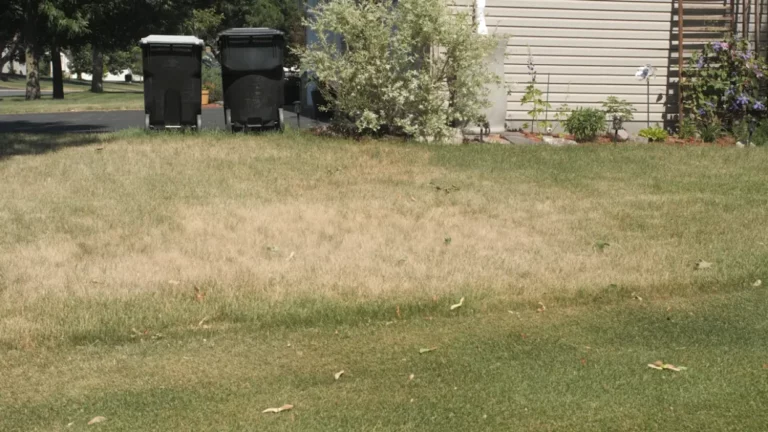
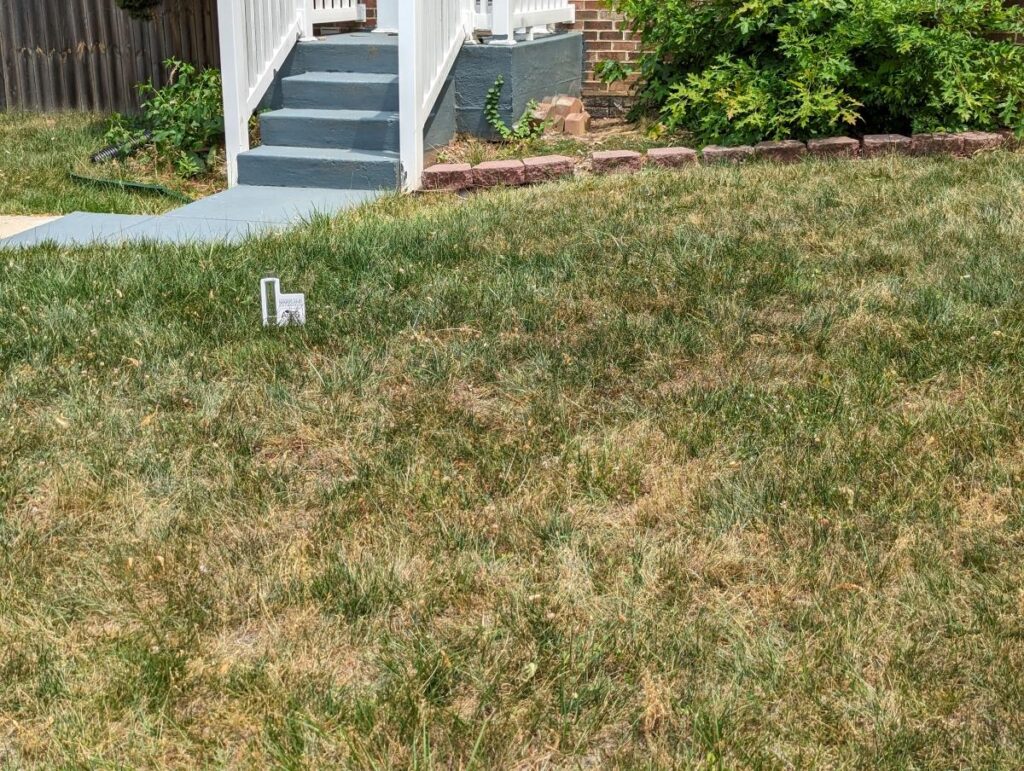
Incorrect watering damages your lawn from the roots up. Whether you’re giving it too much or too little, the grass responds with visible symptoms that most homeowners misread.
The most important thing to understand: overwatering and underwatering often produce the same surface symptoms – yellow patches, thin turf, struggling growth. The difference is in the soil. Press your finger into the ground after you see yellow. Wet and spongy means too much water. Hard and powdery means not enough.
Getting this diagnosis right before you adjust your schedule prevents you from making an already-struggling lawn worse.
Signs You Are Overwatering Your Lawn
Overwatering is the more common mistake, and it causes more long-term damage than underwatering does. Here are the specific signs to look for.
Spongy or mushy soil. Walk across your lawn first thing in the morning. If it feels like a wet sponge underfoot and water squishes up around your shoes, the soil is saturated. Healthy soil should feel firm but give slightly under pressure.
Yellow grass despite frequent watering. When roots stay constantly wet, they can’t absorb oxygen or nutrients properly. The grass turns yellow not because it’s thirsty but because its roots are effectively suffocating. Adding more water makes this worse, not better.
Fungal growth and mushrooms. Overwatering creates conditions that fungal diseases love. Brown patch (Rhizoctonia), powdery mildew, and mushrooms popping up across the lawn are all signs the soil stays wet for too long. Watering in the evening makes this far worse, since grass stays damp overnight with no sun to dry it out.
Thatch buildup thicker than 3/4 inch. Overwatering slows the natural decomposition of dead grass material. When thatch exceeds 3/4 inch, it blocks oxygen from reaching the soil and creates a habitat for pests and fungi (Pro Outdoor, 2018).
Shallow roots that pull up easily. When water is always available near the surface, roots never need to grow deep. A properly watered lawn develops roots 4 to 6 inches deep. Grab a small patch of grass and tug gently – if it lifts out with almost no resistance, shallow roots from overwatering are likely the cause (LawnBySeason, 2026).
Signs You Are Underwatering Your Lawn
Underwatering is easier to spot once you know what to look for, because the lawn sends clear distress signals before permanent damage sets in.
Blue-gray or purple-tinted grass. This color shift is the earliest warning sign of dehydration. A healthy lawn is medium to dark green. When you see a blue-gray or dull purple tinge – especially visible in morning light – the grass is starting to lose moisture faster than it’s absorbing it (Missouri Extension, 2017).
Footprints that stay visible. Walk across your lawn and look back. Healthy, well-hydrated grass springs back within seconds. Dry, stressed grass stays flat. If your footprints are still visible several minutes later, water the lawn that day (Kansas State Extension, 2026).
Grass blades that curl or fold lengthwise. Grass conserves moisture by rolling its blades inward when it’s stressed. If the blades look narrow or tubular instead of flat and open, the lawn is dehydrated. This typically appears before browning starts.
Dry, cracked soil that resists a screwdriver. Push a standard 6-inch screwdriver into the soil in several spots. It should slide in with light pressure on a properly watered lawn. If you have to force it or it barely penetrates, the soil is too dry (Lawn Pride).
Brown tips that spread back from the blade. Drought browning starts at the tip of each grass blade and works back toward the soil. This distinguishes drought stress from fungal damage, which shows up as spotted lesions in the middle of the blade (RYAN Lawn & Tree, 2024).
Overwatering vs. Underwatering: Side-by-Side
| Symptom | Overwatering | Underwatering |
|---|---|---|
| Grass color | Yellow-green, pale | Blue-gray, then brown |
| Soil feel | Spongy, wet | Hard, dry, may crack |
| Footprint test | Springs back quickly | Stays flat for several minutes |
| Fungal growth | Common (brown patch, mildew) | Rare |
| Root depth | Shallow, pulls up easily | Shallow from drought stress |
| Blade appearance | Limp, flattened | Curled or folded inward |
| Screwdriver test | Slides in easily, mud on tip | Resists insertion |
How to Fix Your Watering Habits
credit: https://www.topscapelandscaping.com/
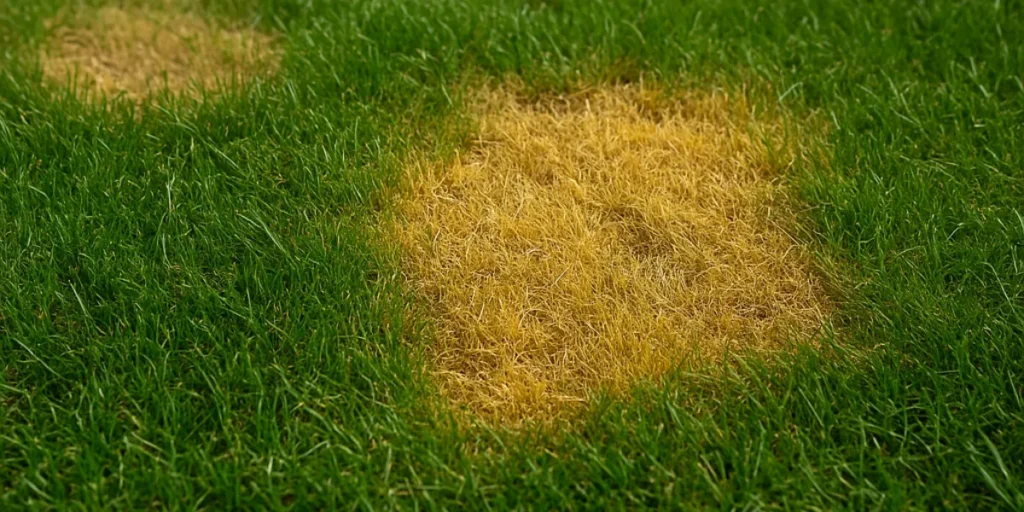
Once you’ve identified which problem you have, the fix is the same general framework adjusted in opposite directions.
If you’re overwatering: Cut watering sessions back immediately. Let the soil dry out to the point where a screwdriver meets some resistance before you water again. Shift to watering deeply 1 to 2 times per week rather than lightly every day. Deep, infrequent watering trains roots to grow down where they build drought resistance for summer.
If you’re underwatering: Increase the duration of each watering session, not the frequency. The goal is to wet the soil 4 to 6 inches deep per session. Use the tuna can test to measure output: place a straight-sided can in the sprinkler zone, run it, and measure how long it takes to collect 1 inch of water. Use that time as your standard run time (NDSU Extension, 2021).
Both problems: Switch watering to early morning, before 10 a.m. Morning watering lets the grass dry out during the day, which cuts fungal disease risk significantly. Evening watering leaves grass wet overnight, which is exactly what lawn fungus needs to spread.
Check your schedule against rainfall. Set it and forget it irrigation systems keep running through rainstorms. A basic rain gauge or a smart irrigation controller that pauses after rainfall events can prevent weeks of accidental overwatering during wet periods.
Frequently Asked Questions
How do I know if I’m watering my lawn correctly?
Use two checks. First, do the footprint test: walk across the lawn and see if the grass springs back within a few seconds. Second, push a 6-inch screwdriver into the soil after watering – it should slide in with light pressure, and the tip should come out damp but not muddy. Both tests passing means your moisture level is about right.
How much water does a lawn need per week?
Most lawns need 1 to 1.5 inches of water per week, including rainfall (Illinois Extension). Cool-season grasses like Kentucky bluegrass and tall fescue are on the higher end of that range during summer heat. Use a rain gauge to track how much natural rainfall you’ve received before turning on the sprinklers.
Why is my lawn yellow even though I water it regularly?
Yellow grass on a regularly watered lawn almost always points to overwatering rather than drought. When roots sit in saturated soil, they can’t absorb nutrients properly, and the grass turns yellow from oxygen deprivation – not thirst. Check whether the soil feels spongy underfoot. If it does, stop watering for several days and let it dry out.
What time of day should I water my lawn?
Water in the early morning, before 10 a.m. This gives the grass time to dry out during the day, which reduces fungal disease risk. Evening watering leaves the lawn wet overnight – warm, damp conditions are exactly what diseases like brown patch need to spread.
What is the footprint test for lawns?
Walk across your lawn and look back at the path you walked. On a well-hydrated lawn, the grass springs back within a few seconds and your path disappears. On a dry, stressed lawn, the grass blades stay flat and your footprints remain visible for several minutes. This is the fastest no-equipment check for whether your lawn needs water.