Lawn Mower Maintenance Mistakes That Shorten Its Life
TL;DR
- A well-maintained lawn mower lasts 8 to 10 years; one that is neglected can fail before year three (WonderHowTo, 2026).
- The most damaging mistakes are skipping oil changes, running stale fuel through winter, and never cleaning the air filter.
- Ethanol fuel left sitting for more than 30 days breaks down into gum and varnish that clogs carburetors (Briggs & Stratton).
- Push mowers need an oil change every 50 hours or once a season; riding mowers every 100 hours or annually (Home Depot, 2025).
- Most of these mistakes take under 30 minutes to fix and cost less than $20 in parts.
Why These Mistakes Matter More Than Most Homeowners Realize
Skipping routine mower maintenance does not cause gradual, predictable wear. A single bad off-season storage job can end an engine’s useful life outright, producing hard-start problems and carburetor failures that no amount of troubleshooting will fix. The gap between a mower that reaches year nine and one that sputters out before year three comes down almost entirely to a handful of avoidable habits.
The mistakes below are the ones small engine repair shops see most. They are not difficult to correct, but they are easy to ignore until something breaks.
Mistake 1: Not Changing the Oil on Schedule
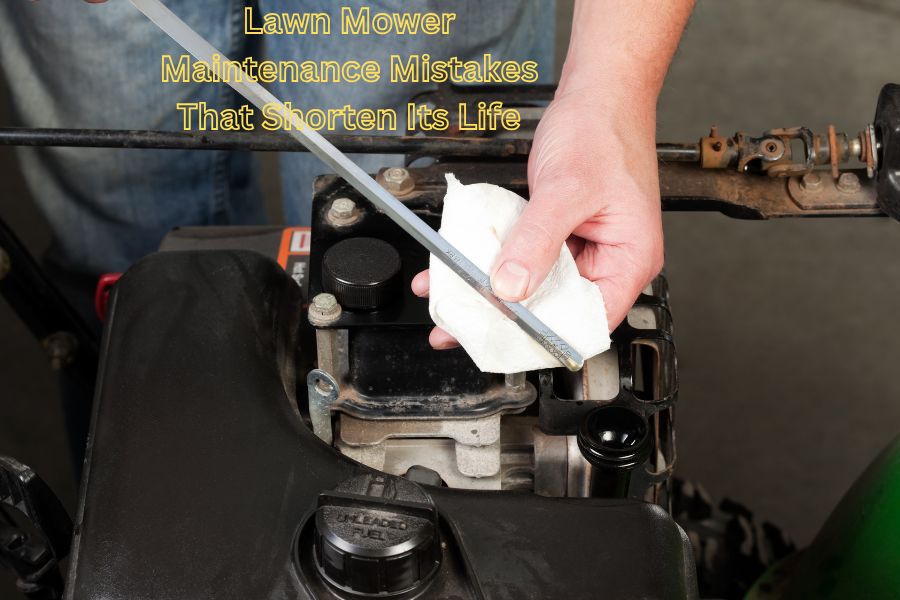
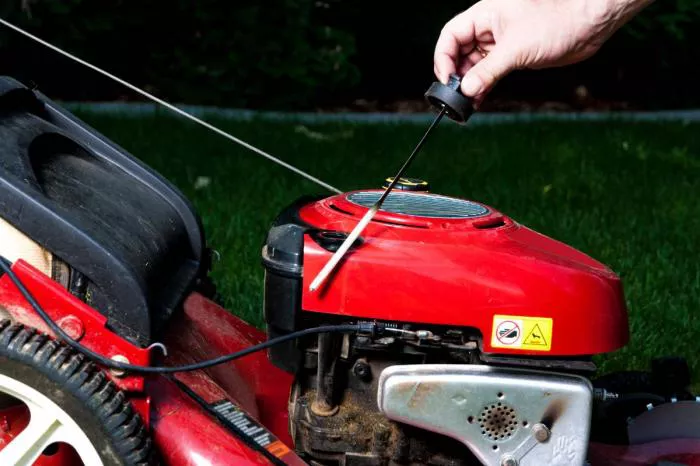
Skipping oil changes is one of the fastest ways to shorten a lawn mower engine’s life. Engine oil lubricates internal moving parts and reduces friction-generated heat. Over time, oil breaks down and picks up metal particles and combustion debris. Running dirty oil causes the engine to run hotter and wear faster, eventually leading to irreversible damage (Alabama Cooperative Extension, 2024).
The intervals are straightforward: push mowers need fresh oil every 50 hours of use or once per season, whichever comes first. Riding mowers with larger oil capacities need a change every 100 hours or annually (Home Depot, 2025). SAE 30 is the standard for most warm-season use; check your owner’s manual for the exact grade your engine calls for.
One detail that trips up new mower owners: too much oil causes just as many problems as too little. Fill to the full mark on the dipstick and stop there (Alabama Cooperative Extension, 2024).
Mistake 2: Storing Your Mower With Untreated Fuel in the Tank
Leaving untreated gas in the tank over winter is the single most common cause of spring starting failures. Stale, ethanol-blended fuel begins to break down in as little as 30 days, forming gum and varnish deposits that clog the carburetor’s small passageways and jets (Briggs & Stratton). Once that happens, you are looking at a carburetor cleaning or full rebuild before the mower will run reliably again.
E15 fuel (gasoline with 15% ethanol) is not approved for use in small engines at all. Even standard E10 has enough ethanol to attract moisture during storage and cause corrosion of metal parts and degradation of rubber fuel line components (Consumer Reports, 2013; Briggs & Stratton).
The fix is one of two options: drain the fuel completely at the end of the season, or add a fuel stabilizer rated for small engines (like Briggs & Stratton Fuel Stabilizer or STA-BIL) and run the engine for two minutes to circulate it through the system. If you use ethanol-free fuel, you avoid the storage problem almost entirely.
Mistake 3: Ignoring the Air Filter Until the Engine Struggles
A clogged air filter is the engine equivalent of trying to breathe through a wet cloth: less airflow means the engine runs rich, loses power, burns more fuel, and works harder to do the same job. Grass clippings, dust, and pollen pack the filter quickly during heavy mowing season, especially if you’re cutting dry or dusty turf.
Per LawnStarter (2026), forgetting the air filter is one of the most common maintenance oversights homeowners make. Most paper air filters should be replaced annually or every 25 hours of use. Foam pre-filters can be washed with warm soapy water, dried completely, and re-oiled before reinstalling. Tap a paper filter gently to knock out loose debris between cleanings, but once it’s visibly dirty or discolored, replace it.
Running a Briggs & Stratton 675exi or a Honda GCV160 with a plugged filter will reduce cutting performance noticeably and put real extra hours of stress on the engine over a full season.
Mistake 4: Mowing With a Dull Blade All Season
A dull blade does not cut grass, it tears it. The ragged tips turn brown within days and create open wounds in the grass blade that become entry points for fungal disease. It also forces the engine to work harder to push the deck through resistance it should be slicing through cleanly. That extra load adds up over a full season of mowing (Home Depot, 2025).
Blades should be sharpened at least once per season for typical suburban lots, and inspected after hitting any hidden debris like rocks, tree roots, or buried sprinkler heads. Sharpening takes about 15 minutes with a metal file or a bench grinder at a 45-degree angle. If the blade is bent or has deep nicks, replace it entirely. A new OEM blade for most walk-behind mowers costs $10 to $25.
Always disconnect the spark plug wire before removing or working near the blade.
Mistake 5: Never Cleaning the Deck or Undercarriage
credit: https://www.xtoolreviews.com/
Grass clippings pack the underside of the cutting deck after every mow. Left there, they hold moisture against the metal, accelerate rust, and reduce cutting efficiency by restricting airflow under the deck. A heavily built-up deck also throws off cut quality since clippings can’t discharge cleanly.
After every few mows, tip the mower on its side (with the air filter facing up) and scrape the deck clean with a putty knife or plastic scraper. Do it at the end of the season before storage. This takes five minutes and extends deck life by several years.
Quick Reference: Mistakes vs. What They Cost You
| Mistake | What Goes Wrong | How to Fix It |
|---|---|---|
| Skipping oil changes | Engine overheats, premature wear, engine failure | Change every 50 hrs (push) or 100 hrs (riding), at minimum once per season |
| Stale fuel left over winter | Carburetor gum and varnish, hard starts | Drain tank or add fuel stabilizer before storage |
| Dirty air filter | Power loss, rich running, excess engine wear | Inspect every 25 hrs, replace annually or when visibly dirty |
| Dull blade | Torn grass, disease entry, extra engine load | Sharpen at least once per season; replace if bent |
| Built-up deck | Poor discharge, rust, reduced cut quality | Scrape clean every few mows and before storage |
Frequently Asked Questions
How often should you change the oil in a lawn mower?
Push mowers need an oil change every 50 hours of use or once per season, whichever comes first. Riding mowers need one every 100 hours or annually. Most homeowners who mow a typical suburban lot will hit the “once per season” trigger before they hit the hour limit, so a spring oil change covers it (Home Depot, 2025).
What happens if you leave gas in a lawn mower over winter?
Untreated gas starts to break down after about 30 days. Ethanol-blended fuel attracts moisture and forms gum and varnish deposits inside the carburetor. This is the leading cause of spring no-start problems and often requires a full carburetor cleaning or rebuild to fix (Briggs & Stratton). Use a fuel stabilizer or drain the tank completely before storing the mower.
Can a dirty air filter ruin a lawn mower engine?
A chronically clogged air filter forces the engine to run with a rich fuel mixture, reduces power output, and adds long-term wear. It will not destroy an engine in one season, but running with a restricted air filter for years accelerates engine wear and reduces fuel efficiency noticeably (LawnStarter, 2026).
How long should a lawn mower last with proper maintenance?
A well-maintained gas lawn mower lasts 8 to 10 years on average. A neglected one can fail before the three-year mark. The maintenance habits with the biggest impact on lifespan are regular oil changes, clean fuel storage, and annual spark plug and air filter replacement (WonderHowTo, 2026).
How do you know if your lawn mower blade needs sharpening?
The clearest sign is grass tips that look torn or shredded rather than cleanly cut, often turning brown at the tips within a day or two after mowing. You can also run a finger lightly along the blade edge (with the spark plug disconnected) to feel if the edge has rounded off. Sharpen at least once per season and after any impact with hard debris.
Is it worth fixing a lawn mower with a blown engine from neglect?
It depends on the mower’s age and value. A full engine replacement or rebuild on a basic push mower often costs $150 to $300, which may approach or exceed the value of the machine. On a quality riding mower like a Husqvarna or John Deere, a rebuild can be worth it. For most entry-level push mowers over five years old, buying a replacement is typically the better call.