Should You Leave Grass Clippings on Your Lawn? Here’s What the Research Says
L;DR
- Yes, you should leave grass clippings on your lawn in most situations – they break down quickly and return nitrogen directly to the soil.
- Clippings can supply up to 25% of your lawn’s total fertilizer needs for the season (University of Missouri Extension).
- The thatch myth is false – grass clippings do not cause thatch buildup, according to research at multiple universities.
- Bag clippings only when your lawn is diseased, when you’ve skipped too many mows, or when clippings are clumping in thick mats.
- The one-third rule applies: never cut more than one-third of the grass blade in a single mow, and your clippings will take care of themselves.
What Happens When You Leave Grass Clippings on Your Lawn?
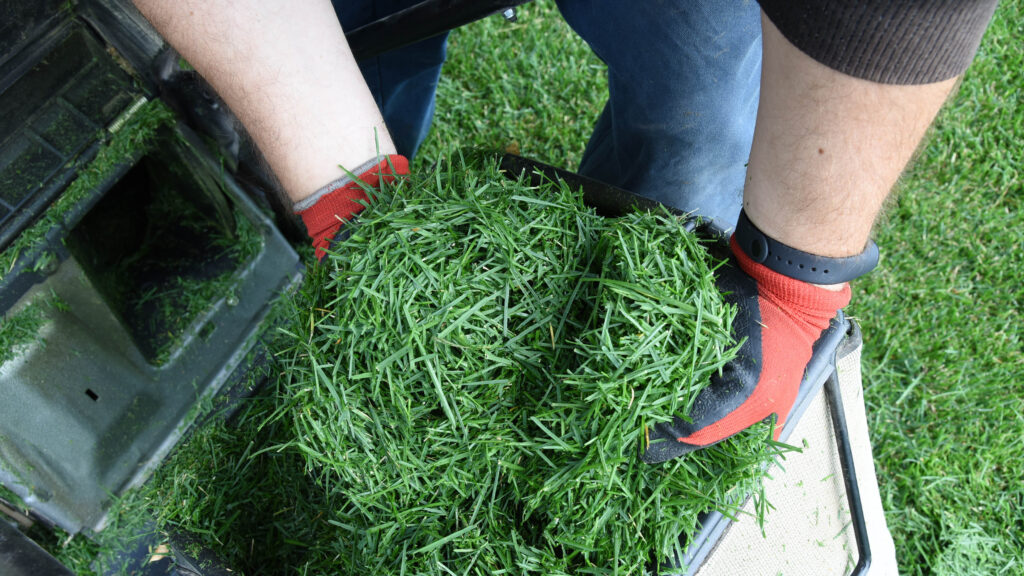
credit: https://greenlawnguide.com/
Grass clippings decompose fast and feed your lawn from the top down. Clippings contain about 4% nitrogen, 2% potassium, and 1% phosphorus, and returned clippings can supply up to 25% of your lawn’s total fertilizer needs for the season (University of Missouri Extension).
That’s real money. If you’re spending $50 to $80 per bag on a slow-release nitrogen fertilizer, leaving clippings is essentially a free application every time you mow.
Clippings are 80 to 85% water and decompose much faster than other grass plant parts. Short clippings from a regular mowing schedule filter down through the turf canopy, reach the soil surface, and break down within days. You won’t even see them after a few days of normal weather.
Does Leaving Clippings Cause Thatch? (No – Here’s Why)
Thatch buildup is the main reason most homeowners still bag their clippings – and it’s based on a myth. Research at the University of Missouri and other universities indicates that clippings do not contribute to thatch buildup on any cool- or warm-season grasses, including zoysiagrass.
Thatch is made up of dead roots, crowns, and stems – not leaf blades. Clippings do not produce thatch because they are 80% water and decompose quickly. Thatch is the accumulation of dead roots and stems, and is most often caused by over-fertilizing and over-watering (Massachusetts Department of Environmental Protection).
The confusion comes from mixing up two different things. If you see thatch building up in your lawn, look at your fertilizer and watering schedule before blaming the clippings.
How Much Fertilizer Do You Actually Save?
The savings are real and measurable. Research shows that bagging and removing grass clippings removes around half the nitrogen applied in a year. For example, if 4 lbs of nitrogen per 1,000 sq ft were applied in a year, roughly 2 lbs per 1,000 sq ft are removed by bagging during mowing (Grégoire et al., 2022, cited in OSU Extension).
A peer-reviewed study in the journal Science of the Total Environment found that returning grass clippings is equivalent to doubling the amount of nitrogen applied through fertilizer, and soil volumetric water content was 4% higher, on average, when clippings were returned (Kopp & Guillard, 2002, cited in Desjardins et al., 2022).
That soil moisture benefit matters during a dry July. Less water lost means less irrigation needed.
| Clipping Practice | Nitrogen Retained | Estimated Annual Fertilizer Savings |
|---|---|---|
| Leave clippings on lawn | ~50% of applied N returned | 25-50% reduction in fertilizer applications |
| Bag and discard | ~50% of applied N removed | No savings – must replace lost nutrients |
| Bag and compost | Partial recovery (compost applied later) | Moderate savings if compost is returned |
Figures based on Grégoire et al. (2022) and University of Missouri Extension data.
When You Should NOT Leave Grass Clippings on Your Lawn
credit: https://www.tomsguide.com/
Leaving clippings works well most of the time, but there are four situations where you should bag them.
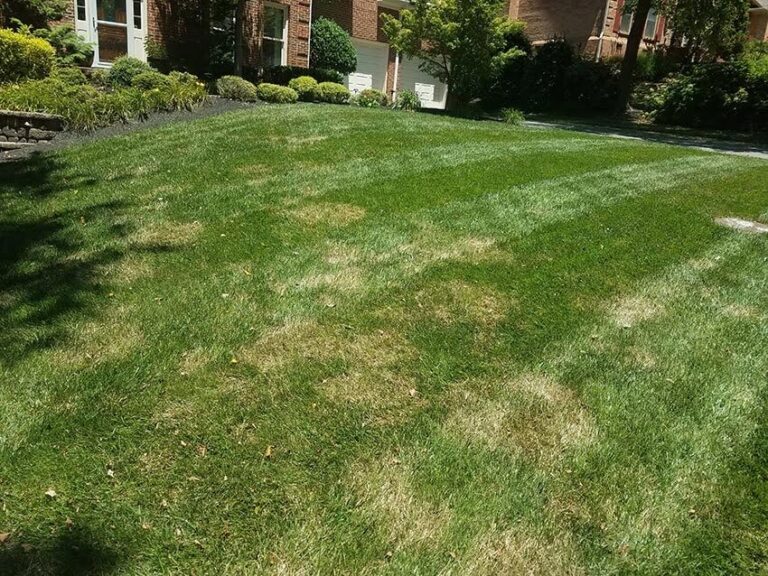
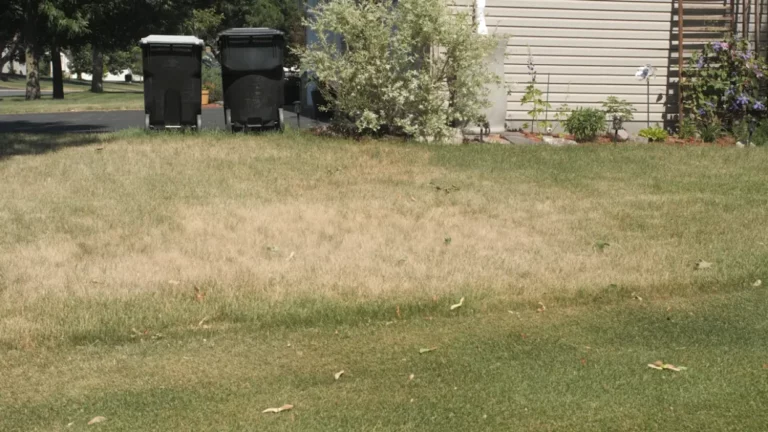
Your lawn has an active disease. If you’re dealing with dollar spot, brown patch, or leaf spot, clippings carry fungal spores. When there is a potential for disease development, grass clippings should be removed, as leftover diseased portions can serve as the inoculum source for future spread from one area to another (Michigan State University Turfgrass Science). Once the disease clears up, you can go back to leaving them.
You let the grass get too tall. As a general rule, grass clippings of an inch or less in length can be left on your lawn where they will filter down to the soil surface and decompose quickly. Remove longer clippings because they can shade or smother grass beneath, causing lawn damage (University of Minnesota Extension).
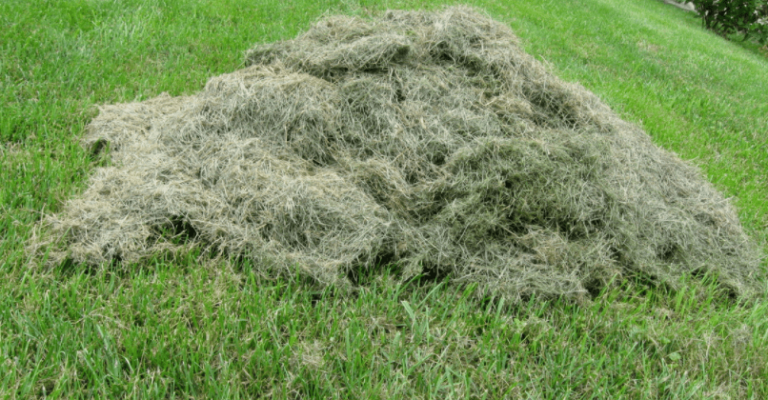
Clippings are clumping in thick mats. Wet grass cut too long will pile up on the surface instead of filtering through the canopy. These mats block sunlight and hold moisture against the grass blades, which invites disease. Rake them out or bag that mow.
You applied a broadleaf herbicide recently. If you sprayed for weeds in the last three to four weeks, keep those clippings out of vegetable gardens and flower beds. The herbicide residue can damage non-grass plants.
How to Leave Clippings the Right Way
Follow the one-third rule and your clippings will almost never cause a problem. Never cut more than one-third of the grass blade in a single session. If your lawn is 4 inches tall, mow to no lower than 2.7 inches. That keeps clippings short enough to disappear on their own.
Frequent mowing – about once a week during the growing season – has a greater impact on turf quality than almost any other lawn care practice, according to Alec Kowalewski, Oregon State University professor and turfgrass specialist. Mulching mowers cut fertilizer application rates nearly in half when clippings are returned (OSU Extension, 2025).
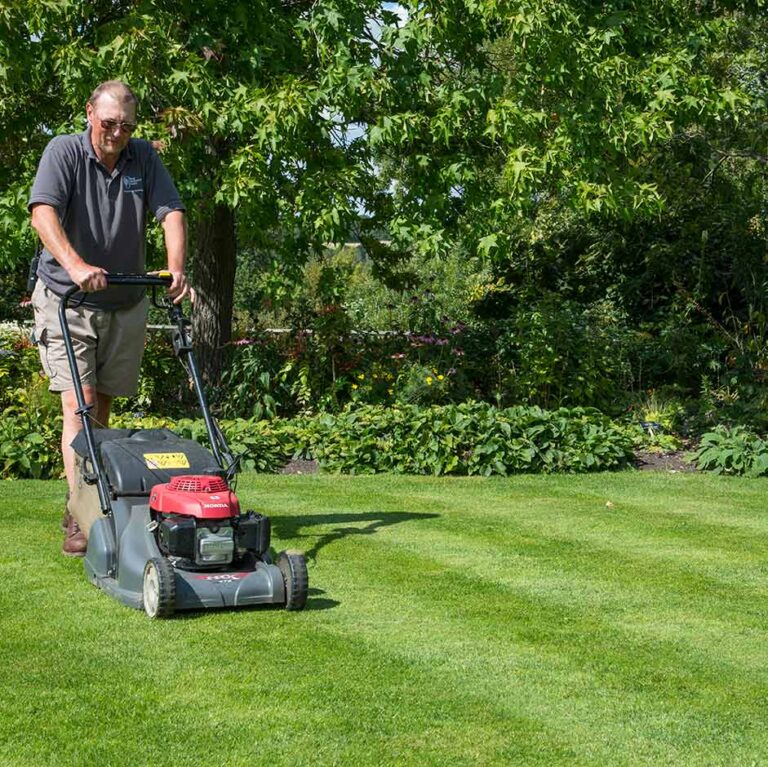
You don’t need a dedicated mulching mower to get results. Any rotary, side-discharge mower with a sharp blade will cut clippings into short lengths and do an excellent job of dispersing them (University of Kentucky College of Agriculture). The key word there is sharp. A dull blade tears grass instead of cutting it clean, leaving ragged clippings that break down slowly and look bad.
Mow when the grass is dry. Wet clippings stick together and clump, which is where the problems start.
Grass Clippings vs. Bagging: A Side-by-Side Look
| Factor | Leave Clippings | Bag Clippings |
|---|---|---|
| Nitrogen returned to lawn | Yes – up to 25% of seasonal needs | No – lost with the bag |
| Thatch risk | No increase, per university research | No difference |
| Time per mow | Faster – no stopping to empty bags | Slower |
| Disease risk | Low (normal mowing); higher if diseased | Lower when lawn is actively diseased |
| Clumping risk | Present if grass is too tall or wet | None |
| Fertilizer cost savings | 25-50% reduction possible | No savings |
| Best for | Regular weekly mowing, healthy lawn | Diseased lawn, overgrown lawn, post-herbicide |
Frequently Asked Questions
Should you leave grass clippings on your lawn every time you mow?
Yes, in most cases. As long as you’re mowing on a regular schedule and not cutting more than one-third of the blade height, clippings will be short enough to disappear into the turf within a few days. The exception is when your lawn has an active fungal disease, in which case bag and dispose of clippings until the disease is treated.
Do grass clippings cause thatch to build up?
No. Research from the University of Missouri, University of Minnesota, and Oregon State University all agree that grass clippings do not contribute to thatch. Thatch is made up of dead stems and roots, not leaf material. Clippings are 80 to 85% water and break down too quickly to accumulate.
How much fertilizer can you skip if you leave clippings on the lawn?
You can typically reduce nitrogen fertilizer applications by 25% to 50% if you consistently return clippings (University of Missouri Extension). Some research suggests the reduction can be even greater. Plan to cut back fertilizer gradually and watch how your lawn responds rather than eliminating it all at once.
What should you do with clippings if you can’t leave them on the lawn?
Compost them. Clippings are an excellent nitrogen source for a compost pile. Mix them with dry “brown” materials like leaves or straw at roughly a 1:2 ratio to prevent odors. You can also use dried clippings as a 1-inch mulch layer in garden beds to suppress weeds and hold moisture.
Does leaving grass clippings on the lawn work with any mower?
Yes. A standard rotary mower with a sharp blade will produce short enough clippings to leave in place, as long as you follow the one-third rule. Dedicated mulching mowers use a recirculating blade to chop clippings into finer pieces before dropping them, which speeds up decomposition slightly – but they aren’t required for the practice to work.
Is it better to leave clippings on the lawn in spring or fall?
Both seasons work well. Spring clippings break down fast in warm, moist conditions and deliver nitrogen during peak growth. Fall clippings take longer to decompose in cooler temperatures, so keep them short and avoid mowing wet grass in October and November. If leaves are also falling, run the mower over them too – chopped leaf material mixed with clippings adds organic matter to the soil heading into winter.