Overwatering vs Underwatering: What Damage Looks Like
TL;DR
- Both overwatering and underwatering can turn grass brown, but the soil feel and grass behavior tell you which problem you have
- Underwatered grass leaves footprints that don’t bounce back; overwatered grass feels spongy underfoot
- Most established lawns need 1 to 1.5 inches of water per week, including rainfall (NDSU Extension, 2021)
- Overwatering is often harder to recover from because it damages soil biology, not just grass blades
- The screwdriver test and the footprint test are the two fastest ways to diagnose your lawn without any tools
Why Brown Grass Doesn’t Tell You Much on Its Own
Brown or yellow patches are the most common sign homeowners notice – and they’re the least useful for diagnosis on their own. Both overwatering and underwatering cause discoloration. What separates them is everything else: how the soil feels, how the grass responds to foot traffic, what’s growing (or dying) alongside the grass, and where the damage shows up on your lawn.
Before you water more or water less, do two quick checks. Push a screwdriver six inches into the soil in the problem area. If it slides in easily, the soil has plenty of moisture. If it’s hard to push, the soil is dry (Mesa Turf Masters, 2026). Then walk across the lawn and look back at your footprints.
What Underwatered Grass Looks Like
credit: https://community.rachio.com/
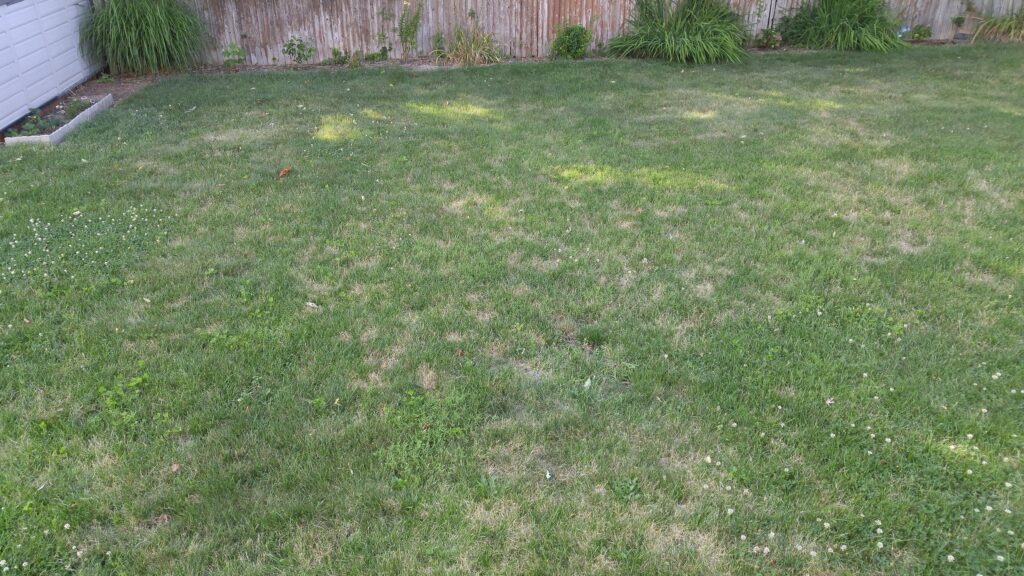
Underwatered grass gives you clear, consistent signals. The footprint test is the fastest: if your shoe impressions stay visible on the lawn for more than a few minutes instead of springing back, the grass blades are dehydrated and limp (NDSU Extension, 2021).
Color is the next signal. Underwatered grass shifts from deep green to a dull blue-gray or straw brown – sometimes in patches along sidewalks and driveways where the soil dries fastest (Mesa Turf Masters, 2026). The soil under those patches will feel hard and dry to the touch.
Slow growth is another indicator. Grass that’s water-stressed stops actively growing and starts conserving energy. You may also notice the blades rolling or folding lengthwise – this is a stress response where the grass reduces the leaf surface exposed to sun (MU Extension). If conditions stay dry long enough, the grass goes fully dormant and turns brown top to bottom, but the crowns usually survive and recover when water returns.
What Overwatered Grass Looks Like
Overwatered grass is trickier to diagnose because it can look similar to underwatered grass at first glance. The difference is in the soil and the pattern of damage.
Walk across the lawn in the affected area. If the ground feels spongy or squishes underfoot – hours after any rain or irrigation – the soil is staying too wet (Angi, 2026). Roots need oxygen, and waterlogged soil cuts off their air supply.
Look for these additional signs:
- Mushrooms or patches of fungal growth appearing on the lawn surface, which thrive when moisture stays high and air can’t reach the roots (Organolawn, 2026)
- Thatch buildup that’s visibly thick between the soil and the grass blades – overwatering slows the natural breakdown of plant material (Angi, 2026)
- Weeds like dollar weed, yellow nutsedge, and creeping Charlie taking hold, since these species do well in wet, compacted conditions (Southern Living, 2026)
- Bare patches that show thick dead thatch underneath rather than bare, hard soil
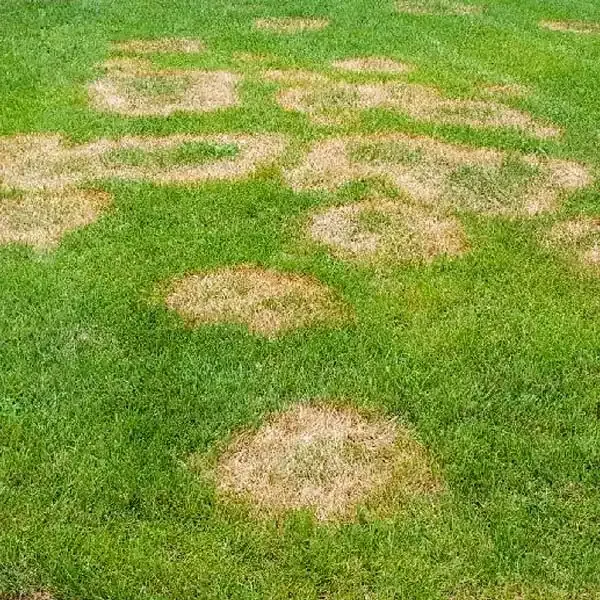
Common fungal diseases that show up in overwatered lawns include brown patch, pythium blight, and leaf spot (Organolawn, 2026). These spread fast in wet conditions and are much harder to correct than simple drought stress.
Side-by-Side: Overwatering vs Underwatering at a Glance
| Sign | Overwatered | Underwatered |
|---|---|---|
| Soil feel | Spongy, wet hours after irrigation | Hard, dry, resists screwdriver |
| Grass color | Yellow-green, dull patches | Blue-gray or straw brown |
| Footprint test | Footprints don’t show clearly | Footprints stay visible, don’t bounce back |
| Fungal growth | Mushrooms, brown patch, leaf spot | Rare |
| Thatch | Thick, matted buildup | Thin or absent |
| Weeds | Dollar weed, nutsedge, creeping Charlie | Crabgrass (late-summer heat stress) |
| Roots | Shallow, weak, may be rotting | Shallow, but from lack of deep watering |
| Screwdriver test | Slides in easily | Hard to push in |
How to Fix an Underwatered Lawn
Stop watering in short, frequent bursts – they train roots to stay shallow. Instead, water deeply and less often, aiming for 1 to 1.5 inches per week total from irrigation and rainfall combined (Kansas State University Extension, 2026). For most sprinkler setups, that works out to two sessions per week on clay soil, or three times on sandy soil (NDSU Extension, 2021).
Water in the early morning so the moisture reaches the roots before the heat of the day drives evaporation. A cheap rain gauge in the yard tells you exactly how much has fallen so you’re not guessing.
Mow at a higher setting – 3.5 to 4 inches – while the lawn recovers. Taller grass blades shade the soil, reduce moisture loss, and give the plant more surface area for photosynthesis (MSU Extension).
How to Fix an Overwatered Lawn
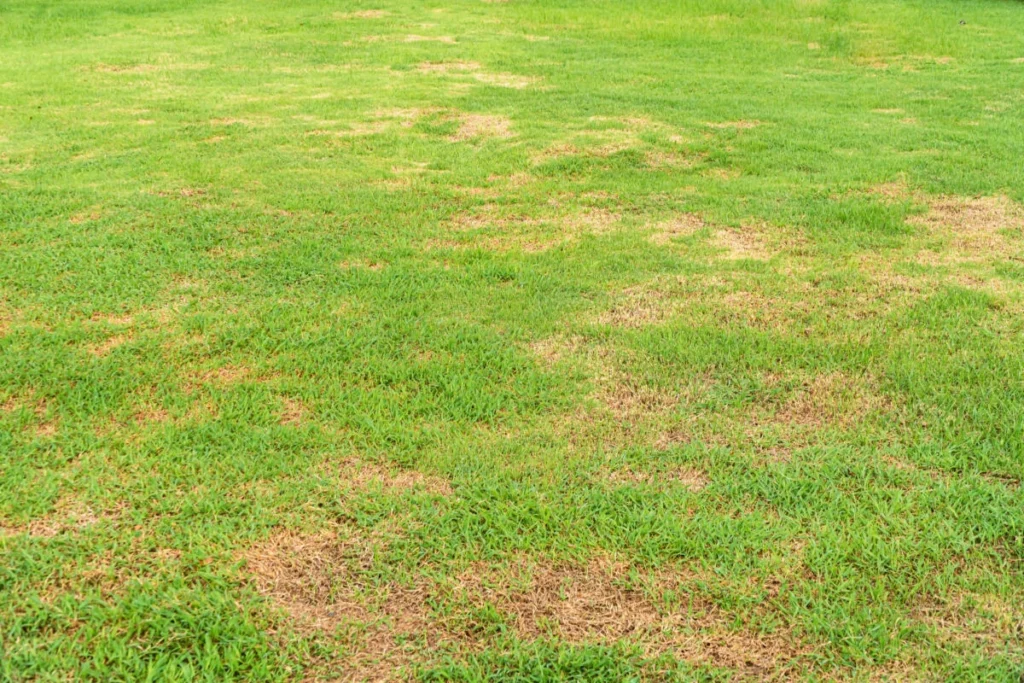
Start by cutting back your watering schedule. If you have an automatic irrigation system, check whether it’s running on a set timer that ignores rainfall. A rain sensor or smart controller that adjusts based on actual weather is the most practical fix for chronic overwatering.
Let the soil dry out enough that a screwdriver meets resistance before you water again. If you’ve developed thatch buildup over half an inch thick, dethatch in early fall for cool-season grasses or late spring for warm-season grasses. Heavy thatch blocks water, nutrients, and air from reaching roots.
If fungal disease has appeared, address it directly rather than waiting. Products containing azoxystrobin or propiconazole treat common lawn fungi, but check your grass type before applying. More importantly, fixing the watering schedule prevents recurrence – no fungicide holds up against ongoing wet conditions.
For severe cases where root rot has killed significant sections, overseeding in fall (cool-season grasses) or late spring (warm-season grasses) fills in the bare areas once drainage is corrected.
Common Watering Mistakes That Make Damage Worse
- Watering every day in short cycles: this keeps the surface wet and roots shallow, setting up both fungal disease and drought stress during any dry spell
- Ignoring soil type: clay holds water much longer than sandy soil, so the same watering schedule that works for one yard will waterlog another
- Watering at night: moisture sitting on grass blades overnight is one of the main conditions that allows brown patch and other fungal diseases to spread
- Assuming brown means dry: the sponginess test and screwdriver test take 30 seconds each and will tell you more than the color of the grass ever will
Frequently Asked Questions
How do I tell if my lawn is overwatered or underwatered?
Do the footprint test and the screwdriver test. If your footprints stay flat and the soil is hard to penetrate, the lawn is underwatered. If the ground feels spongy and the screwdriver slides in easily, it’s overwatered. Color alone is not a reliable indicator since both conditions cause browning and yellowing.
How much water does a lawn need per week?
Most established lawns need 1 to 1.5 inches of water per week from irrigation and rainfall combined (NDSU Extension, 2021; Illinois Extension). Newly seeded lawns need more frequent, lighter watering to keep the seedbed moist. During drought dormancy, 1 inch every two to three weeks is enough to keep the crowns alive without encouraging active growth.
Can overwatering kill grass permanently?
Yes, in severe cases. Prolonged overwatering causes root rot, kills the soil microbes that support healthy turf, and can leave bare patches that require reseeding. Drought stress is usually recoverable once water returns. Overwatering damage to soil structure takes longer to correct (Organolawn, 2026).
What grass diseases come from overwatering?
The most common are brown patch, pythium blight, leaf spot, and necrotic ring spot. All of them thrive in conditions where soil stays wet and air can’t reach the roots (Organolawn, 2026). Reducing watering frequency is the first step in treating any of them.
When should I water my lawn during the day?
Water in the early morning, ideally before 10 a.m. This gives moisture time to soak into the soil before heat increases evaporation rates, and it ensures grass blades dry out during the day, which reduces fungal disease risk.