Why Your Lawn Still Looks Dry Even After Watering
TL;DR
- A lawn that stays dry after watering is almost always a soil or root-depth problem, not a lack of water.
- The five most common causes are hydrophobic soil, compaction, thatch buildup over 1/2 inch, shallow watering habits, and poor watering timing.
- Grass roots need water to reach 6 to 8 inches deep to stay consistently green (SDSU Extension, 2021).
- A thatch layer thicker than 1/2 inch acts as a physical barrier, blocking water before it ever hits the soil (Penn State Extension).
- Fix the underlying issue first. Watering more without addressing it wastes water and doesn’t help the grass.
Why Is My Lawn Still Dry After I Watered It?
credit: https://www.turftimeeq.com/
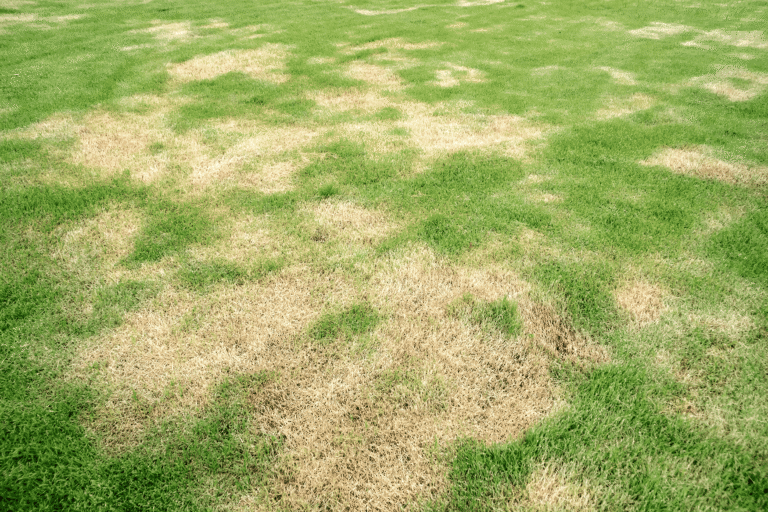
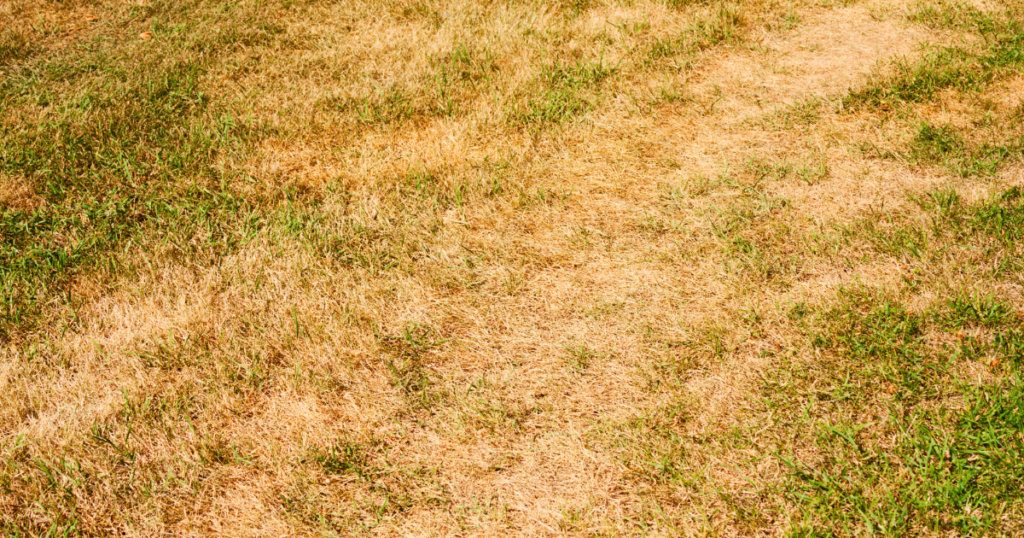
Your lawn looks dry because water is not reaching the roots, even when you’ve run the sprinklers. The surface may be wet for an hour, but if the water stops at the top few inches of soil, or never soaks in at all, the grass runs out of moisture before the day is done.
There are five specific reasons this happens. Each one is fixable, and you don’t need to replace your lawn to solve any of them.
Cause 1: Hydrophobic Soil Is Repelling the Water
Hydrophobic soil is soil that actively repels water instead of absorbing it. This happens when organic compounds from dried plant material coat soil particles, creating a waxy layer that sheds water the same way a waxed car sheds rain (Gardening Know How, 2026).
Sandy soils and any soil that’s been allowed to dry out completely are most vulnerable. When you water, the water beads up and runs off instead of soaking in. The soil an inch below the surface stays bone dry even after 20 minutes of sprinkler time.
You can test for it quickly: pour a glass of water directly onto a dry patch of your lawn. If it pools or runs sideways rather than soaking in within 30 seconds, you likely have a hydrophobic layer.
The fix is a soil wetting agent (also called a surfactant). Products like Hydretain or any yucca-based wetting agent break down the waxy coating and restore normal water absorption. Apply it before watering and water slowly afterward (The Daily Moss, 2026). For severe cases, core aeration followed by a wetting agent is the most effective combination.
Cause 2: Compacted Soil Is Blocking Water from Reaching the Roots
Compacted soil is the most common cause of dry lawn patches, especially in high-traffic areas or anywhere a mower runs repeatedly in the same path. When soil particles are pressed tightly together, water can’t move through the profile and instead runs off the surface (Lawn Mower Guru, 2023).
Compaction can start 6 or more inches below the surface, so the problem is invisible until you see the dry patches. A simple test: push a thin screwdriver or pencil into the soil with steady pressure. If it won’t go in past 2 to 3 inches without force, the soil is compacted.
Core aeration is the right fix. A core aerator pulls out small plugs of soil, opening channels for water, air, and nutrients to penetrate. For most US homeowners, aerating once a year in fall (cool-season grasses) or late spring (warm-season grasses) is enough to keep compaction from building up.
Cause 3: Thatch Is Acting as a Roof Over Your Soil
Thatch is the layer of dead stems, roots, and organic matter that builds up between the green grass blades and the actual soil. A thin layer of 1/2 inch or less is fine – it helps insulate the soil and hold some moisture. But once thatch exceeds 1/2 inch, it becomes a water barrier (Penn State Extension, 2020).
Thick thatch is hydrophobic. Water hits it and either sits on top or runs off the edge rather than working its way down to the soil and roots below. According to Penn State Extension, thatch layers thicker than 1 inch cause roots to grow up into the thatch itself, where they dry out and die quickly during any dry spell.
Cut a small 2-to-3-inch wedge of turf with a trowel and look at the side profile. Measure the brown, spongy layer between the green grass and the soil. If it’s more than 1/2 inch, you have a thatch problem worth addressing. Power raking or vertical mowing removes the excess; core aeration helps slow future buildup.
Cause 4: Shallow, Frequent Watering Is Training Roots to Stay Near the Surface
This is one of the most common mistakes homeowners make, and it looks like a watering problem when it’s actually a root-depth problem. Short daily watering sessions keep moisture in the top 1 to 2 inches of soil. Grass roots follow the water and never grow deeper.
The result: roots that stop 2 to 3 inches down instead of the 8 to 12 inches they should reach (Organo-Lawn, 2026). Those shallow roots run out of available moisture within hours of watering, especially in summer heat.
The fix is to water less often but more deeply. Most lawns need about 1 inch of water per week, applied in one or two sessions rather than daily (SDSU Extension, 2021). That amount of water moves moisture down to the 6-to-8-inch zone where grass roots grow and access moisture even between waterings (SDSU Extension, 2021). Use the tuna-can test to confirm your sprinkler output: place a few empty cans around the yard and run the system until you’ve collected 1 inch.
Cause 5: You’re Watering at the Wrong Time of Day
credit: https://www.georgedaviesturf.co.uk/
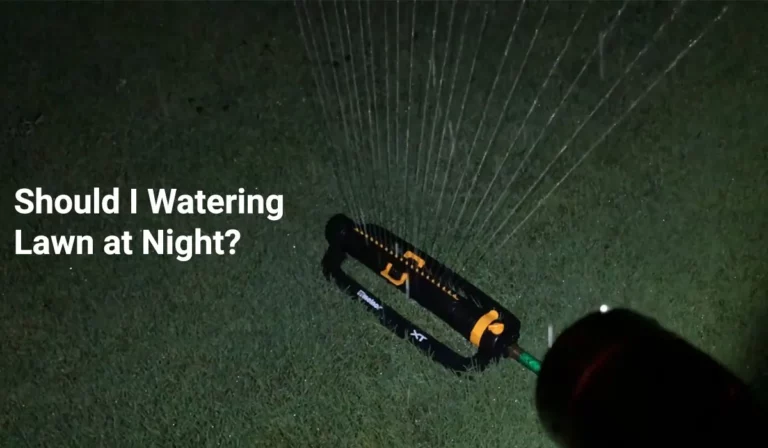
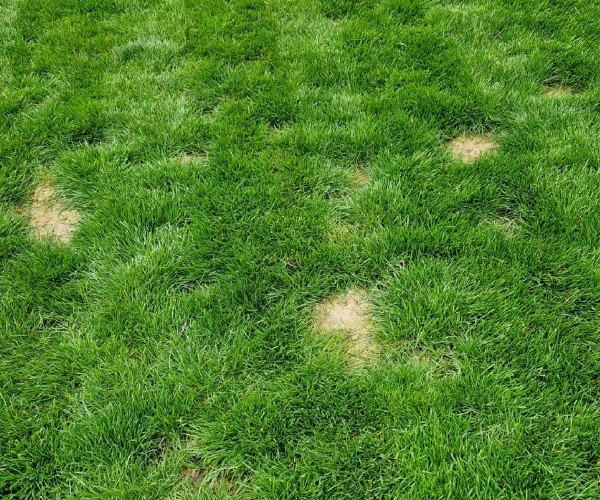
Watering midday in summer is the fastest way to waste water without helping your lawn. Evaporation rates are highest between 10 a.m. and 6 p.m., meaning a significant portion of what you apply never reaches the soil at all.
Early morning is the best window, ideally between 5 and 9 a.m. The air is cooler, wind is typically calm, and the soil can absorb water before peak heat sets in (TruGreen, 2023). Evening watering works in a pinch but leaves the grass wet overnight, which invites fungal disease – particularly dollar spot and brown patch, which thrive in warm, humid conditions.
If you’re watering at the right amount but at the wrong time, your lawn will still look dry because a meaningful portion of that water never made it into the ground.
How to Diagnose Which Problem You Have
| Symptom | Most Likely Cause | Test |
|---|---|---|
| Water pools and runs off immediately | Hydrophobic soil or compaction | Pour glass of water on dry patch; check absorption time |
| Dry patches despite regular watering | Thatch buildup or shallow roots | Cut a 2-in. turf wedge; measure thatch layer |
| Whole lawn dry, not just patches | Shallow watering habit or wrong timing | Use tuna cans to measure water depth; check schedule |
| Spongy or bouncy feel underfoot | Thick thatch layer | Wedge test; measure thatch thickness |
| Soil hard, won’t accept screwdriver | Compaction | Screwdriver push test; aerate if resistance under 3 in. |
Common Mistakes That Make the Problem Worse
- Watering more without diagnosing the cause: Adding more water to hydrophobic or compacted soil doesn’t help. It runs off, wastes water, and can pool around the foundation of your home. Test first, then treat.
- Skipping aeration year after year: Compaction and thatch build gradually. By the time you see dry patches, the problem has usually been developing for two or three seasons. Annual aeration prevents it from getting to that point.
- Running sprinklers at noon in summer: Midday watering in July loses a significant portion to evaporation before it soaks in. Move your schedule to early morning and you’ll likely see improvement within two weeks without changing the amount of water you use.
Frequently Asked Questions
Why does my lawn look dry right after I water it?
Water is reaching the surface but not soaking into the root zone. The most common reasons are hydrophobic soil, thatch buildup over 1/2 inch, or compacted soil. Run the glass-of-water test on a dry patch: if it doesn’t absorb within 30 seconds, the soil or thatch layer is the problem, not your watering schedule.
How deep should water penetrate when I water my lawn?
Water should reach 6 to 8 inches deep, which is where most grass roots grow (SDSU Extension, 2021). To achieve that depth, most lawns need about 1 inch of water per session. Use tuna cans to measure sprinkler output, then dig down after watering to check how deep the moisture actually went.
Can too much thatch cause a lawn to look dry?
Yes. A thatch layer thicker than 1/2 inch becomes hydrophobic and prevents water from reaching the soil (Penn State Extension, 2020). The grass looks dry because the roots, which often grow up into the thatch rather than down into the soil, are sitting in a layer that dries out rapidly. Dethatching or core aeration corrects it.
What is a soil wetting agent and does it work?
A soil wetting agent is a surfactant that breaks down the waxy coating on hydrophobic soil particles, allowing water to soak in normally. Products like yucca-based wetting agents are effective and considered lower impact on soil microbes than many synthetic options (The Daily Moss, 2026). Apply it to dry areas before watering for best results.
When is the best time to water a lawn to prevent dry patches?
Early morning, between 5 and 9 a.m., is the best window. Cooler temperatures and lower wind reduce evaporation, so more of the water actually reaches the soil (TruGreen, 2023). Evening watering can lead to fungal disease because grass stays wet overnight. Midday watering wastes significant water to evaporation before it penetrates.
How do I know if my soil is compacted?
Push a screwdriver or thin metal skewer into the soil with steady, even pressure. If it won’t go 2 feet with moderate effort, or resists at just a few inches, the soil is compacted (Lawn Mower Guru, 2023). Compacted soil in high-traffic areas – anywhere kids play, around the mower’s path, near garage doors – is extremely common and easy to miss until dry patches appear.